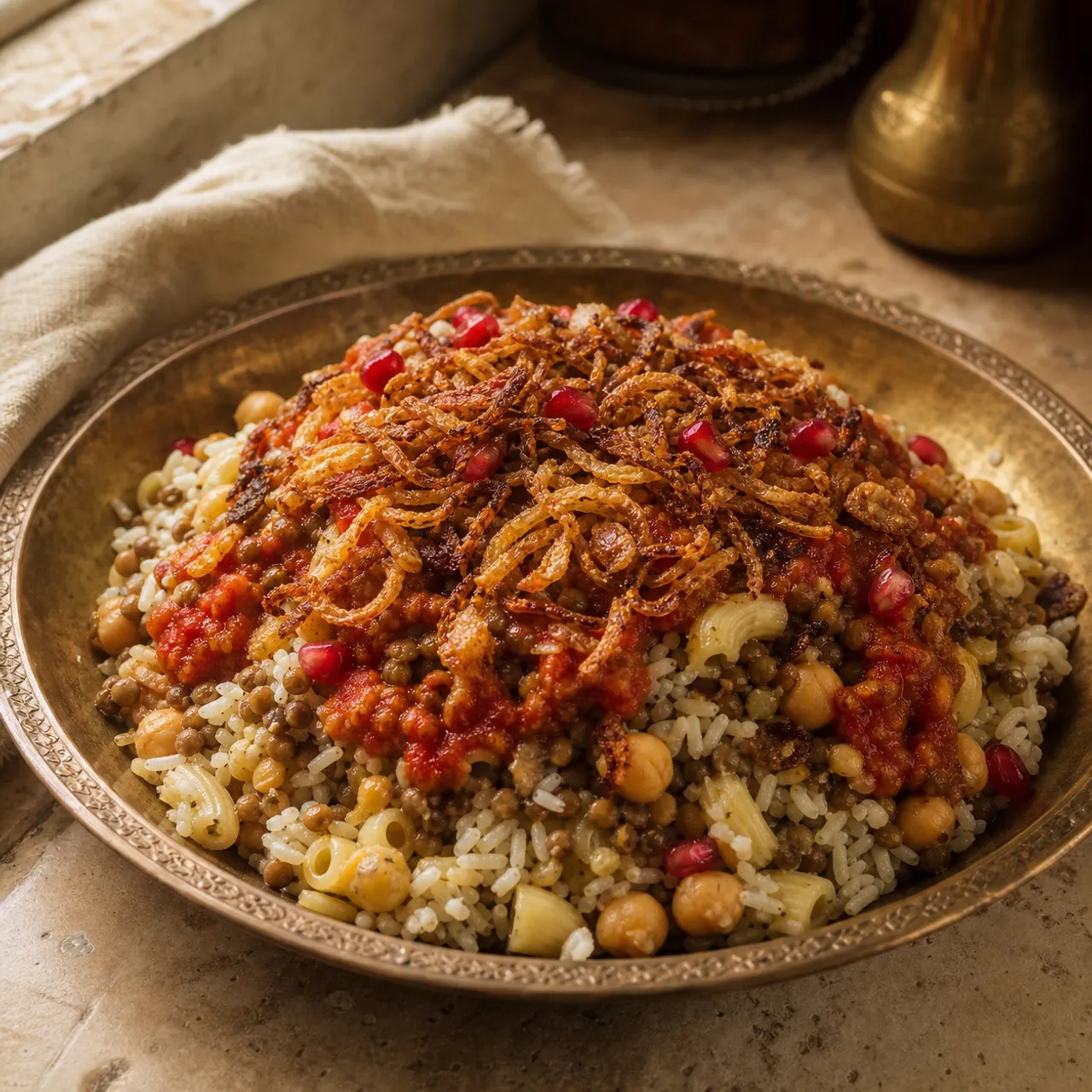
 Middle Eastern Images are for illustrative purposes only, may be inaccurate, and do not guarantee the presence or absence of specific ingredients.
 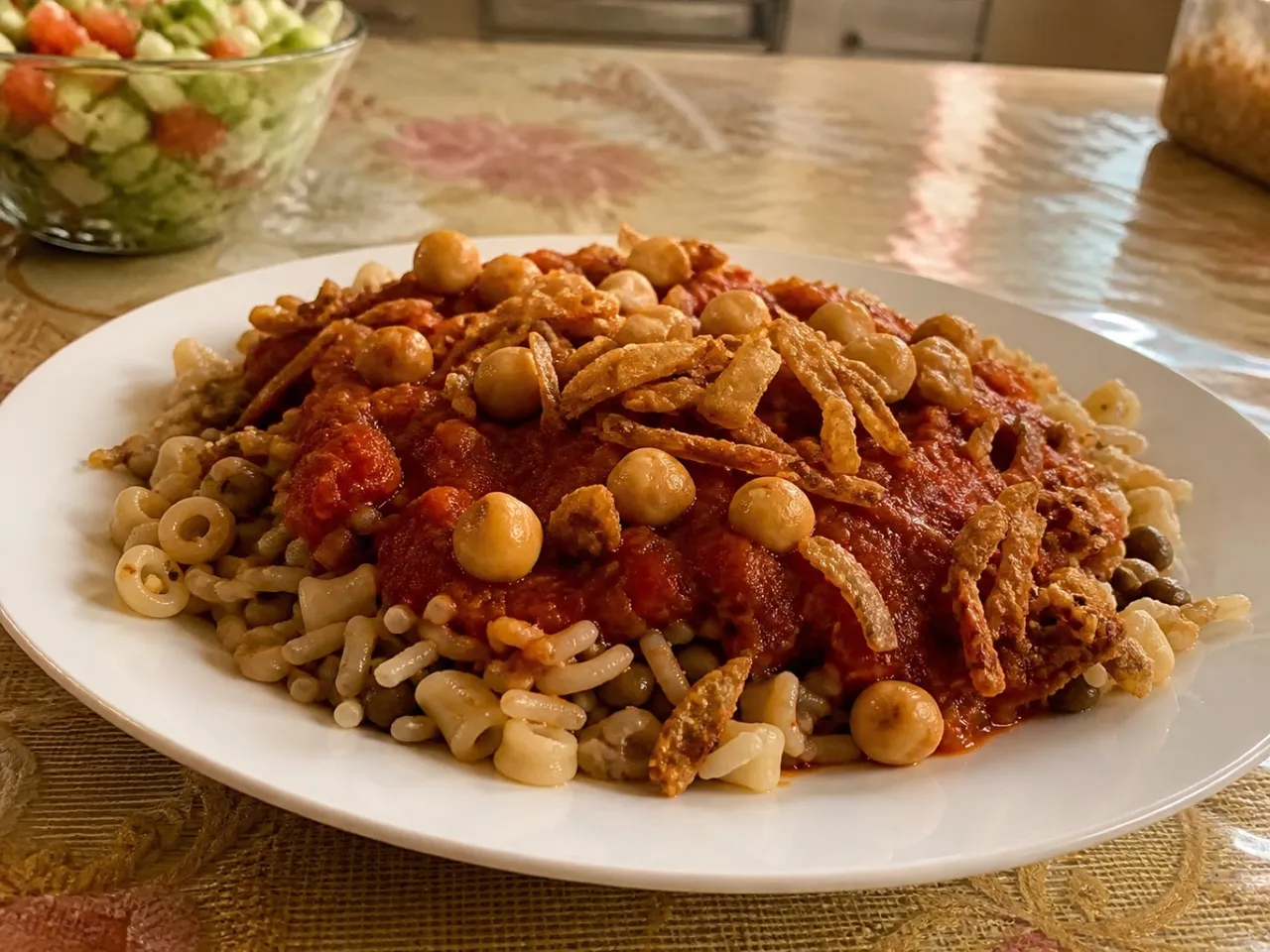 Serving Images are for illustrative purposes only, may be inaccurate, and do not guarantee the presence or absence of specific ingredients.
 Koshari
Egypt's national dish mixing lentils, rice, pasta, and spicy tomato sauce.
Contains common allergens
In the app, Listahan checks these against your household automatically.
Good to know
- Crispy
Matched from this dish's own ingredients and timing. Browse more: crispy recipes
Instructions
6 steps- 1
Toss the thinly sliced onions with a pinch of salt and 1 tbsp flour. Fry them in a half-inch of hot oil until dark golden brown and crispy. Drain on paper towels and reserve the flavorful frying oil.
- 2
Boil the lentils until tender (about 20 mins); cook the macaroni according to package instructions; boil the rice using 1 tbsp of the reserved onion oil.
- 3
For the tomato sauce: Sauté 2 minced garlic cloves in 1 tbsp of onion oil, add coriander, cumin, and the tomato sauce. Simmer for 15 minutes until thickened.
- 4
For the Dakka (garlic vinegar): In a small saucepan, briefly warm the remaining 2 minced garlic cloves, cumin, vinegar, and 1/4 cup water until fragrant, then remove from heat.
- 5
Warm the canned chickpeas in a small saucepan.
- 6
To assemble: Place a generous base of rice and lentils in a bowl, top with macaroni and warm chickpeas. Ladle the spiced tomato sauce over the top, drizzle with the garlic vinegar to taste, and crown with a handful of crispy fried onions.
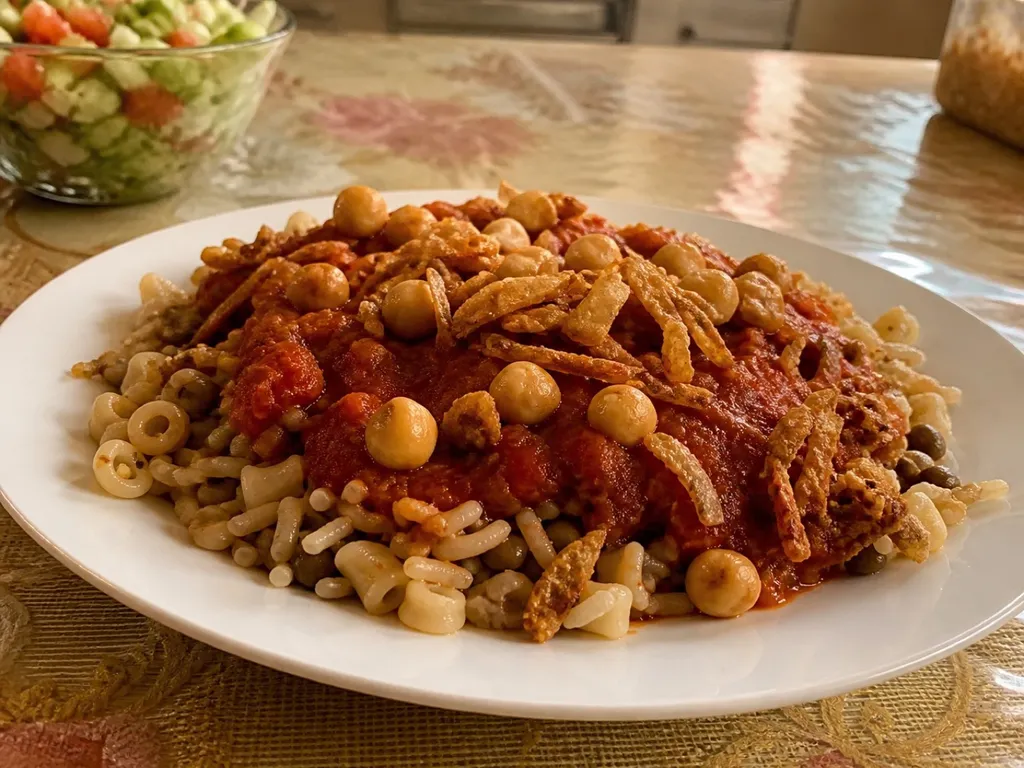 Images are for illustrative purposes only, may be inaccurate, and do not guarantee the presence or absence of specific ingredients.
 Listahan Family Score™
79/100
Good fit for most families
Score reflects how well this recipe fits a typical busy household. In the app, your Family Score is personalized to your household's allergens, kids, and pantry.
Nutrition
per serving380
Calories
13 g
Protein
78 g
Carbs
2 g
Fat
Estimated per serving. Actual values depend on the brands and portions you use.
Listahan cooking guide
Chef notes & practical guide
Technique notes, ingredient swaps, serve-alongside ideas, storage guidance, and equipment for this recipe.
Cultural context
Koshari is Egypt's beloved national street food, a carbohydrate symphony of rice, lentils, and pasta topped with a spiced tomato sauce, tangy garlic vinegar, and crispy fried onions. It emerged in the nineteenth century, blending Indian rice and lentils, Italian pasta, and Middle Eastern elements into something wholly Egyptian. It is cheap, filling, vegan by default, and sold from carts and shops across Cairo.
Listahan note
This version layers rice, brown lentils, and small pasta, then crowns it with a cumin-spiced tomato sauce, a sharp garlic-vinegar dakka, and a heap of crispy onions. The toppings are not optional; they make the dish.
Technique cues
- Fry the onions slowly until deep brown and crisp, since they provide the sweet crunch that ties the whole layered bowl together.
- Spike the tomato sauce with vinegar and a little heat so it cuts through the starchy base rather than tasting flat.
- Make the garlic-vinegar dakka sharp and pungent, because that bright acidic hit is what keeps koshari from feeling heavy.
Kitchen flow
- Parallel prep
- Cook the rice, lentils, and pasta in separate pots at once while the tomato sauce simmers and the onions fry.
- Make-ahead
- Cook the components and sauce ahead and store separately, then reheat and assemble fresh so nothing turns to mush.
- Leftover move
- Mix leftover components together, top with a fried egg, and pan-fry into a crispy koshari cake.
- Cleanup rhythm
- Fry the onions first and reuse that flavored oil for the tomato sauce, cutting both a pan and a step.
Ingredient brief
Role, handling, and swap guidance for each key ingredient.
rice
starchy base
Purpose: Rice is one of the three starches layered together that give koshari its filling body.
Handling: Rinse and cook until fluffy, sometimes mixed with a little vermicelli.
Adaptation: Any long-grain rice works as the base.
brown lentils
protein and earthiness
Purpose: Lentils add protein and an earthy counterpoint to the rice and pasta.
Handling: Cook until just tender so they hold their shape in the bowl.
Adaptation: Green lentils work and hold their shape just as well.
small pasta (macaroni or ditalini)
starch layer
Purpose: Pasta is the Italian-influenced layer that makes koshari uniquely itself among grain bowls.
Handling: Boil until just tender and toss with a little oil to keep it from clumping.
Adaptation: Gluten-free pasta keeps the dish wheat-free.
tomato sauce with cumin and vinegar
the unifying topping
Purpose: The spiced, tangy tomato sauce binds the starches and gives the dish its warm depth.
Handling: Simmer with garlic, cumin, and a splash of vinegar until thick.
Adaptation: Add harissa or chili for a spicier Egyptian-style sauce.
crispy fried onions
defining crunch
Purpose: Sweet, dark, crispy onions are the crowning texture that makes koshari unmistakable.
Handling: Slice thin and fry slowly until deep brown, then drain on paper.
Adaptation: Store-bought crispy fried onions are a legitimate shortcut.
Technique notes
- Layer rather than premix so each bowl shows its strata, and let diners stir in the sauce and dakka to taste.
- A handful of chickpeas scattered on top adds another texture and is traditional in many Cairo versions.
- Make the garlic-vinegar dakka assertively sour; tasting it should make you flinch slightly before it mellows in the bowl.
Ingredient swaps
- Gluten-free direction
- Use gluten-free pasta and confirm the fried onions are coated in a gluten-free flour.
- Lower-fat direction
- Bake the sliced onions with a little oil until crisp instead of deep-frying them.
- Higher-protein direction
- Add extra chickpeas and lentils and reduce the pasta for a more protein-dense bowl.
Serve alongside
- Egyptian salad with cucumber and tomato
- Pickled vegetables (torshi)
- Extra garlic-vinegar sauce
- Warm baladi bread
- Mint lemonade
- Hibiscus tea (karkade)
- Sparkling water with lemon
Serving suggestions only — check pairings for your household's allergens.
Storage & reheating
- Store the koshari components separately in the fridge for up to four days, reheating and assembling fresh so the textures stay distinct. The tomato sauce and fried onions keep especially well. The starch components can be frozen, though the fried onions are best made fresh for crunch.
Equipment
- Several saucepans for the components
- Heavy skillet for frying onions
- Fine mesh strainer
- Slotted spoon
Make this household-aware
Listahan Pro checks this recipe against your household's allergens, finds pantry-aware swaps, builds the shopping list, and helps you plan the week around it.
Plan it in Listahan
Add Koshari to your week, check it against your household's allergens, and build the shopping list automatically.
More Middle Eastern recipes
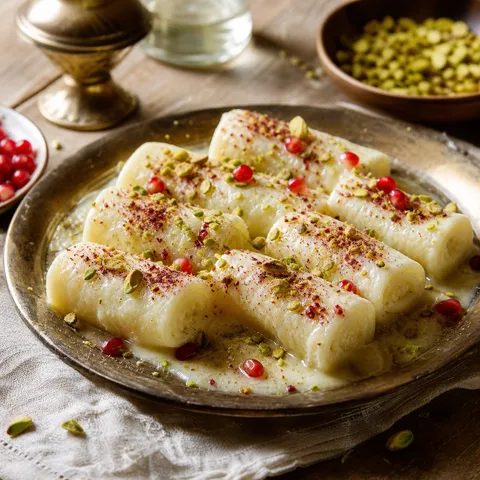 Middle Eastern Lens Verified Images are for illustrative purposes only, may be inaccurate, and do not guarantee the presence or absence of specific ingredients.
 Halawet El Jibn
A Levantine sweet cheese roll of stretched mozzarella and semolina dough wrapped around rose-scented clotted cream, topped with crushed pistachios and sugar syrup.
 Middle Eastern Lens Verified Images are for illustrative purposes only, may be inaccurate, and do not guarantee the presence or absence of specific ingredients.
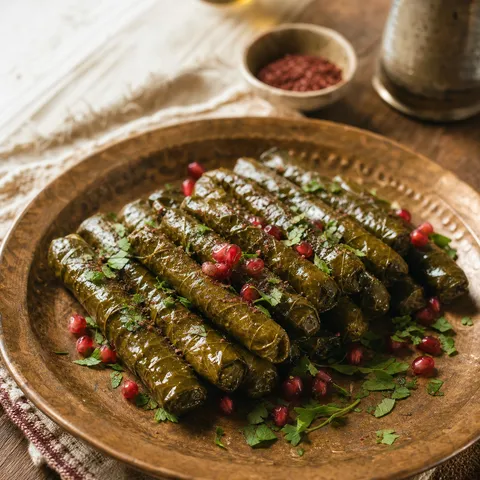
 Dolma (Warak Enab)
Grape leaves stuffed with a mixture of rice, meat, and herbs.
 Middle Eastern Lens Verified Images are for illustrative purposes only, may be inaccurate, and do not guarantee the presence or absence of specific ingredients.
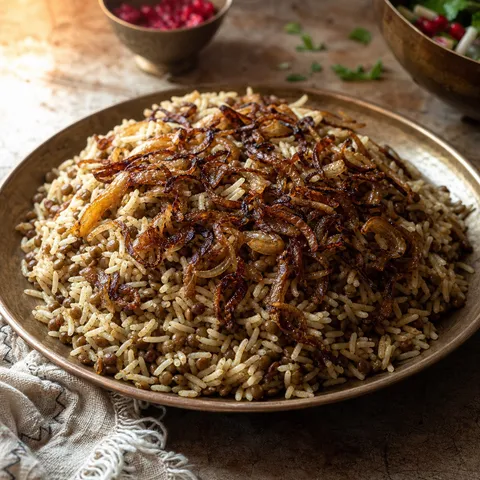
 Mujadara
A comforting dish of cooked lentils together with groats or rice, garnished with sautéed onions.