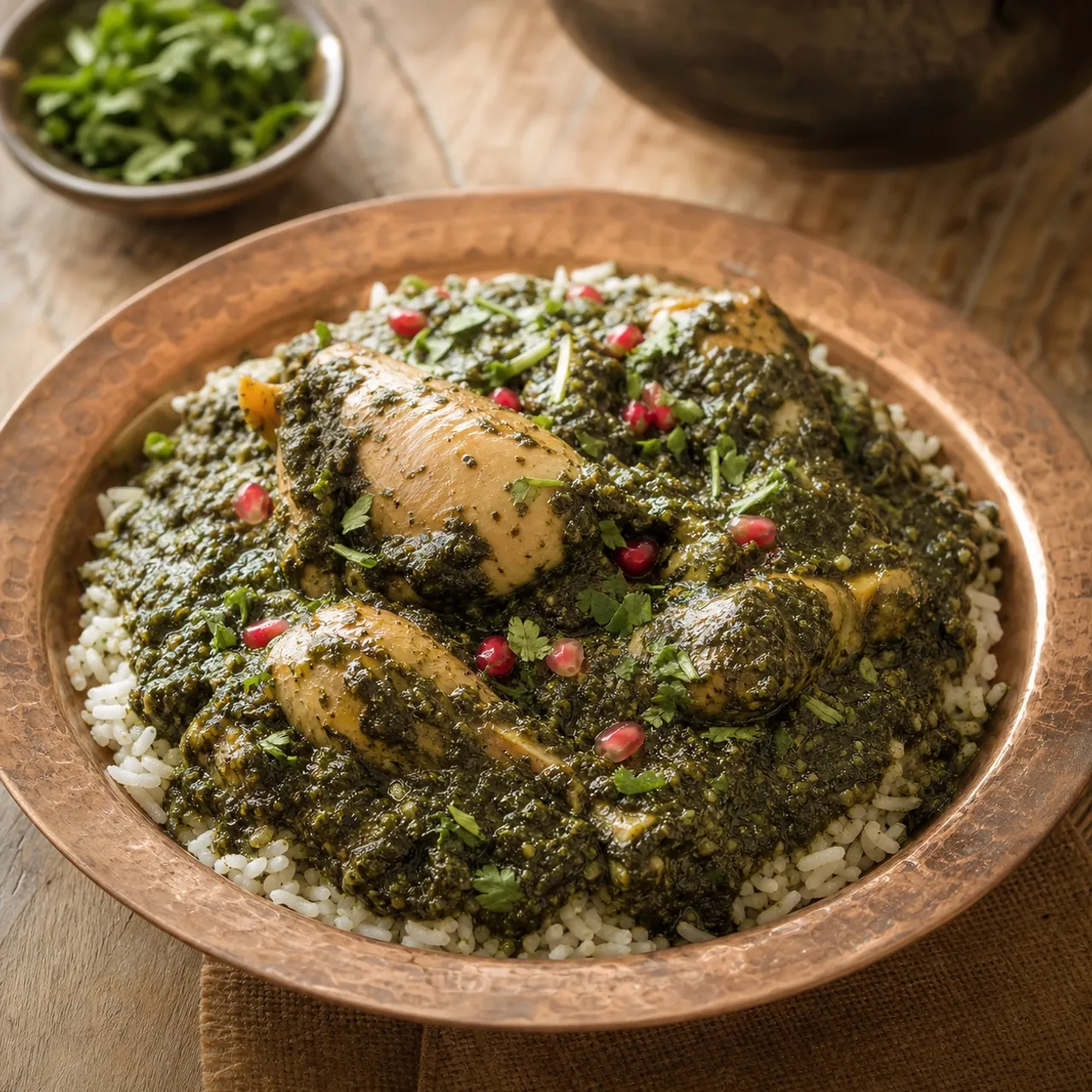
 Middle Eastern Images are for illustrative purposes only, may be inaccurate, and do not guarantee the presence or absence of specific ingredients.
 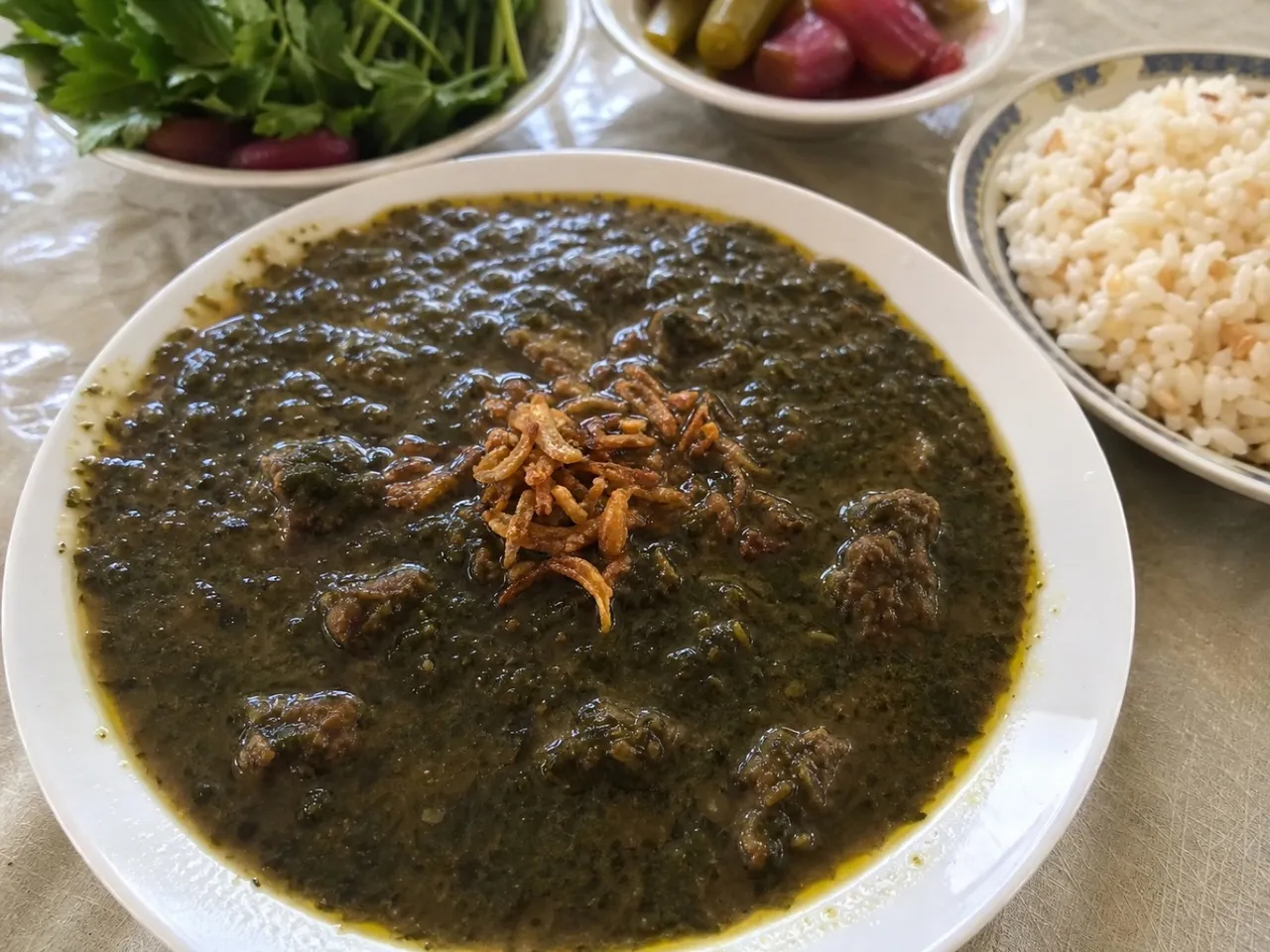 Serving Images are for illustrative purposes only, may be inaccurate, and do not guarantee the presence or absence of specific ingredients.
 Mloukhiyeh
A nutrient-rich stew made from minced jute leaves, served with chicken and rice.
Contains common allergens
In the app, Listahan checks these against your household automatically.
Instructions
6 steps- 1
Place the chicken pieces and whole onion in a large pot. Cover with water, add a pinch of salt and pepper, and boil for 45 minutes until the chicken is fully cooked.
- 2
Remove the chicken, strain the broth to remove impurities, and set aside 4 cups of the clear chicken broth. Shred the chicken meat and discard the skin/bones.
- 3
Return the 4 cups of clear broth to the pot and bring to a simmer. Drop in the frozen minced Mloukhiyeh block. Let it melt slowly into the broth over low heat (do not let it boil vigorously or it will separate).
- 4
In a small skillet, melt the ghee over medium heat. Add the minced garlic and ground coriander. Fry until the garlic is golden brown and deeply fragrant (the taqleya).
- 5
Immediately pour the sizzling garlic mixture into the simmering Mloukhiyeh. Stir in the chopped fresh coriander.
- 6
Serve the thick Mloukhiyeh soup over a bed of vermicelli rice, topped with the shredded chicken and a heavy squeeze of fresh lemon juice.
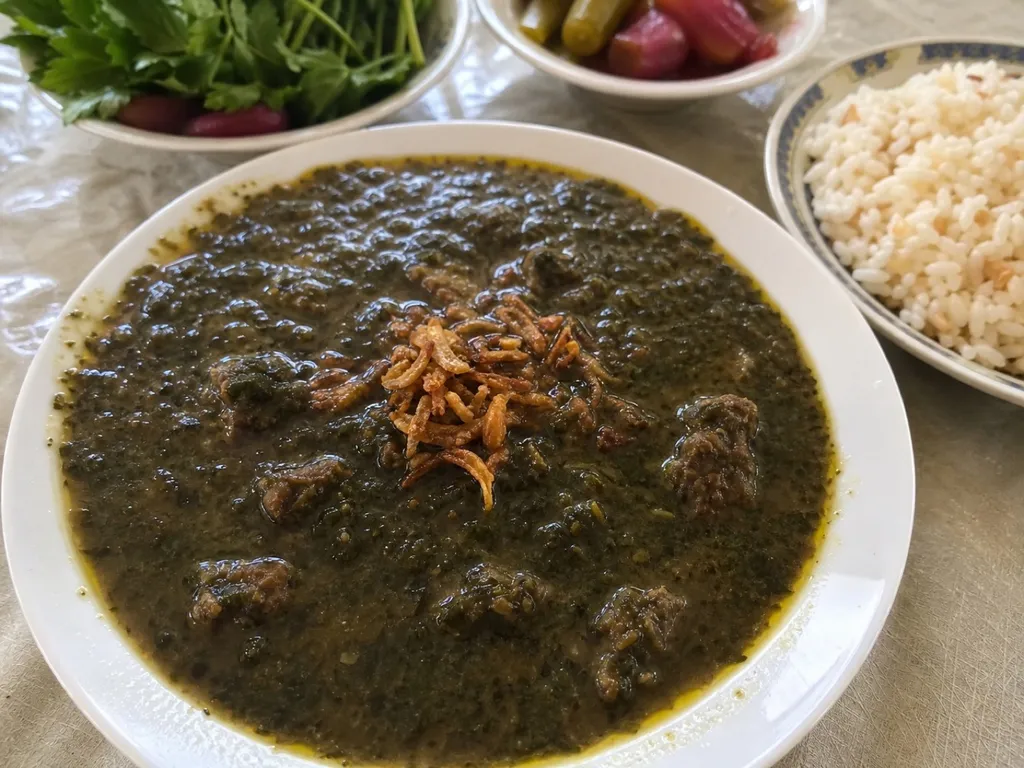 Images are for illustrative purposes only, may be inaccurate, and do not guarantee the presence or absence of specific ingredients.
 Listahan Family Score™
68/100
Works for many families
Score reflects how well this recipe fits a typical busy household. In the app, your Family Score is personalized to your household's allergens, kids, and pantry.
Nutrition
per serving95
Calories
1 g
Protein
7 g
Carbs
8 g
Fat
Estimated per serving. Actual values depend on the brands and portions you use.
Listahan cooking guide
Chef notes & practical guide
Technique notes, ingredient swaps, serve-alongside ideas, storage guidance, and equipment for this recipe.
Cultural context
Mloukhiyeh is a stew built around the leaves of the jute mallow plant, eaten across Egypt, the Levant, and parts of North Africa with regional variations in texture and accompaniments. Its Arabic name connects to the word for royal, and a popular legend ties the dish to an Egyptian caliph, though it has been a humble everyday food far longer. The leaves give the stew a distinctive deep-green color and a gently thickened, almost velvety body that is unlike anything else in the regional repertoire.
Listahan note
This version cooks the jute leaves into a fragrant garlic-and-coriander broth with chicken, served the Levantine way over rice with a sharp side of lemon and onion. It is comfort food with a flavor that rewards anyone willing to try something new.
Technique cues
- Do not boil the leaves hard once they go in, because aggressive boiling can break the delicate texture and dull the green color.
- The taqlia of garlic, coriander, and a little chili fried in oil and stirred in at the end is what gives the stew its signature aroma, so do not skip it.
- Build a clear, well-seasoned chicken broth first, since it is the liquid the leaves cook in and carries most of the flavor.
Kitchen flow
- Parallel prep
- Poach the chicken to build broth while the rice cooks, then make the taqlia in the last few minutes.
- Make-ahead
- The chicken broth can be made a day ahead so only the leaves and taqlia need finishing at dinner.
- Leftover move
- Reheat leftover mloukhiyeh and spoon over fresh rice; the flavor is even deeper the next day.
- Cleanup rhythm
- Strain the broth into the serving pot so the bones and aromatics come out in one motion, leaving little to scrub.
Ingredient brief
Role, handling, and swap guidance for each key ingredient.
mloukhiyeh leaves
the defining green base
Purpose: Jute mallow leaves give the stew its color, gentle body, and signature earthy flavor.
Handling: Use frozen chopped leaves straight in, or wash and finely chop fresh leaves; dried leaves need rehydrating in broth.
Adaptation: Frozen or dried mloukhiyeh are the standard substitutes when fresh leaves are unavailable abroad.
chicken
protein and broth maker
Purpose: Simmering chicken creates the flavorful broth the leaves cook in and provides the meat served alongside.
Handling: Poach bone-in chicken with aromatics, then shred or keep on the bone and reserve the strained broth.
Adaptation: Use rabbit or beef in some regional versions, or vegetable broth for a meatless stew.
garlic
taqlia aromatic
Purpose: Fried garlic is the heart of the finishing taqlia that perfumes the whole pot.
Handling: Mince and fry in oil with ground coriander until fragrant, then stir into the stew.
Adaptation: There is no real substitute for the garlic taqlia; use the freshest garlic you can.
ground coriander
signature spice
Purpose: Coriander fried with the garlic gives mloukhiyeh its characteristic warm, citrusy aroma.
Handling: Add to the garlic as it fries so it blooms in the oil.
Adaptation: Freshly ground coriander seed is best, but pre-ground works if it is not stale.
lemon
table condiment
Purpose: A sharp squeeze of lemon at the table cuts the richness and is traditional, often mixed with raw onion.
Handling: Serve wedges alongside, or offer a bowl of chopped onion soaked in lemon and vinegar.
Adaptation: Lime gives a similar bright acidity if lemons are not available.
Technique notes
- Toast the coriander in the garlic oil until you can smell it clearly, then add it off direct high heat so the garlic does not scorch.
- Serve the broth-and-leaves, the chicken, the rice, and the lemon-onion relish as separate components so everyone builds their own bowl.
- If using fresh leaves, dry them thoroughly before chopping, because excess water thins the stew and washes out the color.
Ingredient swaps
- Weeknight shortcut
- Use frozen chopped mloukhiyeh and rotisserie chicken with boxed broth to bring it together fast.
- Vegetarian direction
- Build the stew on a rich vegetable broth and skip the chicken, keeping the garlic-coriander taqlia front and center.
- Lower-sodium direction
- Make your own unsalted chicken broth and season at the end so you control the salt.
Serve alongside
- Vermicelli rice
- Lemon-onion relish
- Toasted Arabic bread
- Simple green salad
- Mint tea
- Lemonade
- Ayran (salted yogurt drink)
Serving suggestions only — check pairings for your household's allergens.
Storage & reheating
- Refrigerate the stew and chicken separately for up to 3 days in sealed containers and reheat gently without boiling hard. Mloukhiyeh freezes well for up to 2 months; thaw overnight in the fridge and warm slowly, refreshing with a new taqlia if you like.
Equipment
- Large pot for the broth
- Small skillet for the taqlia
- Fine mesh strainer
- Ladle
Make this household-aware
Listahan Pro checks this recipe against your household's allergens, finds pantry-aware swaps, builds the shopping list, and helps you plan the week around it.
Plan it in Listahan
Add Mloukhiyeh to your week, check it against your household's allergens, and build the shopping list automatically.
More Middle Eastern recipes
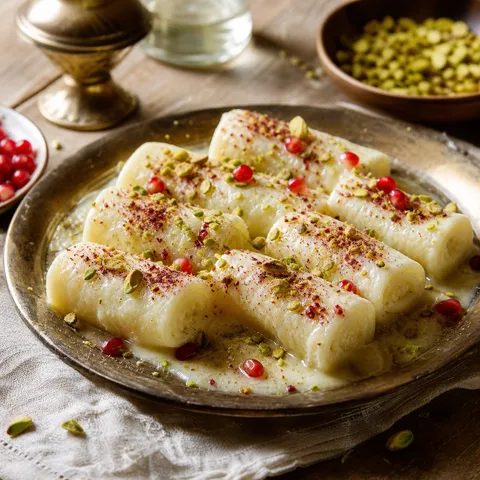 Middle Eastern Lens Verified Images are for illustrative purposes only, may be inaccurate, and do not guarantee the presence or absence of specific ingredients.
 Halawet El Jibn
A Levantine sweet cheese roll of stretched mozzarella and semolina dough wrapped around rose-scented clotted cream, topped with crushed pistachios and sugar syrup.
 Middle Eastern Lens Verified Images are for illustrative purposes only, may be inaccurate, and do not guarantee the presence or absence of specific ingredients.
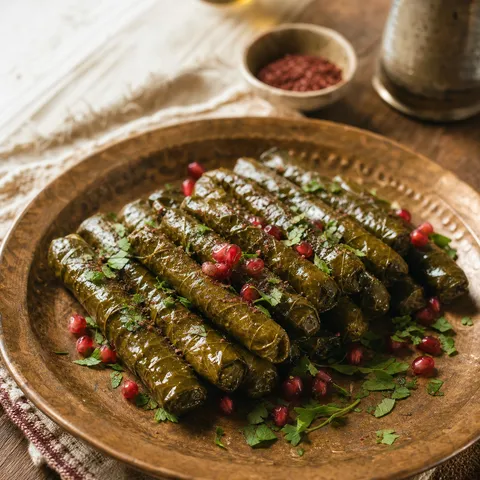
 Dolma (Warak Enab)
Grape leaves stuffed with a mixture of rice, meat, and herbs.
 Middle Eastern Lens Verified Images are for illustrative purposes only, may be inaccurate, and do not guarantee the presence or absence of specific ingredients.
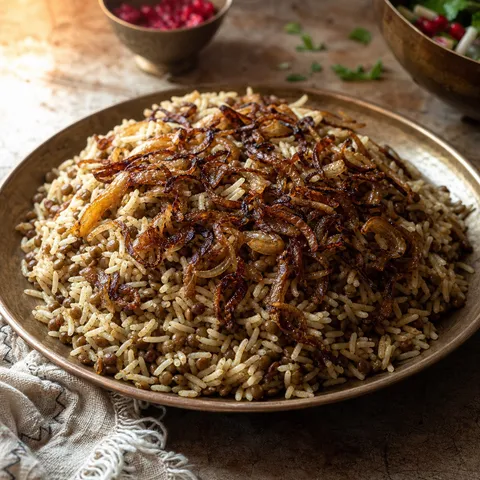
 Mujadara
A comforting dish of cooked lentils together with groats or rice, garnished with sautéed onions.