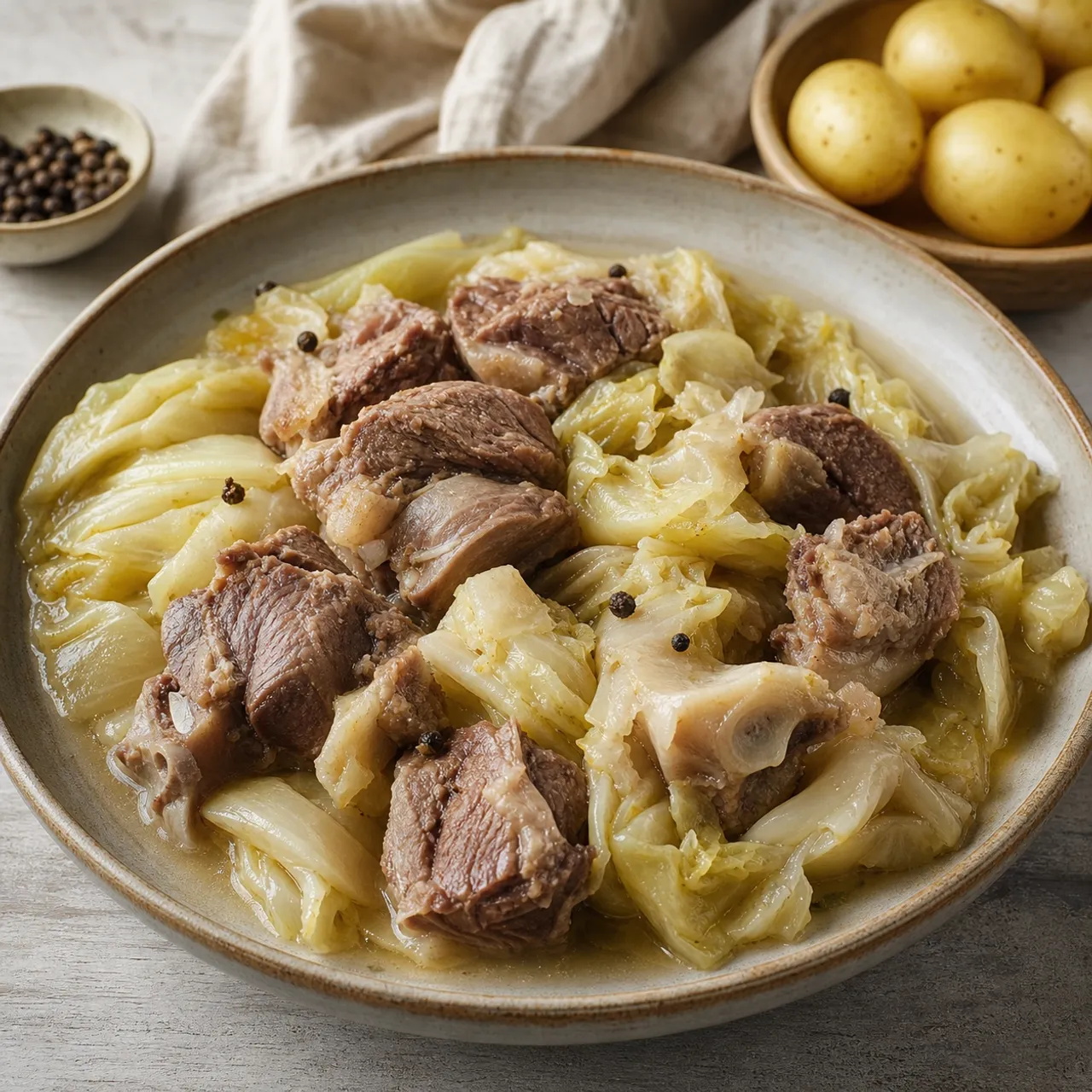
 Nordic Images are for illustrative purposes only, may be inaccurate, and do not guarantee the presence or absence of specific ingredients.
 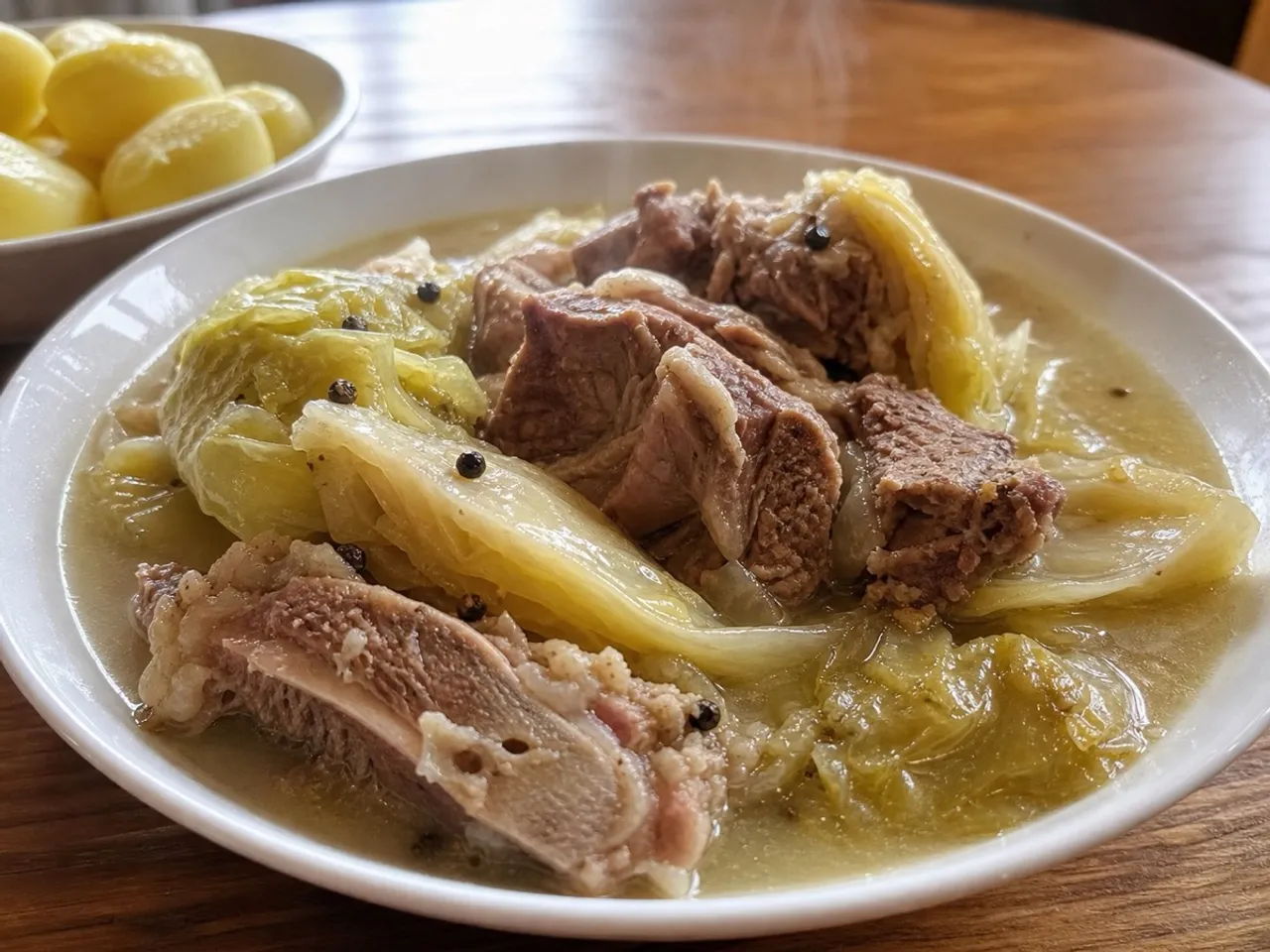 Serving Images are for illustrative purposes only, may be inaccurate, and do not guarantee the presence or absence of specific ingredients.
 Fårikål
Norway's national dish: tender chunks of mutton slow-braised with whole peppercorns and layers of cabbage until the broth turns rich, sweet, and deeply savory.
No common allergens detected
Based on this recipe's ingredient list. Always verify with your own brands and labels.
Good to know
- One-pot
Matched from this dish's own ingredients and timing. Browse more: one-pot dinners
Instructions
6 steps- 1
Cut the cabbage into large, thick wedges, leaving the core intact so the leaves stay together.
- 2
In a large, heavy-bottomed pot or Dutch oven, arrange a layer of meat fat-side down at the bottom.
- 3
Follow with a layer of cabbage wedges. Sprinkle generously with whole black peppercorns and coarse salt.
- 4
Repeat the layering process (meat, cabbage, spices) until all ingredients are used, finishing with a layer of cabbage on top.
- 5
Pour the water into the pot. Cover with a tight-fitting lid and bring to a gentle boil over medium-high heat.
- 6
Reduce the heat to low and simmer very gently for 1.5 to 2 hours until the meat is completely tender and falling off the bone. Serve with simple boiled potatoes.
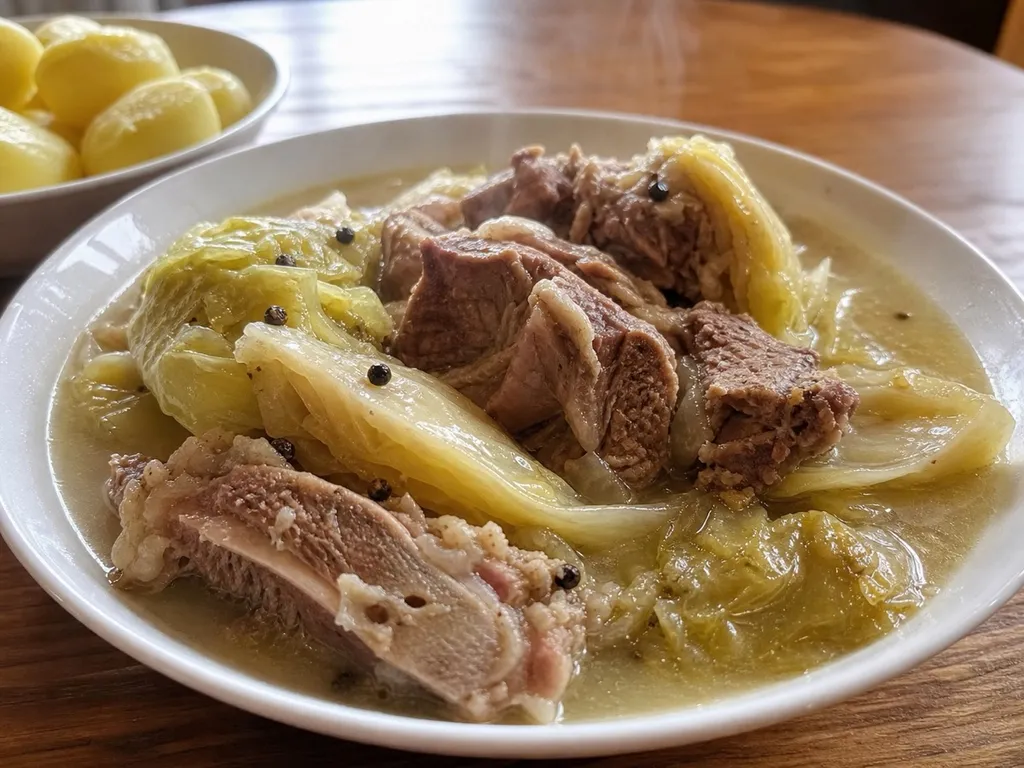 Images are for illustrative purposes only, may be inaccurate, and do not guarantee the presence or absence of specific ingredients.
 Listahan Family Score™
72/100
Good fit for most families
Score reflects how well this recipe fits a typical busy household. In the app, your Family Score is personalized to your household's allergens, kids, and pantry.
Nutrition
per serving600
Calories
49 g
Protein
12 g
Carbs
40 g
Fat
Estimated per serving. Actual values depend on the brands and portions you use.
Listahan cooking guide
Chef notes & practical guide
Technique notes, ingredient swaps, serve-alongside ideas, storage guidance, and equipment for this recipe.
Cultural context
Fårikål — literally 'mutton in cabbage' — is Norway's national dish, voted so by the Norwegian Broadcasting Corporation in 1972. It is an autumn stew tied to the tradition of slaughtering sheep in September as they come down from summer mountain pastures, a practice that has shaped Norwegian food culture for centuries. The dish is deliberately simple: its only seasonings are black pepper and salt, a restraint that reflects the old Norse belief that good ingredients need little intervention.
Listahan note
This version layers the lamb and cabbage in alternating strata so the fat from the meat bastes the cabbage evenly throughout the long braise, producing a stew where every layer is equally tender and saturated with flavor.
Technique cues
- The long, low simmer — 2 to 2.5 hours — is not negotiable; it is what converts the tough collagen in bone-in mutton into gelatin that gives the broth its silky body and rich flavor.
- Whole peppercorns, not ground, are the traditional choice; they release their heat slowly and unevenly, meaning each spoonful has a slightly different spice hit — which Norwegians consider part of the dish's rustic character.
- Layering the meat and cabbage rather than mixing them prevents the cabbage from overcooking into mush; the bottom layers soften completely into the broth while the upper layers retain more texture.
Kitchen flow
- Parallel prep
- While the stew simmers, boil the potatoes separately in salted water so both finish at the same time; there is nothing else to do during the 2-hour braise.
- Make-ahead
- Fårikål is better the next day — the broth thickens overnight and the flavors deepen; reheat gently on the stovetop over low heat, covered.
- Leftover move
- Pick the leftover meat off the bones and combine with the braised cabbage and a ladleful of broth for a quick next-day soup; add a handful of pearl barley if extending to a second meal.
- Cleanup rhythm
- One pot is the entire operation; deglaze any stuck bits with a splash of water while still warm and it rinses clean without scrubbing.
Ingredient brief
Role, handling, and swap guidance for each key ingredient.
1.5 kg (3.3 lbs) mutton or lamb, bone-in (shoulder or neck), cut into large chunks
primary protein and broth builder
Purpose: Bone-in shoulder and neck have the highest collagen content of any cut; as they braise, the collagen melts into the broth giving Fårikål its characteristic silky, unctuous quality.
Handling: Bring the meat to room temperature before adding to the pot; cold meat lowers the water temperature and extends the time to a simmer.
Adaptation: Bone-in lamb shoulder works better than boneless — if only boneless is available, add a few lamb neck bones alongside for the gelatin they contribute.
1.5 kg (3.3 lbs) green cabbage
bulk vegetable and textural contrast
Purpose: Cabbage slowly absorbs the lamb fat and cooking liquid, transforming from raw brassica into a sweet, silky accompaniment that is the soul of the dish.
Handling: Cut into thick wedges — roughly 8 per head — keeping the core intact so wedges hold their shape through the long cook.
Adaptation: Savoy cabbage can replace green cabbage for a softer, more delicate texture; avoid red cabbage which bleeds color into the broth.
2 tbsp whole black peppercorns
sole seasoning and slow-release heat
Purpose: Whole peppercorns release their heat gradually over the long braise and create the characteristic uneven spiciness that distinguishes Fårikål from generic meat stews.
Handling: Add directly to the pot without crushing — crushing would make the broth uniformly peppery rather than giving that traditional bite-by-bite variation.
Adaptation: No authentic substitute exists; if serving children or guests sensitive to pepper, reduce to 1 tablespoon and warn diners to expect occasional heat.
2 tsp coarse sea salt
primary seasoning
Purpose: Coarse salt dissolves slowly and seasons the broth evenly throughout the long braise rather than concentrating at the surface.
Handling: Add half at the start and taste at the 1.5-hour mark to adjust before the final half-hour; the cabbage releases liquid that dilutes the salt as it cooks.
Adaptation: Kosher salt in the same quantity works identically.
Technique notes
- Do not brown the meat first — traditional Fårikål is a pale stew, and browning introduces a roasted flavor that departs from the clean, sweet lamb-and-cabbage character Norwegians expect.
- If the broth tastes thin after 2 hours, remove the lid for the final 20 minutes; the liquid will reduce slightly and concentrate.
- Save the cooking liquid from the boiled potatoes and use it to thin any leftover stew the next day — it adds starchiness that rounds out the broth.
Ingredient swaps
- Milder cut
- Lamb shoulder steaks (bone-in) from any supermarket are the most accessible substitute for mutton; they braise tender in the same timeframe.
- Lower-fat direction
- Skim the rendered fat from the surface after 1 hour of cooking — mutton is fatty and some diners prefer a leaner broth without sacrificing any of the flavor.
Serve alongside
- boiled new potatoes with butter and parsley
- crusty sourdough or rye bread for broth-dipping
- quick-pickled cucumber ribbons with white vinegar and dill
- dark Norwegian beer or a malty amber ale
- still water with lemon
- aquavit for a traditional Norwegian accompaniment
Serving suggestions only — check pairings for your household's allergens.
Storage & reheating
- Refrigerate in the braising pot or a covered container for up to 4 days; the gelatin in the broth will cause it to set solid when cold — this is normal.
- Reheat covered over low heat, stirring occasionally; add a splash of water if the broth seems too thick.
- Freezes well for up to 3 months; thaw overnight in the refrigerator before reheating.
Equipment
- large heavy-bottomed pot or Dutch oven with a lid (at least 6-quart capacity)
- separate pot for boiling potatoes
- ladle for serving
- slotted spoon for transferring meat and cabbage
Make this household-aware
Listahan Pro checks this recipe against your household's allergens, finds pantry-aware swaps, builds the shopping list, and helps you plan the week around it.
Plan it in Listahan
Add Fårikål to your week, check it against your household's allergens, and build the shopping list automatically.
More Nordic recipes
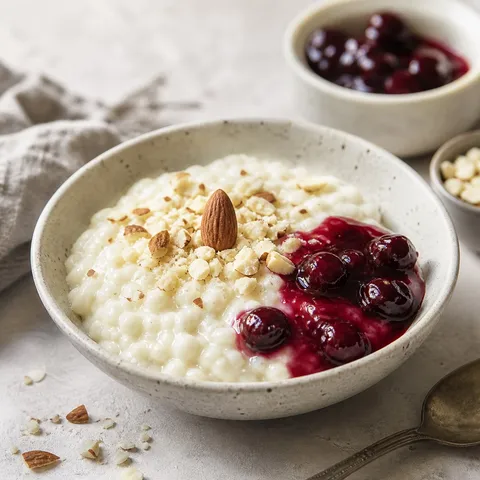 Nordic Lens Verified Images are for illustrative purposes only, may be inaccurate, and do not guarantee the presence or absence of specific ingredients.
 Risalamande
A creamy Danish cold rice pudding folded with whipped cream and chopped almonds, served with a glossy warm cherry sauce on Christmas Eve.
 Nordic Lens Verified Images are for illustrative purposes only, may be inaccurate, and do not guarantee the presence or absence of specific ingredients.
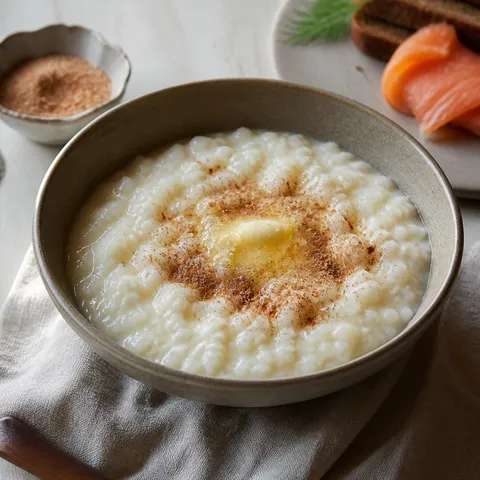
 Risgrynsgröt
Creamy Nordic rice porridge, slow-cooked until thick and comforting, scented with cinnamon and served with a pat of melting butter — Christmas morning in a bowl.
 Nordic Lens Verified Images are for illustrative purposes only, may be inaccurate, and do not guarantee the presence or absence of specific ingredients.
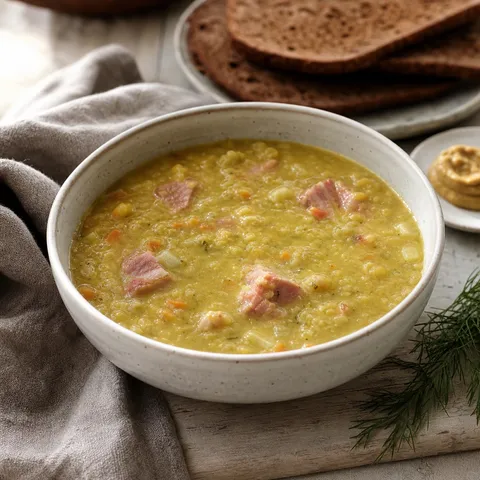
 Hernekeitto
Finland's beloved Thursday pea soup — yellow split peas simmered with smoky ham until thick and hearty, traditionally served with a shot of Finnish mustard and pancakes.