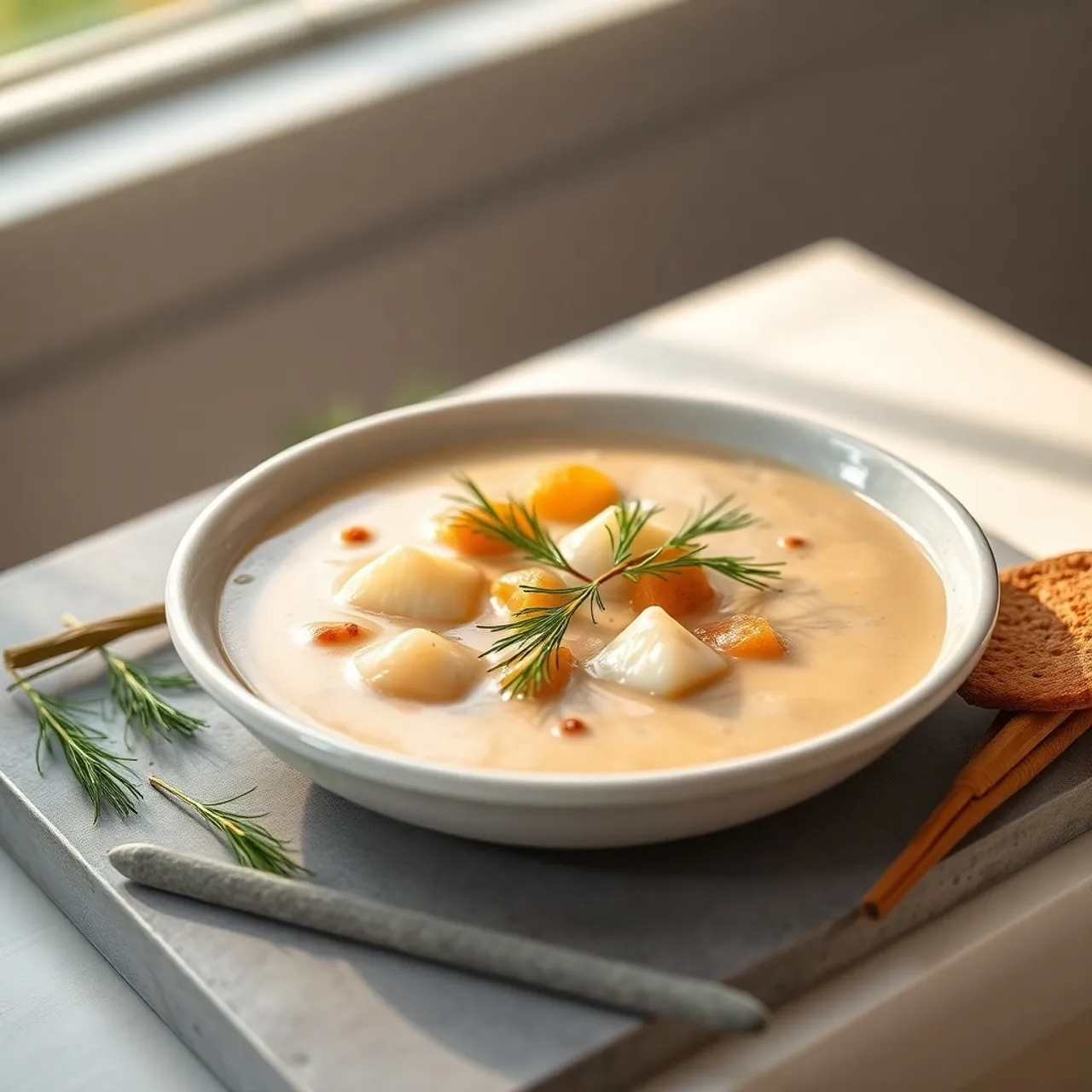
 Nordic Images are for illustrative purposes only, may be inaccurate, and do not guarantee the presence or absence of specific ingredients.
 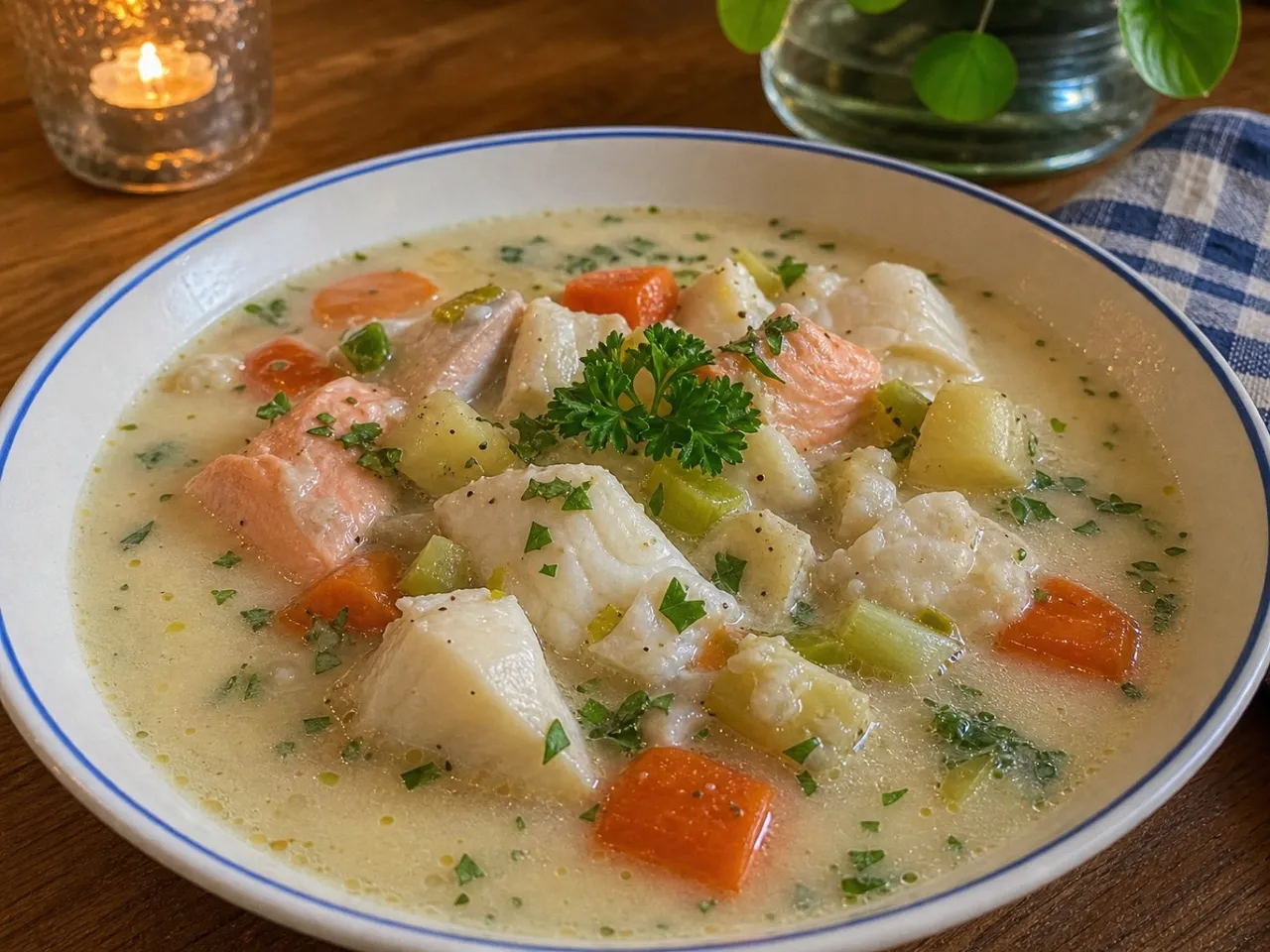 Serving Images are for illustrative purposes only, may be inaccurate, and do not guarantee the presence or absence of specific ingredients.
 Fiskesuppe
Norway's warming cream-based fish soup — silky with butter and cream, brimming with tender cod, salmon, and sweet root vegetables in a delicate broth.
Contains common allergens
In the app, Listahan checks these against your household automatically.
Good to know
- One-pot
Matched from this dish's own ingredients and timing. Browse more: one-pot dinners
Instructions
6 steps- 1
In a large heavy-bottomed pot, melt the butter over medium heat. Add the sliced leeks and sauté until softened but not browned (about 4 minutes).
- 2
Sprinkle the flour over the leeks and stir constantly for 1 minute to cook the raw flour taste out, creating a light roux.
- 3
Gradually whisk in the hot fish stock, stirring constantly to prevent lumps. Bring the soup to a gentle simmer.
- 4
Add the julienned carrots and simmer for 10 minutes until they are tender but still have a slight bite.
- 5
Stir in the heavy cream and gently fold in the cubed white fish. Reduce the heat to low and simmer very gently for 5-7 minutes. Do not let it boil rapidly, or the fish will break apart.
- 6
Season with salt, white pepper, and a squeeze of lemon juice. Ladle into warm bowls and garnish generously with fresh chives or dill.
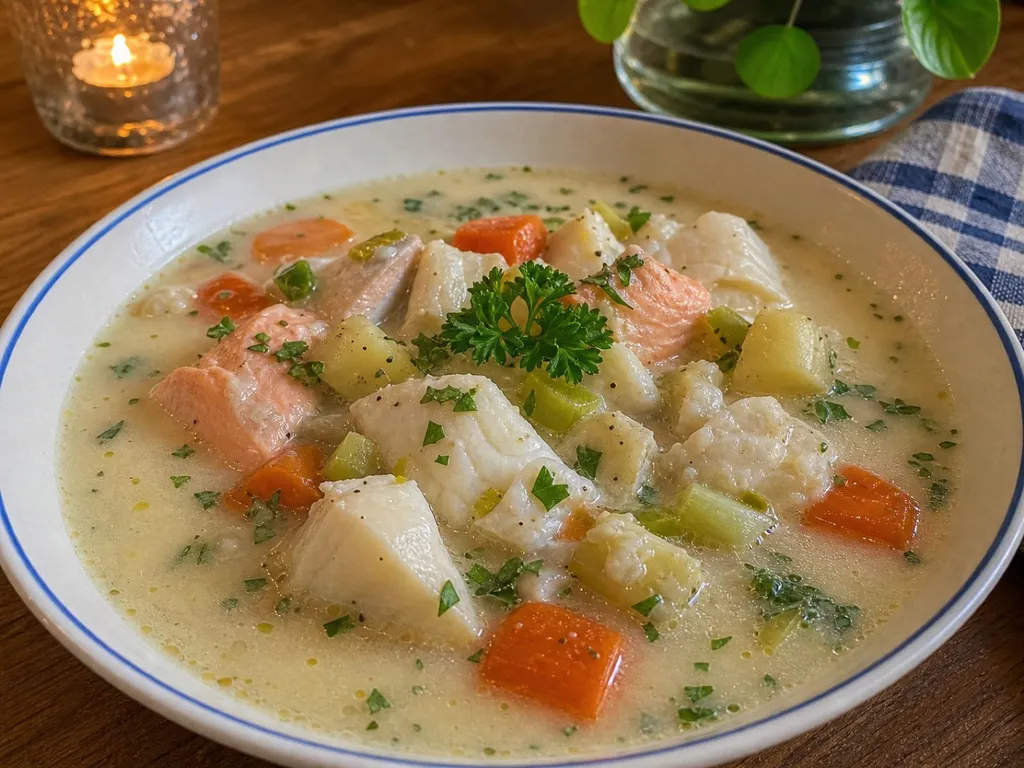 Images are for illustrative purposes only, may be inaccurate, and do not guarantee the presence or absence of specific ingredients.
 Listahan Family Score™
60/100
Works for many families
Score reflects how well this recipe fits a typical busy household. In the app, your Family Score is personalized to your household's allergens, kids, and pantry.
Nutrition
per serving585
Calories
44 g
Protein
17 g
Carbs
39 g
Fat
Estimated per serving. Actual values depend on the brands and portions you use.
Listahan cooking guide
Chef notes & practical guide
Technique notes, ingredient swaps, serve-alongside ideas, storage guidance, and equipment for this recipe.
Cultural context
Fiskesuppe — Norwegian fish soup — is a staple of the Norwegian coastal kitchen, where abundant cold-water fish and root vegetables have been the building blocks of everyday cooking for centuries. Each region of Norway has its own version, from the cream-enriched Bergen-style soup (Bergensk fiskesuppe) to simpler broth-based versions from the north, but the common thread is a clean, lightly thickened cream base and the freshest available white fish. It is a quiet, elegant dish that stands as a counterpoint to the richer, heartier stews of inland Nordic cooking.
Listahan note
This version uses a classic veloute technique — butter, flour, fish stock — to build a lightly thickened base before adding cream, which produces a soup that coats the spoon without being heavy.
Technique cues
- The fish stock is the flavor engine of this dish — a commercial fish stock or clam juice concentrate is acceptable, but a homemade stock made from fish bones and leek trimmings simmered for 20 minutes (not longer, or it turns bitter) produces a depth that makes the finished soup taste like something special rather than something simple.
- Add the fish cubes in the last 4-5 minutes of cooking only — white fish like cod and halibut overcook quickly and become rubbery and dry when simmered too long; they should just turn opaque and flake easily when pressed with a finger, which is your visual cue to pull the soup off the heat.
- Whisk the flour into the melted butter off the heat before adding any liquid — this step (making a roux) is what prevents lumps; adding flour directly to hot liquid or adding liquid too quickly to a hot roux both produce a soup that requires tedious straining to fix.
Kitchen flow
- Parallel prep
- Julienne the carrots and slice the leeks while the butter melts in the soup pot; have the fish cubed and refrigerated so the final steps move quickly.
- Make-ahead
- The cream soup base (stock, roux, vegetables) can be made 1 day ahead and refrigerated; add the fish only when reheating to order, as pre-cooked fish becomes rubbery when reheated.
- Leftover move
- Reheat leftover soup gently over low heat without boiling; add a squeeze of lemon juice to brighten flavors that have muted overnight, and do not add more fish.
- Cleanup rhythm
- Use a single pot for the entire soup; wipe the pot immediately after serving while the roux residue is still warm and liquid, before it sets into a paste that requires scrubbing.
Ingredient brief
Role, handling, and swap guidance for each key ingredient.
500g (1 lb) firm white fish fillets (cod or halibut), cubed
primary protein
Purpose: Firm white fish holds its shape in cubes during the brief cooking time; a more delicate fish like sole or tilapia would fall apart and disappear into the soup.
Handling: Cut into 2 cm cubes and refrigerate until the moment you add them; room-temperature fish overcooks faster in the hot soup.
Adaptation: Salmon cubes work beautifully for a richer, pink-hued version; monkfish is a firmer alternative that holds up well to slightly longer cooking.
1 liter (4 cups) high-quality fish stock
flavor base
Purpose: Fish stock provides the primary savory depth of the soup; the entire flavor profile depends on this ingredient more than any other.
Handling: If using commercial stock, taste it before using — some brands are very salty or have a canned aftertaste; dilute with water if needed.
Adaptation: A mixture of clam juice and water (50/50) is the best widely available substitute; vegetable stock plus a sheet of kombu and a few drops of fish sauce approximates the depth for a pescatarian-leaning version.
200ml (3/4 cup) heavy cream
richness and body
Purpose: Heavy cream gives the Bergen-style fish soup its characteristic velvet texture and rounds out the savory, slightly briny notes of the fish stock.
Handling: Add cream after the roux is fully cooked and the stock is incorporated, then simmer gently — a hard boil can break the cream and create a greasy surface.
Adaptation: Full-fat coconut cream produces a subtly different but pleasant result for a dairy-free version; oat-based cooking cream works similarly.
2 large carrots, julienned
vegetable texture and sweetness
Purpose: Thinly julienned carrots cook in 3-4 minutes in the simmering soup and add natural sweetness that balances the cream and salt.
Handling: Julienne to matchstick thickness so they cook through in the same window as the fish rather than remaining hard.
Adaptation: Parsnip adds a slightly more complex sweetness; thinly sliced celery root (celeriac) is another Nordic-appropriate vegetable.
1 leek (white and light green parts), thinly sliced
aromatic base
Purpose: Leeks provide a mild onion flavor that is gentler than yellow onion and does not overpower the delicate fish.
Handling: Slice thin and soak in cold water for 2 minutes, then drain — leeks trap grit between their layers and need washing after slicing.
Adaptation: The white part of 4-5 scallions can substitute for a milder flavor; sweet onion halved and thinly sliced works for a more accessible alternative.
2 tbsp all-purpose flour
thickener
Purpose: Flour cooked into butter (roux) provides a stable thickener that keeps the soup from breaking when the cream is added and gives it body without starchiness.
Handling: Cook the butter-flour roux for 1-2 minutes over medium heat, stirring, until it smells slightly biscuity — this cooks out the raw flour taste.
Adaptation: A cornstarch slurry (1 tablespoon cornstarch dissolved in 2 tablespoons cold water, stirred in at the end) is a gluten-free thickening alternative.
Technique notes
- A squeeze of fresh lemon juice added just before serving lifts all the flavors and brightens the cream — this is not in every traditional recipe but it is what separates a flat-tasting fish soup from one that has presence.
- Warm the bowls before ladling the soup — fish soup loses heat quickly and a cold bowl accelerates this; 5 minutes in a warm oven (200°F) or a quick rinse with hot tap water does the job.
- Fresh chives or dill added as the last garnish is not optional in the Norwegian tradition — the raw herb provides the aromatic counterpoint to the cream and cuts through the richness as you eat.
Ingredient swaps
- Dairy-free option
- Use full-fat coconut cream or an oat-based cooking cream in place of heavy cream; the flavor shifts slightly but the soup remains rich and satisfying.
- Gluten-free direction
- Replace the flour-based roux with a cornstarch slurry (1 tablespoon cornstarch in 2 tablespoons cold water) stirred in during the last 5 minutes of simmering.
- Lower-fat option
- Substitute half-and-half for heavy cream and reduce the butter to 1 tablespoon; the soup will be thinner but the flavor of a good fish stock carries it.
Serve alongside
- crusty white bread or dinner rolls for dipping
- simple cucumber salad with white vinegar and dill
- Norwegian flatbread (flatbrød) on the side
- crisp dry white wine such as Muscadet or Pinot Gris
- cold sparkling water with lemon
- light Norwegian lager
Serving suggestions only — check pairings for your household's allergens.
Storage & reheating
- Store soup base (without fish) in the refrigerator for up to 3 days; if fish is already in the soup, consume within 1 day as the texture deteriorates quickly.
- Reheat over low heat, stirring gently, without bringing to a full boil — boiling breaks the cream and makes the soup look curdled.
- The cream-based soup does not freeze well; the dairy separates on thawing and the fish texture becomes unpleasant.
Equipment
- large heavy-bottomed saucepan or Dutch oven (4-quart minimum)
- whisk for the roux
- sharp knife and cutting board for julienning
- ladle for serving
Make this household-aware
Listahan Pro checks this recipe against your household's allergens, finds pantry-aware swaps, builds the shopping list, and helps you plan the week around it.
Plan it in Listahan
Add Fiskesuppe to your week, check it against your household's allergens, and build the shopping list automatically.
More Nordic recipes
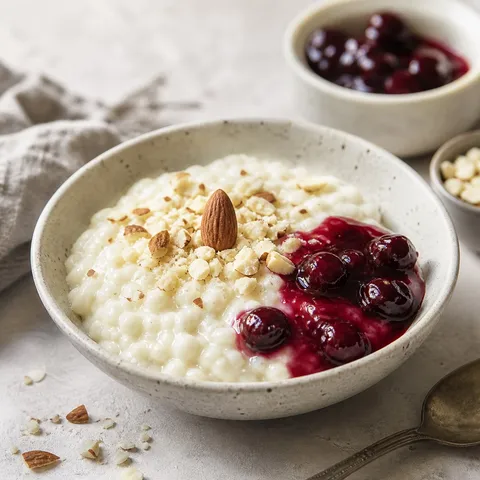 Nordic Lens Verified Images are for illustrative purposes only, may be inaccurate, and do not guarantee the presence or absence of specific ingredients.
 Risalamande
A creamy Danish cold rice pudding folded with whipped cream and chopped almonds, served with a glossy warm cherry sauce on Christmas Eve.
 Nordic Lens Verified Images are for illustrative purposes only, may be inaccurate, and do not guarantee the presence or absence of specific ingredients.
 Risgrynsgröt
Creamy Nordic rice porridge, slow-cooked until thick and comforting, scented with cinnamon and served with a pat of melting butter — Christmas morning in a bowl.
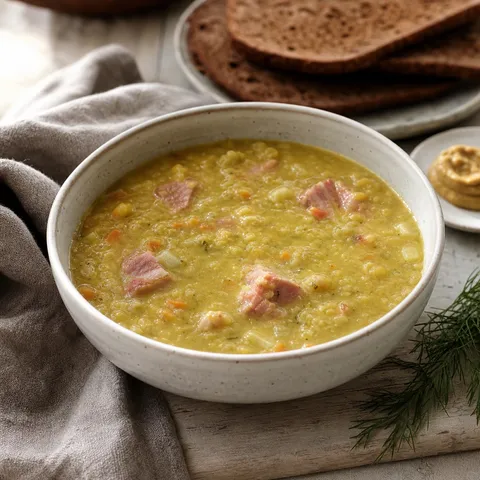 Nordic Lens Verified Images are for illustrative purposes only, may be inaccurate, and do not guarantee the presence or absence of specific ingredients.
 Hernekeitto
Finland's beloved Thursday pea soup — yellow split peas simmered with smoky ham until thick and hearty, traditionally served with a shot of Finnish mustard and pancakes.