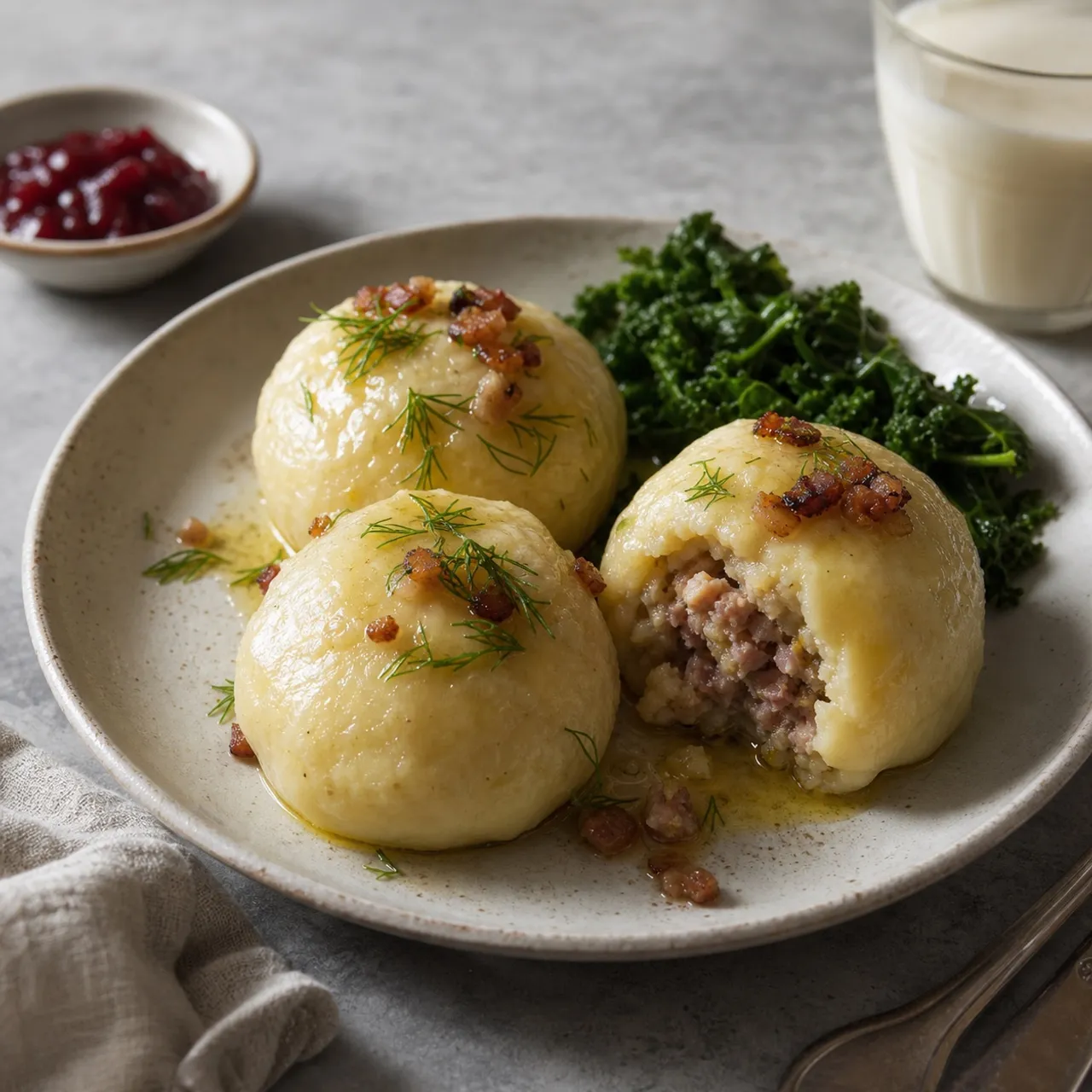
 Nordic Images are for illustrative purposes only, may be inaccurate, and do not guarantee the presence or absence of specific ingredients.
 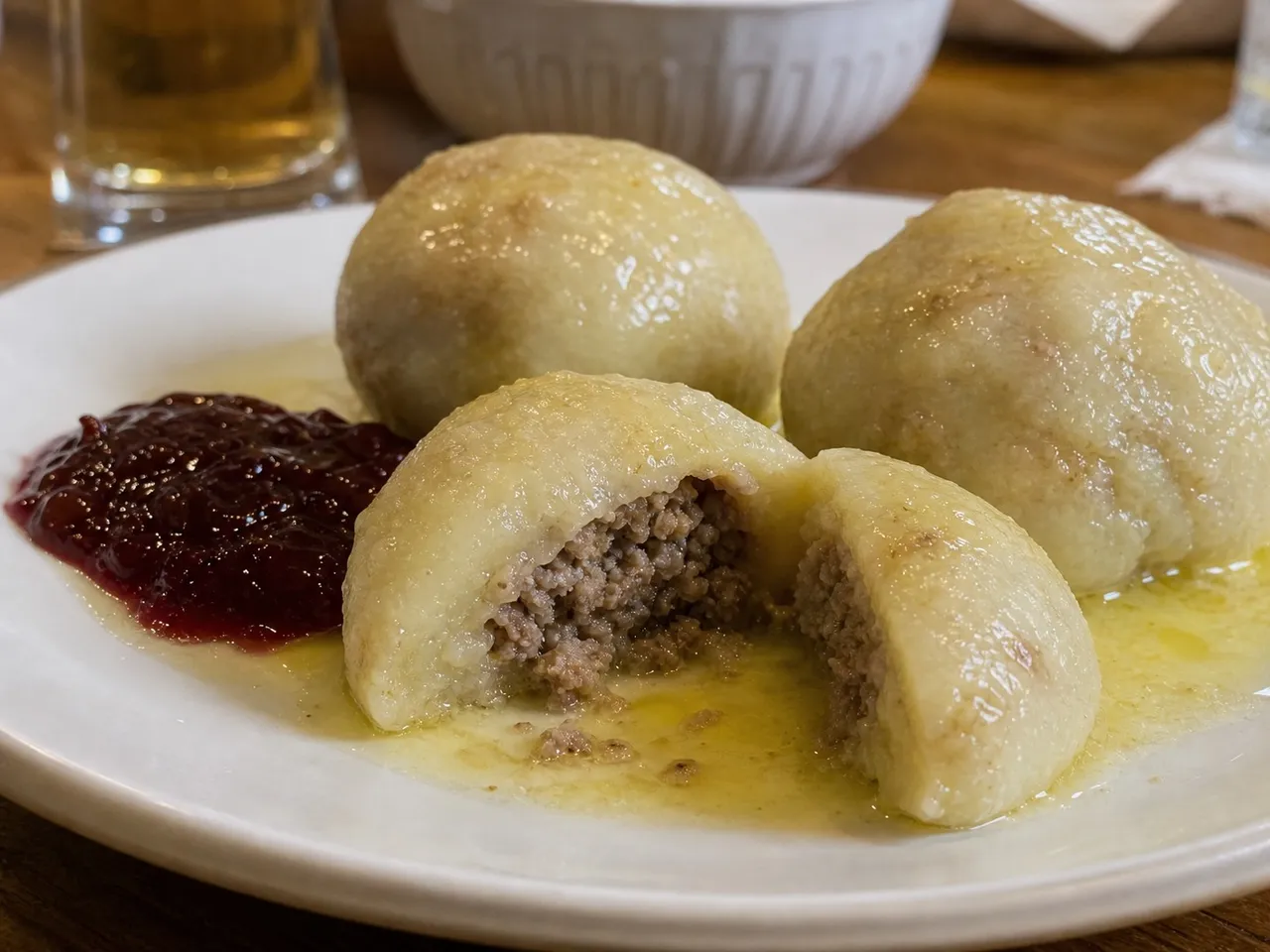 Serving Images are for illustrative purposes only, may be inaccurate, and do not guarantee the presence or absence of specific ingredients.
 Kroppkakor
Soft Swedish potato dumplings stuffed with savory spiced pork and allspice, boiled tender and served with browned butter and lingonberry — deeply satisfying.
Contains common allergens
In the app, Listahan checks these against your household automatically.
Instructions
6 steps- 1
In a skillet, fry the diced pork belly and minced onion until the pork is crispy and the onion is soft. Stir in the allspice, drain excess fat, and let the filling cool completely.
- 2
Grate the raw potatoes using the fine side of a grater. Squeeze out as much liquid as possible using a cheesecloth.
- 3
In a large bowl, thoroughly mix the squeezed raw potatoes, the cold mashed potatoes, egg yolks, flour, and salt to form a firm but pliable dough.
- 4
Divide the dough into tennis-ball-sized portions. Flatten each into a disc, place a generous spoonful of the pork filling in the center, and carefully seal the dough around it, rolling it into a smooth sphere.
- 5
Bring a large pot of heavily salted water to a gentle rolling boil. Drop the dumplings in carefully.
- 6
Simmer uncovered. Once they float to the surface (about 10 minutes), let them cook for an additional 5-7 minutes. Serve hot with melted butter and lingonberries.
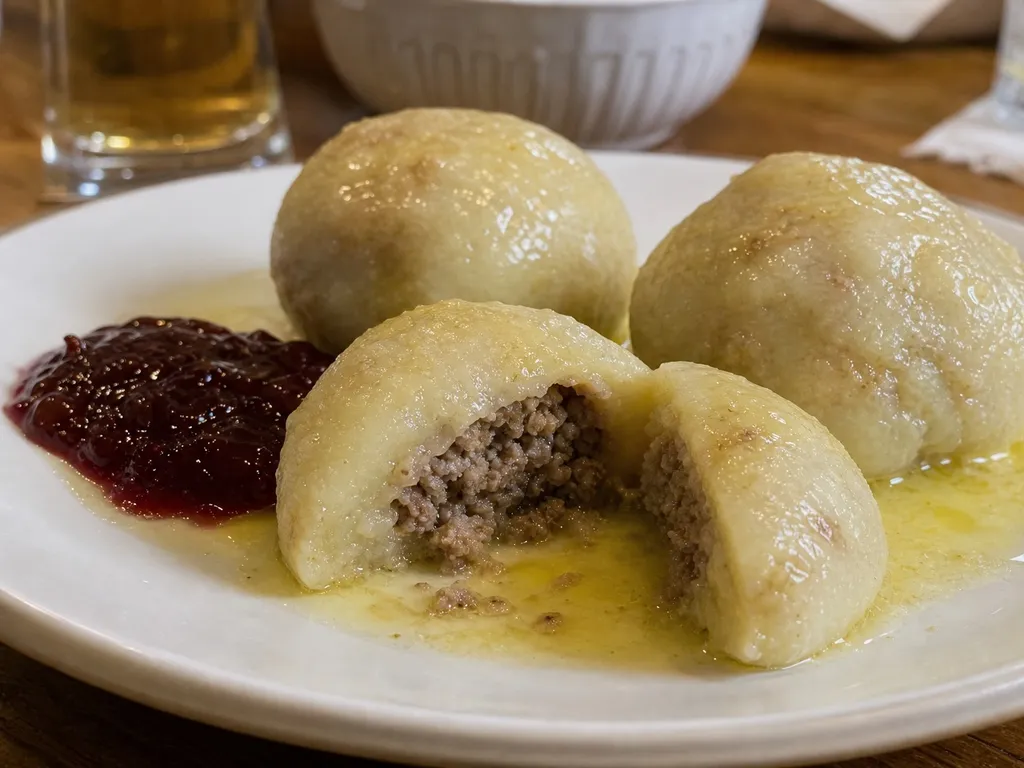 Images are for illustrative purposes only, may be inaccurate, and do not guarantee the presence or absence of specific ingredients.
 Listahan Family Score™
70/100
Good fit for most families
Score reflects how well this recipe fits a typical busy household. In the app, your Family Score is personalized to your household's allergens, kids, and pantry.
Nutrition
per serving215
Calories
12 g
Protein
30 g
Carbs
5 g
Fat
Estimated per serving. Actual values depend on the brands and portions you use.
Listahan cooking guide
Chef notes & practical guide
Technique notes, ingredient swaps, serve-alongside ideas, storage guidance, and equipment for this recipe.
Cultural context
Kroppkakor are Swedish potato dumplings filled with salt pork and onion, originating from the province of Oland and Smaland in southeastern Sweden. The dish dates to at least the 18th century and was a way to extend a small amount of meat by wrapping it in the region's plentiful potato harvest. Each Swedish region has slight variations — Oland kroppkakor use raw grated potato for a denser dough, while the mainland version uses boiled mashed potato for a lighter texture. This recipe uses both, the traditional southern Swedish compromise that produces a dough with both structure and lightness.
Listahan note
This version combines both mashed and raw grated potato in the dough, which is the traditional southern Swedish technique — the mashed potato provides cohesion and the grated potato adds starch that tightens the exterior as it cooks.
Technique cues
- The ratio of boiled mashed to raw grated potato in the dough is critical: too much mashed and the dumplings fall apart; too much raw and they become dense and gluey — equal parts by weight is the correct balance for a dough that holds its shape while remaining tender.
- Squeeze the grated raw potato in a kitchen towel until absolutely dry before incorporating; excess moisture from raw potato will make the dough too wet to form into balls, and will cause the dumplings to absorb too much water during boiling.
- Simmer, do not boil, kroppkakor; a rolling boil causes the dumplings to tumble against each other and break open, releasing the filling into the water and collapsing the outer shell.
Kitchen flow
- Parallel prep
- Cook the pork and onion filling while the boiled potatoes cool; the filling needs to be completely cold before stuffing the dumplings or the heat will make the potato dough sticky and hard to seal.
- Make-ahead
- Formed, unfilled dumplings can be shaped and refrigerated on a parchment-lined tray for up to 4 hours before filling and simmering; fill them just before cooking.
- Leftover move
- Pan-fry leftover kroppkakor in butter cut-side down until a golden crust forms — the fried version is considered by many Swedes to be better than the freshly boiled original.
- Cleanup rhythm
- The simmering pot is the most labor-intensive item to clean; fill it with water and a drop of dish soap immediately after serving and let soak while you eat — potato starch releases cleanly after 20 minutes.
Ingredient brief
Role, handling, and swap guidance for each key ingredient.
1 kg (2.2 lbs) potatoes (half boiled and mashed, half raw and grated)
primary dough base
Purpose: The combination of mashed and grated potato produces a dough that is workable enough to shape and resilient enough to hold its form through 20 minutes of simmering.
Handling: Boil the mashed-potato half the day before and refrigerate; cold mashed potato is much easier to work into a smooth dough than warm, and holds its shape better during shaping.
Adaptation: Starchy russet potatoes work best for both components; waxy potatoes produce a gummy dough that does not hold its shape in boiling water.
200g (1.5 cups) all-purpose flour
binder and structure
Purpose: Flour provides the gluten network that holds the potato dough together during shaping and simmering without making the exterior tough.
Handling: Add flour gradually — the amount needed will vary depending on the moisture content of the potatoes; stop when the dough is just firm enough to roll into balls without sticking to your hands.
Adaptation: Potato starch (50g) plus 150g of all-purpose flour can replace the full flour quantity for a slightly more silky, less chewy exterior.
300g (10 oz) salted pork belly, finely diced
filling, primary savory element
Purpose: Salt pork belly provides the fat and salt that seasons the filling from the inside, and its rendering during the pre-fry step produces the fond that caramelizes the onion in the same pan.
Handling: Dice as fine as possible (about 5mm cubes) so the filling can be portioned neatly into the center of each dumpling without creating lumps that tear the dough.
Adaptation: Pancetta or thick-cut bacon are readily available North American substitutes; reduce added salt in the dough if using heavily salted bacon.
1 tsp ground allspice
filling spice
Purpose: Allspice is the defining spice of Swedish pork dumpling filling; without it, the filling tastes of plain seasoned pork rather than specifically Scandinavian.
Handling: Add to the pork and onion filling off the heat after cooking so the volatile oils are not cooked away before the filling is sealed inside the dumplings.
Adaptation: A pinch each of ground cloves, cinnamon, and nutmeg approximates allspice's warm, complex profile if you do not have it on hand.
Technique notes
- Work with lightly floured hands when shaping the dumplings — the dough is always slightly sticky and flour-dusted palms are the difference between smooth balls and frustratingly torn dough.
- Test the seasoning and seal with a single small dumpling before committing the whole batch; this test dumpling confirms the dough holds in simmering water and the filling is properly seasoned.
- Serve with melted butter and lingonberry jam — this combination is the traditional Swedish accompaniment and the contrast between the rich, porky dumpling and the tart jam is what makes the dish satisfying rather than heavy.
Ingredient swaps
- Gluten-free direction
- Replace all-purpose flour with potato starch (100g) plus fine rice flour (50g); the dough is more fragile but holds together in a gentle simmer.
- Vegetarian filling
- Fill with a mixture of caramelized onion, mushroom, and aged cheese; omit the allspice and use smoked paprika instead to approximate the savory depth of the pork filling.
Serve alongside
- lingonberry jam (traditional and essential counterpoint)
- melted butter with parsley for spooning over at the table
- simple pickled cucumber with white vinegar, sugar, and dill
- cold Swedish milk, the most traditional pairing
- light Swedish lager
- aquavit for a formal dinner version
Serving suggestions only — check pairings for your household's allergens.
Storage & reheating
- Refrigerate cooked kroppkakor in a covered container for up to 3 days; they firm up when cold and hold their shape better for pan-frying.
- Reheat by pan-frying in butter over medium heat for 3-4 minutes per side until warmed through and golden; avoid microwaving which makes the exterior gummy.
- Uncooked formed dumplings freeze well for up to 2 months on a tray, then transferred to a bag; simmer directly from frozen, adding 5 minutes to the cooking time.
Equipment
- large pot for simmering dumplings (at least 6-quart)
- skillet for rendering pork and caramelizing onion
- kitchen towel or cheesecloth for squeezing raw potato
- slotted spoon for removing dumplings from water
Make this household-aware
Listahan Pro checks this recipe against your household's allergens, finds pantry-aware swaps, builds the shopping list, and helps you plan the week around it.
Plan it in Listahan
Add Kroppkakor to your week, check it against your household's allergens, and build the shopping list automatically.
More Nordic recipes
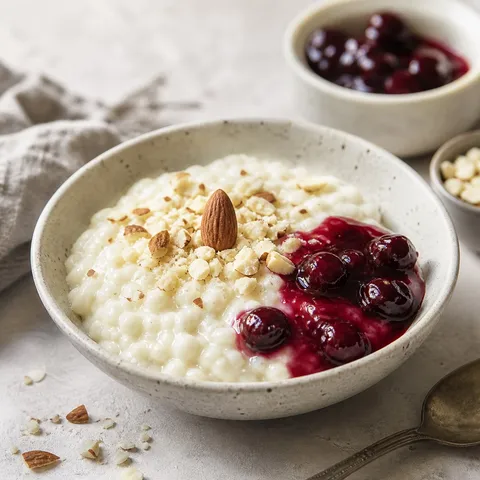 Nordic Lens Verified Images are for illustrative purposes only, may be inaccurate, and do not guarantee the presence or absence of specific ingredients.
 Risalamande
A creamy Danish cold rice pudding folded with whipped cream and chopped almonds, served with a glossy warm cherry sauce on Christmas Eve.
 Nordic Lens Verified Images are for illustrative purposes only, may be inaccurate, and do not guarantee the presence or absence of specific ingredients.
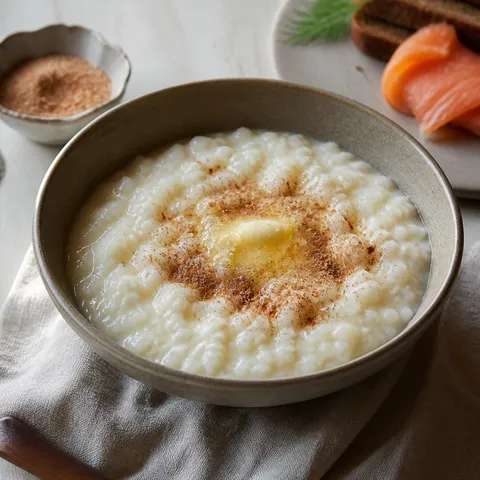
 Risgrynsgröt
Creamy Nordic rice porridge, slow-cooked until thick and comforting, scented with cinnamon and served with a pat of melting butter — Christmas morning in a bowl.
 Nordic Lens Verified Images are for illustrative purposes only, may be inaccurate, and do not guarantee the presence or absence of specific ingredients.
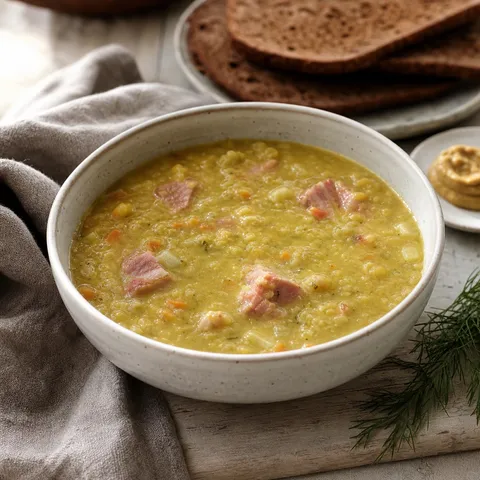
 Hernekeitto
Finland's beloved Thursday pea soup — yellow split peas simmered with smoky ham until thick and hearty, traditionally served with a shot of Finnish mustard and pancakes.