 Nordic Images are for illustrative purposes only, may be inaccurate, and do not guarantee the presence or absence of specific ingredients.
  Serving Images are for illustrative purposes only, may be inaccurate, and do not guarantee the presence or absence of specific ingredients.
 Surströmming
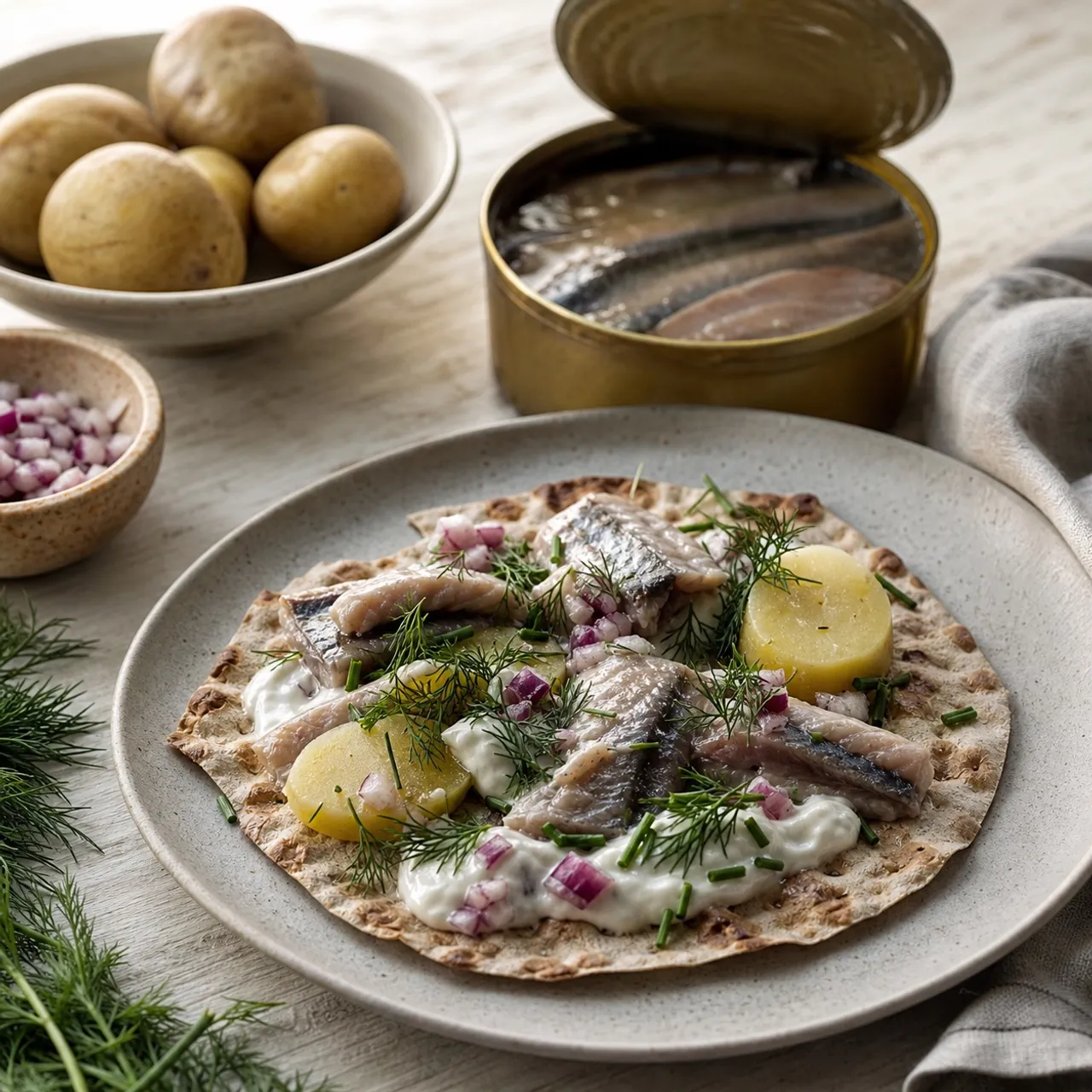
Legendarily pungent Swedish fermented herring — best opened outdoors, then tucked into tunnbröd with onion, sour cream, and potatoes for a true Nordic adventure.
Contains common allergens
In the app, Listahan checks these against your household automatically.
Good to know
- Ready in under 30 minutes
Matched from this dish's own ingredients and timing. Browse more: 30-minute meals
Instructions
6 steps- 1
IMPORTANT: Always open the can of Surströmming outdoors. Submerge the can in a bucket of cold water and pierce the lid underwater to safely release the pressurized, pungent gas.
- 2
Open the can fully, remove the fermented herring, and rinse them gently under cold water. Cut off the heads and carefully fillet the fish, removing the spine and skin.
- 3
Flake the potent pink meat into small pieces.
- 4
Lay out a piece of buttered tunnbröd. If using crisp bread, break it into serving-sized pieces.
- 5
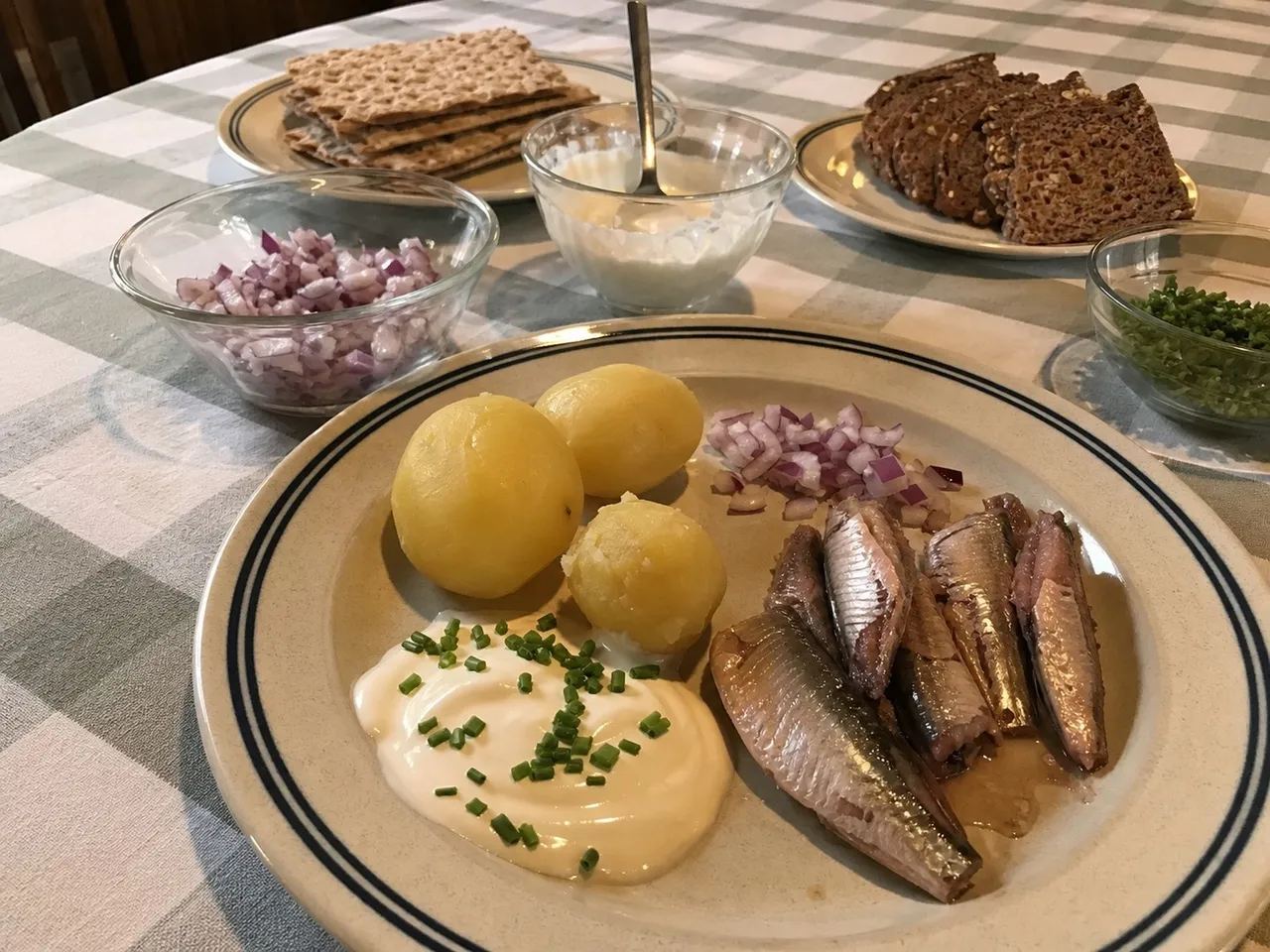
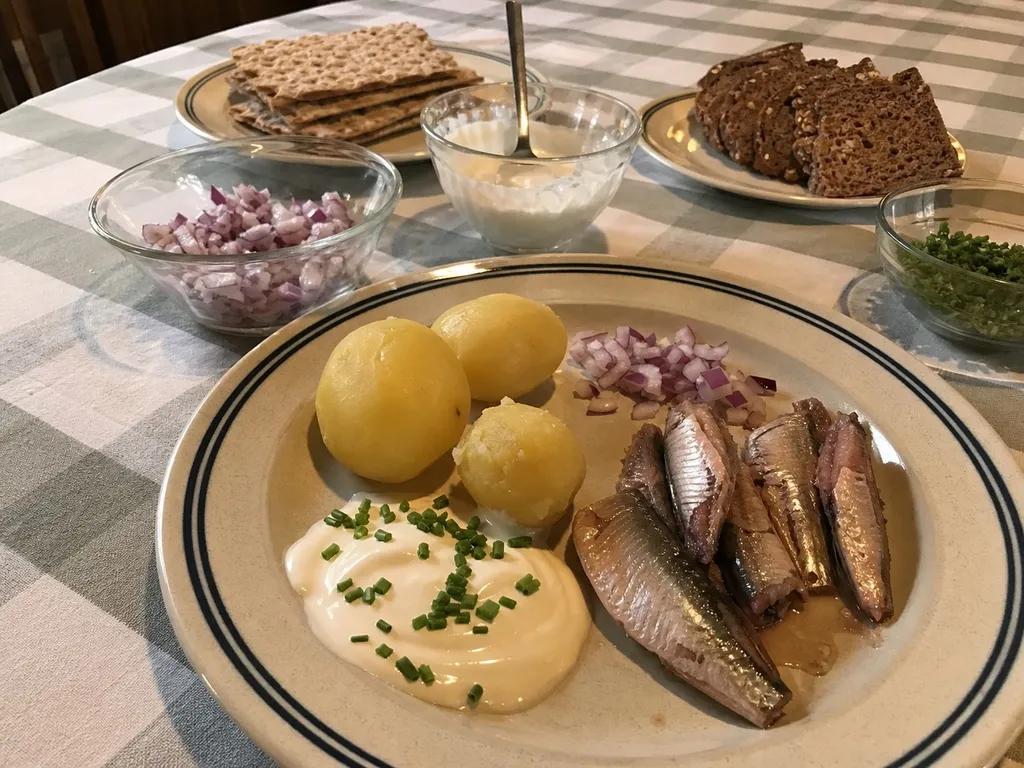
Layer the warm, sliced almond potatoes over the bread. Scatter the flaked surströmming sparingly over the potatoes (it is extremely salty and intensely flavored).
- 6
Top generously with the finely diced red onion, a dollop of sour cream, and fresh dill. Roll it up or eat it open-faced, preferably accompanied by cold beer or aquavit.
 Images are for illustrative purposes only, may be inaccurate, and do not guarantee the presence or absence of specific ingredients.
 Listahan Family Score™
63/100
Works for many families
Score reflects how well this recipe fits a typical busy household. In the app, your Family Score is personalized to your household's allergens, kids, and pantry.
Nutrition
per serving220
Calories
4 g
Protein
26 g
Carbs
11 g
Fat
Estimated per serving. Actual values depend on the brands and portions you use.
Listahan cooking guide
Chef notes & practical guide
Technique notes, ingredient swaps, serve-alongside ideas, storage guidance, and equipment for this recipe.
Cultural context
Surströmming — fermented Baltic herring — is one of the oldest preserved foods in Sweden, with production methods documented from the 16th century when salt was expensive and lactic acid fermentation was used to preserve the autumn herring catch through winter. The fermentation is distinctive: unlike most preserved fish, surströmming is allowed to continue fermenting inside sealed cans after processing, producing the pressurized, pungent gas that makes opening the can one of the most dramatic moments in Swedish food culture. It is a regional specialty of the High Coast (Hoga Kusten) area of northern Sweden, where the tradition of surströmming premieres each August is a serious annual event.
Listahan note
This version follows the traditional northern Swedish serving assembly — tunnbrod, mandelpotatis, onion, sour cream, and dill — which is the only format that balances the intense fermented flavor against enough starchy, creamy, and fresh elements to make it approachable.
Technique cues
- Open the can submerged in a bowl of cold water outdoors or in a well-ventilated space — the pressurized gas escapes violently and the liquid inside contains the most concentrated source of the fermented aroma; containing this splash prevents it from permeating a kitchen for hours.
- Rinsing the herring fillets briefly under cold water after removing them from the can moderates the intensity of the fermented flavor to a level that the supporting ingredients (potato, sour cream, onion) can balance; do not over-rinse or you lose the character of the dish entirely.
- The traditional assembly on soft tunnbrod (not crisp) is intentional: the soft flatbread wraps around the components like a taco, absorbing the brine and cream rather than staying rigid — the wrap format is how surströmming is eaten as street food at the August premiere.
Kitchen flow
- Parallel prep
- Boil the potatoes and set up all the accompaniments in small bowls before opening the can — once the can is open, you want to move directly to eating.
- Make-ahead
- Boil the potatoes up to 2 hours ahead and hold at room temperature wrapped in foil; all other components are straight from package or jar and require no cooking.
- Leftover move
- Leftover herring from an opened can should be transferred to a glass jar with a tight lid and refrigerated for up to 2 days; the smell does not intensify further but will permeate the refrigerator if left in an open can.
- Cleanup rhythm
- Dispose of the can and any packaging immediately in an outdoor bin; rinse all utensils that touched the fish with cold water first, then hot soapy water — hot water alone sets the fishy protein and makes the smell harder to remove.
Ingredient brief
Role, handling, and swap guidance for each key ingredient.
1 can of Surströmming (fermented Baltic herring)
primary protein and defining ingredient
Purpose: Surströmming is the irreplaceable center of this dish — the fermented herring delivers the intense, complex umami that all the other components are chosen to balance.
Handling: Open the can outdoors or in a very well-ventilated space, submerged in a bowl of cold water to contain the pressurized liquid; rinse the fillets briefly before serving.
Adaptation: There is no substitute that replicates surströmming's fermented character; strongly-flavored anchovies or gravlax can be used for a tasting plate that demonstrates the building blocks of the dish without the fermentation.
Tunnbröd (Swedish thin flatbread, either soft or crisp)
vehicle and textural wrapper
Purpose: Soft tunnbrod (mjukt tunnbrod) is the traditional choice because it wraps around the assembled ingredients and its mild flavor absorbs rather than competes with the fermented fish.
Handling: If using crisp tunnbrod, break it into manageable pieces and pile the components on top; if using soft tunnbrod, warm briefly in a dry pan or microwave for 15 seconds to make it pliable.
Adaptation: Soft flour tortillas are widely available and work as a functional substitute for soft tunnbrod; rice crackers can substitute for crisp tunnbrod.
500g (1 lb) almond potatoes (mandelpotatis), boiled and sliced
starchy base and flavor moderator
Purpose: Almond potatoes (a long, waxy, buttery Swedish variety) absorb the brine and cream in the wrap and their starchiness moderates the intense fermented flavor, making the dish palatable beyond the first bite.
Handling: Boil unpeeled until just tender, then peel and slice while still warm; room-temperature potatoes absorb the sauce better than cold ones.
Adaptation: Fingerling potatoes or small Yukon Golds are the closest North American substitute; their waxy, buttery quality approximates mandelpotatis better than russet or new potatoes.
1 large red onion, very finely diced
sharp aromatic contrast
Purpose: Raw red onion's pungency and crunch provide the only textural contrast in the wrap and its sharp flavor cuts through the fat of the sour cream and the richness of the fish.
Handling: Dice as fine as possible (2-3mm) — large pieces of raw onion overwhelm the other flavors in each bite; soak in cold water for 5 minutes if you want a milder onion flavor.
Adaptation: Chives scattered generously provide onion flavor with less intensity for first-time tasters; shallots finely minced are another mild alternative.
1 cup sour cream or gräddfil
cooling dairy element
Purpose: Sour cream and its Swedish equivalent gräddfil have the necessary fat content to coat the palate and moderate the fermented acidity; low-fat dairy does not provide the same buffering effect.
Handling: Serve at room temperature rather than cold — a cold dairy component straight from the fridge creates a temperature shock with the warm potatoes that makes the wrap feel unbalanced.
Adaptation: Creme fraiche works identically; full-fat Greek yogurt provides more tang, which can amplify rather than balance the fermented fish for first-time tasters.
Technique notes
- The traditional Swedish wisdom is to eat surströmming with a cold drink in hand — the cold beverage resets the palate between bites and makes the experience more pleasant; cold beer or schnapps are the traditional choices.
- Build each wrap in the correct order: tunnbrod, potato slices, herring fillet, onion, sour cream, dill — this layering ensures every element reaches every bite and the creamy elements land on top where they moderate the intensity on first contact.
- First-time tasters should start with a small piece of fish relative to the supporting ingredients; experienced eaters gradually shift the ratio more toward the fish as they acclimatize to the fermented intensity.
Ingredient swaps
- First-timer gentler version
- Use one fillet of surströmming split across two wraps with extra potato and sour cream; the lower fish-to-accompaniment ratio makes the dish accessible to newcomers.
- Dairy-free option
- Replace the sour cream with a thick, unflavored coconut yogurt; the mild coconut note is barely perceptible alongside the strong fermented fish flavor.
- Gluten-free direction
- Serve the components on rice crackers or corn tortillas rather than tunnbrod; the assembly is the same and all other ingredients are naturally gluten-free.
Serve alongside
- simple boiled fingerling potatoes with butter and sea salt
- cold cucumber slices with sour cream and dill
- sliced tomatoes as a fresh, acidic palate cleanser
- ice-cold Swedish lager or pilsner — the canonical pairing that cuts the fermented richness
- cold aquavit or Swedish snaps, served as a small shot
- ice-cold whole milk, the non-alcoholic traditional accompaniment
Serving suggestions only — check pairings for your household's allergens.
Storage & reheating
- Unopened cans should be stored in a cool place (not in the refrigerator — the cold slows fermentation but the can may continue to pressurize); consume by the best-before date.
- Once opened, transfer remaining herring to a glass jar, cover with the brine, seal tightly, and refrigerate for up to 2 days; keep the jar in a sealed bag inside the refrigerator.
- Do not freeze surströmming — the texture of the fermented fish becomes unpleasant after freezing and thawing.
Equipment
- large bowl of cold water for opening the can outdoors
- tongs or fork for handling the herring fillets
- small bowls or ramekins for each accompaniment
- cutting board reserved for fish (or lined with paper)
Make this household-aware
Listahan Pro checks this recipe against your household's allergens, finds pantry-aware swaps, builds the shopping list, and helps you plan the week around it.
Plan it in Listahan
Add Surströmming to your week, check it against your household's allergens, and build the shopping list automatically.
More Nordic recipes
 Nordic Lens Verified Images are for illustrative purposes only, may be inaccurate, and do not guarantee the presence or absence of specific ingredients.
 Risalamande
A creamy Danish cold rice pudding folded with whipped cream and chopped almonds, served with a glossy warm cherry sauce on Christmas Eve.
 Nordic Lens Verified Images are for illustrative purposes only, may be inaccurate, and do not guarantee the presence or absence of specific ingredients.
 Risgrynsgröt
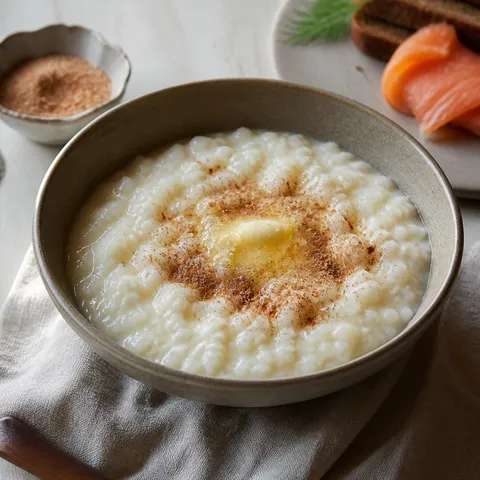
Creamy Nordic rice porridge, slow-cooked until thick and comforting, scented with cinnamon and served with a pat of melting butter — Christmas morning in a bowl.
 Nordic Lens Verified Images are for illustrative purposes only, may be inaccurate, and do not guarantee the presence or absence of specific ingredients.
 Hernekeitto
Finland's beloved Thursday pea soup — yellow split peas simmered with smoky ham until thick and hearty, traditionally served with a shot of Finnish mustard and pancakes.