 Nordic Images are for illustrative purposes only, may be inaccurate, and do not guarantee the presence or absence of specific ingredients.
  Serving Images are for illustrative purposes only, may be inaccurate, and do not guarantee the presence or absence of specific ingredients.
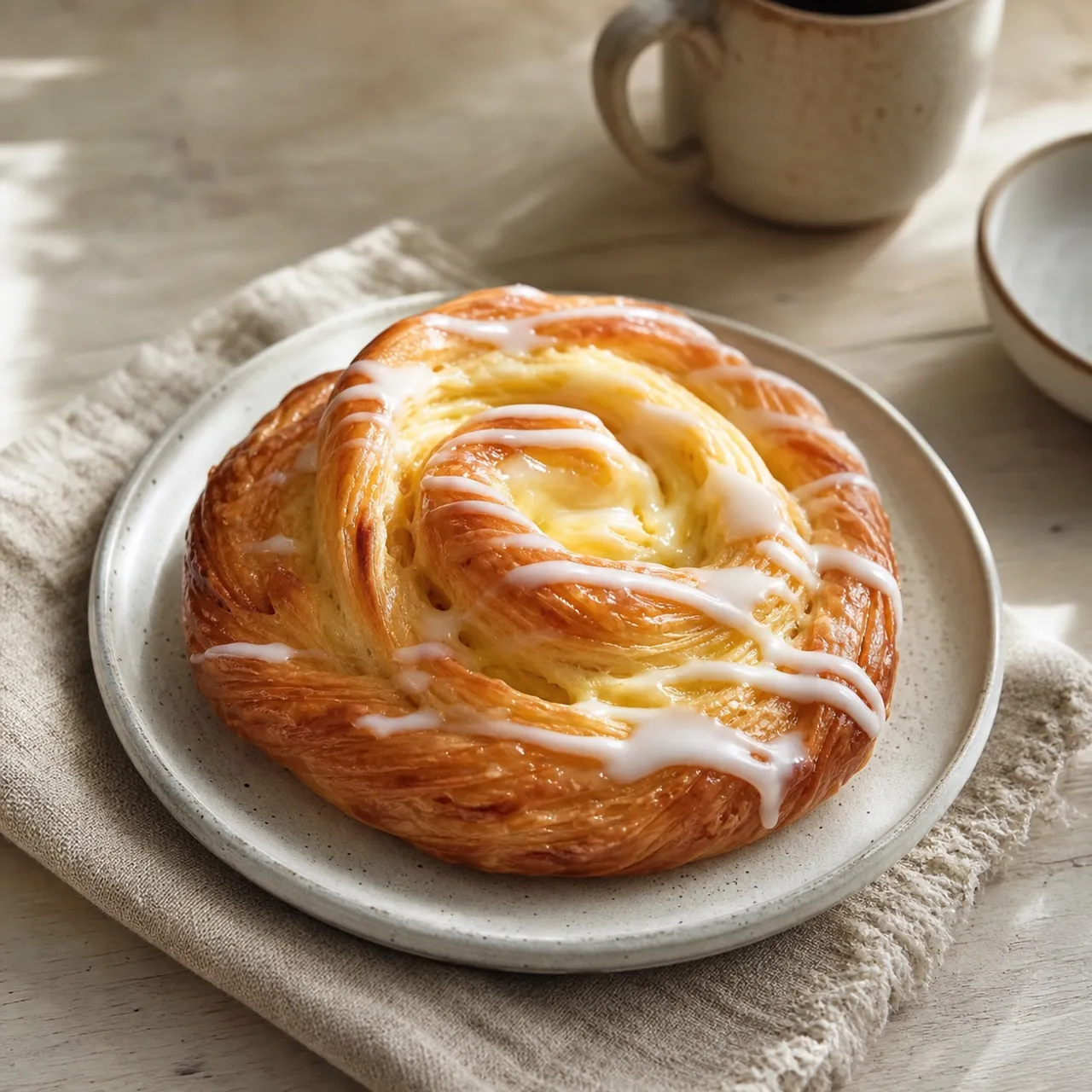
 Wienerbrød
The original Danish pastry, with buttery laminated dough folded around a sweet vanilla custard and finished with a glossy sugar glaze.
Contains common allergens
In the app, Listahan checks these against your household automatically.
Instructions
6 steps- 1
Whisk the warm milk with the yeast and a pinch of the sugar, let it foam for 5 minutes, then mix in the remaining sugar, egg, egg yolk, flour, and 4 tablespoons of softened butter to form a soft dough, and chill it for 30 minutes.
- 2
Pound the remaining cold butter between two sheets of parchment into a 7-inch square, then roll the chilled dough into a 12-inch square, set the butter block in the center on the diagonal, and fold the corners over to enclose it completely.
- 3
Roll the dough into a long rectangle and fold it in thirds like a letter, then wrap and refrigerate for 30 minutes; repeat this roll-and-fold two more times, chilling between each turn to keep the butter cold and the layers distinct.
- 4
Roll the laminated dough to 1/4-inch thick, cut into 4-inch squares, spoon a tablespoon of vanilla pastry cream into the center of each, and fold the corners toward the middle, pressing gently to seal.
- 5
Arrange the pastries on parchment-lined baking sheets, cover loosely, and proof at room temperature for 45 minutes until puffy, then brush with beaten egg.
- 6
Bake at 400°F for 16 to 18 minutes until deeply golden and flaky, then cool for 10 minutes and drizzle with the powdered sugar glaze before serving.
 Images are for illustrative purposes only, may be inaccurate, and do not guarantee the presence or absence of specific ingredients.
 Listahan Family Score™
68/100
Works for many families
Score reflects how well this recipe fits a typical busy household. In the app, your Family Score is personalized to your household's allergens, kids, and pantry.
Nutrition
per serving1345
Calories
16 g
Protein
136 g
Carbs
83 g
Fat
Estimated per serving. Actual values depend on the brands and portions you use.
Listahan cooking guide
Chef notes & practical guide
Technique notes, ingredient swaps, serve-alongside ideas, storage guidance, and equipment for this recipe.
Cultural context
Wienerbrød — literally 'Vienna bread' in Danish — arrived in Denmark in the 1850s when Viennese bakers were brought in to work during a Copenhagen bakers' strike and introduced their laminated pastry techniques. Danish bakers adapted the process with their own butter ratios and enriched dough, creating a style so distinct it eventually became known internationally as 'the Danish.' Today wienerbrød is the backbone of the Danish bakery tradition, found in every konditori from Copenhagen to Aarhus.
Listahan note
This version uses a cold-butter lamination process that builds distinct, shatteringly crisp layers without requiring professional equipment, and fills each pastry with a firm vanilla pastry cream that holds its shape after baking.
Technique cues
- The entire technique hinges on keeping the butter cold and plastic — if the butter block warms past 60°F it will absorb into the dough rather than forming discrete layers; work quickly and return the dough to the refrigerator for 20 minutes between every two folds.
- When rolling the laminated dough, use even pressure along the full length of the rolling pin rather than pressing hardest in the center — uneven pressure ruptures the butter layers on one side and leaves them too thick on the other, resulting in patchy rise.
- Pastry cream must be fully chilled before filling — warm cream steams inside the pastry during baking, softening the very layers you worked to create; spread a thin, even layer and leave a 1/2-inch border to prevent leaking.
Kitchen flow
- Parallel prep
- Make and chill the pastry cream the night before so it is fully firm; shape the butter block and refrigerate it at the same time so both are ready when the dough is mixed.
- Make-ahead
- Shaped, unfilled pastries can be covered and refrigerated overnight for a slow proof and baked fresh in the morning; alternatively, freeze shaped unbaked pastries on a sheet tray, then bag — bake from frozen adding 5-8 minutes.
- Leftover move
- Day-old wienerbrød sliced in half and toasted in a dry skillet for 2 minutes per side revives the crispness and caramelizes the pastry cream edges.
- Cleanup rhythm
- Flour the work surface lightly and often to prevent the dough from sticking; keep a bench scraper handy to lift and rotate the dough rather than prying it up with your hands, which tears layers.
Ingredient brief
Role, handling, and swap guidance for each key ingredient.
3 1/2 cups all-purpose flour
dough structure
Purpose: All-purpose flour provides enough gluten to hold the laminated layers without becoming tough; bread flour produces too much chew for a tender Danish.
Handling: Measure by spooning into the cup and leveling — packing flour tightens the dough and makes it harder to roll thin.
Adaptation: A 50/50 blend of all-purpose and cake flour produces an even more tender crumb if you prefer a softer bite.
1 1/2 cups (3 sticks) cold unsalted butter
lamination fat
Purpose: Cold butter is pounded and folded into the dough in a block to create the hundreds of flaky layers that define wienerbrød.
Handling: Pound cold butter between two sheets of parchment into a 7-inch square about 3/4-inch thick; refrigerate until firm before encasing in dough.
Adaptation: European-style butter (84% fat) produces richer, more pronounced layers than standard American butter (80% fat) and is worth seeking out for this recipe.
2 1/4 tsp active dry yeast
leavening and flavor
Purpose: Yeast gives wienerbrød its characteristic slight tang and lift that pure lamination alone cannot provide; it works slowly during the cold rest to develop flavor.
Handling: Proof in the warm milk with 1 tsp of the measured sugar for 5 minutes until foamy before adding to the dough.
Adaptation: Instant yeast can replace active dry yeast in equal measure without proofing; simply add it directly to the flour.
1 cup prepared vanilla pastry cream
filling and flavor center
Purpose: Pastry cream provides the sweet, custardy core that distinguishes wienerbrød from plain croissants; it must be thick enough to stay put during baking.
Handling: Chill the pastry cream in a shallow dish until it is firm enough to hold a shape when scooped; if store-bought, drain any excess liquid.
Adaptation: Almond cream (frangipane) is the traditional alternative filling — mix equal parts softened butter, sugar, and almond flour with one egg.
1/2 cup powdered sugar mixed with 1 tbsp milk, for glaze
finish and shine
Purpose: The thin glaze applied to still-warm pastries sets to a matte sheen that adds sweetness and visually signals the pastry is fresh.
Handling: Mix until smooth with no lumps; the glaze should drizzle easily from a fork rather than sit in stiff peaks.
Adaptation: Replace milk with orange juice for a citrus glaze that brightens the rich butter flavor.
Technique notes
- The signature wienerbrød window check: after the final lamination fold and before shaping, press the dough gently with one finger — it should feel cool, slightly firm, and spring back slowly; if it springs back immediately the gluten is too tight and needs another 15-minute rest.
- Egg-wash each pastry twice — once before proofing and again just before going in the oven — the double wash builds a deep mahogany color that looks bakery-professional and signals proper caramelization inside.
- Do not crowd the baking sheet; wienerbrød need at least 3 inches of space to expand and for hot air to circulate around each piece, otherwise the sides steam instead of crisp.
Ingredient swaps
- Dairy-free direction
- Replace butter with a high-fat vegan block butter (Miyoko's or similar) and use oat milk in the dough; the lamination works but layers will be slightly less shatteringly crisp.
- Gluten-free direction
- Laminated gluten-free pastry is genuinely difficult; the closest shortcut is to use a good gluten-free puff pastry sheet (Schar makes one) topped with pastry cream and baked in squares.
- Simpler filling
- A thick jam (apricot, raspberry) can replace pastry cream entirely for a faster version; use 1 tsp per pastry and chill briefly before baking.
Serve alongside
- strong black filter coffee or an Americano
- simple cucumber slices with cream cheese on rye bread
- a small dish of cold sliced strawberries with a pinch of sugar
- Danish filter coffee or strong espresso
- cold whole milk
Serving suggestions only — check pairings for your household's allergens.
Storage & reheating
- Best eaten the day they are baked; store at room temperature loosely covered in paper (not plastic, which softens the crust) for up to 1 day.
- To refresh next-day pastries, place on a wire rack in a 350°F oven for 5-7 minutes until the exterior re-crisps.
- Freeze unfilled, baked pastries in a sealed bag for up to 6 weeks; thaw at room temperature and warm in the oven before serving.
Equipment
- rolling pin
- bench scraper
- stand mixer with dough hook (optional but helpful)
- parchment-lined baking sheet
Make this household-aware
Listahan Pro checks this recipe against your household's allergens, finds pantry-aware swaps, builds the shopping list, and helps you plan the week around it.
Plan it in Listahan
Add Wienerbrød to your week, check it against your household's allergens, and build the shopping list automatically.
More Nordic recipes
 Nordic Lens Verified Images are for illustrative purposes only, may be inaccurate, and do not guarantee the presence or absence of specific ingredients.
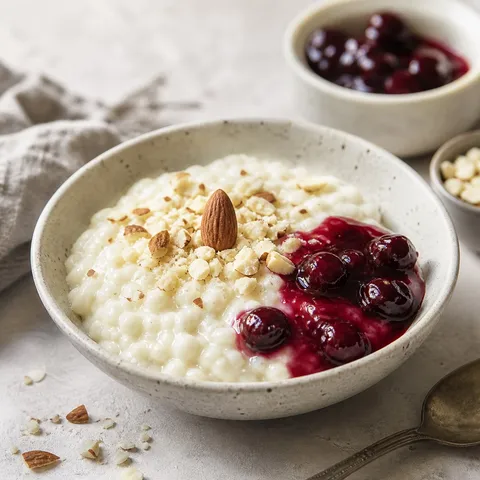
 Risalamande
A creamy Danish cold rice pudding folded with whipped cream and chopped almonds, served with a glossy warm cherry sauce on Christmas Eve.
 Nordic Lens Verified Images are for illustrative purposes only, may be inaccurate, and do not guarantee the presence or absence of specific ingredients.
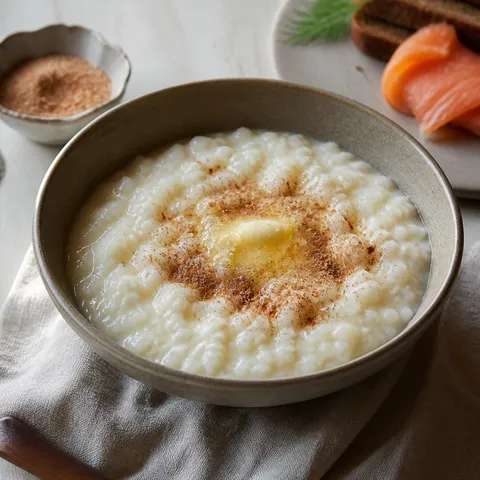
 Risgrynsgröt
Creamy Nordic rice porridge, slow-cooked until thick and comforting, scented with cinnamon and served with a pat of melting butter — Christmas morning in a bowl.
 Nordic Lens Verified Images are for illustrative purposes only, may be inaccurate, and do not guarantee the presence or absence of specific ingredients.
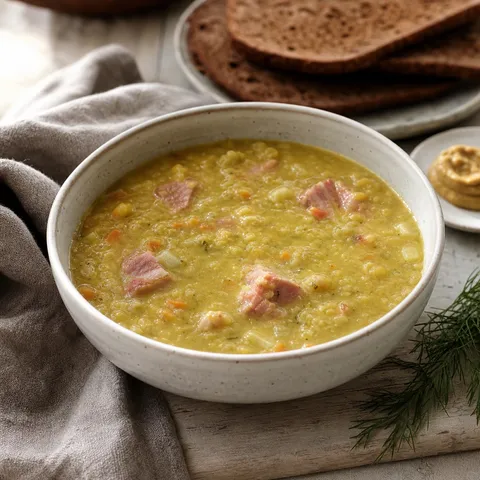
 Hernekeitto
Finland's beloved Thursday pea soup — yellow split peas simmered with smoky ham until thick and hearty, traditionally served with a shot of Finnish mustard and pancakes.