 North African Images are for illustrative purposes only, may be inaccurate, and do not guarantee the presence or absence of specific ingredients.
  Serving Images are for illustrative purposes only, may be inaccurate, and do not guarantee the presence or absence of specific ingredients.
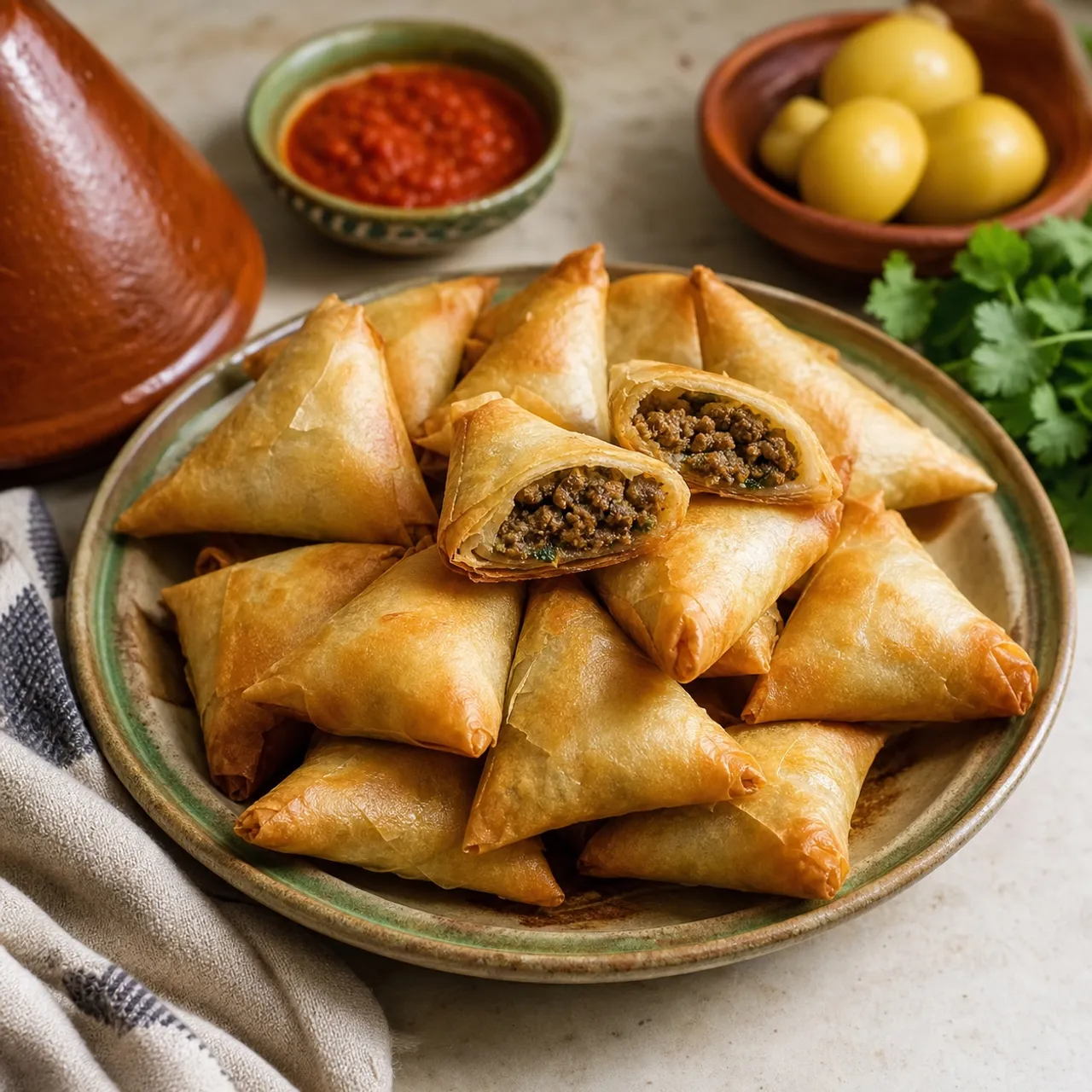
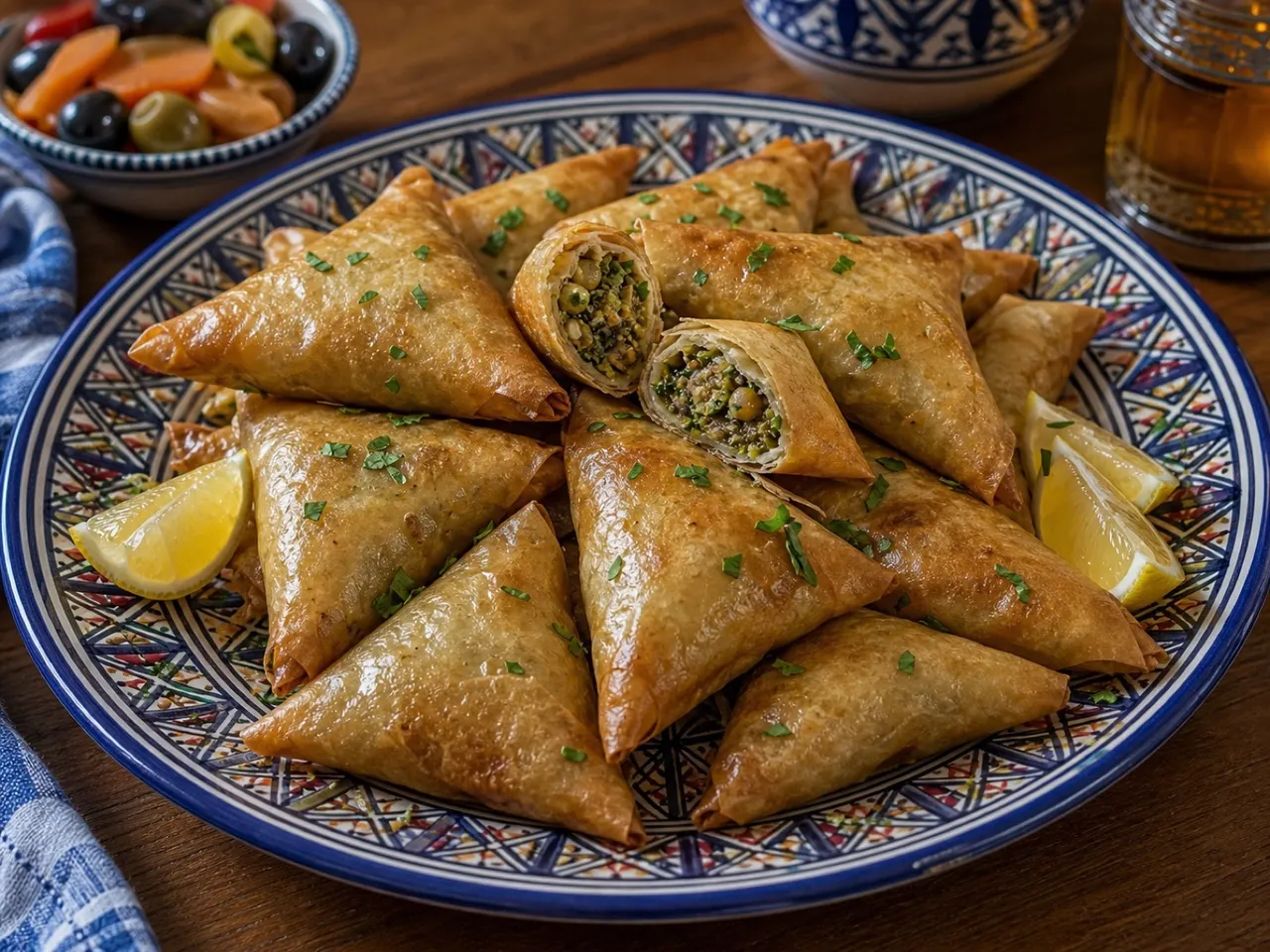
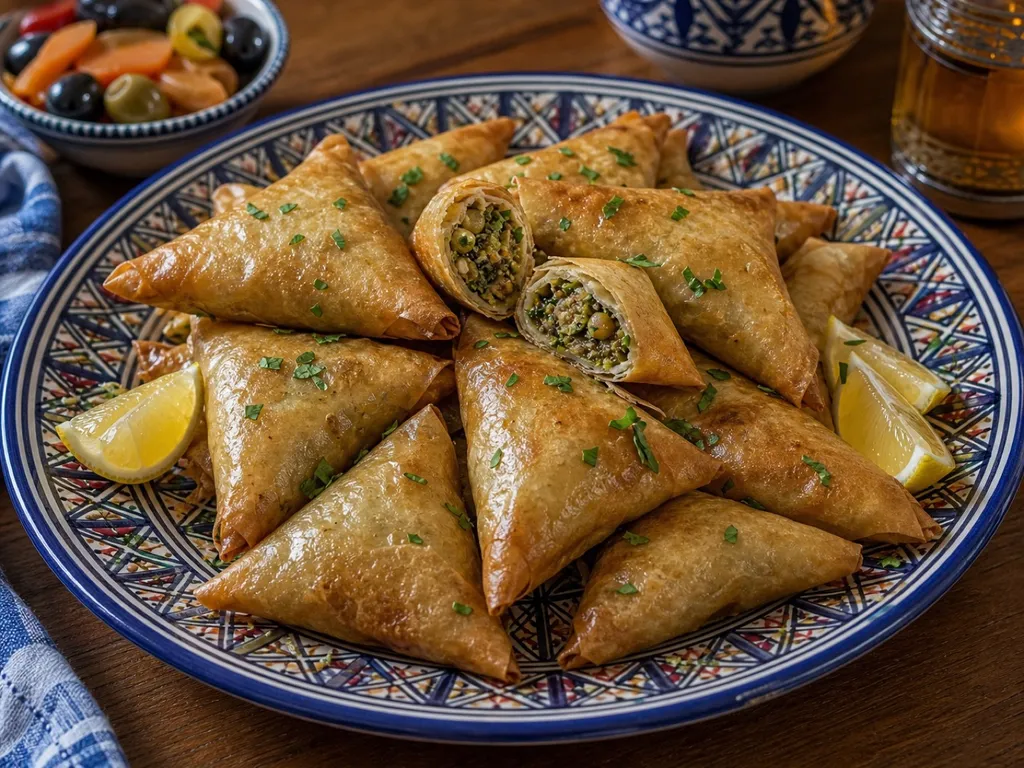
 Briouats
Crispy Moroccan phyllo triangles stuffed with spiced ground meat, sealed and fried to a shattering crunch.
Contains common allergens
In the app, Listahan checks these against your household automatically.
Good to know
- Crispy
Matched from this dish's own ingredients and timing. Browse more: crispy recipes
Instructions
5 steps- 1
Sauté the onion in 1 tbsp oil over medium heat for 5 minutes until soft, then add the ground meat and cook, breaking it up, for 8 minutes until browned and any liquid evaporates.
- 2
Stir in the cinnamon, cumin, ginger, 1 tsp salt, and 1/2 tsp pepper, cook 2 minutes more, then remove from heat and fold in the herbs and 1 beaten egg, stirring until the egg sets into the warm filling.
- 3
Lay a phyllo strip on a work surface, place 1 tbsp filling at one end, and fold flag-style into a tight triangle, brushing the final edge with beaten egg to seal.
- 4
Heat 1 1/2 inches of oil to 350°F and fry the triangles in batches for 2 minutes per side until golden and blistered.
- 5
Drain on a rack and serve warm with lemon wedges and harissa for dipping.
 Images are for illustrative purposes only, may be inaccurate, and do not guarantee the presence or absence of specific ingredients.
 Listahan Family Score™
61/100
Works for many families
Score reflects how well this recipe fits a typical busy household. In the app, your Family Score is personalized to your household's allergens, kids, and pantry.
Nutrition
per serving440
Calories
44 g
Protein
4 g
Carbs
26 g
Fat
Estimated per serving. Actual values depend on the brands and portions you use.
Listahan cooking guide
Chef notes & practical guide
Technique notes, ingredient swaps, serve-alongside ideas, storage guidance, and equipment for this recipe.
Cultural context
Briouats are a Moroccan specialty of crispy filled pastries made from warqa, a paper-thin handmade dough similar to phyllo that requires great skill to stretch by hand on a heated pan. The name derives from Moroccan Arabic and the pastries are a fixture of celebration tables — weddings, Eid, and Ramadan spreads — filled with either savory spiced meat or sweet almond paste with honey. The combination of cinnamon with savory meat, which strikes North American cooks as unusual, reflects the medieval Andalusian culinary tradition that crossed into the Maghreb and has remained central to Moroccan festive cooking for centuries.
Listahan note
This version uses commercially available phyllo dough in place of traditional warqa, which makes the recipe accessible to home cooks while preserving the key flavor profile — the cinnamon-forward spiced meat filling that is the heart of a good briouat.
Technique cues
- The filling must be fully cooked and completely dry before wrapping: any excess moisture from the onion and meat will steam the phyllo from the inside during frying, creating a soggy pocket rather than a shatteringly crisp shell — cook the filling until the pan is almost dry.
- Phyllo tears easily when cold and dry; keep the stack covered with a barely damp kitchen towel while you work and handle each strip with both hands to avoid splitting, working quickly so the exposed dough does not dry out between wraps.
- The triangle-fold technique (similar to a flag fold) is key to a tight, sealed briouat: each fold should be snug with no air pockets, and the final flap sealed with a thin brush of beaten egg — an improperly sealed seam will open in the oil and the filling will scatter.
Kitchen flow
- Parallel prep
- Cook and cool the filling a day ahead — cold filling is easier to handle and wrap than hot. While filling chills, cut phyllo strips and keep covered. The actual wrapping is fast once the filling is ready.
- Make-ahead
- Formed, unfried briouats can be frozen on a parchment-lined sheet, then transferred to a freezer bag for up to 2 months. Fry directly from frozen, adding 2 minutes to the frying time — no thawing needed.
- Leftover move
- Leftover filling (before wrapping) can be tossed through couscous with toasted pine nuts and raisins, or stuffed into pita with yogurt sauce as a quick lunch.
- Cleanup rhythm
- Set up a sheet pan with a wire rack for draining, keep paper towels nearby, and strain the oil through a fine-mesh sieve after frying to remove any stray phyllo bits that can burn in subsequent batches.
Ingredient brief
Role, handling, and swap guidance for each key ingredient.
1 lb ground beef or lamb
filling protein
Purpose: Ground lamb is the more traditional choice and its fat content keeps the filling moist even after full cooking; beef is milder and leaner but still works well.
Handling: Brown the meat, breaking it into very fine crumbles — a chunky filling is harder to wrap neatly in narrow phyllo strips and can punch through the dough.
Adaptation: Ground chicken or turkey can substitute for a lighter filling; add an extra tablespoon of olive oil to compensate for the lower fat content.
1 large onion, finely diced
moisture and sweetness
Purpose: Onion softens and sweetens during cooking and provides the aromatic backbone of the filling; it must cook down fully so it does not add excess water to the wrapped pastry.
Handling: Dice as finely as possible and cook over medium heat until golden and completely soft before adding the meat — rushing this step leaves sharp onion flavor and too much moisture.
Adaptation: Shallots can replace the onion for a slightly sweeter, less pungent filling.
1 tsp ground cinnamon, 1 tsp ground cumin, and 1/2 tsp ground ginger
Moroccan spice profile
Purpose: This trio is the defining flavor of Moroccan savory pastry fillings — cinnamon adds warmth and slight sweetness that bridges the meat and herbs, cumin grounds it, and ginger brightens.
Handling: Add the spices to the pan after the onion is soft and toast them briefly in the residual fat for 30 seconds before adding meat — this activates their fat-soluble compounds.
Adaptation: One and a half teaspoons of ras el hanout can replace this trio and adds complexity, though it may include additional warming spices like cardamom.
12 sheets phyllo dough (or warqa), cut into 3-inch strips
pastry shell
Purpose: Phyllo creates the essential shatteringly thin, crispy shell that defines a briouat; two layers of strip per pastry is standard to prevent tearing during frying.
Handling: Cut all strips before starting to wrap, keep covered, and use two stacked strips per briouat for durability — single-layer phyllo is too fragile for frying.
Adaptation: Spring roll wrappers can substitute for a slightly chewier, less flaky shell that is more forgiving for beginners to wrap.
2 tbsp chopped fresh cilantro and 2 tbsp chopped parsley
freshness and color
Purpose: Both herbs add brightness and visual contrast to the cooked meat filling; they also provide a light anise-citrus note that lifts the richness of the lamb.
Handling: Stir in off the heat after the filling has cooked — adding herbs to a hot pan for more than a moment dulls their color and volatilizes their fresh flavor.
Adaptation: If cilantro is disliked, use all parsley; the filling will be slightly less complex but still authentic.
Technique notes
- Seal the final flap of each briouat with a thin smear of beaten egg and press firmly for 5 seconds — the egg acts as a paste that bonds the phyllo layers together so the parcel does not unravel when it hits the hot oil.
- Fry at 350 F rather than higher: phyllo browns very quickly and the goal is a deep golden color achieved gradually so the pastry crisps all the way through, not just on the surface.
- Drain on a wire rack rather than paper towels — paper traps steam under the pastry and softens the bottom, while the rack allows air to circulate and keep all sides crisp.
Ingredient swaps
- Gluten-free direction
- Rice paper wrappers can replace phyllo for a gluten-free shell — brush lightly with oil before frying; the result will be translucent and chewy rather than flaky.
- Dairy-free option
- The base recipe is dairy-free; verify your phyllo brand, as some contain butter. Use oil-based phyllo or brush with olive oil instead of clarified butter.
- Baked option
- Brush each briouat with olive oil and bake at 400 F for 20 minutes, turning once, for a lighter result with a less shattery but still crisp shell.
Serve alongside
- orange and fennel salad with argan oil and black olives
- Moroccan carrot salad with cumin and lemon
- herbed yogurt dipping sauce with preserved lemon
- warm harissa on the side for dipping
- Moroccan mint tea served hot in small glasses
- fresh-squeezed orange juice with orange blossom water
- dry rose wine
Serving suggestions only — check pairings for your household's allergens.
Storage & reheating
- Cooked briouats are best eaten the same day; they will keep in the fridge for up to 2 days but the phyllo softens.
- Reheat in a 375 F oven for 8-10 minutes directly on the oven rack to restore crispness — do not microwave.
- Uncooked formed briouats freeze well for up to 2 months and can be fried directly from frozen.
Equipment
- heavy skillet or wide saucepan for frying
- pastry brush for sealing and oiling
- wire rack set over a sheet pan
- kitchen scissors for cutting phyllo strips cleanly
Make this household-aware
Listahan Pro checks this recipe against your household's allergens, finds pantry-aware swaps, builds the shopping list, and helps you plan the week around it.
Plan it in Listahan
Add Briouats to your week, check it against your household's allergens, and build the shopping list automatically.
More North African recipes
 North African Lens Verified Images are for illustrative purposes only, may be inaccurate, and do not guarantee the presence or absence of specific ingredients.
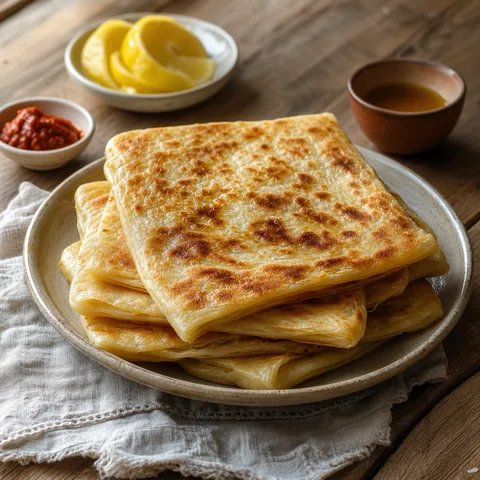
 Msemmen
Layered and folded semolina flatbread cooked on a griddle until the outside crisps and the inside stays wonderfully chewy — perfect with honey or harissa.
 North African Lens Verified Images are for illustrative purposes only, may be inaccurate, and do not guarantee the presence or absence of specific ingredients.
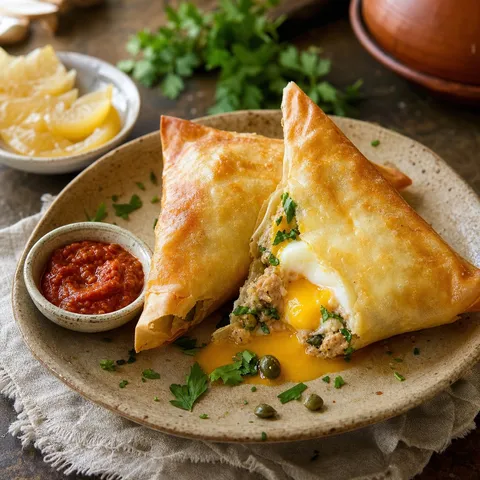
 Brik
Crispy paper-thin pastry folded around a whole egg, tuna, and parsley then flash-fried until golden — Tunisia's beloved street snack, eaten fast before the yolk escapes.
 North African Lens Verified Images are for illustrative purposes only, may be inaccurate, and do not guarantee the presence or absence of specific ingredients.
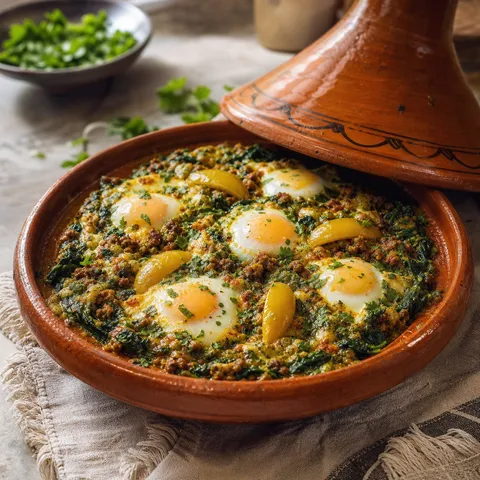
 Tajine El Bey
Tunisia's grand layered bake of spiced lamb, eggs, and cheese baked in a deep crust — a celebration dish with silky, complex layers in every slice.