 North African Images are for illustrative purposes only, may be inaccurate, and do not guarantee the presence or absence of specific ingredients.
  Serving Images are for illustrative purposes only, may be inaccurate, and do not guarantee the presence or absence of specific ingredients.
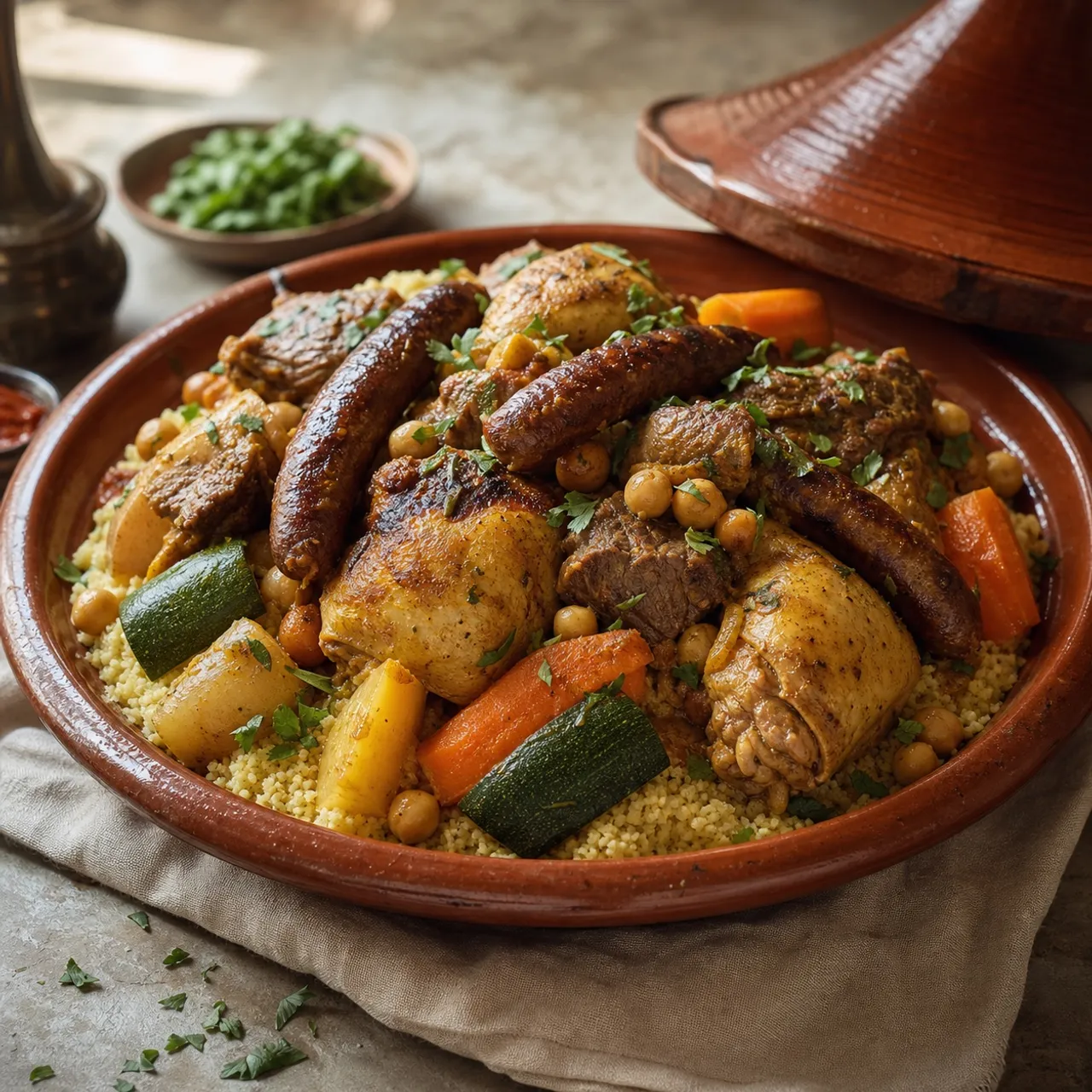
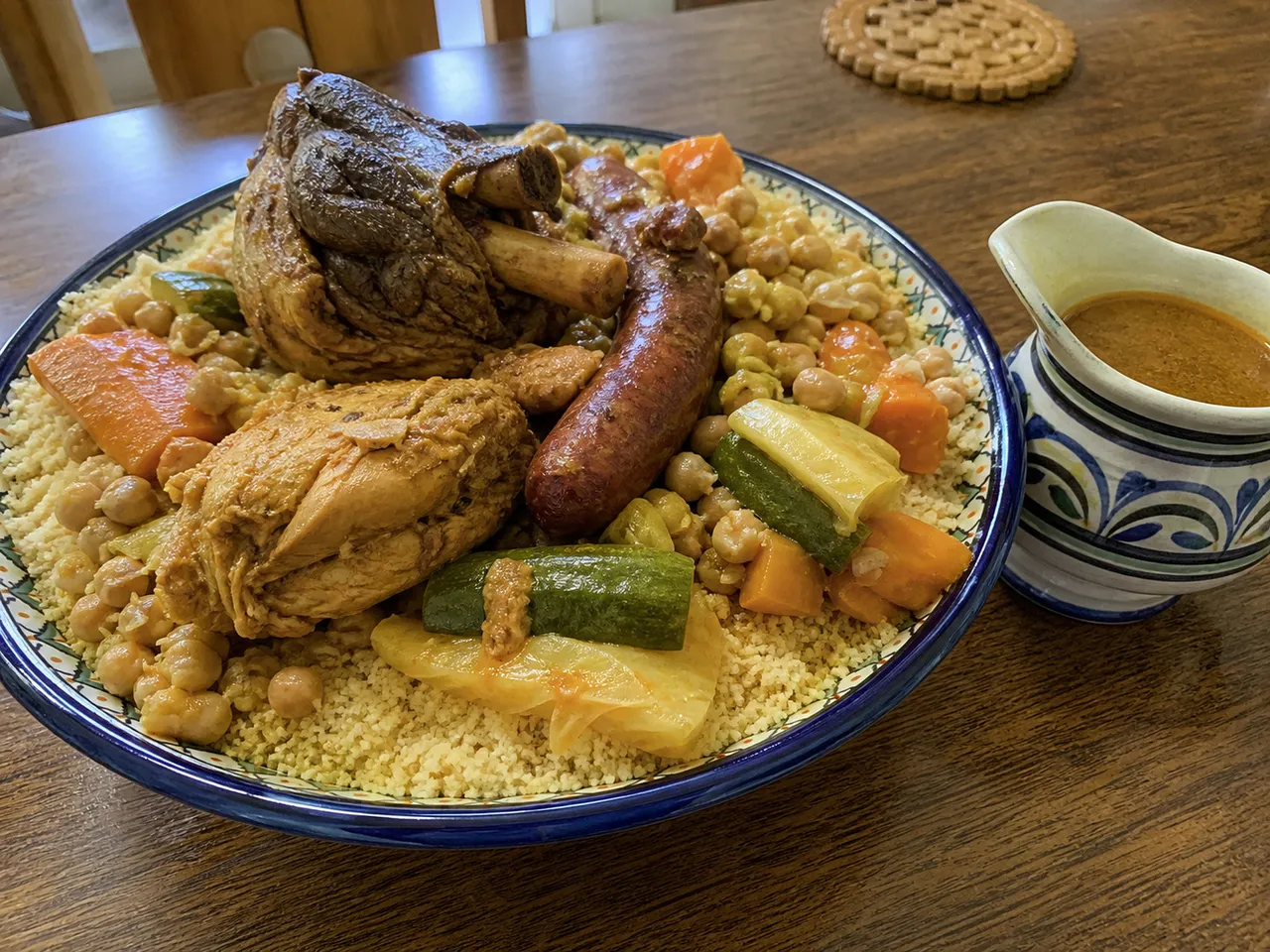
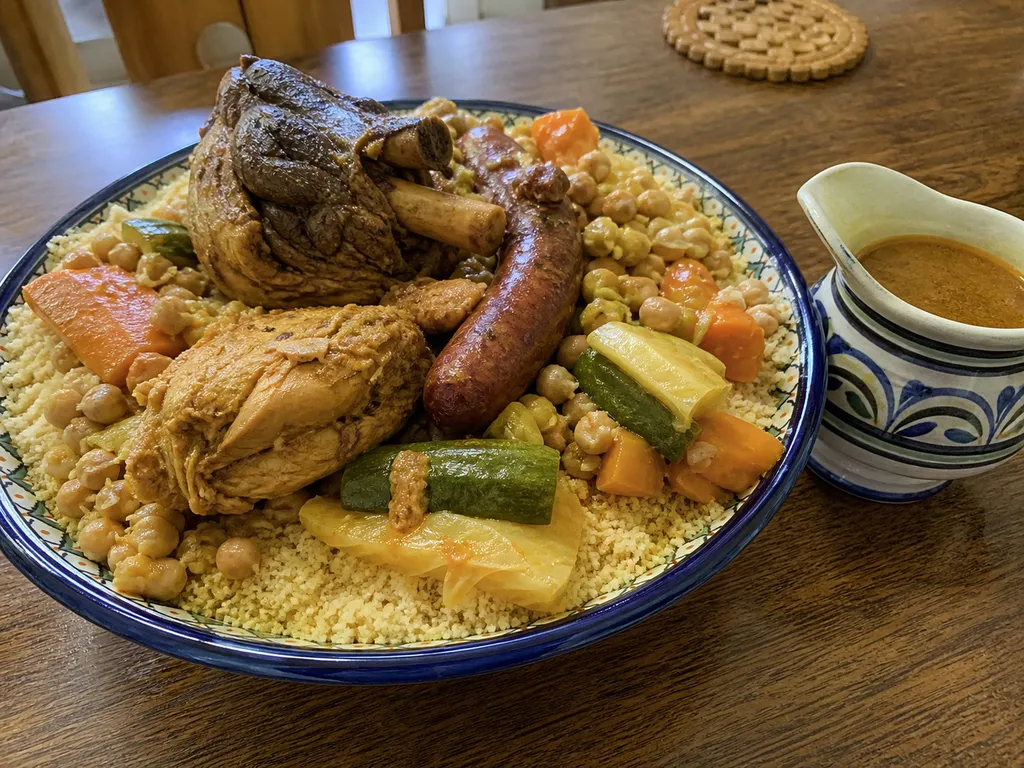
 Couscous Royale
A festive Maghrebi feast of fluffy steamed couscous crowned with merguez, lamb, chicken, and saffron-spiced vegetables.
Contains common allergens
In the app, Listahan checks these against your household automatically.
Instructions
5 steps- 1
In a large pot or couscoussier base, brown the lamb and chicken in 2 tbsp olive oil over medium-high heat for 8 minutes, then add the onion and cook 5 minutes until softened.
- 2
Stir in the ras el hanout, saffron, 2 tsp salt, and 1/2 tsp pepper, add 8 cups water, and simmer covered for 45 minutes until the meat is nearly tender.
- 3
Add the carrots, turnip, and chickpeas and simmer 20 minutes, then add the zucchini for a final 15 minutes until all the vegetables are soft.
- 4
Meanwhile, moisten the couscous with water and a drizzle of oil, fluff with your fingers, and steam it over the simmering broth in three 15-minute rounds, raking and re-moistening between each to keep the grains separate.
- 5
Sear the merguez in a skillet for 8 minutes until browned, then mound the couscous on a platter, arrange the meats and vegetables on top, and ladle over the fragrant broth before serving.
 Images are for illustrative purposes only, may be inaccurate, and do not guarantee the presence or absence of specific ingredients.
 Listahan Family Score™
66/100
Works for many families
Score reflects how well this recipe fits a typical busy household. In the app, your Family Score is personalized to your household's allergens, kids, and pantry.
Nutrition
per serving1795
Calories
124 g
Protein
143 g
Carbs
77 g
Fat
Estimated per serving. Actual values depend on the brands and portions you use.
Listahan cooking guide
Chef notes & practical guide
Technique notes, ingredient swaps, serve-alongside ideas, storage guidance, and equipment for this recipe.
Cultural context
Couscous Royale is the grand celebration version of the North African couscous tradition, distinguished by its combination of multiple meats — lamb, chicken, and merguez — served together over steamed grain with a rich vegetable broth. Couscous itself is a Berber staple predating the Arab conquest of the Maghreb, traditionally steamed in a couscousiere over a simmering stew so the grain absorbs the cooking vapors. The 'Royale' designation, meaning royal or luxurious, signals the abundance of proteins that made this a feast-day or Friday-lunch centrepiece in Moroccan and Algerian households, a dish reserved for guests and celebrations.
Listahan note
This version builds the stew in one pot and steams or hydrates the couscous separately, bringing them together at the table so each component is at its best — the grain fluffy and separate, the meats tender, the vegetables still with some texture.
Technique cues
- Lamb shoulder needs at minimum 45-60 minutes of simmering to become tender; adding the chicken thighs at the 30-minute mark and the merguez in the final 10 minutes ensures each protein finishes correctly without any piece being over- or undercooked when the dish comes together.
- Saffron must be bloomed before adding to the broth: soak the threads in 2 tablespoons of warm water for 10 minutes before adding the liquid — the warm water extracts the crocin pigment and safranal compounds that give saffron its color and aroma far more effectively than dropping the threads directly into a simmering pot.
- For the fluffiest couscous using the absorption method, pour the boiling salted broth over the dry grain, cover tightly, and let it steam undisturbed for 5 minutes, then fluff with a fork and toss with a knob of butter — raking constantly creates clumps while the steam is setting; patience during the rest produces perfectly separate, light grains.
Kitchen flow
- Parallel prep
- Cut and brown the lamb first, then prep vegetables while the lamb simmers. Bloom saffron as soon as the broth goes in. Time the couscous so it hydrates during the final 5 minutes of the stew.
- Make-ahead
- The stew (without couscous) is an ideal make-ahead dish — the flavors deepen overnight in the fridge and the fat solidifies on top for easy removal. Reheat gently and prepare fresh couscous on the day of serving.
- Leftover move
- Leftover stew reheats beautifully and can be served over fresh couscous for a second meal. The leftover broth also makes an excellent base for a simple harira-style soup with added tomatoes and lentils.
- Cleanup rhythm
- This is a one-pot stew with a separate couscous bowl — the main cleanup is the braising pot, which deglazes easily with a little water while still warm. Pre-soaking it for 15 minutes before washing removes most residue.
Ingredient brief
Role, handling, and swap guidance for each key ingredient.
3 cups dry medium couscous
starch base
Purpose: Medium couscous has the ideal grain size for absorbing broth without becoming mushy — fine couscous over-absorbs and clumps, while Israeli pearl couscous is a different product that behaves more like pasta.
Handling: Use the absorption method: pour 3 cups of hot, well-seasoned broth ladled from the stew over 3 cups of couscous, cover, and rest for 5 minutes before fluffing.
Adaptation: Millet or quinoa can substitute for a gluten-free grain base that absorbs broth similarly; adjust liquid ratios per package directions.
1 lb lamb shoulder, cut into 2-inch chunks
primary protein and broth flavor
Purpose: Lamb shoulder has the right balance of fat and connective tissue to become tender and flavorful with 45-60 minutes of gentle simmering while contributing body and richness to the broth.
Handling: Brown in batches in the pot before adding liquid — browning the lamb surfaces builds the fond that makes the broth taste deeply savory rather than like boiled meat.
Adaptation: Bone-in lamb neck or ribs produce an even richer broth; beef chuck can substitute for a milder flavor.
4 bone-in chicken thighs
secondary protein
Purpose: Bone-in thighs stay moist during the second half of a long simmer and contribute additional fat and collagen to the broth without drying out the way breast meat would.
Handling: Add to the pot after the lamb has had a 25-30 minute head start so both proteins finish at the same time.
Adaptation: Bone-in chicken legs or drumsticks work equally well; boneless thighs can substitute but will cook faster and contribute less flavor to the broth.
4 merguez sausages
spiced accent protein
Purpose: Merguez adds the spiced, gamy, harissa-rich counterpoint that distinguishes Couscous Royale from plain couscous with broth — it is the element that earns the 'royal' designation.
Handling: Add whole to the pot in the final 8-10 minutes of cooking, or brown separately in a skillet for better color before adding to the stew at the end.
Adaptation: Spiced lamb kefta (formed into small patties) can substitute if merguez is unavailable.
1 pinch saffron threads and 1 tsp ras el hanout
aromatic broth foundation
Purpose: Saffron provides the golden color and distinctive floral-honey note that elevates the broth beyond a plain meat stew; ras el hanout layers warm spice complexity across the entire pot.
Handling: Bloom saffron in warm water separately before adding; stir ras el hanout in at the start of cooking so the spices have time to fully infuse the oil and liquid.
Adaptation: A pinch of turmeric can mimic the golden color of saffron at a fraction of the cost; the flavor will be earthier rather than floral.
1 can (15 oz) chickpeas, drained
hearty vegetable protein and texture
Purpose: Chickpeas absorb the spiced broth beautifully and provide a creamy contrast in texture to the meat and vegetables while adding plant protein and making the dish more filling.
Handling: Add in the final 20 minutes of cooking so they warm through and absorb flavor without turning mushy.
Adaptation: Dried chickpeas soaked overnight and cooked separately produce a superior texture; use 1 cup dried, cooked until just tender.
Technique notes
- Serve the broth separately in a small pitcher or bowl alongside the plated couscous and meats — the traditional Moroccan way is to add broth incrementally so the couscous absorbs it at the table without becoming waterlogged, and guests control their own moisture level.
- Arrange the meats and vegetables over the couscous mound and ladle just enough broth to moisten the grain at the base — the visual of a generous composed plate with the three meats clearly visible is what makes this dish dramatic and inviting.
- If the broth tastes flat after long cooking, a squeeze of lemon, a pinch of salt, and a few strands of fresh cilantro stirred in off the heat will brighten it immediately — long-simmered broths often need this final acid adjustment.
Ingredient swaps
- Gluten-free direction
- Replace couscous with millet or white rice cooked in a portion of the stew broth; verify your merguez sausage is gluten-free (most traditional versions are, but commercial brands vary).
- Weeknight shortcut
- Use a rotisserie chicken instead of bone-in thighs — pull the meat and add it in the final 5 minutes of cooking, using the carcass to enrich the broth if time allows.
- Leaner protein direction
- Replace lamb shoulder with bone-in chicken legs throughout for a lighter, lower-fat version that still produces a richly flavored broth and keeps the multi-protein character.
Serve alongside
- harissa on the side for heat-seekers to add to their bowl
- Moroccan carrot salad with cumin and preserved lemon
- simple cucumber-yogurt raita to cool the spiced broth
- warm khobz for scooping up any leftover broth
- Moroccan mint tea served hot after the meal
- still or sparkling water throughout, as the spiced broth is rich
- dry rose wine or a light, chilled red such as Grenache
Serving suggestions only — check pairings for your household's allergens.
Storage & reheating
- Store the stew and couscous separately in the fridge for up to 3 days; keeping them together makes the couscous waterlogged.
- Reheat the stew gently on the stovetop over medium-low heat, adding a splash of water if the broth has reduced; prepare fresh couscous or reheat the couscous with a fork and a splash of water in a covered bowl in the microwave.
- The stew freezes well for up to 2 months; freeze without the couscous and thaw overnight in the fridge before reheating.
Equipment
- large Dutch oven or heavy-bottomed pot (at least 6 quarts)
- couscousiere or large heatproof bowl with a tight-fitting lid for steaming couscous
- small bowl for blooming saffron
- ladle and serving platter for the composed presentation
Make this household-aware
Listahan Pro checks this recipe against your household's allergens, finds pantry-aware swaps, builds the shopping list, and helps you plan the week around it.
Plan it in Listahan
Add Couscous Royale to your week, check it against your household's allergens, and build the shopping list automatically.
More North African recipes
 North African Lens Verified Images are for illustrative purposes only, may be inaccurate, and do not guarantee the presence or absence of specific ingredients.
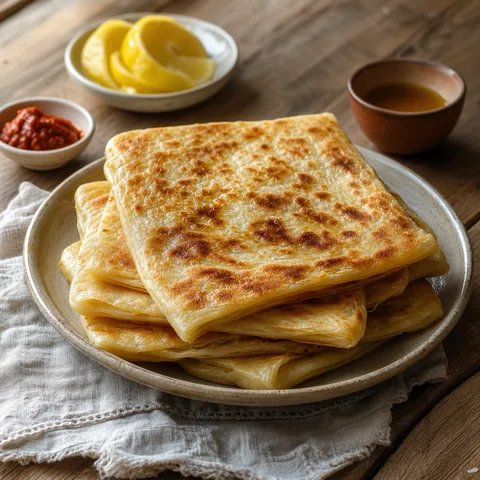
 Msemmen
Layered and folded semolina flatbread cooked on a griddle until the outside crisps and the inside stays wonderfully chewy — perfect with honey or harissa.
 North African Lens Verified Images are for illustrative purposes only, may be inaccurate, and do not guarantee the presence or absence of specific ingredients.
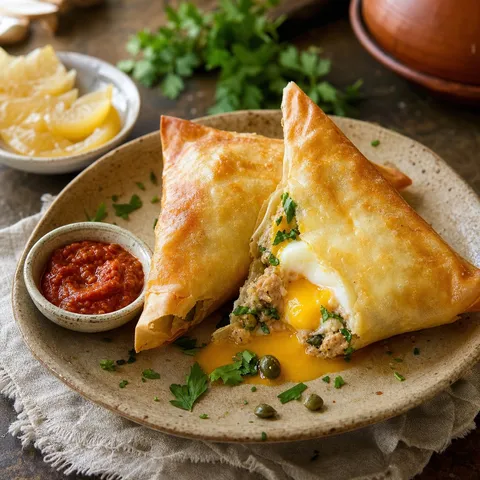
 Brik
Crispy paper-thin pastry folded around a whole egg, tuna, and parsley then flash-fried until golden — Tunisia's beloved street snack, eaten fast before the yolk escapes.
 North African Lens Verified Images are for illustrative purposes only, may be inaccurate, and do not guarantee the presence or absence of specific ingredients.
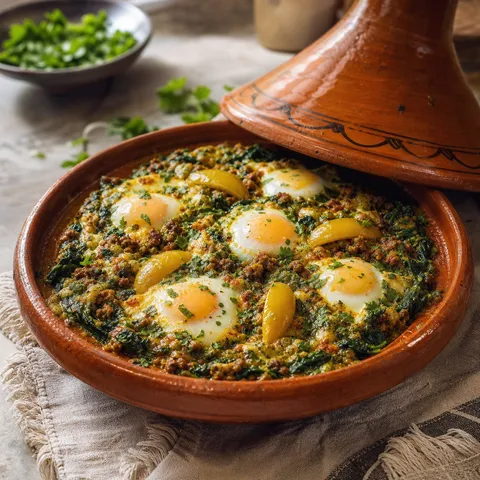
 Tajine El Bey
Tunisia's grand layered bake of spiced lamb, eggs, and cheese baked in a deep crust — a celebration dish with silky, complex layers in every slice.