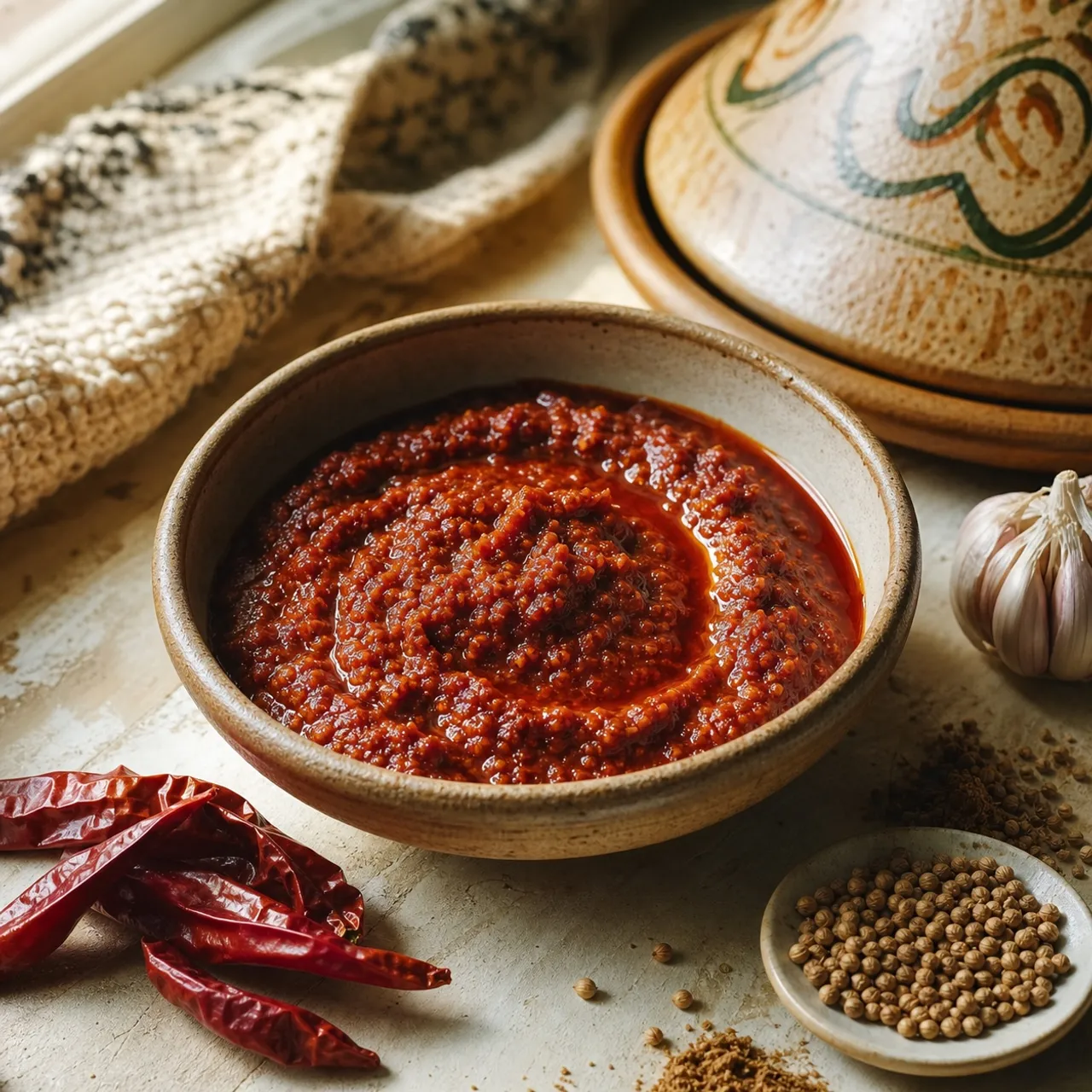
 North African Images are for illustrative purposes only, may be inaccurate, and do not guarantee the presence or absence of specific ingredients.
 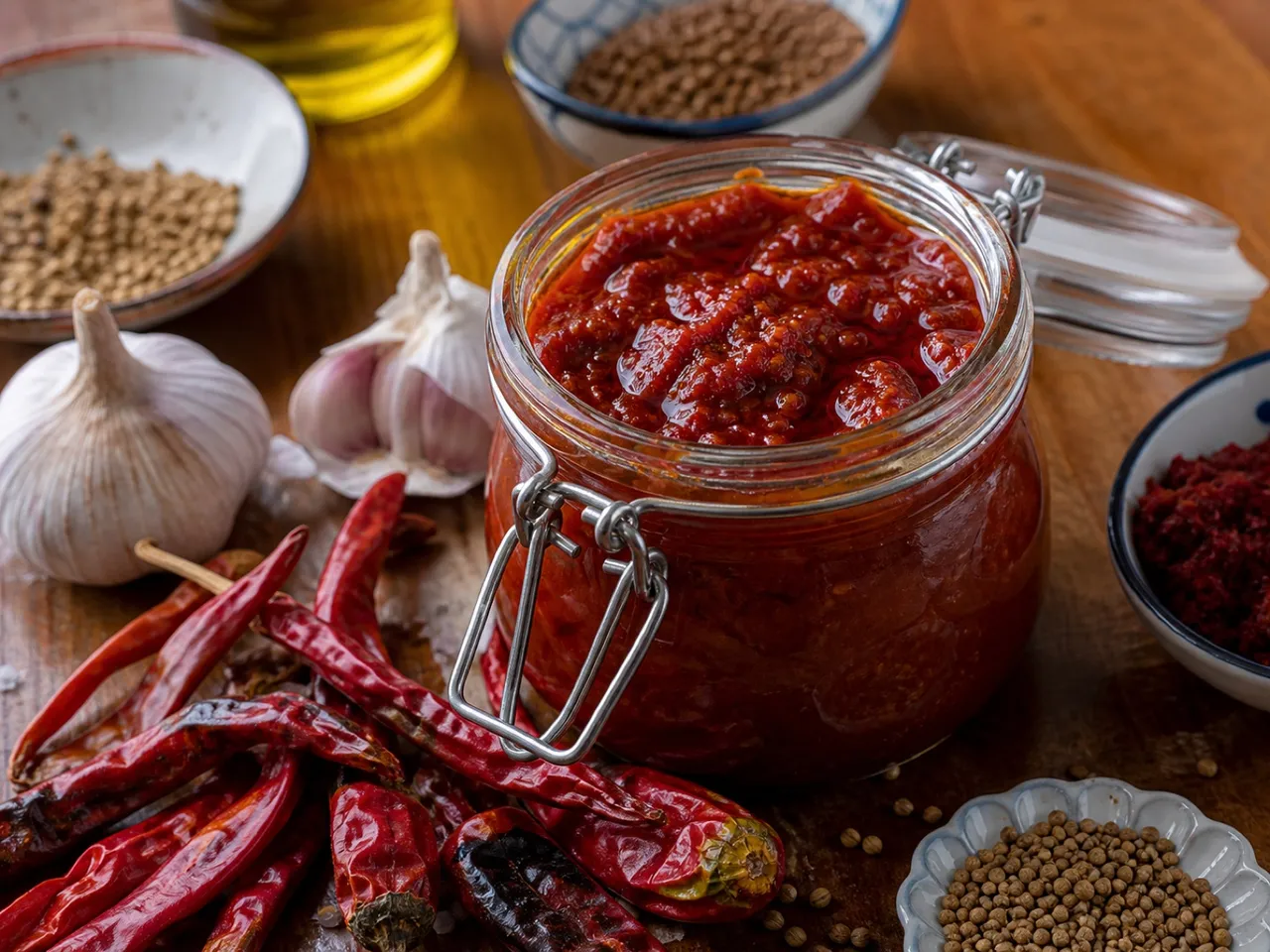 Serving Images are for illustrative purposes only, may be inaccurate, and do not guarantee the presence or absence of specific ingredients.
 Harissa
Tunisia's signature fiery red chili paste, deepened with toasted spices, garlic, and good olive oil.
No common allergens detected
Based on this recipe's ingredient list. Always verify with your own brands and labels.
Good to know
- Ready in under 30 minutes
Matched from this dish's own ingredients and timing. Browse more: 30-minute meals
Instructions
5 steps- 1
Soak the dried chilies in just-boiled water for 20 minutes until fully softened, then drain and squeeze out excess liquid.
- 2
Toast the caraway and coriander seeds in a dry skillet over medium heat for 1 to 2 minutes until fragrant, then grind to a fine powder.
- 3
Combine the softened chilies, garlic, ground spices, cumin, and salt in a food processor and pulse into a coarse paste.
- 4
With the motor running, stream in the olive oil until the harissa turns glossy and spreadable, scraping down the sides as needed.
- 5
Transfer to a clean jar, smooth the top, and cover with a thin film of olive oil; refrigerate up to 3 weeks.
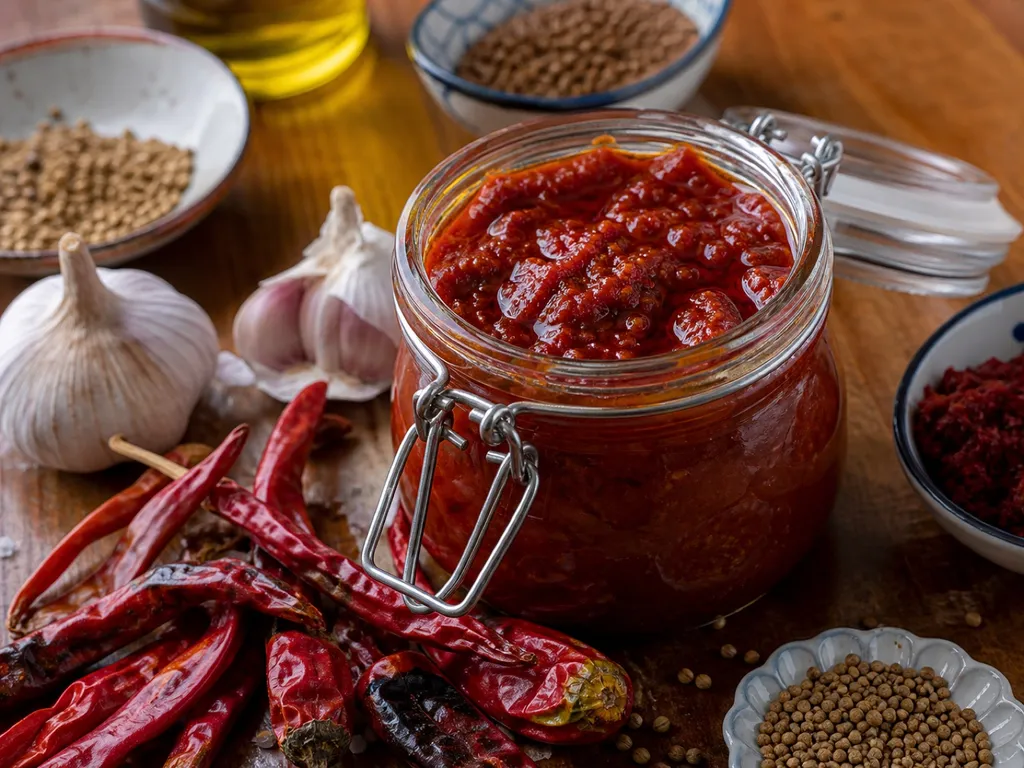 Images are for illustrative purposes only, may be inaccurate, and do not guarantee the presence or absence of specific ingredients.
 Listahan Family Score™
69/100
Works for many families
Score reflects how well this recipe fits a typical busy household. In the app, your Family Score is personalized to your household's allergens, kids, and pantry.
Nutrition
per serving320
Calories
3 g
Protein
18 g
Carbs
29 g
Fat
Estimated per serving. Actual values depend on the brands and portions you use.
Listahan cooking guide
Chef notes & practical guide
Technique notes, ingredient swaps, serve-alongside ideas, storage guidance, and equipment for this recipe.
Cultural context
Harissa is Tunisia's national condiment and arguably the most influential hot sauce in North African cooking, appearing as a table condiment, a cooking paste, and a marinade across Tunisia, Libya, Algeria, and Morocco. Its origin is traced to the introduction of chile peppers to North Africa by Spanish traders in the 16th century, where they were rapidly integrated into Berber and Arab cooking. The word harissa derives from an Arabic root meaning to pound or crush, reflecting the traditional preparation method of grinding dried chiles with garlic and spices in a stone mortar to a smooth, oil-slicked paste.
Listahan note
This version builds harissa from dried chiles rehydrated in boiling water, which gives the paste a deeper, more complex flavor than blends made from fresh peppers or chile flakes, and uses the traditional caraway-coriander base that distinguishes Tunisian harissa from supermarket versions.
Technique cues
- Soaking dried chiles in just-boiled water for 20-30 minutes is the key preparatory step: the rehydration softens the flesh to a consistency that will blend smooth and also leaches out some of the harshest, most astringent compounds from the skin, producing a rounder heat than dry-processing alone.
- Toast caraway and coriander seeds in a dry pan before grinding — these spices are fat-soluble and their aromatic compounds bloom fully only with heat; toasting before grinding produces a harissa with noticeably more depth than one made with pre-ground seeds straight from the jar.
- The olive oil is not just for preservation — it emulsifies during blending and gives the harissa its characteristic silky body; add it gradually while the processor runs so it incorporates fully into the paste rather than pooling on top.
Kitchen flow
- Parallel prep
- Soak the dried chiles and toast the seeds simultaneously — the soak takes 25 minutes and the toasting takes 3, so start the soak first and use the waiting time to prep garlic and measure oil.
- Make-ahead
- Harissa is an ideal make-ahead condiment — it improves after 24 hours as the flavors meld, and keeps for 3 weeks in the fridge under a thin layer of olive oil. Make a full batch and use it across the week.
- Leftover move
- Harissa is a starting point, not just a condiment — stir into yogurt for a dipping sauce, whisk into vinaigrette, rub onto chicken before roasting, swirl into hummus, or stir into tomato sauce for shakshuka.
- Cleanup rhythm
- Chile oil stains are stubborn — wipe the food processor bowl with a paper towel before rinsing with soapy water to prevent the oil from coating the sink. Wear gloves when handling the soaked chiles if your skin is sensitive.
Ingredient brief
Role, handling, and swap guidance for each key ingredient.
4 oz dried red chilies (such as guajillo or de arbol), stemmed and seeded
heat, color, and body
Purpose: Guajillo provides deep red color and a fruity, moderate heat; de arbol adds sharpness and intensity — blending both mimics the layered heat profile of traditional Tunisian baklouti and serrano chiles.
Handling: Remove stems and shake out as many seeds as possible (seeds add heat and bitterness with no flavor), then soak in boiling water for 25 minutes until completely softened and pliable.
Adaptation: Ancho chiles (soaked) make a milder, more chocolatey harissa; for significant heat, add 2-3 bird's eye chiles to the soak for a fiercer paste.
5 cloves garlic
pungent aromatic base
Purpose: Raw garlic blended directly into the paste provides the sharp, biting edge that is characteristic of harissa and distinguishes it from milder chile pastes.
Handling: Use as-is — no need to roast; raw garlic gives harissa its signature punch and the olive oil preserves it safely in the fridge.
Adaptation: Roasted garlic can substitute for a sweeter, less aggressive harissa — good for those who want the flavor without sharp heat.
1 tbsp caraway seeds and 1 tbsp coriander seeds
Tunisian spice signature
Purpose: Caraway is the defining spice that makes Tunisian harissa different from other chile pastes in the world; its anise-like, slightly bitter character is the flavor note most North Americans recognize as 'harissa' from restaurant versions.
Handling: Toast in a dry skillet over medium heat for 2-3 minutes until fragrant, then grind in a spice grinder or mortar to a fine powder before adding.
Adaptation: If caraway is unavailable, fennel seeds produce a similar anise note at a slightly sweeter register; the result will be closer to a Moroccan harissa than Tunisian.
1/2 cup extra-virgin olive oil
emulsifier, preservative, and body
Purpose: Olive oil carries fat-soluble flavor compounds from the chiles and spices, gives the paste its smooth, spreadable consistency, and acts as a preservative seal when storing.
Handling: Add in a thin stream while blending for a fully emulsified, uniform paste — adding all at once can prevent full integration.
Adaptation: Neutral oil can substitute for a less assertive flavor; the olive oil character is noticeable in harissa used as a condiment but less so when it is cooked into a dish.
Technique notes
- Reserve a tablespoon of the chile soaking water and add it to the blender if the paste is too thick — the liquid is dark, flavorful, and will loosen the paste without diluting the heat the way plain water would.
- Taste the finished harissa immediately and adjust: if it is too bitter, add a pinch of sugar; if too sharp, add a squeeze of lemon; if too thick, stream in more olive oil — harissa is a living paste that responds to adjustment.
- Pour a thin layer of olive oil over the surface before sealing the container for storage — this oil cap prevents oxidation and extends the fridge life considerably; shake or stir before each use.
Ingredient swaps
- Milder family version
- Use all guajillo or ancho chiles and omit any de arbol; the paste will be vibrant red with complex flavor but a heat level most children can tolerate.
- Gluten-free and vegan
- The base recipe is naturally gluten-free and vegan — no adjustments needed.
- Smoky variation
- Replace half the guajillo with dried chipotle (morita) chiles for a smoky harissa that works exceptionally well as a marinade for grilled meats.
Serve alongside
- couscous with roasted vegetables for a built-in heat element
- warm flatbread for spreading
- eggs any style for a quick shakshuka-adjacent meal
- yogurt or labneh as a cooling counterpoint
- cold water or sparkling water to balance the heat
- chilled dry rose wine
- cold lager beer
Serving suggestions only — check pairings for your household's allergens.
Storage & reheating
- Store in a sealed glass jar in the fridge for up to 3 weeks; keep a thin layer of olive oil over the surface to prevent oxidation.
- Harissa does not need reheating — use straight from the fridge as a condiment or stir into hot dishes.
- Freeze in ice cube trays for single-use portions; transfer to a freezer bag and use within 3 months directly from frozen in cooked dishes.
Equipment
- food processor or high-speed blender
- dry skillet for toasting seeds
- spice grinder or mortar and pestle
- glass jar with tight-fitting lid for storage
Make this household-aware
Listahan Pro checks this recipe against your household's allergens, finds pantry-aware swaps, builds the shopping list, and helps you plan the week around it.
Plan it in Listahan
Add Harissa to your week, check it against your household's allergens, and build the shopping list automatically.
More North African recipes
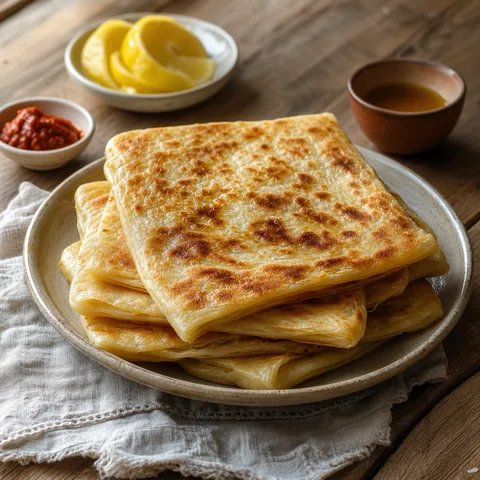 North African Lens Verified Images are for illustrative purposes only, may be inaccurate, and do not guarantee the presence or absence of specific ingredients.
 Msemmen
Layered and folded semolina flatbread cooked on a griddle until the outside crisps and the inside stays wonderfully chewy — perfect with honey or harissa.
 North African Lens Verified Images are for illustrative purposes only, may be inaccurate, and do not guarantee the presence or absence of specific ingredients.
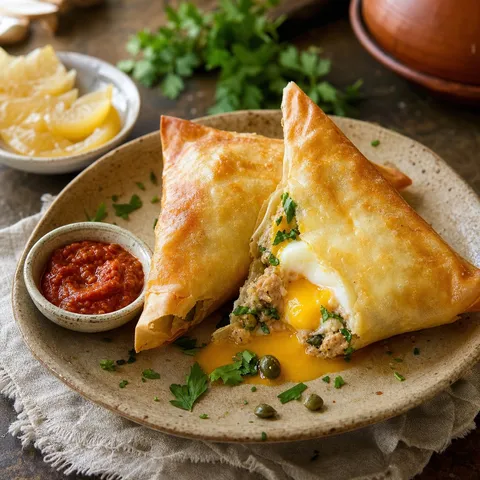
 Brik
Crispy paper-thin pastry folded around a whole egg, tuna, and parsley then flash-fried until golden — Tunisia's beloved street snack, eaten fast before the yolk escapes.
 North African Lens Verified Images are for illustrative purposes only, may be inaccurate, and do not guarantee the presence or absence of specific ingredients.
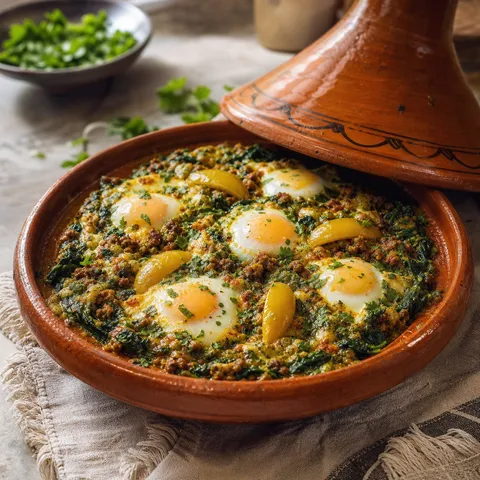
 Tajine El Bey
Tunisia's grand layered bake of spiced lamb, eggs, and cheese baked in a deep crust — a celebration dish with silky, complex layers in every slice.