 North African Images are for illustrative purposes only, may be inaccurate, and do not guarantee the presence or absence of specific ingredients.
 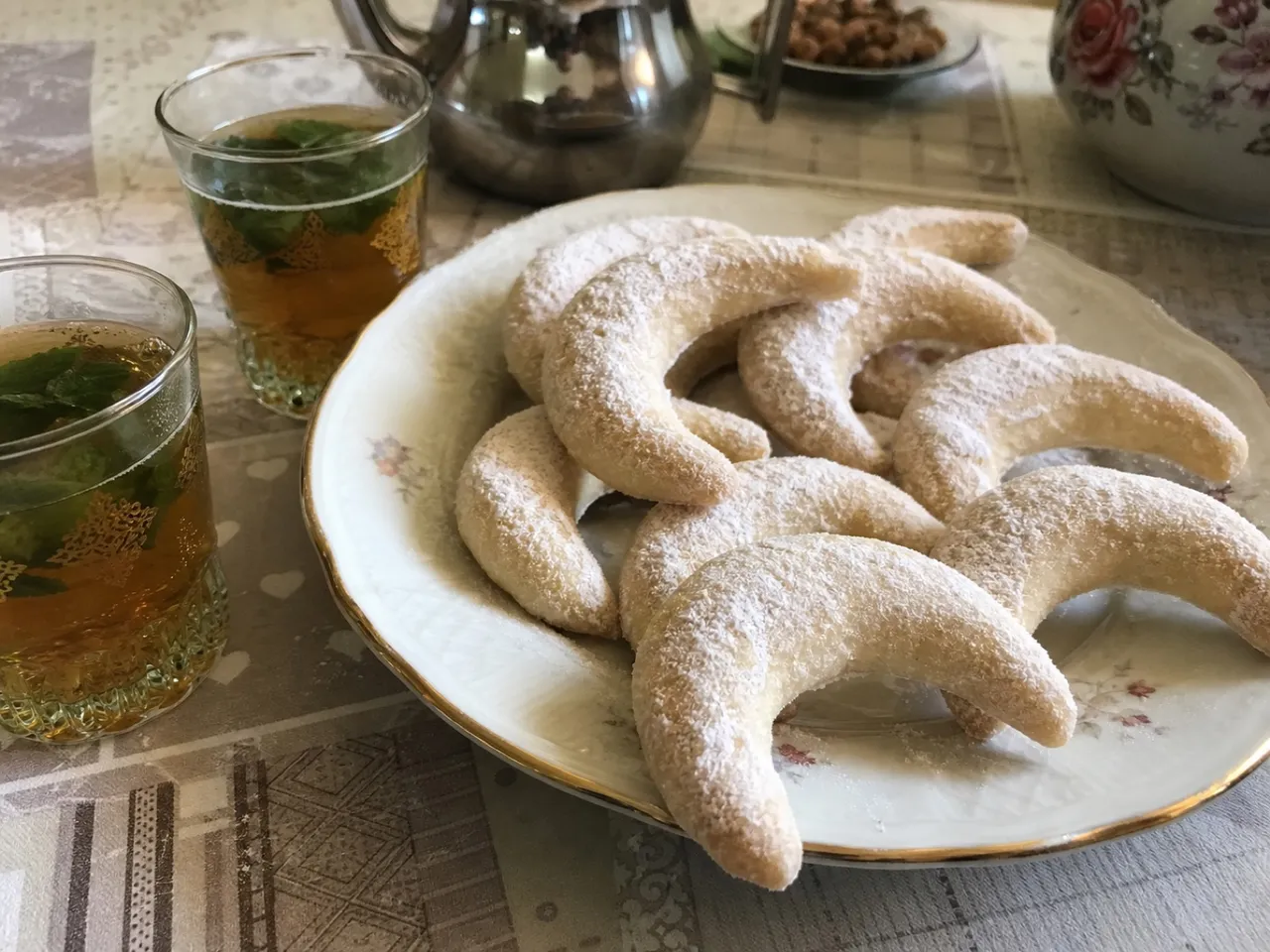 Serving Images are for illustrative purposes only, may be inaccurate, and do not guarantee the presence or absence of specific ingredients.
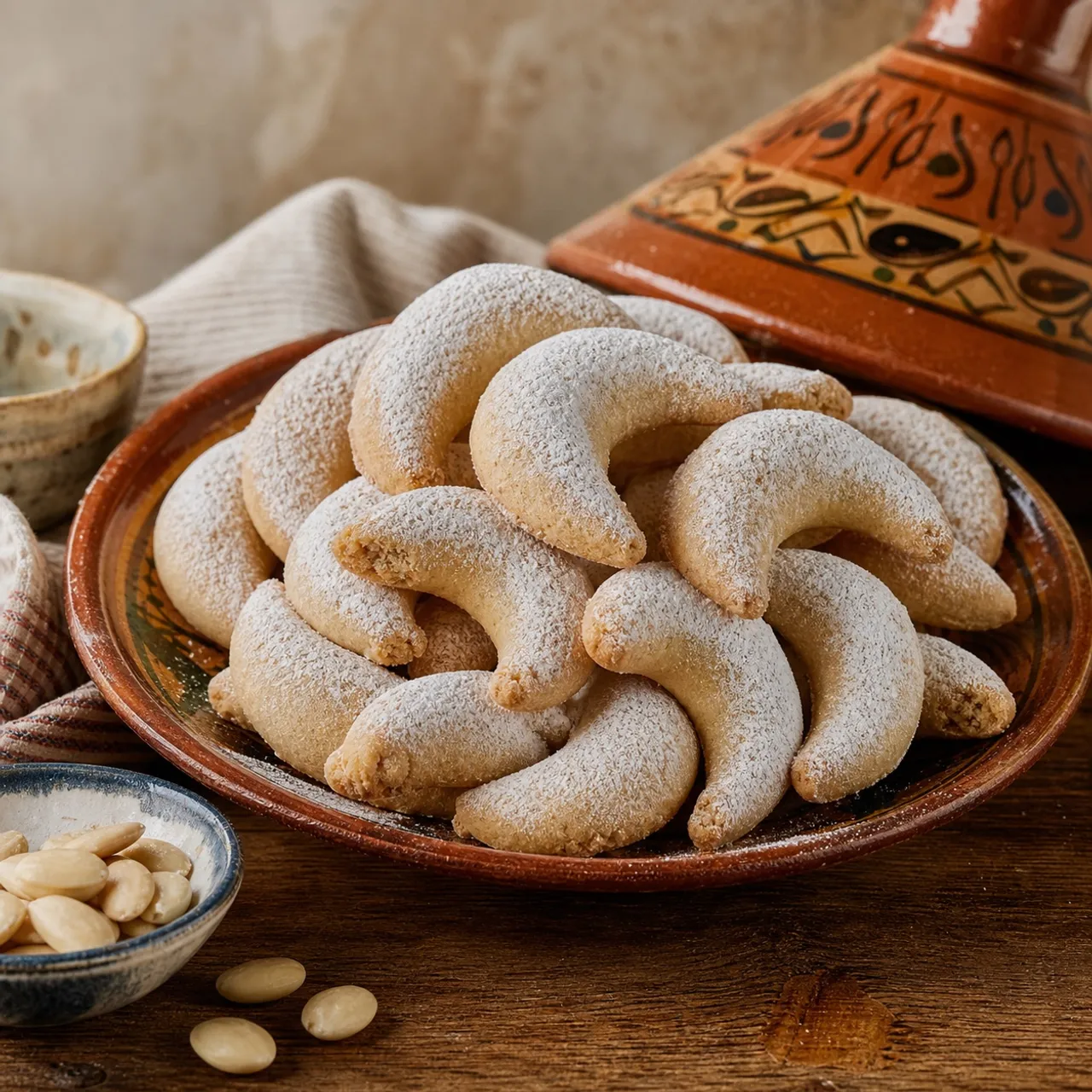
 Kaab el Ghazal
Delicate crescent-shaped Moroccan pastries, their thin shells cradling a fragrant orange-blossom almond paste.
Contains common allergens
In the app, Listahan checks these against your household automatically.
Instructions
5 steps- 1
Blend the ground almonds, powdered sugar, cinnamon, and 2 tbsp orange blossom water into a smooth, pliable paste, then roll into thin 2-inch logs and set aside.
- 2
Make the dough by mixing the flour, salt, melted butter, and enough warm water (about 1/3 cup) to form a soft dough, then knead for 8 minutes until silky and elastic.
- 3
Roll the dough paper-thin on a floured surface, cut into 4-inch squares, and lay an almond log along one edge of each.
- 4
Fold the dough over the filling, press out air, and trim with a fluted cutter, then curve each piece into a crescent and prick the top a few times with a pin.
- 5
Bake at 350°F for 12 to 15 minutes until barely golden, then brush with the remaining orange blossom water and cool before serving.
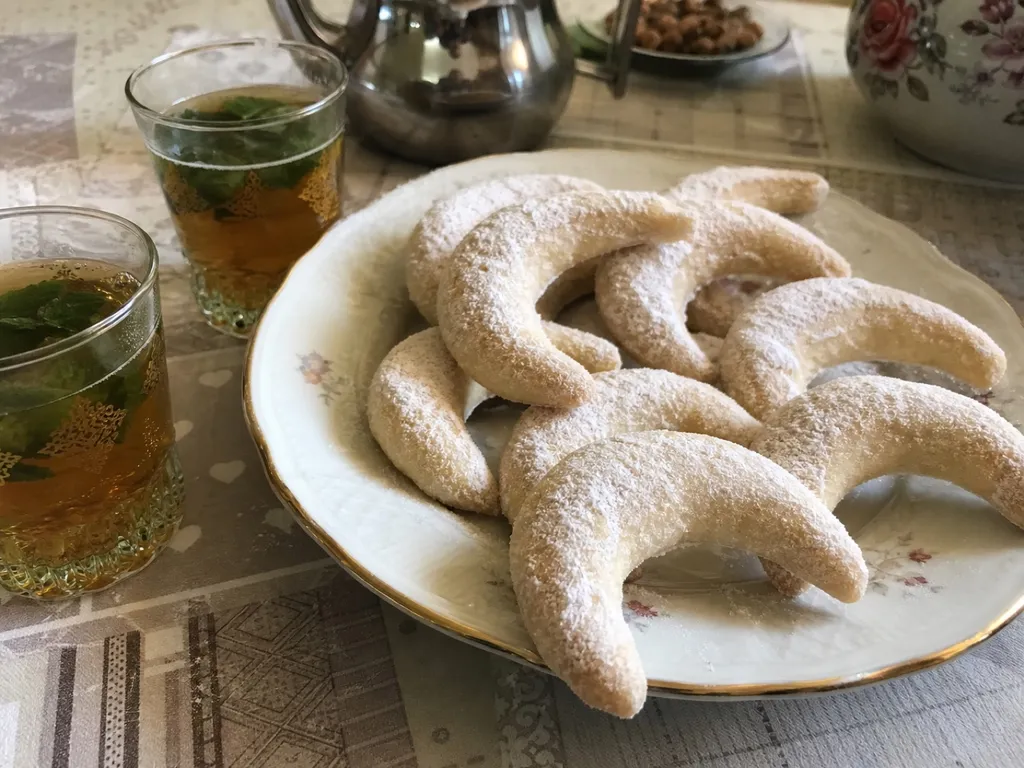 Images are for illustrative purposes only, may be inaccurate, and do not guarantee the presence or absence of specific ingredients.
 Listahan Family Score™
66/100
Works for many families
Score reflects how well this recipe fits a typical busy household. In the app, your Family Score is personalized to your household's allergens, kids, and pantry.
Nutrition
per serving445
Calories
11 g
Protein
51 g
Carbs
24 g
Fat
Estimated per serving. Actual values depend on the brands and portions you use.
Listahan cooking guide
Chef notes & practical guide
Technique notes, ingredient swaps, serve-alongside ideas, storage guidance, and equipment for this recipe.
Cultural context
Kaab el Ghazal, meaning 'gazelle ankles' in Moroccan Arabic, are crescent-shaped almond-paste-filled cookies that are one of Morocco's most iconic pastries, served at weddings, religious celebrations, and alongside the mint tea ritual. The delicate curve of the crescent is meant to evoke the elegance of a gazelle's limb, and the level of skill required to fill and shape them without cracking the dough is considered a marker of a skilled Moroccan home baker. The combination of orange blossom water with almonds and cinnamon reflects the Andalusian culinary heritage that traveled to Morocco with the Moorish expulsion from Spain in 1492.
Listahan note
This version uses a simple unleavened pastry dough that relies on butter and orange blossom water for tenderness, which gives the cookies a sandy, melt-in-the-mouth shell that contrasts with the dense, fragrant almond filling.
Technique cues
- The pastry dough should be mixed until it just holds together and no further — overworking develops gluten and produces a tough shell that cracks when bent into the crescent shape; the finished dough should feel like soft modeling clay and should not spring back when pressed.
- The almond filling must be moist enough to roll into a log without crumbling but dry enough not to leak through the pastry — the orange blossom water is the binding agent, and if the mixture feels dry and sandy, add it a teaspoon at a time until the paste holds when squeezed.
- Kaab el Ghazal are baked low and slow at 325-340 F until barely colored: the goal is a pale ivory shell rather than golden, which indicates the dough is cooked through but still tender; overbaked crescents become brittle and lose the sandy texture that defines the best version.
Kitchen flow
- Parallel prep
- Make the almond filling first and chill it while you mix the dough — cold filling is much easier to roll into logs and place inside the dough without tearing.
- Make-ahead
- Both the dough and filling can be made up to 2 days ahead and refrigerated separately. Assembled but unbaked crescents can be frozen on a sheet pan and baked directly from frozen at 325 F, adding 4-5 minutes to the bake time.
- Leftover move
- Kaab el Ghazal keep very well and actually improve slightly after a day as the flavors meld; store in a tin and serve with subsequent rounds of mint tea throughout the week.
- Cleanup rhythm
- The almond grinding is the messiest step — do it first and wipe down the food processor before switching to dough work. The rest is mostly hand work with minimal dishes.
Ingredient brief
Role, handling, and swap guidance for each key ingredient.
2 cups blanched almonds, finely ground
filling base
Purpose: Finely ground blanched almonds produce a smooth, moldable paste that has the right density and richness for the filling; whole or coarsely ground almonds will create a grainy texture that is difficult to roll cleanly.
Handling: Grind in a food processor until the texture resembles fine, slightly damp sand — stop before it becomes almond butter; a few pulses beyond flour stage is where you want to stop.
Adaptation: Commercially prepared marzipan or almond paste can substitute and saves the grinding step; use the same weight and omit the powdered sugar and orange blossom water, adjusting sweetness to taste.
3/4 cup powdered sugar
sweetness and binding
Purpose: Powdered sugar dissolves seamlessly into the almond flour without graininess and helps bind the paste together alongside the orange blossom water.
Handling: Sift if lumpy before mixing so no sugar clumps remain in the filling — a lump of undissolved sugar will create a hard spot in the finished filling.
Adaptation: No effective substitute in the filling; reducing sugar will make the paste harder to bind and less pleasant to eat.
3 tbsp orange blossom water (divided)
binder and aromatic signature
Purpose: Orange blossom water is the defining perfume of Moroccan sweet pastry — it binds the almond paste and scents the dough, and its floral character is what makes these cookies unmistakably North African.
Handling: Use in two portions: most goes into the almond filling as a binder, with a small amount for the dough — add gradually to the filling until the paste just coheres.
Adaptation: Rose water can substitute for a different but still authentic floral note; use about half the amount as rose water is more potent.
2 cups all-purpose flour
pastry shell structure
Purpose: All-purpose flour with a modest protein content produces a shell that is firm enough to hold the filling but tender enough to snap cleanly when bitten rather than crumbling or bending.
Handling: Measure by spooning into the cup and leveling — packed flour produces a dry dough that cracks when shaped into the crescent.
Adaptation: A blend of equal parts all-purpose and cake flour produces an even more tender, delicate shell.
4 tbsp unsalted butter, melted
tenderness and richness
Purpose: Melted butter coats the flour proteins quickly and limits gluten development, producing a sandy, short texture in the finished pastry shell.
Handling: Cool the melted butter to room temperature before adding to the flour so it does not toughen the dough.
Adaptation: Neutral vegetable oil can replace butter for a dairy-free direction at the same volume; the shell will be slightly less rich but still sandy.
Technique notes
- Roll the almond filling into a thin log slightly shorter than your dough rectangle before sealing — a log that extends to the edge of the dough makes it impossible to seal the ends without the filling pressing through and cracking the crust.
- Pinch the seam firmly and roll the filled crescent gently under your palm on the work surface to smooth it before bending into the crescent shape — this compresses any air pockets that would expand and crack the shell during baking.
- Prick each crescent twice with a toothpick just before baking to allow steam to escape — without venting, the dough can puff and split, ruining the smooth surface.
Ingredient swaps
- Gluten-free direction
- Replace the all-purpose flour with a 1-to-1 gluten-free baking flour blend; the dough will be more delicate and may need brief chilling before rolling, but the cookies bake successfully.
- Dairy-free option
- Substitute the melted butter with refined coconut oil or a neutral vegetable oil at the same volume; the shell will be slightly less rich but maintains the sandy texture.
- Nut-free direction
- Replace the almond filling with a date-and-sesame paste (blended equal parts Medjool dates and toasted sesame seeds with a pinch of cinnamon and a teaspoon of orange blossom water) for a nut-free cookie that stays in the Moroccan flavor register.
Serve alongside
- Moroccan mint tea as the canonical accompaniment
- a plate of dates and dried apricots alongside
- honey for dipping if desired
- Moroccan mint tea, hot and very sweet
- cardamom-spiced Arabic coffee
- warm almond milk with cinnamon
Serving suggestions only — check pairings for your household's allergens.
Storage & reheating
- Store in an airtight tin at room temperature for up to 10 days — these cookies keep exceptionally well and the flavor mellows and deepens over the first 2 days.
- Do not refrigerate; moisture from the fridge makes the pastry shell soft and the filling dense.
- Freeze unbaked assembled crescents for up to 2 months; bake from frozen at 325 F.
Equipment
- food processor for grinding almonds
- rolling pin for pastry
- parchment-lined baking sheet
- toothpick or thin skewer for venting
Make this household-aware
Listahan Pro checks this recipe against your household's allergens, finds pantry-aware swaps, builds the shopping list, and helps you plan the week around it.
Plan it in Listahan
Add Kaab el Ghazal to your week, check it against your household's allergens, and build the shopping list automatically.
More North African recipes
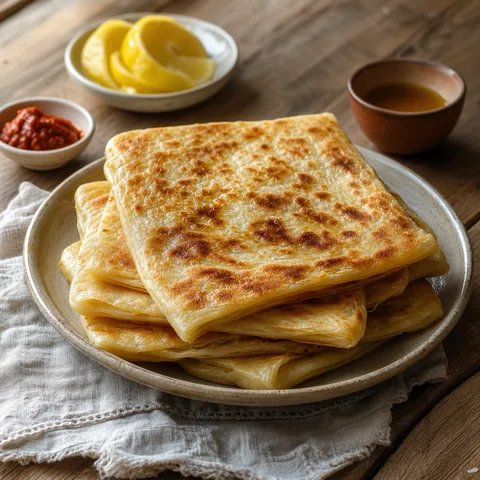 North African Lens Verified Images are for illustrative purposes only, may be inaccurate, and do not guarantee the presence or absence of specific ingredients.
 Msemmen
Layered and folded semolina flatbread cooked on a griddle until the outside crisps and the inside stays wonderfully chewy — perfect with honey or harissa.
 North African Lens Verified Images are for illustrative purposes only, may be inaccurate, and do not guarantee the presence or absence of specific ingredients.
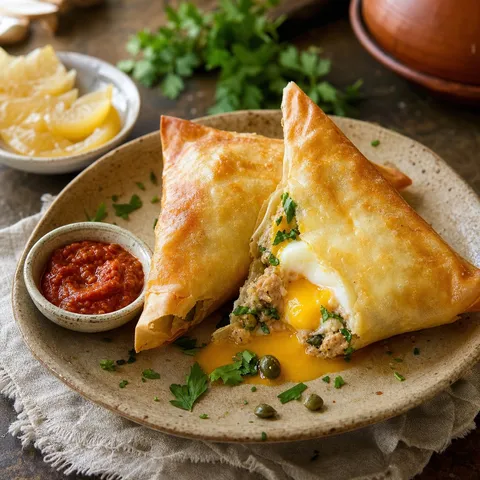
 Brik
Crispy paper-thin pastry folded around a whole egg, tuna, and parsley then flash-fried until golden — Tunisia's beloved street snack, eaten fast before the yolk escapes.
 North African Lens Verified Images are for illustrative purposes only, may be inaccurate, and do not guarantee the presence or absence of specific ingredients.
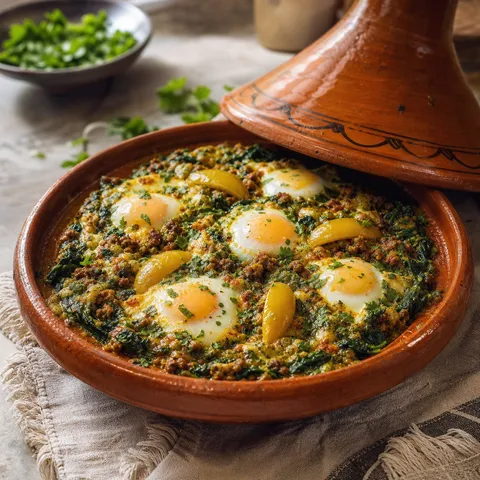
 Tajine El Bey
Tunisia's grand layered bake of spiced lamb, eggs, and cheese baked in a deep crust — a celebration dish with silky, complex layers in every slice.