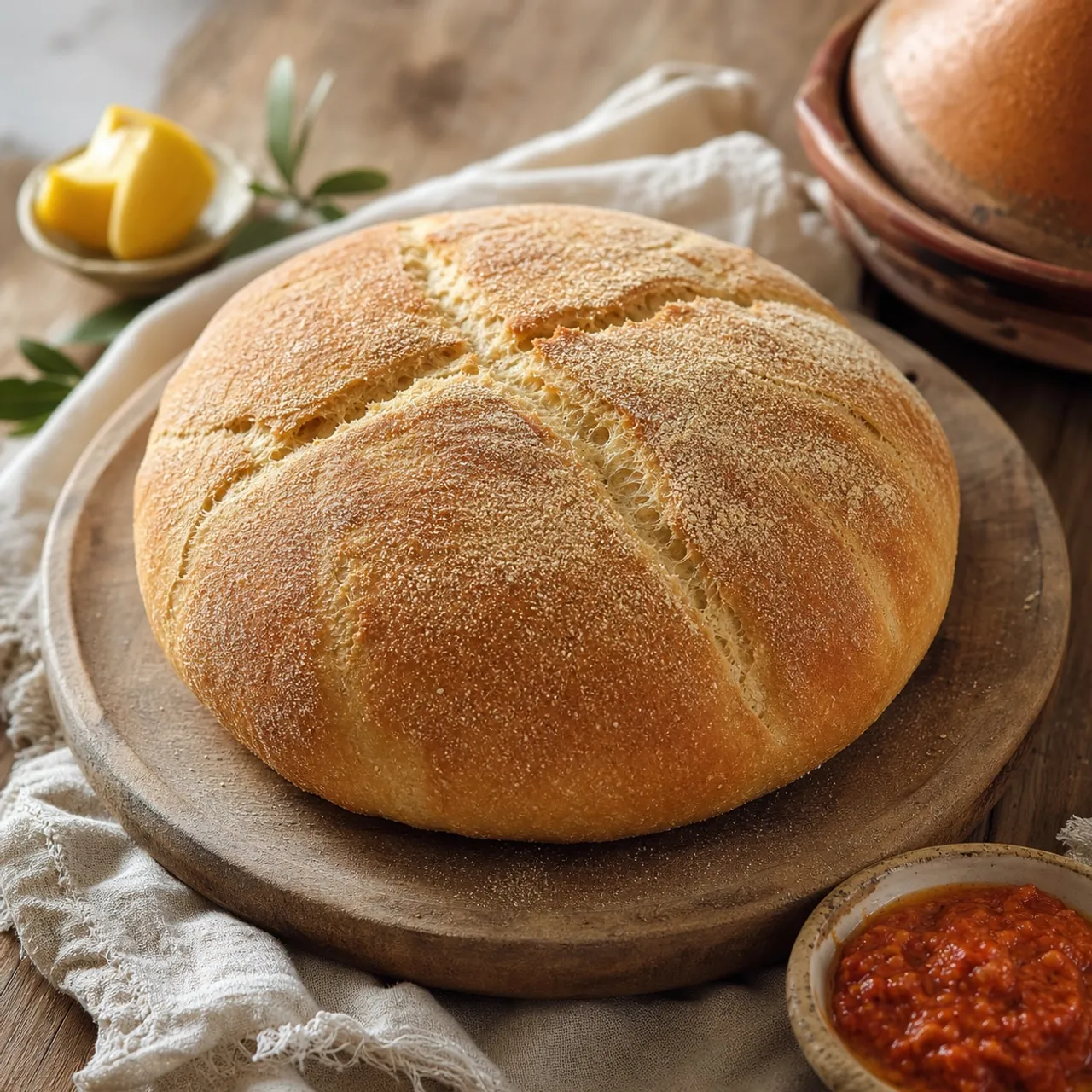
 North African Images are for illustrative purposes only, may be inaccurate, and do not guarantee the presence or absence of specific ingredients.
 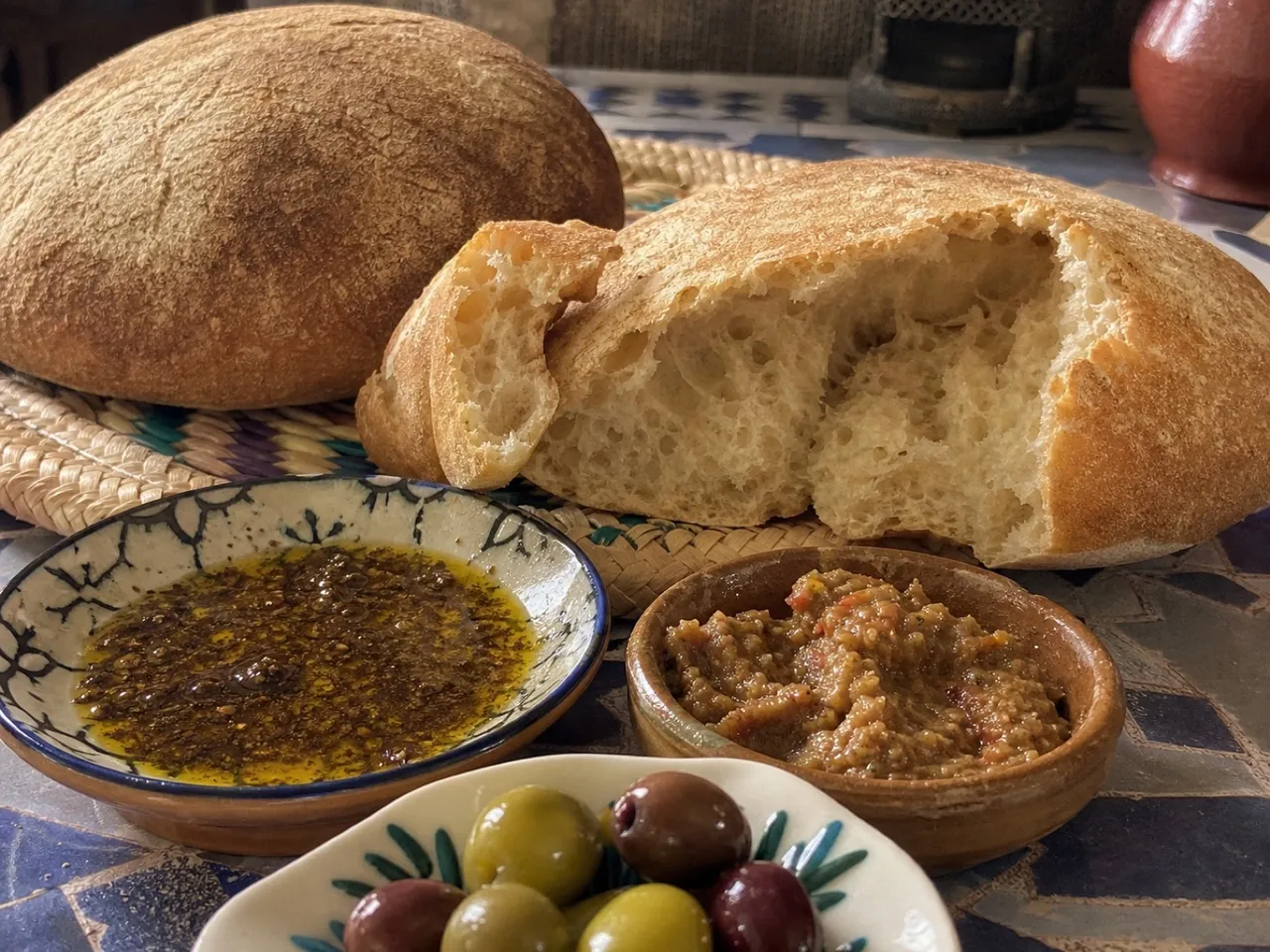 Serving Images are for illustrative purposes only, may be inaccurate, and do not guarantee the presence or absence of specific ingredients.
 Khobz
The everyday Moroccan round bread with a golden crust and tender crumb, made to scoop up tagines and salads.
Contains common allergens
In the app, Listahan checks these against your household automatically.
Instructions
5 steps- 1
Whisk the yeast into the warm water (about 110°F) and let it stand for 5 minutes until foamy.
- 2
In a large bowl combine the flour, semolina, and salt, then pour in the yeast mixture and olive oil, stirring until a shaggy dough forms.
- 3
Knead on a floured surface for 10 minutes until smooth and elastic, divide into two balls, and flatten each into a 7-inch disk on a semolina-dusted surface.
- 4
Cover with a towel and let rise in a warm spot for about 1 hour until nearly doubled, then prick the tops several times with a fork.
- 5
Bake at 435°F for 18 to 20 minutes until the crust is golden and the loaves sound hollow when tapped; cool on a rack before slicing.
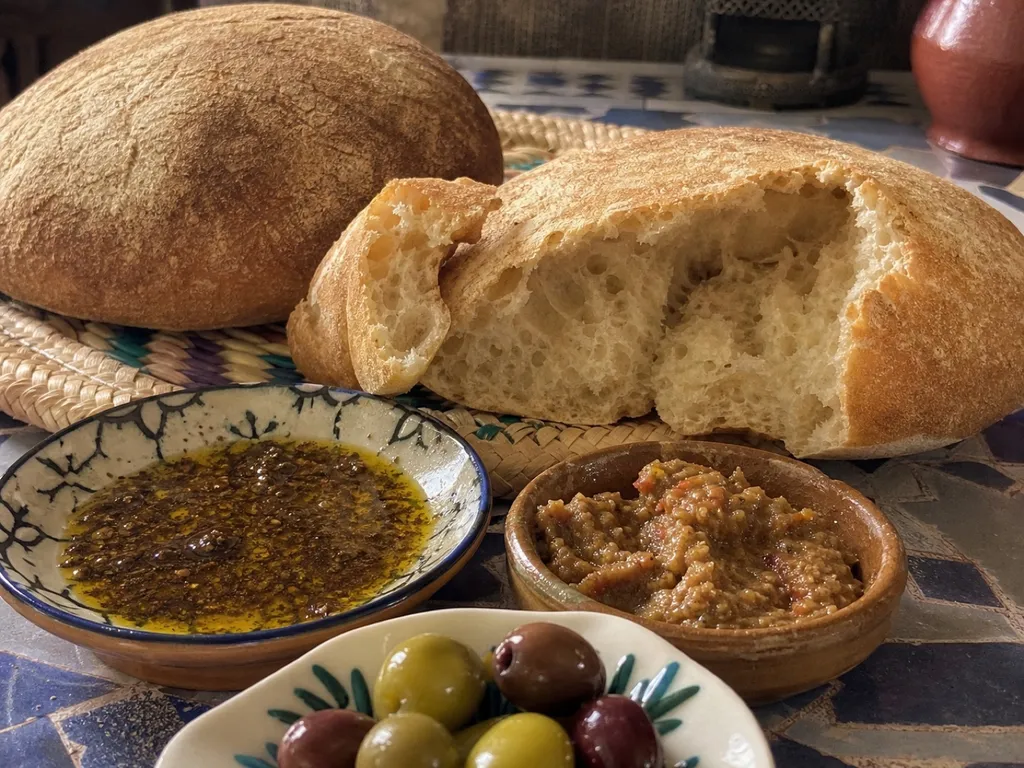 Images are for illustrative purposes only, may be inaccurate, and do not guarantee the presence or absence of specific ingredients.
 Listahan Family Score™
71/100
Good fit for most families
Score reflects how well this recipe fits a typical busy household. In the app, your Family Score is personalized to your household's allergens, kids, and pantry.
Nutrition
per serving595
Calories
16 g
Protein
111 g
Carbs
8 g
Fat
Estimated per serving. Actual values depend on the brands and portions you use.
Listahan cooking guide
Chef notes & practical guide
Technique notes, ingredient swaps, serve-alongside ideas, storage guidance, and equipment for this recipe.
Cultural context
Khobz is the everyday round flatbread of Morocco and across the Maghreb, baked in wood-fired community ovens called ferran where families traditionally brought their shaped loaves each morning to be baked by the neighborhood baker. The word simply means bread in Arabic, reflecting how central this loaf is to Moroccan eating — it is the utensil at most meals, used to scoop tagines, dip into olive oil, and wrap around grilled meats. The combination of all-purpose flour and semolina is the Moroccan signature: semolina gives the crumb a slightly grainy, chewy texture and the crust a dusted, matte appearance distinct from French-style bread.
Listahan note
This version bakes in a home oven at high heat on a preheated surface, which replicates the short burst of intense bottom heat from the ferran and produces the characteristic crisp base and soft, pillow-like interior.
Technique cues
- The semolina is structural as well as textural: its coarser grain absorbs water more slowly than all-purpose flour, which means the dough will feel slightly stiffer than an all-flour dough even when properly hydrated — resist the urge to add more water; the dough softens during the 60-90 minute proof as the semolina fully hydrates.
- Khobz is shaped into a round and pressed flat rather than formed into a free-standing loaf, and the thickness matters: 3/4 inch is the target — thinner and the crumb dries out in the oven, thicker and the interior stays doughy while the crust darkens.
- A very hot oven (425-450 F) with a preheated baking stone or inverted cast-iron skillet is essential for the right crust: the shock of heat from below drives rapid oven spring and sets the bottom crust before the crumb fully expands, which is what produces the tight, dense-crumbed interior and crisp underside that makes khobz so satisfying for scooping.
Kitchen flow
- Parallel prep
- While the dough proofs, preheat the oven with a baking stone or inverted cast-iron skillet inside for at least 45 minutes — the stone needs extended heat to become a reliable heat reservoir.
- Make-ahead
- After shaping, the rounds can be covered and refrigerated overnight for a slow cold proof; remove from the fridge 30 minutes before baking to take the chill off. This produces a slightly more complex flavor.
- Leftover move
- Day-old khobz is excellent split and toasted for a Moroccan-style bruschetta with olive oil and cumin, crumbled into a vegetable soup as a thickener, or pressed into a panini-style sandwich with harissa and leftover tagine.
- Cleanup rhythm
- Dust the work surface with semolina rather than flour for shaping — it prevents sticking without incorporating excess flour into the dough and sweeps up easily. Lining the sheet pan with parchment means no scrubbing after baking.
Ingredient brief
Role, handling, and swap guidance for each key ingredient.
4 cups all-purpose flour
primary structure
Purpose: All-purpose flour provides the gluten network that gives the dough elasticity and the bread its chewy structure while remaining workable enough to shape by hand.
Handling: Measure by spooning into the cup and leveling to avoid packing — a few extra tablespoons of flour will make the dough stiff enough to tear when pressed flat.
Adaptation: Bread flour can replace all-purpose for a chewier crumb with slightly more rise; the loaf will be a little taller and more open-crumbed.
1/2 cup fine semolina, plus more for dusting
texture and crust character
Purpose: Fine semolina adds a slightly gritty bite to the crumb and gives the crust the pale, matte, dusted appearance that is the visual signature of khobz.
Handling: Use fine semolina (rimacinata or 'extra fine') rather than coarse semolina or polenta, which will not integrate smoothly into the dough.
Adaptation: Substitute an equal amount of whole wheat flour for a nuttier, earthier flavor profile common in some Algerian household breads.
2 1/4 tsp active dry yeast
leavening
Purpose: Active dry yeast produces a steady, moderate rise appropriate for a dense, chewy flatbread — faster-acting yeasts can over-proof the round shape before it develops adequate flavor.
Handling: Dissolve in 1/4 cup of the warm water with a pinch of sugar and wait 5-10 minutes until foamy before adding to the flour; this proofing step confirms the yeast is alive.
Adaptation: Instant yeast can substitute at 3/4 the quantity and can be added directly to the dry ingredients without proofing.
2 tbsp olive oil
crumb tenderness and flavor
Purpose: A small amount of olive oil lubricates the gluten strands and produces a more tender, less dry crumb than a water-only dough, and adds the subtle fruitiness characteristic of Moroccan bread.
Handling: Add after the dough has come together and knead in thoroughly — adding oil too early can interfere with initial gluten development.
Adaptation: Neutral oil or melted butter can substitute; the flavor will shift slightly away from the traditional Moroccan profile.
Technique notes
- After shaping into a round, press the disc evenly to about 3/4 inch thick with the flat of your palm using light, even pressure — an uneven thickness means some parts of the bread will bake before others, leaving a doughy center or a burnt edge.
- Prick the surface of the shaped round all over with a fork (or use a traditional bread stamp) before its final proof — this prevents the top crust from ballooning and separating from the interior, which creates hollow pockets rather than an even crumb.
- Khobz is done when it sounds hollow when tapped on the bottom and the underside is golden brown — the internal temperature should reach 190-200 F; a pale-looking top is fine since the dramatic oven spring happens at the bottom of the bread.
Ingredient swaps
- Gluten-free direction
- A direct gluten-free swap is difficult for this bread as gluten is structural; a 1-to-1 GF bread flour blend plus 1 teaspoon xanthan gum produces an acceptable round but with a denser, less chewy crumb.
- Whole grain option
- Replace up to half the all-purpose flour with whole wheat flour for a nuttier flavor and denser crumb; add 1 tablespoon more water as whole wheat absorbs more liquid.
- Dairy-free and vegan
- The base recipe is already dairy-free and vegan — no adjustments needed.
Serve alongside
- Moroccan tagine of chicken with preserved lemons and olives for scooping
- harissa and extra-virgin olive oil for dipping
- Moroccan zaalouk (roasted eggplant and tomato salad)
- herb-flecked labneh with za'atar
- Moroccan mint tea
- fresh orange juice
- cold water with a wedge of lemon
Serving suggestions only — check pairings for your household's allergens.
Storage & reheating
- Store at room temperature in a bread bag or wrapped in a clean kitchen towel for up to 2 days; khobz stales quickly and is best eaten the day it is baked.
- Refresh day-old khobz by wrapping in foil and warming in a 350 F oven for 8 minutes.
- Freeze fully cooled loaves tightly wrapped for up to 1 month; thaw at room temperature and warm in the oven before serving.
Equipment
- baking stone or inverted cast-iron skillet for the oven floor
- kitchen scale for accurate flour measurement
- bench scraper for handling dough
- instant-read thermometer to confirm doneness
Make this household-aware
Listahan Pro checks this recipe against your household's allergens, finds pantry-aware swaps, builds the shopping list, and helps you plan the week around it.
Plan it in Listahan
Add Khobz to your week, check it against your household's allergens, and build the shopping list automatically.
More North African recipes
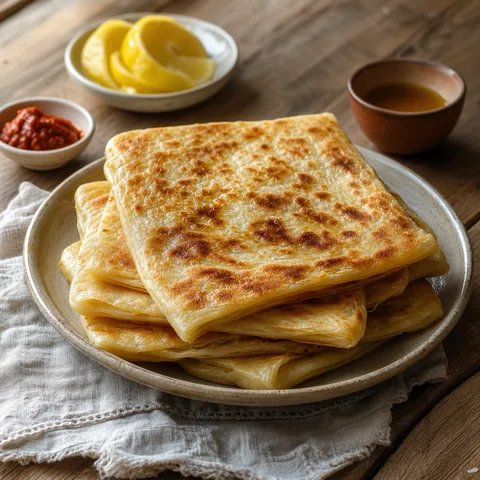 North African Lens Verified Images are for illustrative purposes only, may be inaccurate, and do not guarantee the presence or absence of specific ingredients.
 Msemmen
Layered and folded semolina flatbread cooked on a griddle until the outside crisps and the inside stays wonderfully chewy — perfect with honey or harissa.
 North African Lens Verified Images are for illustrative purposes only, may be inaccurate, and do not guarantee the presence or absence of specific ingredients.
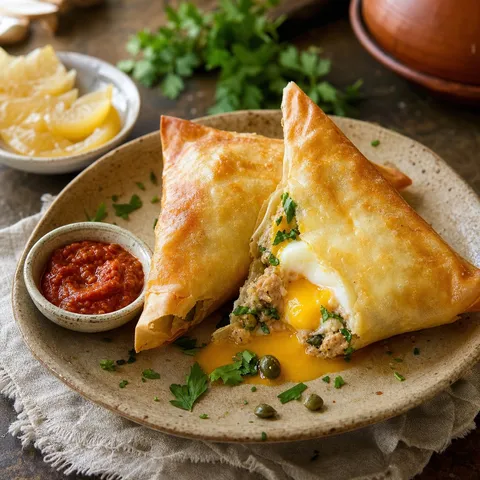
 Brik
Crispy paper-thin pastry folded around a whole egg, tuna, and parsley then flash-fried until golden — Tunisia's beloved street snack, eaten fast before the yolk escapes.
 North African Lens Verified Images are for illustrative purposes only, may be inaccurate, and do not guarantee the presence or absence of specific ingredients.
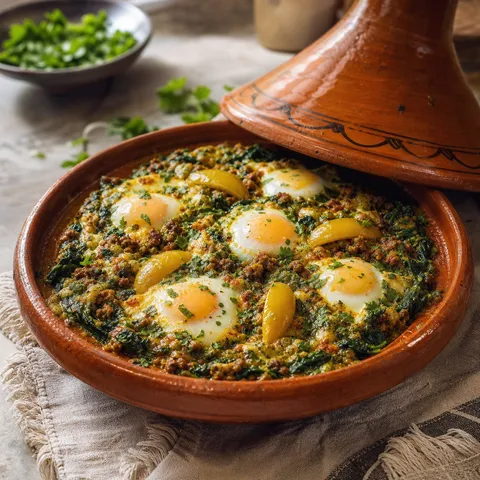
 Tajine El Bey
Tunisia's grand layered bake of spiced lamb, eggs, and cheese baked in a deep crust — a celebration dish with silky, complex layers in every slice.