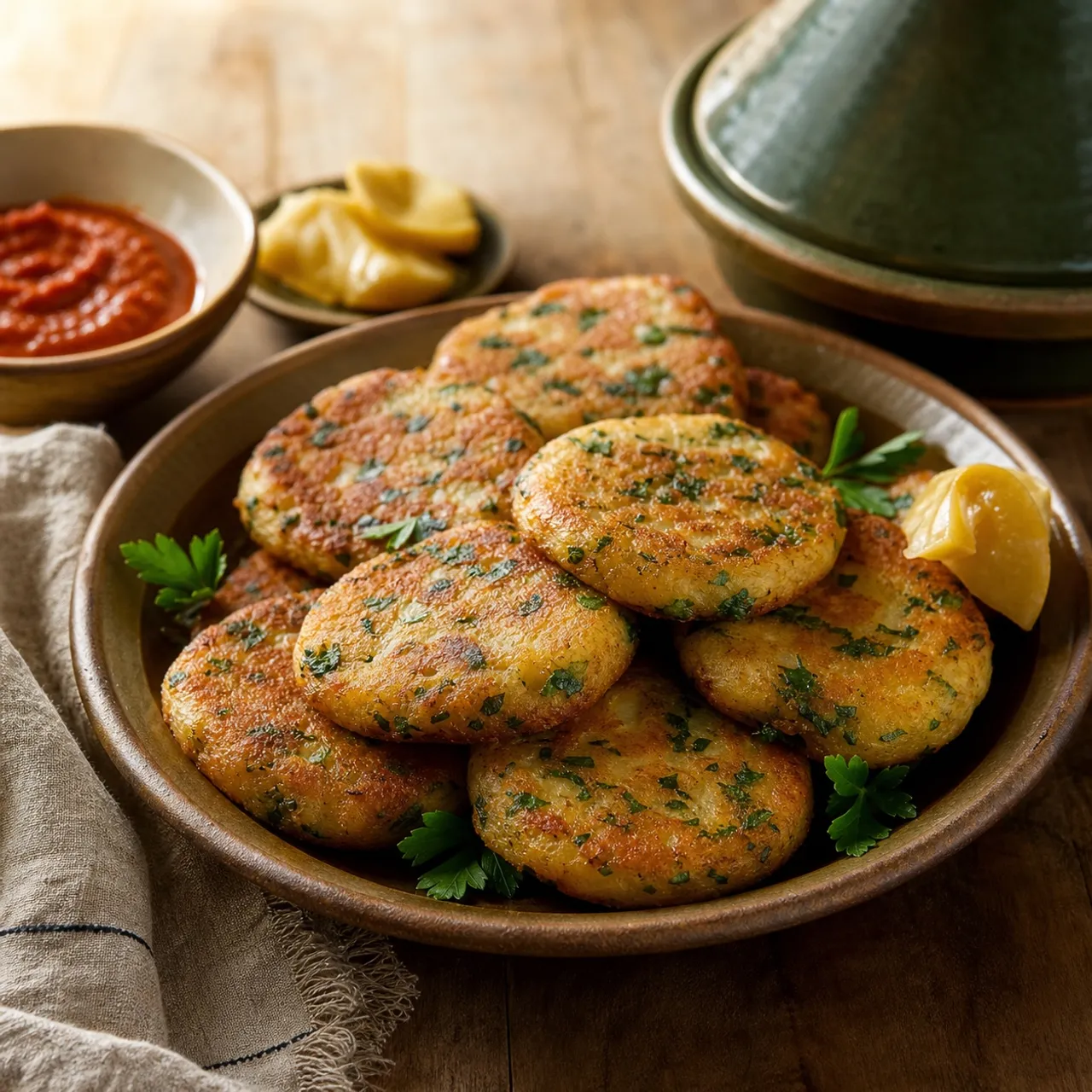
 North African Images are for illustrative purposes only, may be inaccurate, and do not guarantee the presence or absence of specific ingredients.
 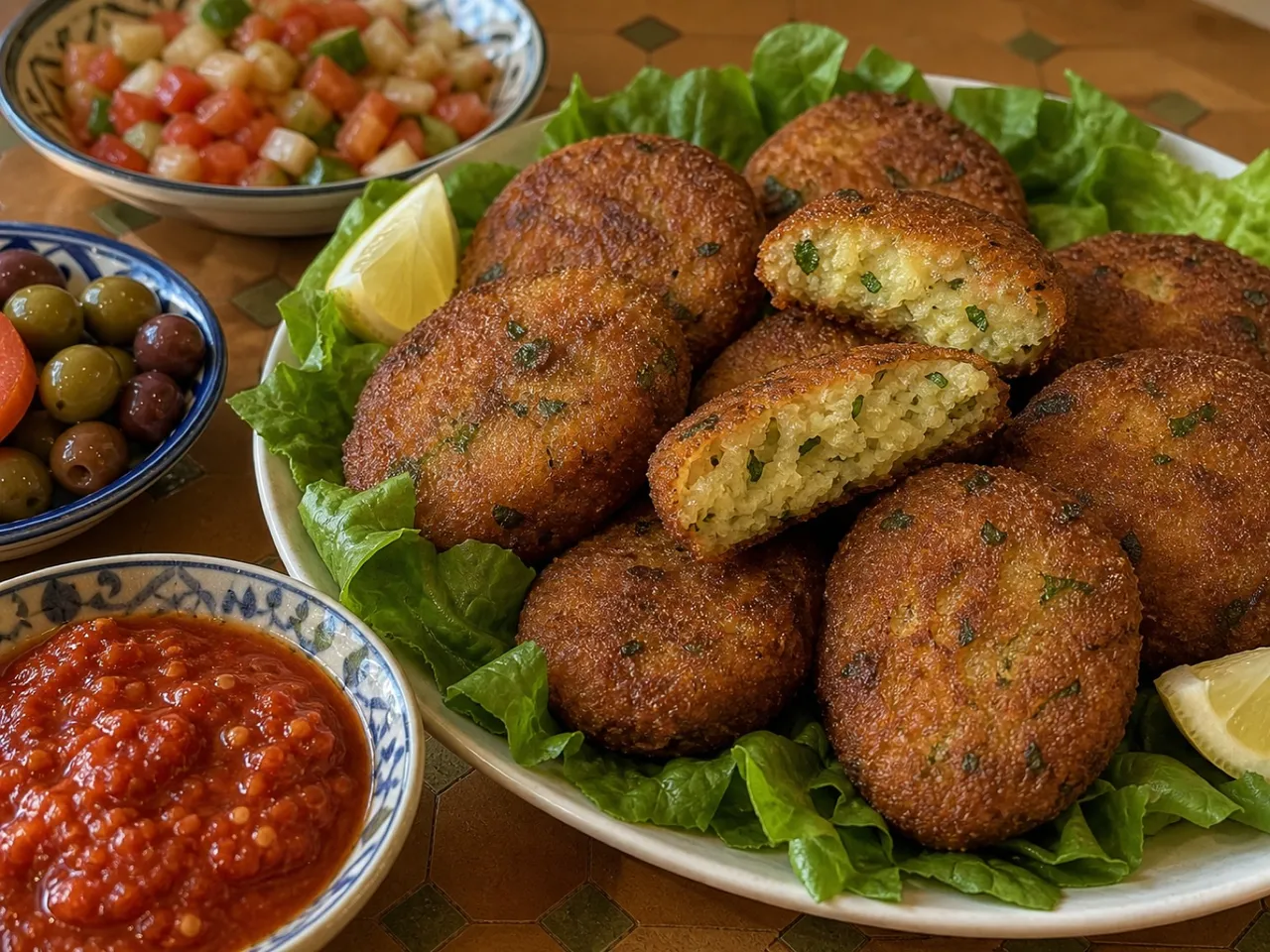 Serving Images are for illustrative purposes only, may be inaccurate, and do not guarantee the presence or absence of specific ingredients.
 Maakouda
Golden Algerian potato fritters, crisp outside and pillowy within, fragrant with garlic, parsley, and cumin.
Contains common allergens
In the app, Listahan checks these against your household automatically.
Good to know
- Crispy
Matched from this dish's own ingredients and timing. Browse more: crispy recipes
Instructions
5 steps- 1
Boil the potatoes in salted water for 18 to 20 minutes until fork-tender, then drain well and mash smooth while still hot.
- 2
Stir the garlic, parsley, cumin, paprika, 1 tsp salt, and 1 beaten egg into the warm mash until evenly combined, then chill for 15 minutes to firm up.
- 3
Scoop golf-ball portions and flatten into 1/2-inch-thick patties, dredging each lightly in flour and then in the second beaten egg.
- 4
Heat 1 inch of oil in a deep skillet to 350°F and fry the fritters in batches for 2 to 3 minutes per side until deep golden and crisp.
- 5
Drain on paper towels, sprinkle with a pinch of salt, and serve hot, often tucked into a baguette with harissa.
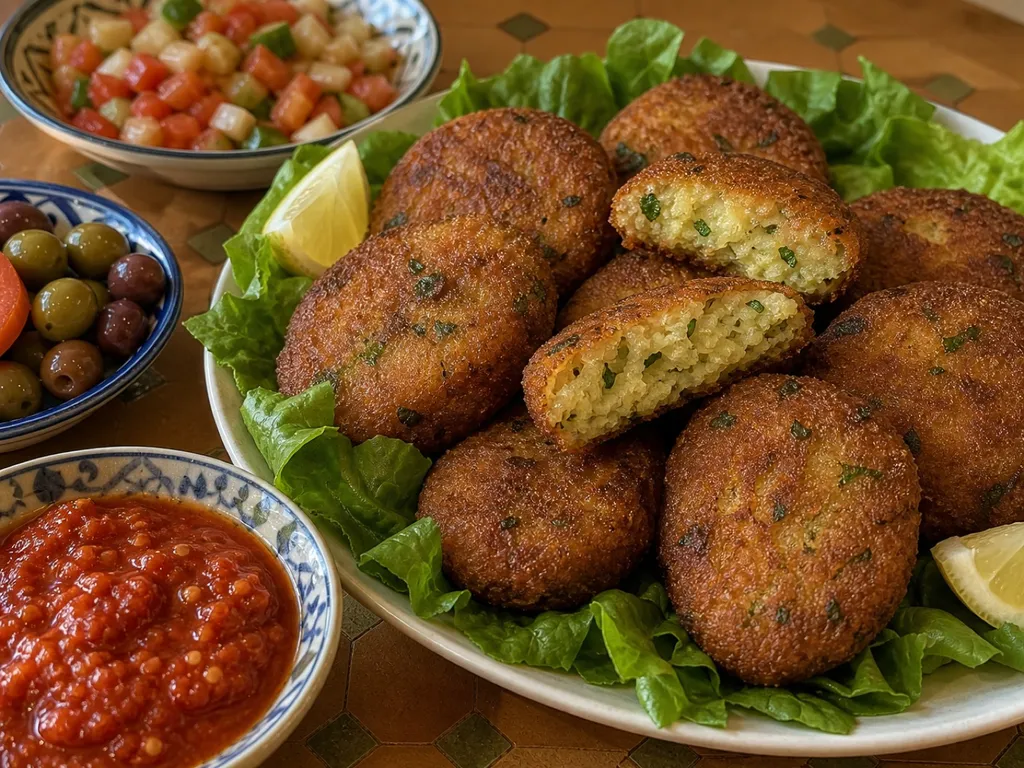 Images are for illustrative purposes only, may be inaccurate, and do not guarantee the presence or absence of specific ingredients.
 Listahan Family Score™
66/100
Works for many families
Score reflects how well this recipe fits a typical busy household. In the app, your Family Score is personalized to your household's allergens, kids, and pantry.
Nutrition
per serving135
Calories
5 g
Protein
26 g
Carbs
1 g
Fat
Estimated per serving. Actual values depend on the brands and portions you use.
Listahan cooking guide
Chef notes & practical guide
Technique notes, ingredient swaps, serve-alongside ideas, storage guidance, and equipment for this recipe.
Cultural context
Maakouda are Moroccan and Tunisian fried potato cakes that evolved as an affordable, filling street food sold by vendors in medina marketplaces. The name comes from Arabic roots meaning something that is bound or formed, describing the way mashed potato and egg are pressed into compact rounds before frying. In Tunisia they are often stuffed into baguette sandwiches with harissa and tuna as a working-class lunch; in Morocco they appear as a mezze-style starter or a Ramadan fast-breaker alongside fresh bread.
Listahan note
This version keeps the filling simple — cumin, paprika, garlic, and parsley — so the potato flavor comes through clearly, and uses a dual-egg technique (one in the batter, one for dredging) to create a golden, stable crust that stays crisp for several minutes after plating.
Technique cues
- The potato must be thoroughly dried after boiling: any residual moisture in the mash will steam the interior during frying and prevent the crust from setting, leaving a soft, greasy cake instead of a crisp one — spread the mash on a baking sheet and let it steam-dry for 5 minutes before mixing.
- Dredging in flour before the egg wash creates a thin dry barrier that gives the egg something to grip, which is what produces the even golden crust; skipping the flour layer causes the egg to slide off and the cake to absorb excess oil.
- Fry in oil that is deep enough to come halfway up the sides of each cake (about 3/4 inch) at 350 F — too cool and the cakes absorb oil; too hot and the exterior burns before the center sets.
Kitchen flow
- Parallel prep
- While potatoes boil, set up your dredging station (flour in one plate, beaten egg in a bowl) and heat the oil. By the time the mash is mixed and chilled, the oil is at temperature.
- Make-ahead
- Form the uncoated patties and refrigerate them on a parchment-lined sheet for up to 24 hours before dredging and frying. The chill actually helps the cakes hold their shape better during frying.
- Leftover move
- Leftover maakouda are excellent stuffed into a baguette with harissa, sliced hard-boiled egg, and tuna in the classic Tunisian casse-croute style, or crumbled into a breakfast hash with eggs and peppers.
- Cleanup rhythm
- Set a wire rack over a sheet pan to drain the fried cakes — it keeps the counter clean and the cakes crisp. Let the oil cool completely before discarding or straining for reuse.
Ingredient brief
Role, handling, and swap guidance for each key ingredient.
2 lbs russet potatoes, peeled and quartered
base and binder
Purpose: Russets have a high starch content that creates a light, cohesive mash which holds together during frying without becoming gluey.
Handling: Boil in salted water until very tender, drain completely, then let steam-dry before mashing — lumps or wet spots cause cakes to crack and fall apart in the oil.
Adaptation: Yukon Gold potatoes produce a richer, creamier mash and work well, though the cakes will be slightly denser and have a more yellow color.
3 cloves garlic, grated
aromatic sharpness
Purpose: Grated raw garlic distributes throughout the potato mixture and mellows slightly during frying, giving each cake a persistent savory depth.
Handling: Grate on a Microplane directly into the mash so it disperses evenly — minced garlic can leave detectable hot pockets in the finished cake.
Adaptation: One teaspoon of garlic powder can substitute if raw garlic flavor is too strong for the household.
1/3 cup chopped fresh flat-leaf parsley
freshness and color
Purpose: Parsley cuts through the starchiness of the potato and adds visible green flecks that make the interior of a sliced cake look vibrant and fresh.
Handling: Chop finely and pat dry if washed — wet herbs introduce moisture into the mash.
Adaptation: Fresh cilantro can replace parsley for a more North African flavor profile; dried herbs are a poor substitute here.
1 tsp ground cumin and 1/2 tsp sweet paprika
spice character
Purpose: This pairing is the signature Moroccan/Tunisian spice footprint for potato dishes — cumin adds warmth and earthiness while paprika gives color and gentle sweetness.
Handling: Add directly to the warm mash so the heat from the potatoes briefly blooms the spices and integrates their flavor.
Adaptation: Add a pinch of cayenne or harissa powder alongside the paprika if more heat is wanted.
2 large eggs (1 in batter, 1 for dredging)
structural binder and crust-setter
Purpose: The egg mixed into the mash binds the potato into a cohesive cake; the second egg beaten for dredging sets into a protective shell on contact with hot oil.
Handling: Beat the dredging egg in a wide, shallow bowl so the formed cakes can be rolled through it efficiently without breaking.
Adaptation: A flax egg (1 tablespoon ground flaxseed plus 3 tablespoons water) can replace the in-batter egg for binding in a vegan direction, though the crust will be slightly less golden.
1/2 cup all-purpose flour, for coating
crust anchor
Purpose: A light flour coat on each patty creates a dry, starchy surface that allows the egg wash to adhere evenly, which is what produces the even golden crust.
Handling: Season the flour lightly with salt and press each cake gently to ensure the flour coats all surfaces, including the edges.
Adaptation: Use chickpea flour for a gluten-free direction; it produces a slightly nuttier, more golden crust.
Technique notes
- Chill the formed patties in the fridge for 15 minutes before dredging — cold potato holds together much better than warm in the hot oil, and the firmer surface picks up the flour coating more evenly.
- Test the oil temperature with a small pinch of mash: it should sizzle immediately and float to the surface within 5 seconds; if it sinks and sits still, the oil is too cool and the cakes will be greasy.
- Do not crowd the pan — fry in batches of 3 or 4 with at least an inch between cakes so the oil temperature does not drop and the cakes can brown rather than steam.
Ingredient swaps
- Gluten-free direction
- Replace all-purpose flour with chickpea flour or a gluten-free all-purpose blend; the coating will be slightly thicker but still crisps well.
- Vegan direction
- Replace both eggs with flax eggs (1 tbsp ground flax + 3 tbsp water each) for binding; for dredging, use a thin slurry of chickpea flour and water instead of beaten egg.
- Baked option
- Brush formed, dredged patties with olive oil and bake at 425 F on a preheated sheet pan for 20-25 minutes, flipping once — not as crisp as fried but significantly lighter.
Serve alongside
- harissa-spiked yogurt dipping sauce
- simple tomato and roasted pepper salad with cumin dressing
- warm pita or crusty baguette for sandwiching
- green olives and pickled turnips
- fresh orange juice with a few drops of orange blossom water
- Moroccan mint tea served hot
- light lager beer
Serving suggestions only — check pairings for your household's allergens.
Storage & reheating
- Cooked maakouda keep in the fridge for up to 3 days; the crust softens but the flavor holds well.
- Reheat in a dry skillet over medium heat or in a 400 F oven for 8 minutes to restore crispness — avoid the microwave.
- Raw formed patties (uncoated) can be frozen for up to 1 month; thaw in the fridge overnight before dredging and frying.
Equipment
- heavy-bottomed skillet or Dutch oven for frying
- potato masher or ricer
- wire rack set over a sheet pan for draining
- instant-read or candy thermometer for oil temperature
Make this household-aware
Listahan Pro checks this recipe against your household's allergens, finds pantry-aware swaps, builds the shopping list, and helps you plan the week around it.
Plan it in Listahan
Add Maakouda to your week, check it against your household's allergens, and build the shopping list automatically.
More North African recipes
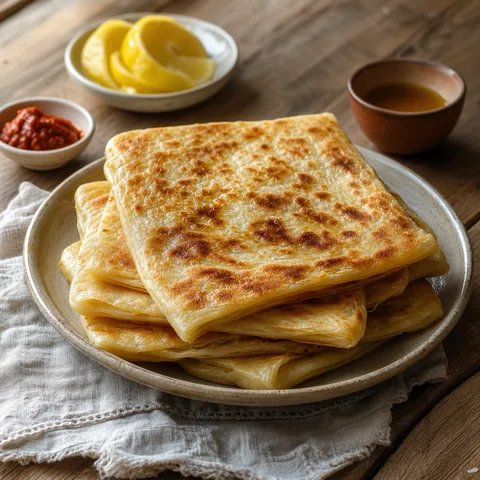 North African Lens Verified Images are for illustrative purposes only, may be inaccurate, and do not guarantee the presence or absence of specific ingredients.
 Msemmen
Layered and folded semolina flatbread cooked on a griddle until the outside crisps and the inside stays wonderfully chewy — perfect with honey or harissa.
 North African Lens Verified Images are for illustrative purposes only, may be inaccurate, and do not guarantee the presence or absence of specific ingredients.
 Brik
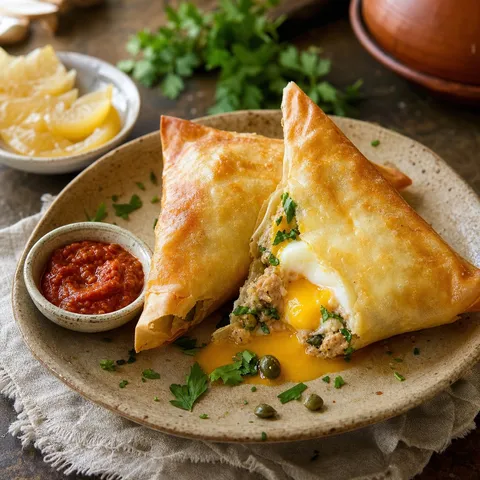
Crispy paper-thin pastry folded around a whole egg, tuna, and parsley then flash-fried until golden — Tunisia's beloved street snack, eaten fast before the yolk escapes.
 North African Lens Verified Images are for illustrative purposes only, may be inaccurate, and do not guarantee the presence or absence of specific ingredients.
 Tajine El Bey
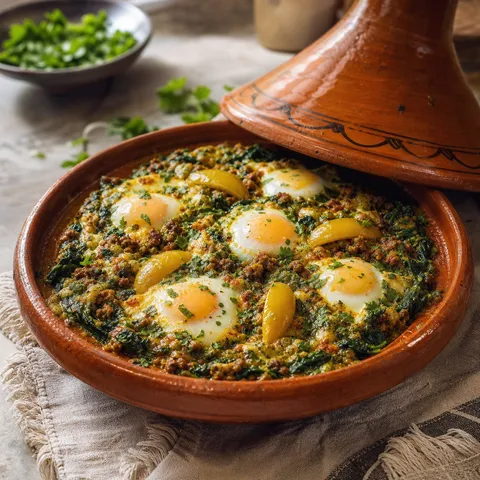
Tunisia's grand layered bake of spiced lamb, eggs, and cheese baked in a deep crust — a celebration dish with silky, complex layers in every slice.