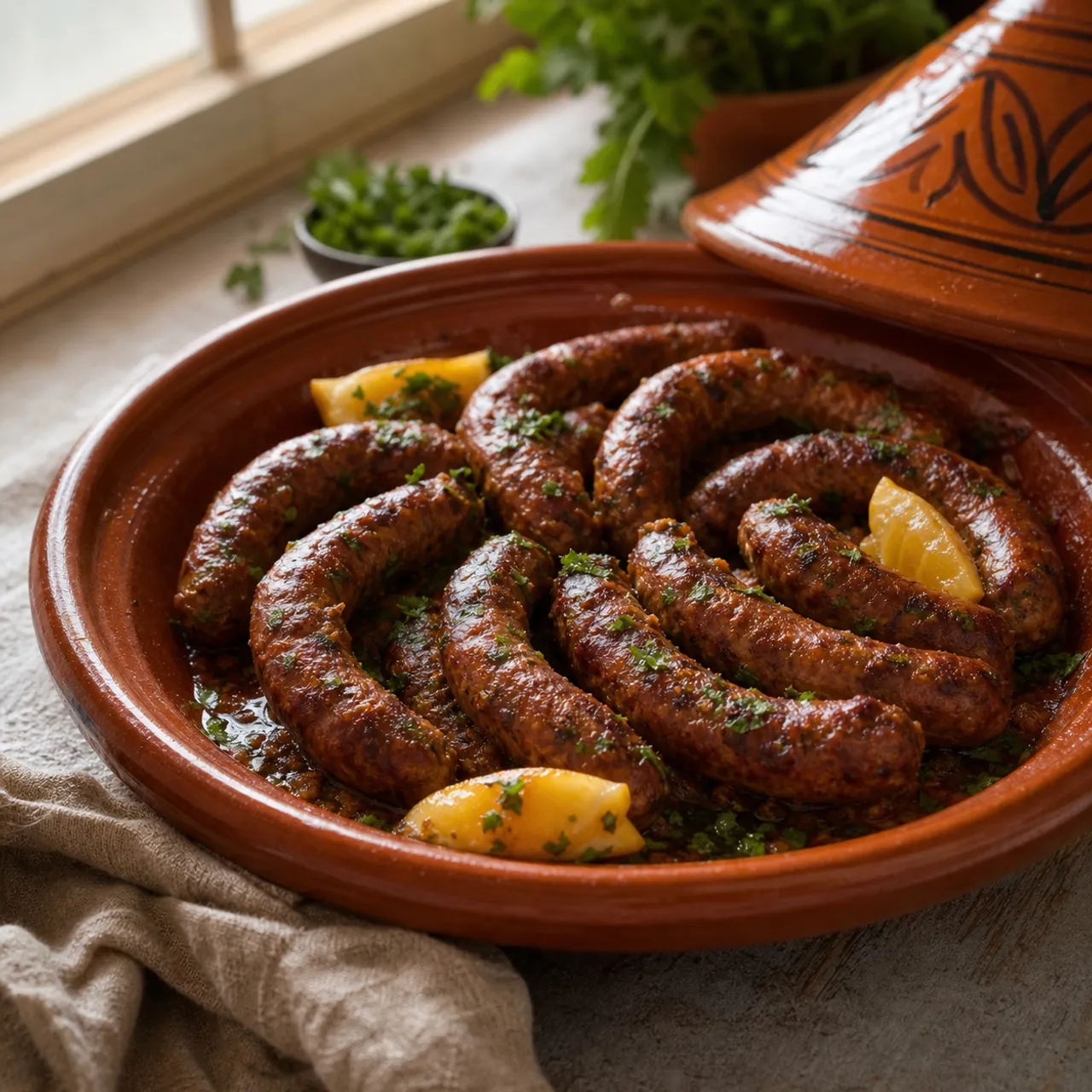
 North African Images are for illustrative purposes only, may be inaccurate, and do not guarantee the presence or absence of specific ingredients.
 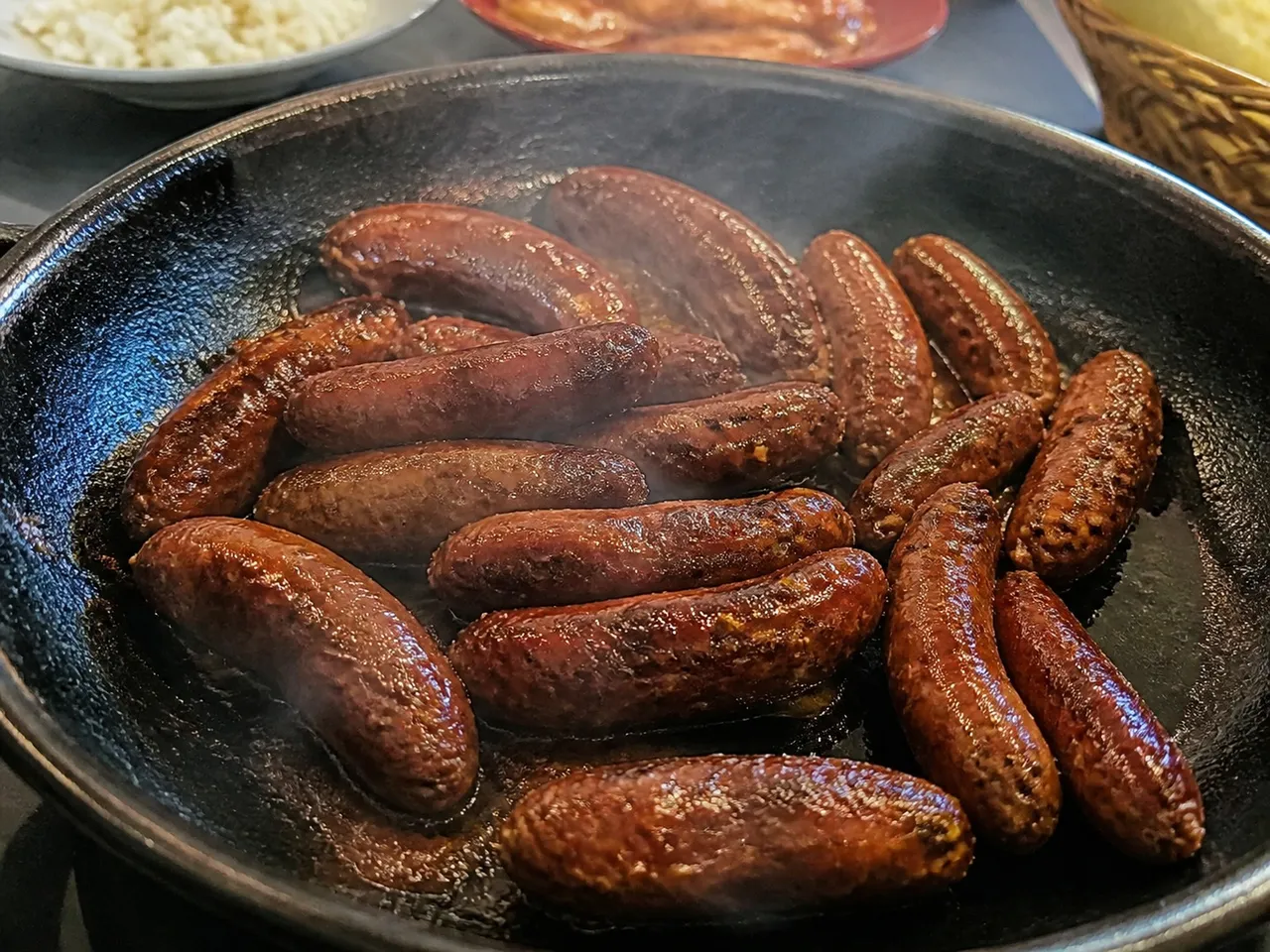 Serving Images are for illustrative purposes only, may be inaccurate, and do not guarantee the presence or absence of specific ingredients.
 Merguez
Fiery North African lamb sausages bursting with cumin, harissa, and garlic, seared until blistered and juicy.
No common allergens detected
Based on this recipe's ingredient list. Always verify with your own brands and labels.
Instructions
5 steps- 1
In a large chilled bowl, combine the ground lamb, harissa, garlic, cumin, paprika, coriander, salt, and pepper, then mix vigorously by hand for 2 minutes until the mixture turns slightly tacky and uniformly red.
- 2
Cover and refrigerate the seasoned meat for at least 1 hour so the spices bloom; keep everything cold to prevent the fat from smearing.
- 3
Soak the casings in cool water for 15 minutes, then thread onto a sausage stuffer and pipe the meat in, twisting every 4 inches into links and pricking each with a pin to release trapped air.
- 4
Heat 1 tbsp olive oil in a heavy skillet over medium heat and cook the sausages, turning often, for 10 to 12 minutes until deeply browned and the internal temperature reaches 160°F.
- 5
Rest the merguez for 5 minutes, then serve hot with warm flatbread, harissa, and a squeeze of lemon.
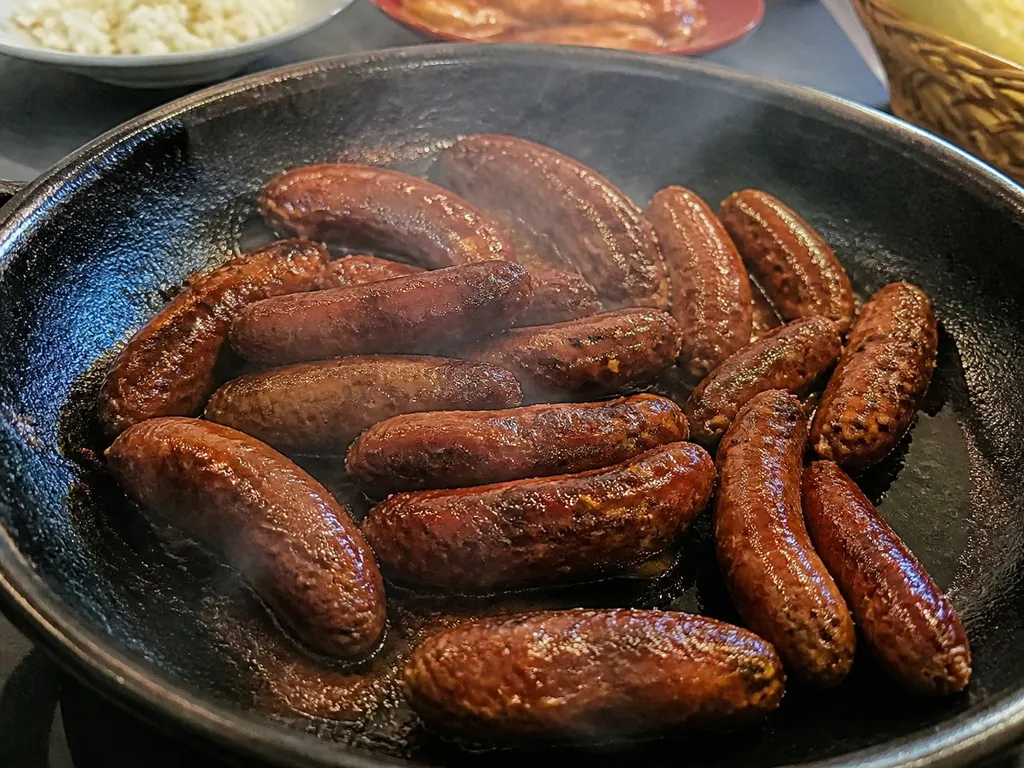 Images are for illustrative purposes only, may be inaccurate, and do not guarantee the presence or absence of specific ingredients.
 Listahan Family Score™
64/100
Works for many families
Score reflects how well this recipe fits a typical busy household. In the app, your Family Score is personalized to your household's allergens, kids, and pantry.
Nutrition
per serving915
Calories
66 g
Protein
5 g
Carbs
69 g
Fat
Estimated per serving. Actual values depend on the brands and portions you use.
Listahan cooking guide
Chef notes & practical guide
Technique notes, ingredient swaps, serve-alongside ideas, storage guidance, and equipment for this recipe.
Cultural context
Merguez is a fresh lamb sausage originating in the Maghreb — Algeria, Morocco, and Tunisia — where it has been made for centuries as a way to season and preserve lamb with the region's aromatic spice pantry. The name likely derives from the Berber or Arabic culinary tradition of spiced ground meat, and the sausage spread across North Africa and into France through Algerian immigration in the 20th century. Today it is a staple of Algerian family grills and French street markets alike, prized for its deep red color from harissa and paprika and its distinctively gamy, smoky flavor.
Listahan note
This version skips the casing step with a patty option so home cooks can get the full flavor on the table without sausage-making equipment, while the harissa paste keeps the heat honest and adjustable.
Technique cues
- Fat content is not optional: 20% fat in the ground lamb keeps merguez juicy during high heat — leaner blends will seize and dry out before they color properly, leaving a grainy texture instead of a snappy bite.
- Mix spices into the meat by hand until just combined, then chill the mixture for at least 30 minutes before shaping; this resting period lets the salt begin extracting myosin proteins, which act as a binder so the sausage holds its shape without casings.
- Cook merguez over high direct heat — whether a cast-iron pan, grill grate, or broiler — and resist the urge to press or move them until a deep brown crust releases naturally; the Maillard crust seals in the spice-infused fat and is where the flavor lives.
Kitchen flow
- Parallel prep
- While the lamb mixture chills, prep any accompaniments — slice pita, make a quick tomato-cucumber salad, or set up the grill. The 30-minute rest is mandatory, so use that window fully.
- Make-ahead
- Formed sausages or patties can be covered and refrigerated for up to 24 hours before cooking; the flavor deepens as the spices penetrate the meat. Raw shaped merguez also freezes well for up to 2 months — freeze on a sheet pan until solid, then bag.
- Leftover move
- Slice cooked merguez and add to a shakshuka, toss through couscous with roasted vegetables, or stuff into a baguette with harissa mayo and pickled onions for a Tunisian-style sandwich.
- Cleanup rhythm
- Mix in the bowl you will chill in and use a single cast-iron pan or grill to cook — most of the mess comes from the fat splatter, so a splatter screen on a stovetop pan contains it. Deglaze the pan with a splash of water while still hot for easy cleanup.
Ingredient brief
Role, handling, and swap guidance for each key ingredient.
2 lbs ground lamb (20% fat)
protein and fat base
Purpose: Lamb provides the characteristic gamy, rich flavor that distinguishes merguez from generic sausage; the 20% fat content is the minimum needed for a juicy result.
Handling: Keep the lamb cold — straight from the fridge — when mixing; warm fat smears instead of binding and produces a greasy, loose sausage.
Adaptation: Ground beef (80/20) can substitute for a milder flavor, or combine half lamb and half beef for a middle ground.
3 tbsp harissa paste
heat, color, and moisture
Purpose: Harissa provides the signature brick-red color, fruity chile heat, and enough moisture to keep the sausage from drying out during cooking.
Handling: Use a commercial harissa paste rather than a dry spice blend here — the oil and moisture in the paste distributes evenly through the meat without dry pockets.
Adaptation: Substitute sambal oelek or a mix of tomato paste plus a pinch of cayenne for a similar color and heat without the caraway notes.
4 cloves garlic, finely minced
aromatic backbone
Purpose: Raw garlic minced very fine — almost to a paste — blooms throughout the fat during cooking and gives merguez its pungent, savory depth.
Handling: Grate the garlic on a Microplane or use the flat of a knife to work it to a smooth paste so it integrates without detectable raw chunks.
Adaptation: Half a teaspoon of garlic powder can substitute in a pinch but will mute the brightness considerably.
2 tsp ground cumin, 2 tsp sweet paprika, and 1 tsp ground coriander
spice profile
Purpose: This trio defines the North African spice character — cumin is earthy and warm, paprika adds mild sweetness and amplifies the red color, coriander brings a citrusy top note that lifts the lamb.
Handling: Toast whole seeds and grind them fresh if possible; pre-ground spices work but deliver noticeably less aroma in an uncooked meat preparation.
Adaptation: A tablespoon of ras el hanout can replace this trio and adds floral complexity, though it will shift the flavor profile slightly toward Moroccan.
8 feet lamb sausage casings, rinsed (or formed as patties)
structure and shape
Purpose: Natural casings snap when bitten and allow the sausage to blister and char without falling apart on the grill; the patty option skips the equipment barrier entirely.
Handling: Soak rinsed casings in cold water for 30 minutes before stuffing and run water through the inside to check for tears before loading onto the stuffer horn.
Adaptation: Skip casings entirely and shape into 1-inch-thick logs or patties; oil the exterior lightly before cooking to help develop a crust.
Technique notes
- A quick test for seasoning: fry a small marble-sized piece of the raw mixture in a hot pan and taste it before shaping all the sausages — this is your only window to adjust salt, harissa, or spice levels before cooking the batch.
- If stuffing casings, tie off the end tightly with butcher's twine and prick each sausage link twice with a skewer before cooking; this releases steam and prevents blowouts that cause the casing to split and lose the juices.
- Let cooked merguez rest on a rack for 3 minutes before serving — cutting immediately releases the accumulated fat and juices onto the board instead of into each bite.
Ingredient swaps
- Gluten-free direction
- The base recipe is already gluten-free; verify your harissa paste label, as some commercial brands use modified starch as a thickener.
- Milder heat
- Reduce harissa to 1 tablespoon and add 1 tablespoon of tomato paste to keep the color and moisture without the full chile heat — good for family tables with kids.
- Leaner option
- Use 90/10 ground lamb but add 2 tablespoons of olive oil directly into the mix to compensate for lost fat and prevent dryness.
Serve alongside
- warm flatbread with harissa-spiked yogurt dip
- cucumber and tomato salad with red onion and fresh mint
- steamed couscous tossed with parsley and lemon zest
- roasted red pepper and olive tapenade
- mint lemonade with a pinch of orange blossom water
- cold Moroccan mint tea
- light-bodied red wine such as Grenache or Cotes du Rhone
Serving suggestions only — check pairings for your household's allergens.
Storage & reheating
- Cooked merguez keeps in the fridge for up to 3 days in an airtight container.
- Reheat gently in a dry skillet over medium heat or in a 325 F oven for 8 minutes — microwaving overcooks the exterior before the center warms.
- Freeze cooked merguez for up to 2 months; thaw overnight in the fridge and reheat as above.
Equipment
- cast-iron skillet or heavy grill pan
- Microplane or fine grater for garlic
- sausage stuffer or piping bag (if using casings)
- instant-read thermometer to confirm 160 F internal temp
Make this household-aware
Listahan Pro checks this recipe against your household's allergens, finds pantry-aware swaps, builds the shopping list, and helps you plan the week around it.
Plan it in Listahan
Add Merguez to your week, check it against your household's allergens, and build the shopping list automatically.
More North African recipes
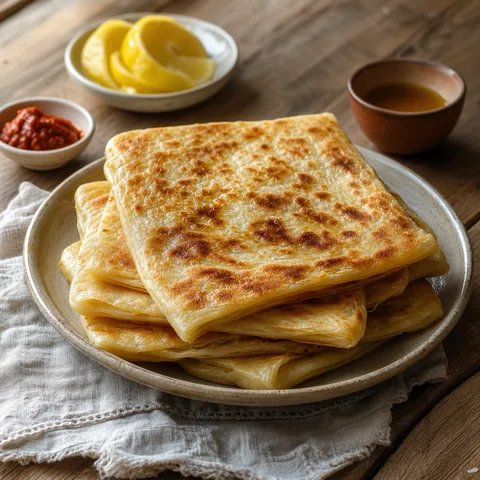 North African Lens Verified Images are for illustrative purposes only, may be inaccurate, and do not guarantee the presence or absence of specific ingredients.
 Msemmen
Layered and folded semolina flatbread cooked on a griddle until the outside crisps and the inside stays wonderfully chewy — perfect with honey or harissa.
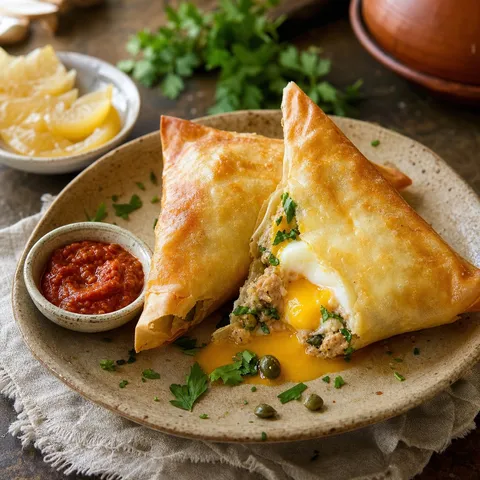 North African Lens Verified Images are for illustrative purposes only, may be inaccurate, and do not guarantee the presence or absence of specific ingredients.
 Brik
Crispy paper-thin pastry folded around a whole egg, tuna, and parsley then flash-fried until golden — Tunisia's beloved street snack, eaten fast before the yolk escapes.
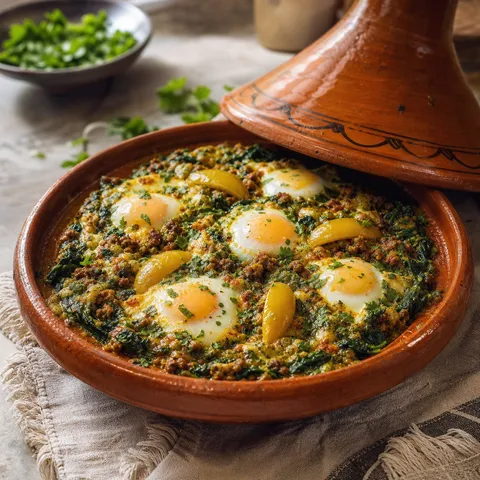 North African Lens Verified Images are for illustrative purposes only, may be inaccurate, and do not guarantee the presence or absence of specific ingredients.
 Tajine El Bey
Tunisia's grand layered bake of spiced lamb, eggs, and cheese baked in a deep crust — a celebration dish with silky, complex layers in every slice.