 North African Images are for illustrative purposes only, may be inaccurate, and do not guarantee the presence or absence of specific ingredients.
  Serving Images are for illustrative purposes only, may be inaccurate, and do not guarantee the presence or absence of specific ingredients.
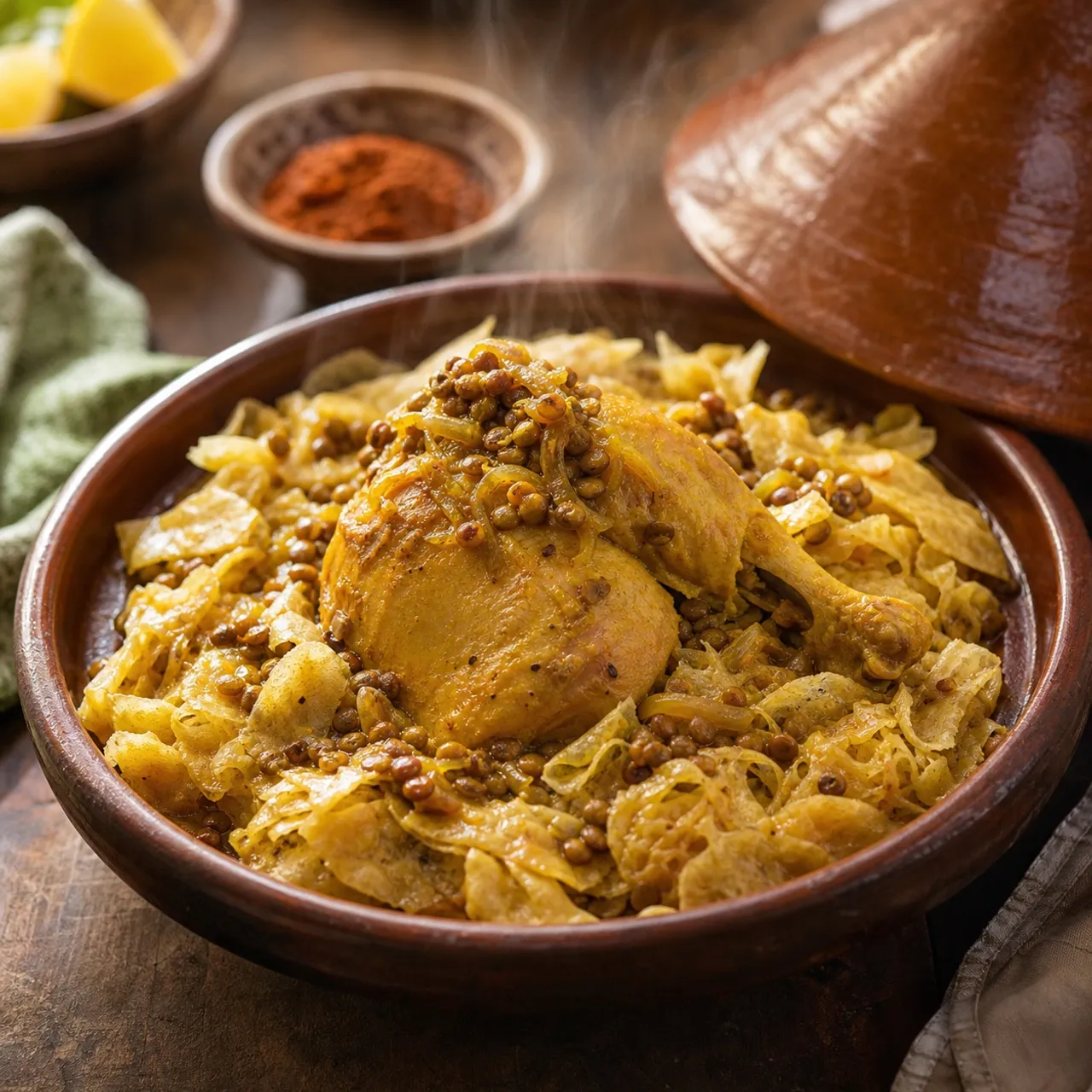
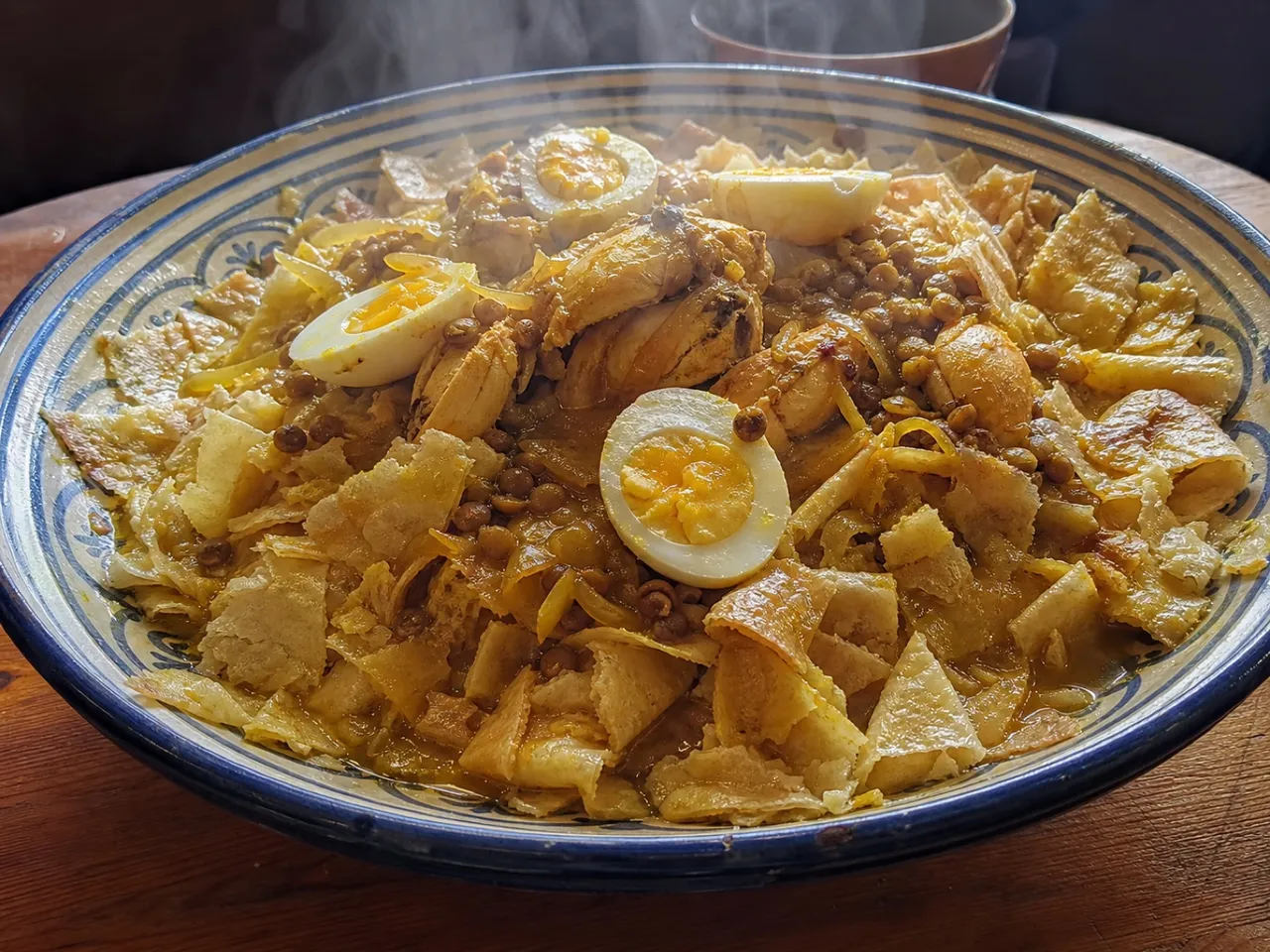
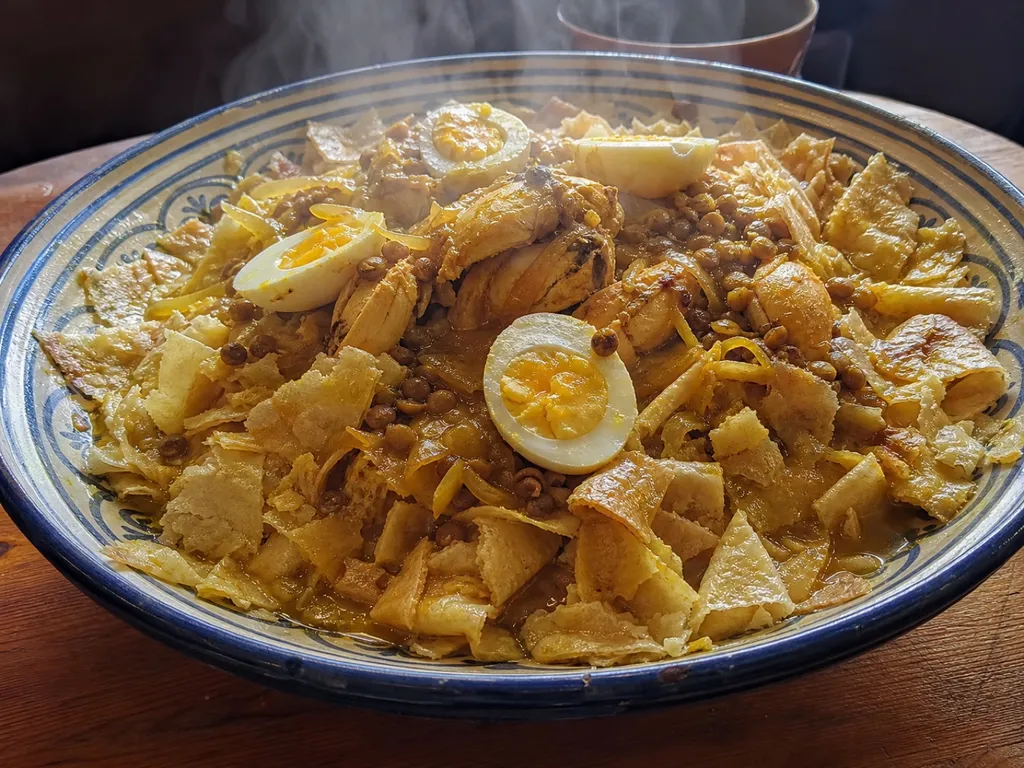
 Rfissa
Shredded chicken and lentils piled over torn msemmen flatbread, drenched in a fenugreek-spiced broth — Morocco's rich, healing celebration dish.
Contains common allergens
In the app, Listahan checks these against your household automatically.
Instructions
5 steps- 1
Marinate Chicken: Rub the chicken with half of the Ras el Hanout, saffron, salt, pepper, and olive oil. Let sit for at least 30 minutes.
- 2
Start Stew: In a large pot, brown the chicken with the sliced onions. Add the remaining Ras el Hanout, drained fenugreek seeds, and enough water to cover the chicken. Bring to a boil.
- 3
Add Lentils: Add the soaked lentils to the pot. Reduce heat, cover, and simmer for 45-60 minutes until chicken and lentils are completely tender.
- 4
Prepare Bread: Shred the Msemmen flatbread into bite-sized pieces. Steam them lightly in a couscoussiere for 5 minutes until soft and warm.
- 5
Assemble: Spread the warm bread on a large serving platter. Place the chicken in the center and generously ladle the hot lentil stew and broth over the bread. Let it soak for a minute before serving.
 Images are for illustrative purposes only, may be inaccurate, and do not guarantee the presence or absence of specific ingredients.
 Listahan Family Score™
66/100
Works for many families
Score reflects how well this recipe fits a typical busy household. In the app, your Family Score is personalized to your household's allergens, kids, and pantry.
Nutrition
per serving80
Calories
5 g
Protein
15 g
Carbs
0 g
Fat
Estimated per serving. Actual values depend on the brands and portions you use.
Listahan cooking guide
Chef notes & practical guide
Technique notes, ingredient swaps, serve-alongside ideas, storage guidance, and equipment for this recipe.
Cultural context
Rfissa is a ceremonial Moroccan dish traditionally prepared for women who have just given birth, as fenugreek was believed to promote milk production and recovery. It layers slow-braised chicken and lentils over torn Msemmen flatbreads, which absorb the saffron-scented broth as they sit. The dish is rooted in Fassi and Marrakshi household cooking, where Ras el Hanout, Morocco's complex spice blend, signals special-occasion effort.
Listahan note
This version relies on the Msemmen soaking up the broth in the final rest off heat, so the flatbread becomes tender and steamed rather than soggy; tearing it into rough pieces rather than neat strips keeps the texture uneven and interesting.
Technique cues
- Soaking fenugreek seeds for several hours before cooking is not optional: the dry seed has a harsh, slightly medicinal bitterness that mellows dramatically after soaking, becoming pleasantly nutty once braised into the stew.
- Saffron gives Rfissa its signature amber color and honeyed aroma; steep the threads in 3 tablespoons of warm water for 10 minutes before adding to concentrate the flavor and distribute it evenly rather than leaving threads clustered in one spot.
- The Msemmen should be torn into palm-sized pieces and spread in the serving dish before the hot chicken-and-lentil broth is ladled over; the bread needs a full 5-minute rest to absorb the liquid without collapsing into mush.
Kitchen flow
- Parallel prep
- While the chicken braises, soak and drain the lentils and fenugreek seeds, and steep the saffron; add all three to the pot at the same time for the final 30-minute stretch.
- Make-ahead
- Braise the chicken and cook the lentil-broth base up to 2 days ahead; store separately from the Msemmen and assemble the bread layer only just before serving.
- Leftover move
- Store leftover chicken and broth separately from the bread; reheat the broth and spoon it over freshly torn Msemmen the next day for an almost-identical result.
- Cleanup rhythm
- Use one deep Dutch oven for the entire braise; the only other dishes are the soaking bowls for fenugreek and lentils, and the skillet used to warm the flatbreads.
Ingredient brief
Role, handling, and swap guidance for each key ingredient.
1 whole chicken
protein and broth base
Purpose: A whole chicken braised on the bone produces a naturally rich, gelatinous broth that the lentils and bread need to absorb properly.
Handling: Brown lightly in butter or oil before adding liquid to develop color, then braise covered on low heat for about 1 hour until the meat falls from the bone.
Adaptation: A 3-lb cut-up chicken or 8 bone-in thighs replaces a whole bird; reduce braising time by 15 minutes.
1 cup brown lentils (soaked)
body and earthiness
Purpose: Lentils thicken the braising liquid slightly and add an earthy, protein-rich counterpoint to the rich chicken.
Handling: Soak for 30 minutes and rinse before adding to the pot about 30 minutes before the chicken is done, so they cook through without turning to paste.
Adaptation: Green lentils hold their shape slightly better; red lentils will dissolve into the sauce and thicken it more aggressively.
1 tbsp Ras el Hanout
complex spice foundation
Purpose: Ras el Hanout brings together up to 30 spices in a single blend, giving the dish its distinctly Moroccan warmth, floral notes, and depth without the cook having to measure each spice individually.
Handling: Stir into the fat with the onions before adding liquid so the spice blend blooms and its volatile oils disperse through the base.
Adaptation: A mix of 1/2 tsp each cumin, coriander, cinnamon, and a pinch of allspice approximates the warming character of Ras el Hanout.
1 tsp fenugreek seeds (soaked)
bitter-sweet aromatic accent
Purpose: Fenugreek is the defining flavor note of Rfissa and cannot be replaced; it gives the dish a slightly maple-like sweetness underneath its characteristic bitterness.
Handling: Soak in cold water overnight or in warm water for at least 2 hours, then drain and add with the lentils.
Adaptation: There is no close substitute for fenugreek in this dish; if unavailable, skip it rather than substituting, as it changes the character of the dish entirely.
1/2 tsp saffron
color and floral depth
Purpose: Saffron is the visual and aromatic signature of the broth, turning it golden and lending a honeyed, hay-like perfume that defines ceremonial Moroccan cooking.
Handling: Crumble threads into 3 tablespoons of warm (not boiling) water and steep for 10 minutes before stirring into the stew.
Adaptation: A generous pinch of turmeric replaces the color but not the aroma; the dish will look similar but taste noticeably different.
4 Msemmen (Moroccan flatbreads)
starchy base and sauce absorber
Purpose: Msemmen's layered, slightly chewy texture soaks up the saffron broth without dissolving completely, creating the signature textural contrast of the dish.
Handling: Warm briefly in a dry skillet or oven before tearing and layering in the serving dish, so the bread is pliable and ready to absorb liquid rather than dry-stiff.
Adaptation: Day-old pita bread, torn into large pieces, or a thick flour tortilla can stand in; the texture will be slightly denser but serviceable.
Technique notes
- The broth should be abundant and slightly thin after braising; do not reduce it aggressively because the Msemmen needs that liquid to absorb and become tender.
- Pull the chicken off the bone before assembling; diners can eat with hands or a fork but picking through bones at the table disrupts the communal presentation.
- Let the assembled dish rest covered for 5 minutes after pouring the broth over the bread; this steams the Msemmen through to the center without making the top layer wet and slick.
Ingredient swaps
- Gluten-free direction
- Replace Msemmen with cooked short-grain rice spread in the serving dish as the base layer; ladle the broth over the rice the same way.
- Dairy-free option
- Substitute a neutral oil for the butter in the braise and when warming the Msemmen; flavor is minimally affected.
Serve alongside
- simple cucumber and tomato salad with olive oil
- warm Moroccan mint tea
- plain harissa on the side for those who want heat
- sweet Moroccan mint tea (atay)
- cold still water with orange blossom water
Serving suggestions only — check pairings for your household's allergens.
Storage & reheating
- Store chicken and broth together, separate from bread, refrigerated for up to 3 days.
- Reheat the broth and chicken gently on the stovetop; assemble with fresh or rewarmed Msemmen just before eating.
- The assembled dish does not freeze well; freeze only the braised chicken and broth base for up to 1 month.
Equipment
- large Dutch oven or heavy braising pot
- small bowl for saffron steeping
- dry skillet for warming Msemmen
- wide shallow serving platter or tagine
Make this household-aware
Listahan Pro checks this recipe against your household's allergens, finds pantry-aware swaps, builds the shopping list, and helps you plan the week around it.
Plan it in Listahan
Add Rfissa to your week, check it against your household's allergens, and build the shopping list automatically.
More North African recipes
 North African Lens Verified Images are for illustrative purposes only, may be inaccurate, and do not guarantee the presence or absence of specific ingredients.
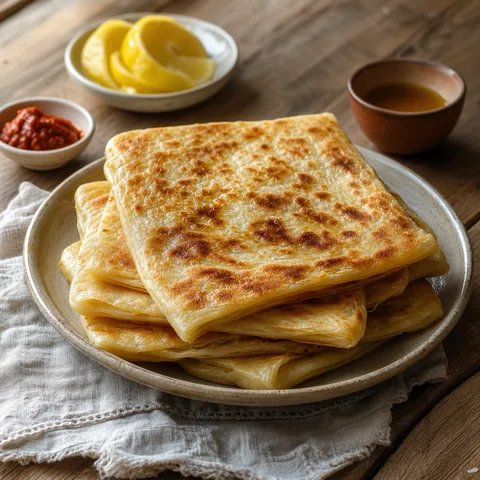
 Msemmen
Layered and folded semolina flatbread cooked on a griddle until the outside crisps and the inside stays wonderfully chewy — perfect with honey or harissa.
 North African Lens Verified Images are for illustrative purposes only, may be inaccurate, and do not guarantee the presence or absence of specific ingredients.
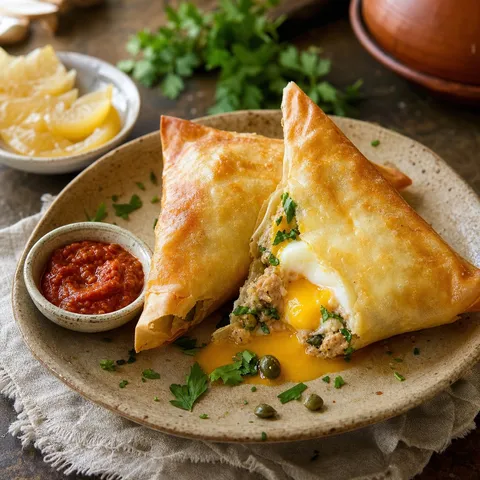
 Brik
Crispy paper-thin pastry folded around a whole egg, tuna, and parsley then flash-fried until golden — Tunisia's beloved street snack, eaten fast before the yolk escapes.
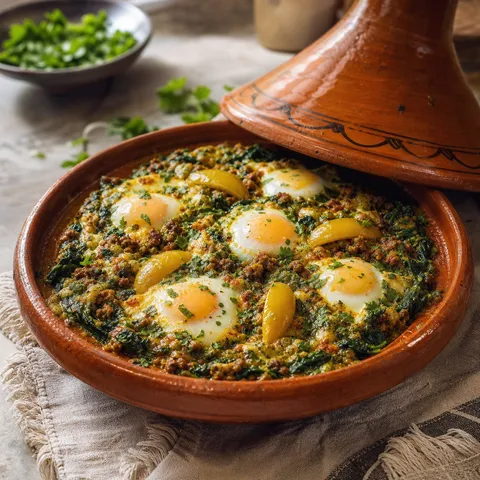 North African Lens Verified Images are for illustrative purposes only, may be inaccurate, and do not guarantee the presence or absence of specific ingredients.
 Tajine El Bey
Tunisia's grand layered bake of spiced lamb, eggs, and cheese baked in a deep crust — a celebration dish with silky, complex layers in every slice.