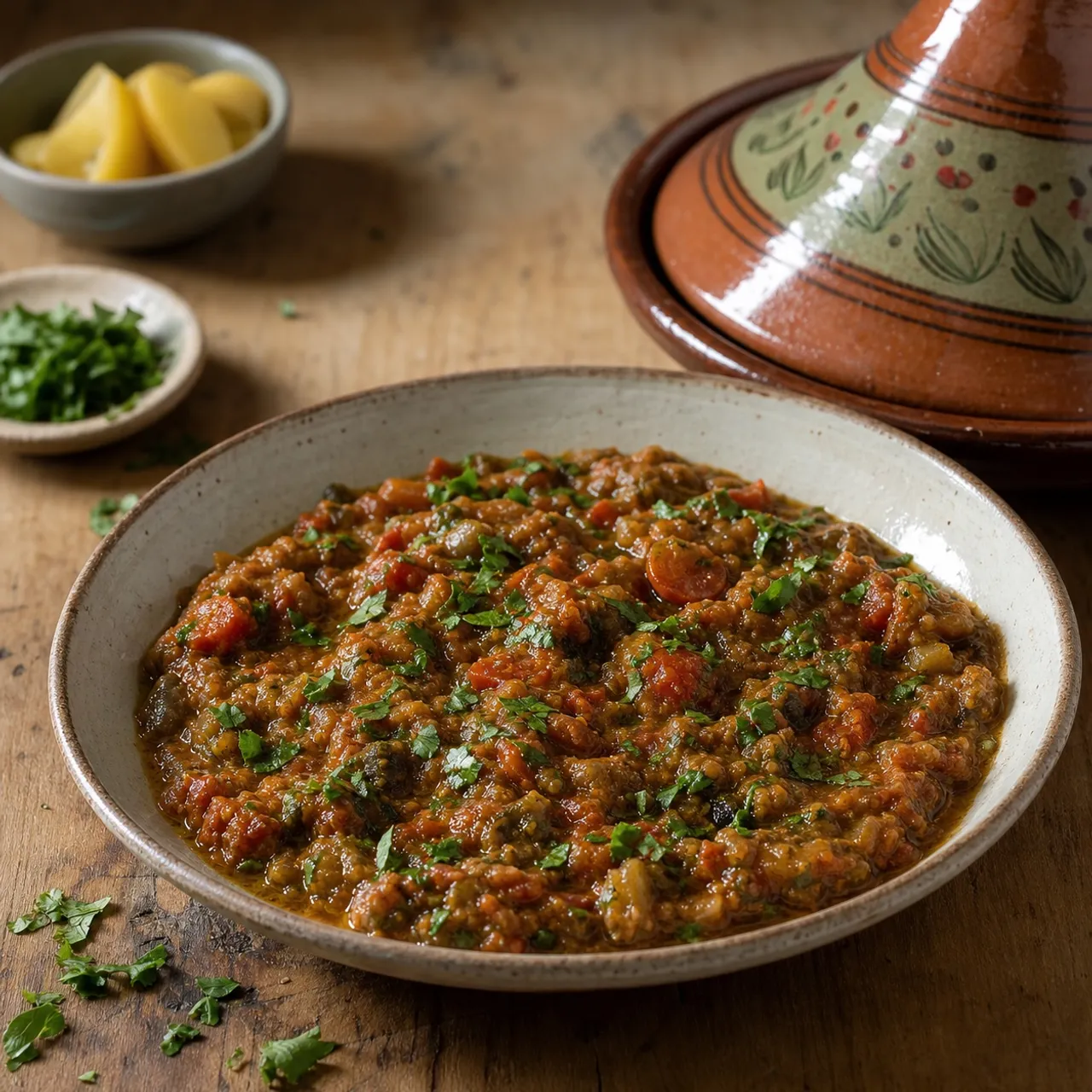
 North African Images are for illustrative purposes only, may be inaccurate, and do not guarantee the presence or absence of specific ingredients.
 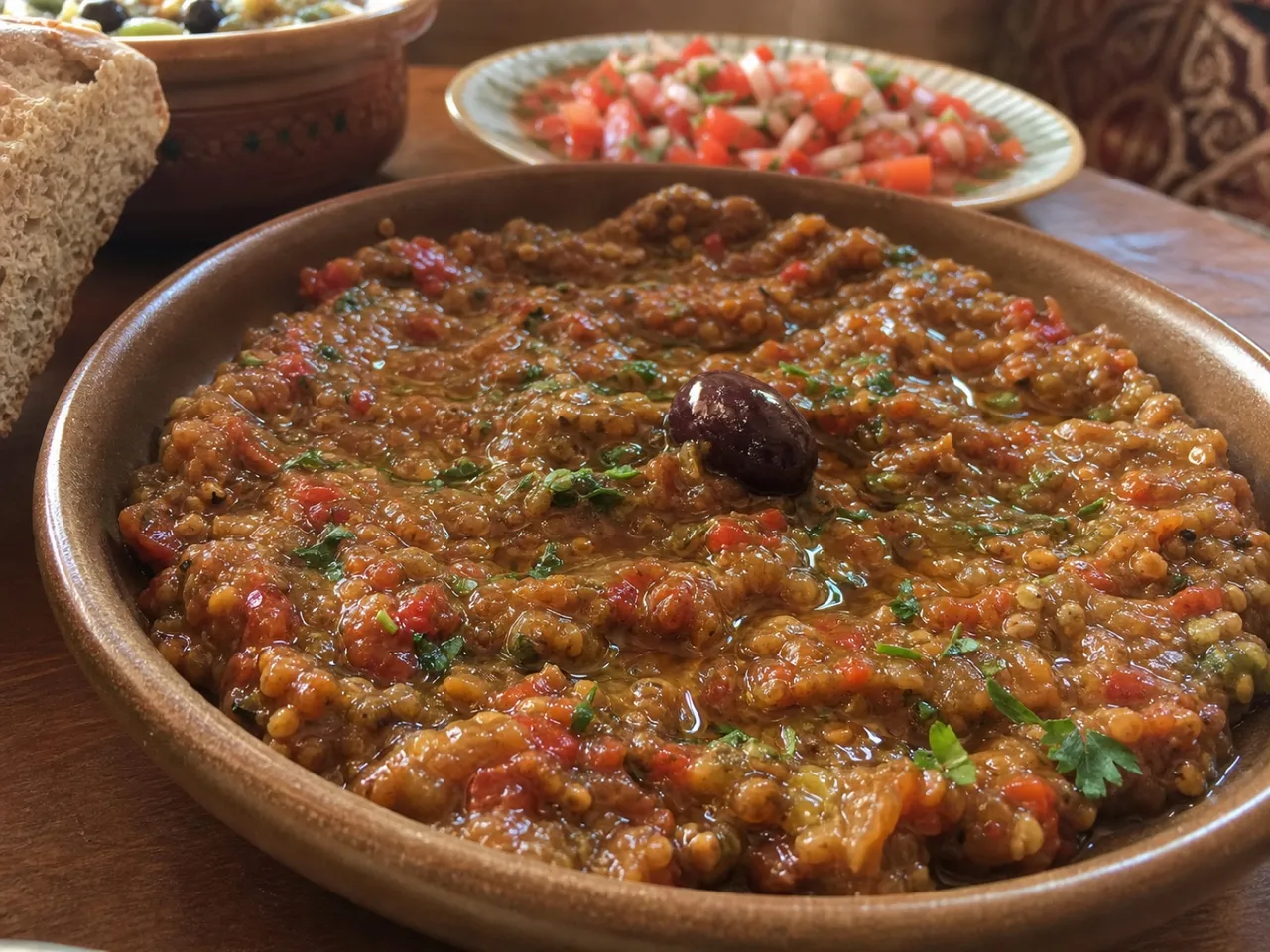 Serving Images are for illustrative purposes only, may be inaccurate, and do not guarantee the presence or absence of specific ingredients.
 Zaalouk
Smoky charred eggplant mashed with tomatoes, garlic, cumin, and a drizzle of olive oil — Morocco's silky dip that begs to be scooped up with warm bread.
No common allergens detected
Based on this recipe's ingredient list. Always verify with your own brands and labels.
Instructions
5 steps- 1
Roast Eggplant: Prick eggplants with a fork and roast at 400°F (200°C) for 30-40 minutes until the skin is blistered and the flesh is very soft. Let cool, scoop out the flesh, and mash it.
- 2
Cook Tomatoes: In a large skillet, heat olive oil over medium heat. Add diced tomatoes and minced garlic, cooking for 10 minutes until they break down into a sauce.
- 3
Combine and Spice: Add the mashed eggplant to the skillet along with cumin, paprika, salt, and pepper.
- 4
Simmer and Mash: Cook the mixture for another 10-15 minutes, mashing continuously with a spoon or potato masher to blend the flavors and evaporate excess liquid.
- 5
Finish: Stir in chopped cilantro and lemon juice. Serve warm or cold with crusty bread.
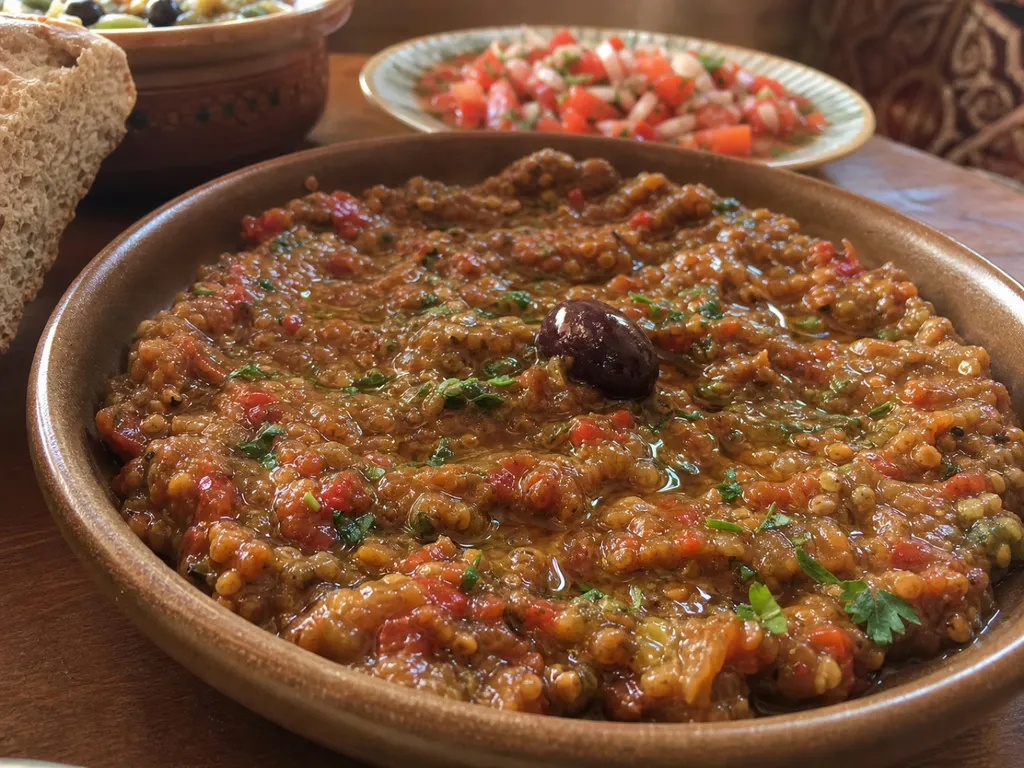 Images are for illustrative purposes only, may be inaccurate, and do not guarantee the presence or absence of specific ingredients.
 Listahan Family Score™
72/100
Good fit for most families
Score reflects how well this recipe fits a typical busy household. In the app, your Family Score is personalized to your household's allergens, kids, and pantry.
Nutrition
per serving170
Calories
3 g
Protein
19 g
Carbs
11 g
Fat
Estimated per serving. Actual values depend on the brands and portions you use.
Listahan cooking guide
Chef notes & practical guide
Technique notes, ingredient swaps, serve-alongside ideas, storage guidance, and equipment for this recipe.
Cultural context
Zaalouk is a Moroccan cooked eggplant and tomato salad served warm or at room temperature as a starter, a side dish, or a spread for bread. Unlike the raw salads that appear earlier in a Moroccan meal, zaalouk is fully cooked down to a soft, thick, deeply flavored paste where the eggplant and tomato become almost indistinguishable in texture. It belongs to the tradition of Moroccan cooked salads, which appear in a variety of forms at the beginning of a formal meal alongside dishes like carrots with cumin, beet salad, and taktouka, the pepper and tomato version made in the same way.
Listahan note
This version roasts the eggplant directly over a gas flame or under a broiler before cooking to add a smoky depth that elevates the dish from a simple cooked vegetable to something more complex. The olive oil is added generously at the end rather than during cooking, which keeps its flavor fresh and distinct.
Technique cues
- Cook the eggplant and tomato mixture over medium heat, stirring regularly, until the liquid from both vegetables has completely evaporated and the mixture begins to fry gently in the olive oil; this drying-out stage is what concentrates the flavor and creates the thick, spreadable texture zaalouk is known for.
- Mash the eggplant coarsely with a fork rather than blending it; zaalouk should have some texture and visible vegetable character rather than a smooth puree.
- Add the lemon juice off heat just before serving; acid added during cooking dissipates quickly, while acid added at the end stays bright and provides the contrast that lifts the earthy spices.
Kitchen flow
- Parallel prep
- Char the eggplant under the broiler while dicing the tomatoes and mincing the garlic; the charring takes 10-15 minutes under a hot broiler and can happen entirely unattended.
- Make-ahead
- Zaalouk is best made at least 1 hour ahead and served at room temperature or slightly warm; the flavors deepen as it sits and the texture settles.
- Leftover move
- Leftover zaalouk makes an excellent sandwich spread, a topping for grilled fish, or a dip for crudites the next day.
- Cleanup rhythm
- The eggplant charring creates smoke; open a window and turn on the range fan; the pan used for cooking the zaalouk itself wipes clean easily once cool.
Ingredient brief
Role, handling, and swap guidance for each key ingredient.
2 large eggplants
primary vegetable base
Purpose: Eggplant provides the creamy, collapsing texture that makes zaalouk a spread rather than a stew; the flesh must be fully cooked until it loses all resistance.
Handling: Char the skin directly over a gas flame or under a broiler until blackened, then steam in a sealed bag or bowl for 10 minutes before peeling; this adds smokiness and makes peeling easy.
Adaptation: Zucchini can partially replace eggplant for a lighter version, though the texture will be firmer and less rich.
3 large tomatoes (peeled and diced)
acidic body
Purpose: Tomatoes provide the liquid, acidity, and color that define zaalouk's sauce; they must be fully cooked down until no separate tomato liquid remains.
Handling: Score and blanch in boiling water for 30 seconds to peel easily; remove seeds before dicing to prevent excess liquid.
Adaptation: A can of crushed tomatoes provides consistent results when good fresh tomatoes are not available.
3 cloves garlic (minced)
aromatic backbone
Purpose: Garlic is prominent in zaalouk and provides an essential savory anchor for the sweet eggplant and tomato.
Handling: Mince finely rather than slicing; the garlic should melt into the dish rather than remain as distinct pieces.
Adaptation: Roasted garlic can replace raw for a milder, sweeter garlic presence.
3 tbsp olive oil
richness and finish
Purpose: Olive oil added at the end carries the cumin and paprika aromas and gives zaalouk a glossy, lush finish.
Handling: Use a good-quality olive oil; this is one of the main flavors in the final dish and a neutral oil produces a flat result.
Adaptation: Argan oil, the traditional Moroccan finishing oil, replaces olive oil for an authentically Moroccan and nutty flavor profile.
1 tbsp lemon juice
bright acid finish
Purpose: Lemon juice added off heat keeps the dish from feeling heavy and amplifies the herbal quality of the cilantro.
Handling: Squeeze just before adding to the finished dish; do not cook the lemon juice into the mixture.
Adaptation: Preserved lemon pulp, finely minced, provides a more fermented, complex acidity native to Moroccan cuisine.
Technique notes
- Do not rush the drying step; standing over the pan and stirring for the 15-20 minutes it takes for the liquid to evaporate is the essential work of zaalouk, and skipping it produces a watery, under-concentrated result.
- Season generously with salt in the final minutes of cooking; eggplant absorbs salt aggressively during cooking and the finished dish will taste flat if under-seasoned.
- A small spoonful of harissa stirred into the finished zaalouk adds heat and another dimension of spice without changing the fundamental character of the dish.
Ingredient swaps
- Vegan direction
- This recipe is naturally vegan; serve as a spread or side with confidence.
- Low-FODMAP adjustment
- Use garlic-infused olive oil in place of whole garlic to reduce fructans while keeping the garlic flavor.
- Add smokiness
- A pinch of smoked paprika added with the regular paprika deepens the smoky note if the eggplant was not charred over a direct flame.
Serve alongside
- warm khobz or pita bread for scooping
- other Moroccan cooked salads such as taktouka or beet salad
- grilled merguez sausage
- mint tea
- iced water with orange blossom water
Serving suggestions only — check pairings for your household's allergens.
Storage & reheating
- Refrigerate in a sealed container for up to 4 days; the flavor continues to develop and is often better on day 2.
- Serve at room temperature or warm briefly in a pan; do not microwave, which makes the texture watery.
- Zaalouk does not freeze well as the eggplant texture becomes waterlogged when thawed.
Equipment
- broiler or gas stovetop for charring the eggplant
- large heavy skillet or shallow saucepan
- fork or potato masher for mashing
Make this household-aware
Listahan Pro checks this recipe against your household's allergens, finds pantry-aware swaps, builds the shopping list, and helps you plan the week around it.
Plan it in Listahan
Add Zaalouk to your week, check it against your household's allergens, and build the shopping list automatically.
More North African recipes
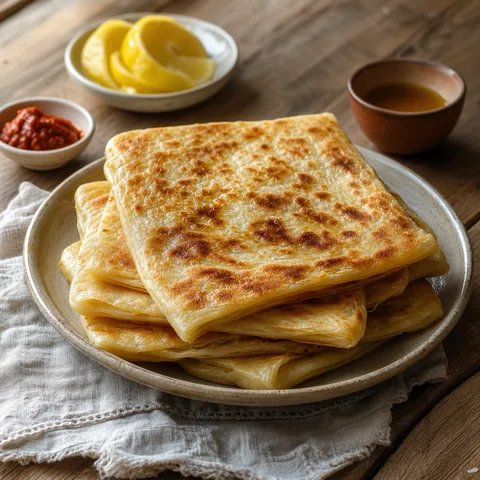 North African Lens Verified Images are for illustrative purposes only, may be inaccurate, and do not guarantee the presence or absence of specific ingredients.
 Msemmen
Layered and folded semolina flatbread cooked on a griddle until the outside crisps and the inside stays wonderfully chewy — perfect with honey or harissa.
 North African Lens Verified Images are for illustrative purposes only, may be inaccurate, and do not guarantee the presence or absence of specific ingredients.
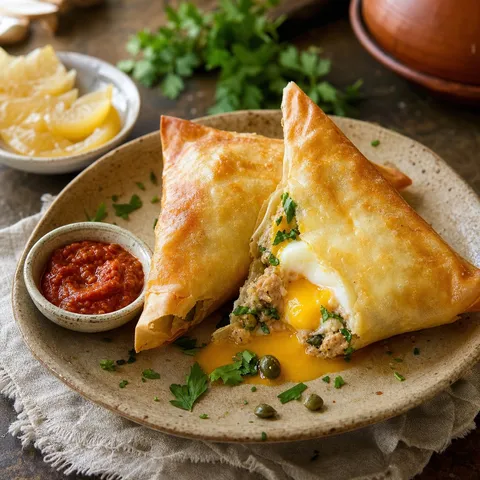
 Brik
Crispy paper-thin pastry folded around a whole egg, tuna, and parsley then flash-fried until golden — Tunisia's beloved street snack, eaten fast before the yolk escapes.
 North African Lens Verified Images are for illustrative purposes only, may be inaccurate, and do not guarantee the presence or absence of specific ingredients.
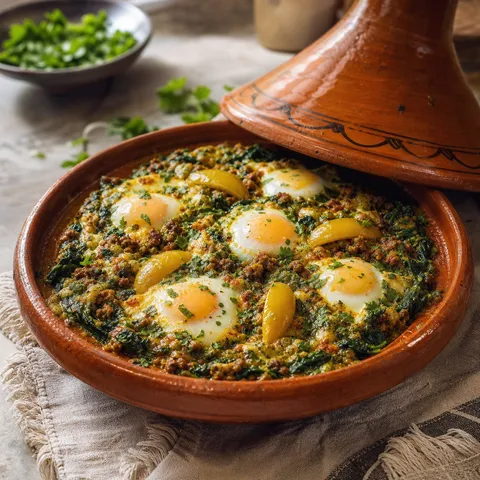
 Tajine El Bey
Tunisia's grand layered bake of spiced lamb, eggs, and cheese baked in a deep crust — a celebration dish with silky, complex layers in every slice.