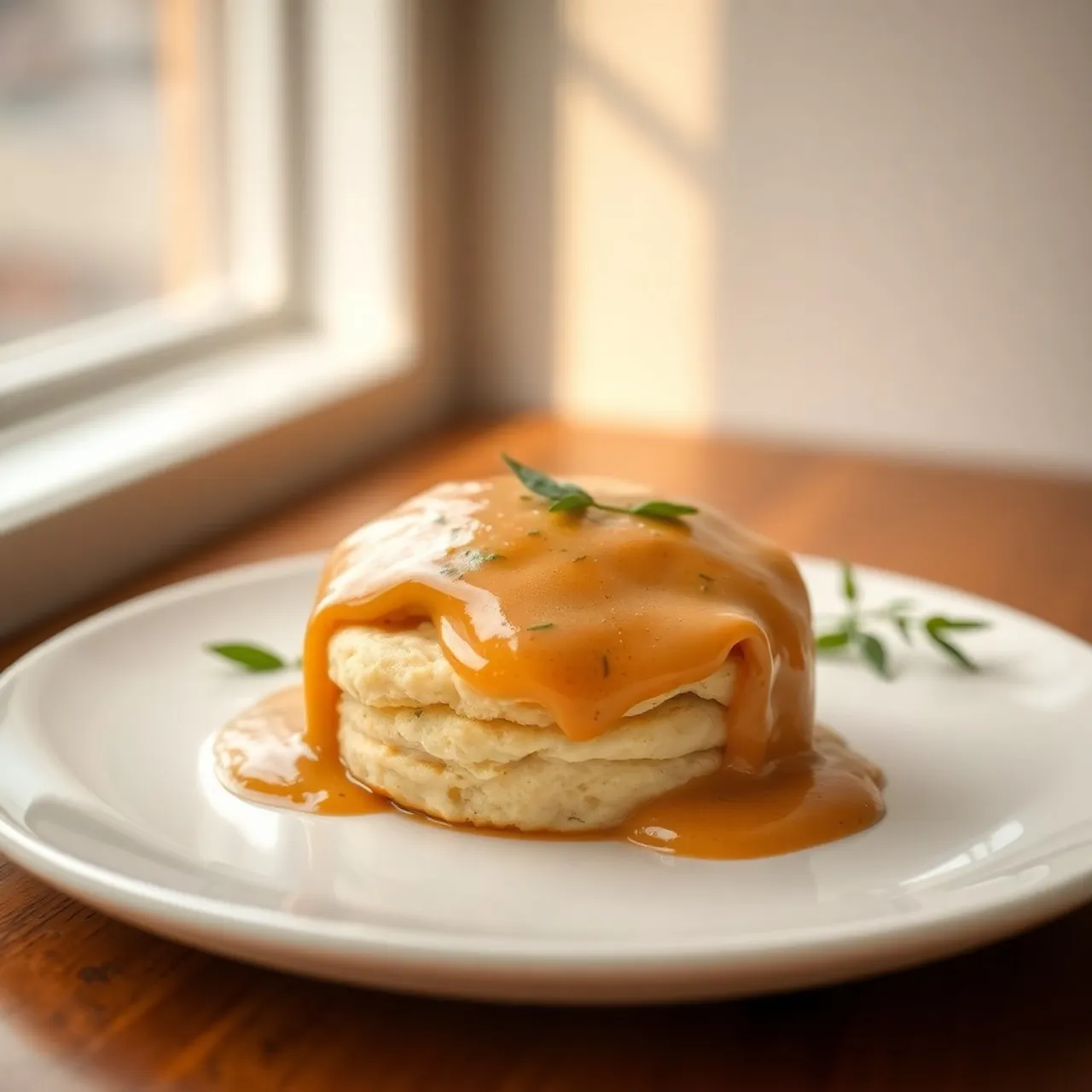
 North American Images are for illustrative purposes only, may be inaccurate, and do not guarantee the presence or absence of specific ingredients.
 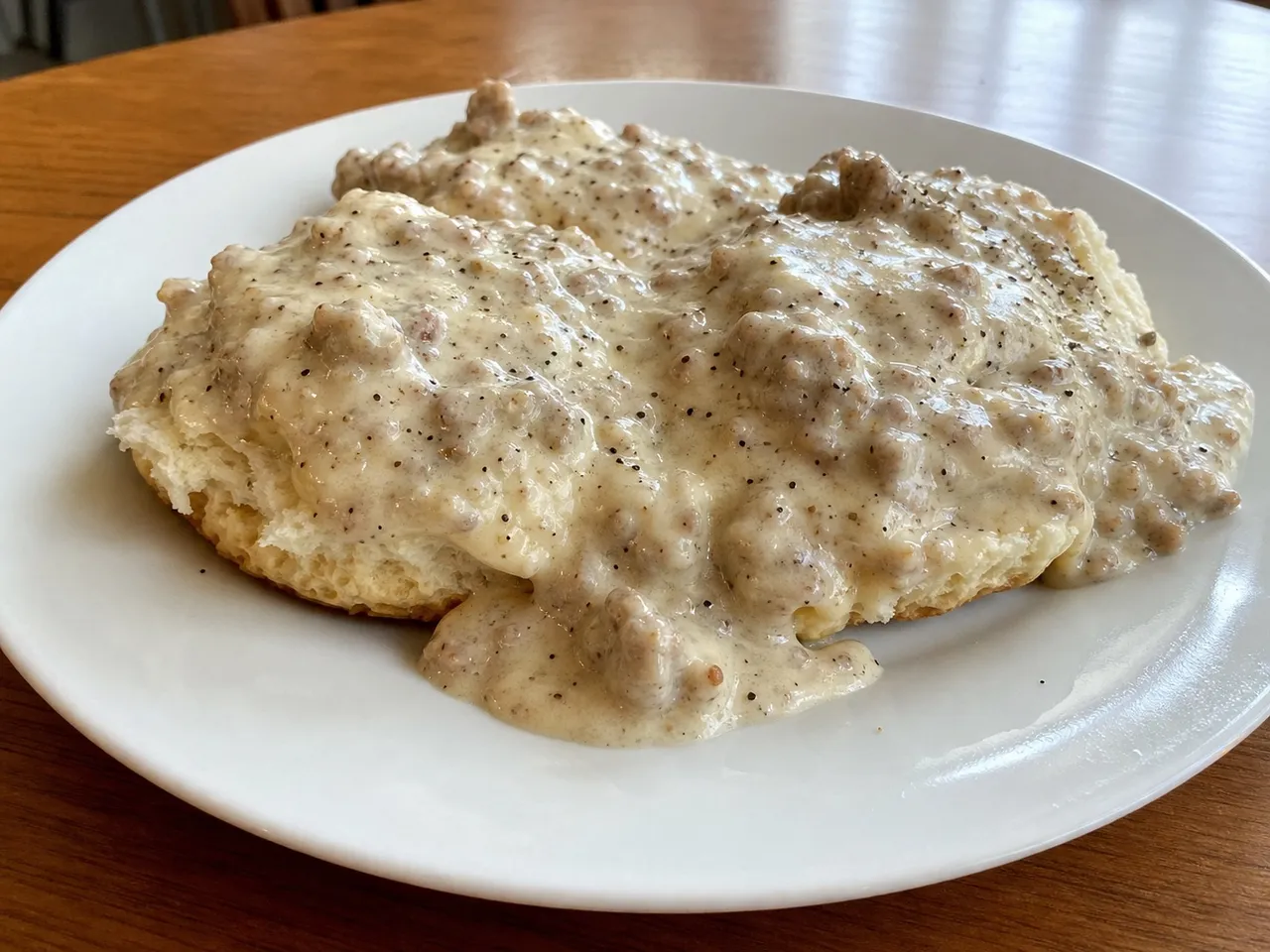 Serving Images are for illustrative purposes only, may be inaccurate, and do not guarantee the presence or absence of specific ingredients.
 Biscuits and Gravy
Flaky buttermilk biscuits smothered in a peppery pork sausage gravy, a Southern breakfast classic.
Contains common allergens
In the app, Listahan checks these against your household automatically.
Instructions
6 steps- 1
Bake the buttermilk biscuits according to recipe or package directions until golden and puffed. Keep them warm.
- 2
In a large cast-iron skillet, cook the pork sausage over medium-high heat. Break it into fine crumbles with a wooden spoon and cook for 6-8 minutes until completely browned. Do not drain the fat.
- 3
Sprinkle the flour evenly over the cooked sausage and fat. Stir continuously for 2 minutes to cook the raw flour taste out, creating a savory roux.
- 4
Gradually pour in the whole milk, 1/2 cup at a time, whisking constantly to prevent lumps.
- 5
Bring the mixture to a gentle simmer. Reduce the heat to low and cook for 5-7 minutes, stirring frequently, until the gravy is thick and coats the back of a spoon. Season generously with black pepper, salt, and cayenne.
- 6
Split the warm biscuits in half horizontally, place on a plate, and ladle the rich, peppery sausage gravy generously over the top. Serve immediately.
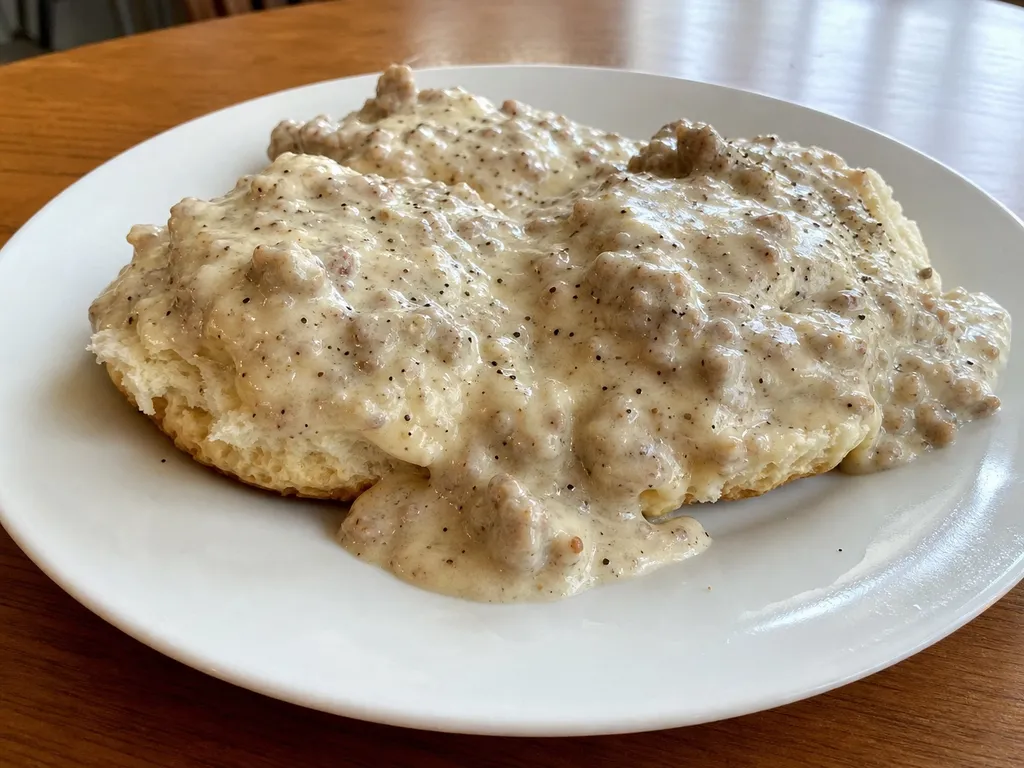 Images are for illustrative purposes only, may be inaccurate, and do not guarantee the presence or absence of specific ingredients.
 Listahan Family Score™
62/100
Works for many families
Score reflects how well this recipe fits a typical busy household. In the app, your Family Score is personalized to your household's allergens, kids, and pantry.
Nutrition
per serving505
Calories
27 g
Protein
14 g
Carbs
38 g
Fat
Estimated per serving. Actual values depend on the brands and portions you use.
Listahan cooking guide
Chef notes & practical guide
Technique notes, ingredient swaps, serve-alongside ideas, storage guidance, and equipment for this recipe.
Cultural context
Biscuits and gravy is a breakfast staple of the American South and Appalachian regions, where pork sausage and white flour gravy were economical and filling options for farm workers who needed caloric fuel for long mornings outdoors. The dish spread westward through the early 20th century, becoming a diner standard across the Midwest and Mountain West by mid-century. It remains strongly regional in the sense that many Americans on the coasts encounter it only as a novelty, while in its home territory it is an unremarkable, expected morning offering.
Listahan note
This version keeps the sausage fat in the pan as the roux base rather than draining it, which gives the gravy a deeper pork flavor than versions that start fresh with butter.
Technique cues
- The flour must cook in the sausage fat for at least 2 full minutes before the milk goes in; undercooked roux produces a gravy with a raw starch taste that no amount of seasoning fixes.
- Add the milk gradually at first, whisking constantly to incorporate it before adding more; adding it all at once almost always creates lumps.
- Black pepper is not optional seasoning here; the gravy should be visibly peppered and mildly spicy from the pepper alone before the cayenne is added.
Kitchen flow
- Parallel prep
- Bake the biscuits first and keep them warm in a low oven while making the gravy; the gravy takes about 15 minutes start to finish.
- Make-ahead
- Gravy can be made 2 days ahead and refrigerated; it thickens significantly when cold, so reheat with a splash of milk and whisk smooth.
- Leftover move
- Leftover gravy is excellent over scrambled eggs or spooned over a split baked potato for a quick lunch.
- Cleanup rhythm
- Fill the cast-iron skillet with hot water right after serving so the gravy residue dissolves; do not let it dry and harden.
Ingredient brief
Role, handling, and swap guidance for each key ingredient.
fresh pork breakfast sausage
Main protein and fat source
Purpose: Breakfast sausage provides both the protein and the seasoned fat that forms the roux base; it cannot be replaced without restructuring the recipe.
Handling: Break into fine crumbles as it cooks rather than leaving large chunks; smaller pieces ensure the fat renders evenly.
Adaptation: Turkey breakfast sausage works but has less fat, so you may need to add 1-2 tablespoons of butter to the pan before making the roux.
all-purpose flour
Thickener (roux)
Purpose: Flour cooked in the sausage fat creates a roux that thickens the gravy evenly without becoming gluey.
Handling: Sprinkle the flour evenly over the sausage and fat rather than adding it in one pile; even distribution prevents clumping.
Adaptation: Rice flour creates a gluten-free roux with a slightly different texture; use the same quantity but whisk more vigorously as you add the milk.
whole milk
Liquid and richness
Purpose: Whole milk provides enough fat to keep the gravy from tasting thin or chalky once the roux is cooked.
Handling: Warm the milk slightly before adding to reduce the risk of the roux seizing; room-temperature milk is fine.
Adaptation: 2% milk produces a slightly thinner gravy; evaporated milk makes it richer and creamier if that is the goal.
coarse black pepper
Primary seasoning and heat
Purpose: Country-style sausage gravy is expected to be visibly peppered; the black pepper is as structural a flavor as the sausage itself.
Handling: Add half while cooking the roux and half at the end to get both an integrated pepper flavor and a bright finish.
Adaptation: White pepper works for a cleaner-looking gravy with the same heat; reduce the quantity slightly as white pepper is sharper.
Technique notes
- If the gravy becomes too thick before serving, whisk in warm milk a tablespoon at a time; it loosens immediately without weakening the flavor.
- A well-seasoned cast-iron skillet is the ideal pan because it holds steady heat while the roux cooks and the milk thickens.
- Split the biscuits and ladle gravy generously over both halves; too little gravy makes the biscuit taste dry and the whole dish falls flat.
Ingredient swaps
- Gluten-free direction
- Use rice flour in the same quantity for the roux and serve over gluten-free drop biscuits; texture is slightly different but fully satisfying.
- Dairy-free option
- Use full-fat oat milk or unsweetened soy milk in the same quantity; the gravy will be slightly less rich but still thick and coatable.
Serve alongside
- Scrambled eggs or over-easy eggs
- Hash browns or home fries
- Sliced fresh fruit or orange segments to cut the richness
- Strong black coffee or cafe au lait
- Orange juice
- Sweet tea in a Southern-style setting
Serving suggestions only — check pairings for your household's allergens.
Storage & reheating
- Refrigerate gravy separately from biscuits in a sealed container for up to 3 days.
- Reheat gravy in a saucepan over medium-low heat, whisking in a splash of milk to restore consistency.
- Biscuits store wrapped at room temperature for 2 days or frozen up to 1 month; reheat in a 350 degrees F oven for 8 minutes.
Equipment
- 12-inch cast-iron skillet or heavy-bottomed saute pan
- Wooden spoon and whisk for managing the roux and gravy
- Baking sheet and parchment for the biscuits
- Ladle for portioning the gravy at the table
Make this household-aware
Listahan Pro checks this recipe against your household's allergens, finds pantry-aware swaps, builds the shopping list, and helps you plan the week around it.
Plan it in Listahan
Add Biscuits and Gravy to your week, check it against your household's allergens, and build the shopping list automatically.
More North American recipes
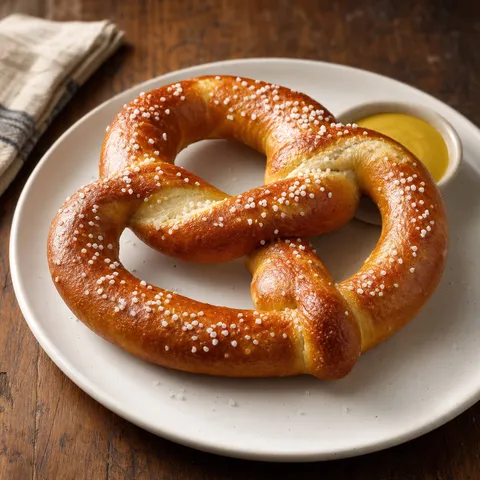 North American Lens Verified Images are for illustrative purposes only, may be inaccurate, and do not guarantee the presence or absence of specific ingredients.
 Soft Pretzels
Chewy golden mall-style pretzels with a salty crust, brushed in butter.
 North American Lens Verified Images are for illustrative purposes only, may be inaccurate, and do not guarantee the presence or absence of specific ingredients.
 Gumbo
A Louisiana-style gumbo of chicken thighs and Andouille sausage simmered with okra, the Cajun holy trinity, and a dark roux, served over rice.
 North American Lens Verified Images are for illustrative purposes only, may be inaccurate, and do not guarantee the presence or absence of specific ingredients.
 New York Cheesecake
A dense, ultra-creamy baked cheesecake with a buttery graham cracker crust and a faintly tangy, melt-in-your-mouth filling.