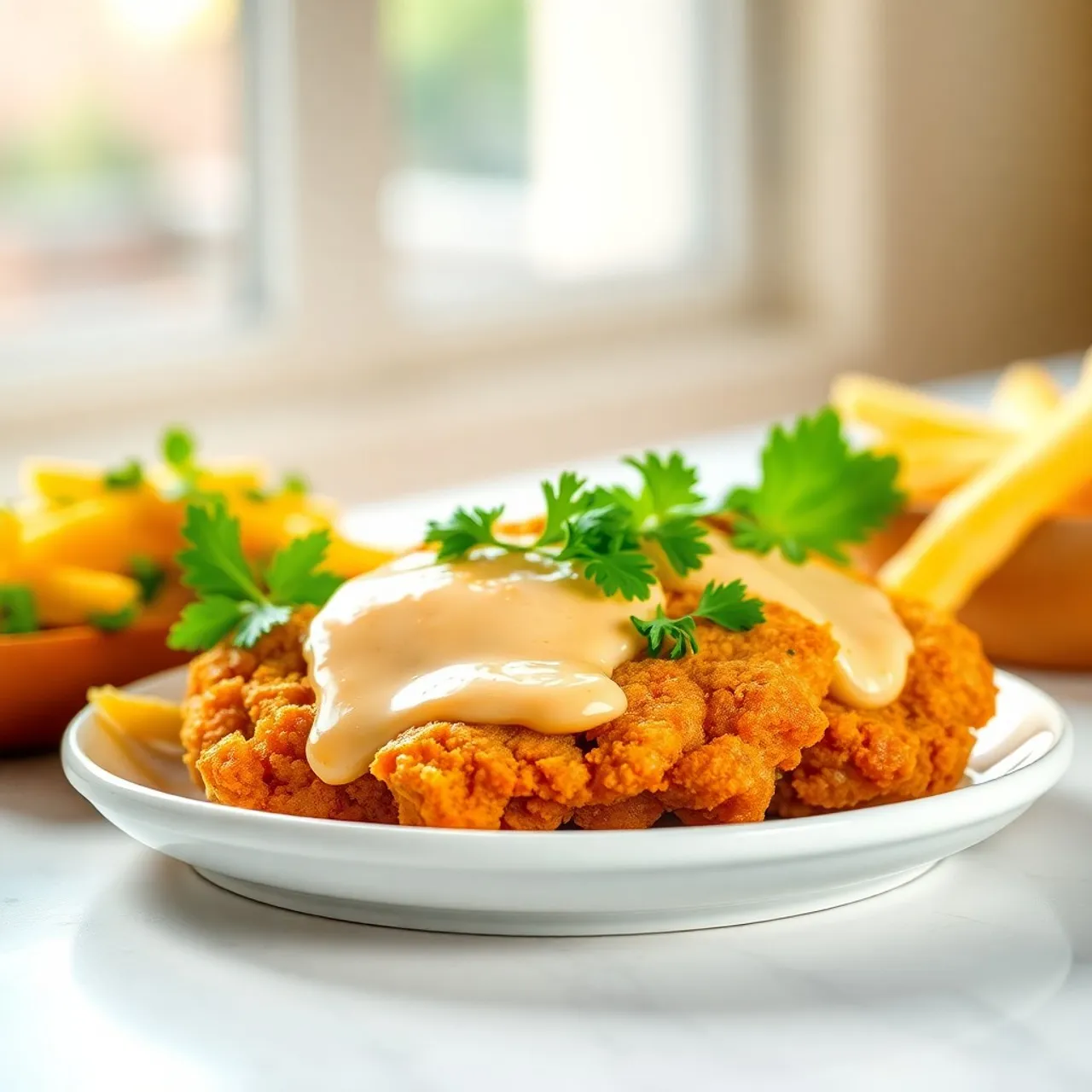
 North American Images are for illustrative purposes only, may be inaccurate, and do not guarantee the presence or absence of specific ingredients.
 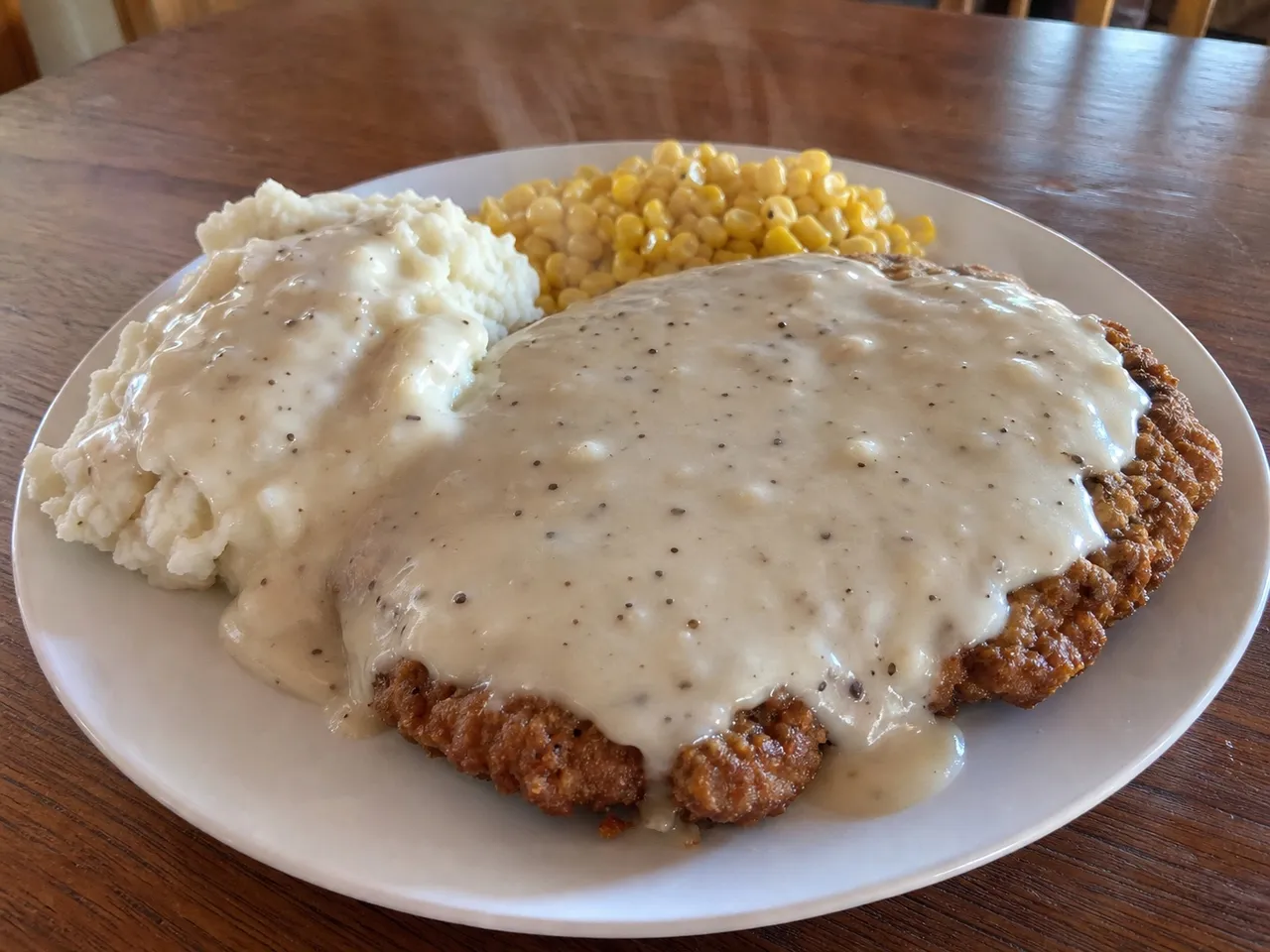 Serving Images are for illustrative purposes only, may be inaccurate, and do not guarantee the presence or absence of specific ingredients.
 Chicken Fried Steak
Tenderized cube steaks breaded in seasoned flour, pan-fried crisp, and topped with a peppery pan-drippings milk gravy.
Contains common allergens
In the app, Listahan checks these against your household automatically.
Good to know
- Crispy
- Ready in under 30 minutes
Matched from this dish's own ingredients and timing. Browse more: crispy recipes30-minute meals
Instructions
6 steps- 1
In a wide dish, whisk together the flour, baking powder, garlic powder, paprika, salt, and heavy black pepper. In a separate bowl, whisk the buttermilk and eggs together.
- 2
Pat the cube steaks dry. Dredge each steak first in the seasoned flour, then dip completely into the buttermilk mixture, and finally press firmly back into the flour to create a thick crust. Let them rest for 5 minutes.
- 3
Heat the vegetable oil in a large cast-iron skillet over medium-high heat to 350°F (175°C).
- 4
Fry the steaks (in batches to avoid crowding) for 4-5 minutes per side until the crust is deep golden brown and crispy. Remove to a wire rack and keep warm.
- 5
Carefully pour off all but 1/4 cup of the hot oil/drippings from the skillet. Reduce heat to medium. Whisk in 1/4 cup of the leftover seasoned flour and cook for 1 minute to make a roux.
- 6
Slowly whisk in the whole milk, scraping up the browned bits from the bottom. Simmer for 3-5 minutes until the gravy is thick and bubbly. Season heavily with black pepper and salt. Serve the steaks smothered in hot gravy.
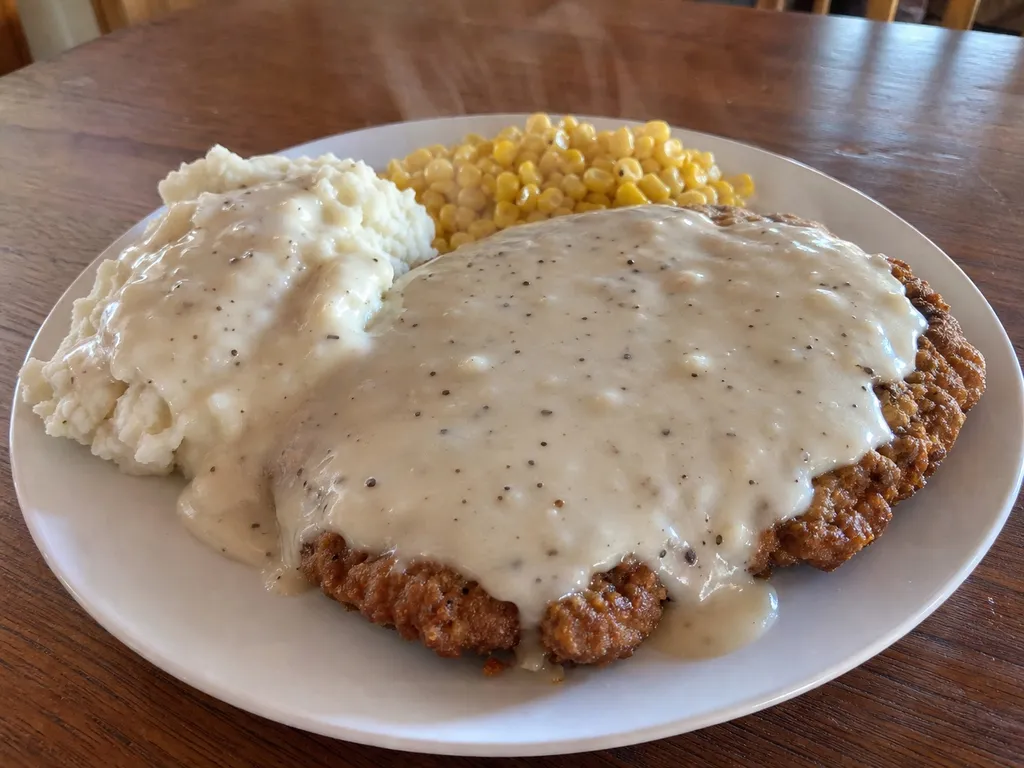 Images are for illustrative purposes only, may be inaccurate, and do not guarantee the presence or absence of specific ingredients.
 Listahan Family Score™
66/100
Works for many families
Score reflects how well this recipe fits a typical busy household. In the app, your Family Score is personalized to your household's allergens, kids, and pantry.
Nutrition
per serving820
Calories
15 g
Protein
51 g
Carbs
62 g
Fat
Estimated per serving. Actual values depend on the brands and portions you use.
Listahan cooking guide
Chef notes & practical guide
Technique notes, ingredient swaps, serve-alongside ideas, storage guidance, and equipment for this recipe.
Cultural context
Chicken fried steak is one of the defining dishes of Texas and Oklahoma home cooking, with roots in the breaded schnitzel techniques brought by German and Austrian immigrants in the 1800s. The name describes the cooking method, not the protein: the beef is battered and fried the same way as Southern fried chicken. It appeared widely on Texas diner menus by the 1930s as an economical way to tenderize tougher cuts of beef, and the cream gravy poured over it became inseparable from the dish's identity.
Listahan note
This version treats the double-dredge as non-negotiable and pays attention to the cream gravy, which is made in the same pan as the steak so every bit of the seasoned fond gets used.
Technique cues
- Cube steak is already mechanically tenderized, but a few additional passes with a meat mallet on the thicker spots ensures even frying and prevents tough spots in the center.
- The double-dredge, flour then milk then flour again, creates a thick coating with craggy edges that trap gravy better than a single coat.
- Cream gravy is made from the pan drippings after frying; do not drain all the fat, as you need about 3 tablespoons left in the pan to make a proper roux.
Kitchen flow
- Parallel prep
- Set up the dredging station before heating the oil; once the oil is hot, the cooking goes quickly.
- Make-ahead
- Chicken fried steak does not make ahead well; the coating softens as it sits. Make the gravy in advance and reheat it while frying the steak fresh.
- Leftover move
- Re-crisp leftover steak in a 400 degree oven for 10 minutes and serve as a sandwich on white bread with a smear of gravy.
- Cleanup rhythm
- Pour off excess frying oil carefully, leaving the drippings in the pan for the gravy; the pan cleans much more easily once the gravy is made while it is still warm.
Ingredient brief
Role, handling, and swap guidance for each key ingredient.
cube steak
Main protein
Purpose: Cube steak is round steak that has been run through a tenderizer, giving it a texture that cooks quickly and stays relatively tender through frying.
Handling: Pat dry before dredging so the flour coating adheres without steaming; pound any uneven thick spots to a uniform half-inch thickness.
Adaptation: Thin-pounded round steak or sirloin can substitute; increase the mallet work to compensate for the lower initial tenderization.
all-purpose flour
Coating and gravy base
Purpose: Flour does double duty here: it forms the crust on the steak and then serves as the roux base for the cream gravy made from the pan drippings.
Handling: Season the dredge flour generously with salt, black pepper, garlic powder, and paprika so the coating is fully flavored.
Adaptation: Rice flour in the dredge produces an extremely crisp exterior but will not work as easily for the gravy; use separate all-purpose flour for the gravy if substituting.
milk
Wet dredge and gravy liquid
Purpose: Milk creates the wet layer that makes the second coat of flour stick and forms the cream gravy base when added to the pan drippings roux.
Handling: Use whole milk for the richest gravy; low-fat milk will produce a thinner result that takes longer to reduce.
Adaptation: Buttermilk makes a slightly tangier, more tender coating; evaporated milk makes an extra-rich gravy.
vegetable oil
Frying medium
Purpose: A neutral high-smoke-point oil keeps the coating from picking up any off-flavors during the high-heat fry.
Handling: Use enough oil to come about a third of the way up the side of the steak; you are shallow-frying, not deep-frying.
Adaptation: Lard or beef tallow was traditional and produces a richer-flavored crust; refined peanut oil fries cleanly and hot.
Technique notes
- Do not move the steak once it is in the pan; let it fry undisturbed for 3-4 minutes so a crust forms before you flip it, otherwise the coating will stick to the pan and tear.
- Make the gravy immediately after the steak comes out, while the drippings are hot; a roux made from cool drippings clumps and does not cook properly.
- Season the gravy aggressively with black pepper; cream gravy without enough pepper tastes bland and flat, and pepper is the flavor that makes it distinctly Southern.
Ingredient swaps
- Gluten-free direction
- Use a 1:1 gluten-free flour blend for both the dredge and the gravy roux; the result fries and thickens comparably to all-purpose flour.
- Lighter direction
- Bake breaded steaks at 425 degrees on an oiled rack for 20 minutes, flipping once; the crust will be less crisp but the overall dish is much lower in fat.
Serve alongside
- Buttery mashed potatoes
- Southern-style green beans with bacon
- Buttermilk biscuits
- Simple sliced tomato with salt
- Sweet iced tea
- Black coffee
- Cold buttermilk
Serving suggestions only — check pairings for your household's allergens.
Storage & reheating
- Refrigerate fried steaks separately from the gravy in a sealed container for up to 3 days.
- Reheat steaks in a 400 degree oven for 10-12 minutes; reheat gravy on the stovetop with a splash of milk, whisking to restore smoothness.
- Do not freeze fried steak; the coating becomes soggy when thawed.
Equipment
- Large cast iron skillet or heavy stainless skillet
- Meat mallet for tenderizing
- Three shallow dishes for the dredging station
- Whisk for making the cream gravy
Make this household-aware
Listahan Pro checks this recipe against your household's allergens, finds pantry-aware swaps, builds the shopping list, and helps you plan the week around it.
Plan it in Listahan
Add Chicken Fried Steak to your week, check it against your household's allergens, and build the shopping list automatically.
More North American recipes
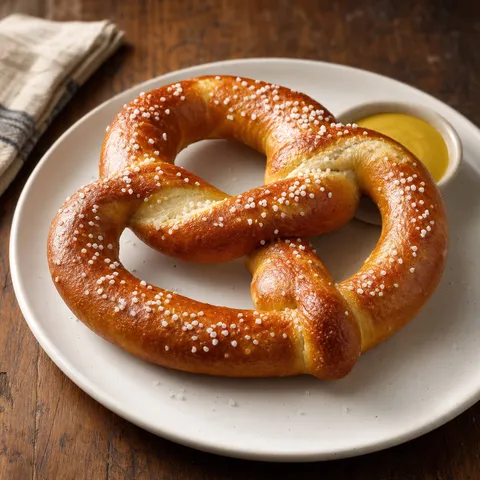 North American Lens Verified Images are for illustrative purposes only, may be inaccurate, and do not guarantee the presence or absence of specific ingredients.
 Soft Pretzels
Chewy golden mall-style pretzels with a salty crust, brushed in butter.
 North American Lens Verified Images are for illustrative purposes only, may be inaccurate, and do not guarantee the presence or absence of specific ingredients.
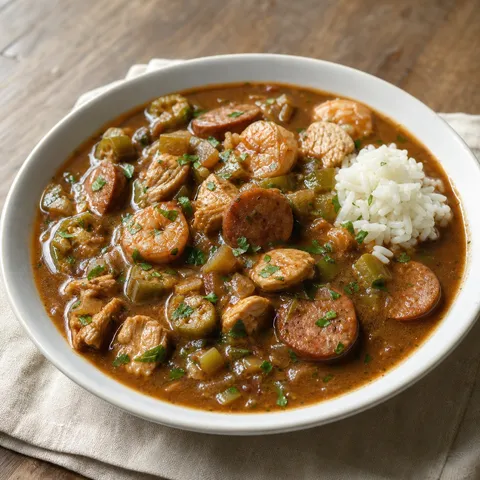
 Gumbo
A Louisiana-style gumbo of chicken thighs and Andouille sausage simmered with okra, the Cajun holy trinity, and a dark roux, served over rice.
 North American Lens Verified Images are for illustrative purposes only, may be inaccurate, and do not guarantee the presence or absence of specific ingredients.
 New York Cheesecake
A dense, ultra-creamy baked cheesecake with a buttery graham cracker crust and a faintly tangy, melt-in-your-mouth filling.