 North American Images are for illustrative purposes only, may be inaccurate, and do not guarantee the presence or absence of specific ingredients.
  Serving Images are for illustrative purposes only, may be inaccurate, and do not guarantee the presence or absence of specific ingredients.
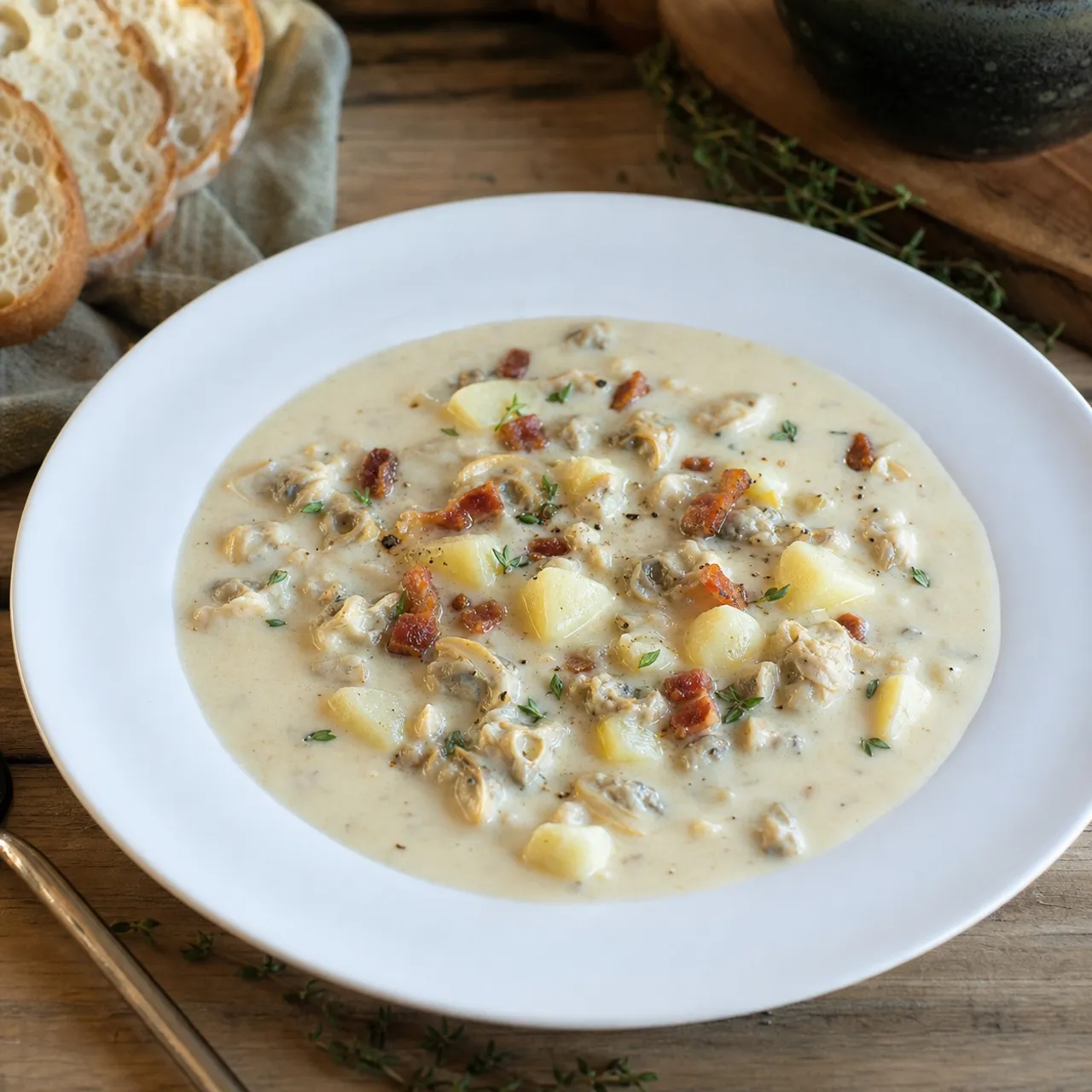
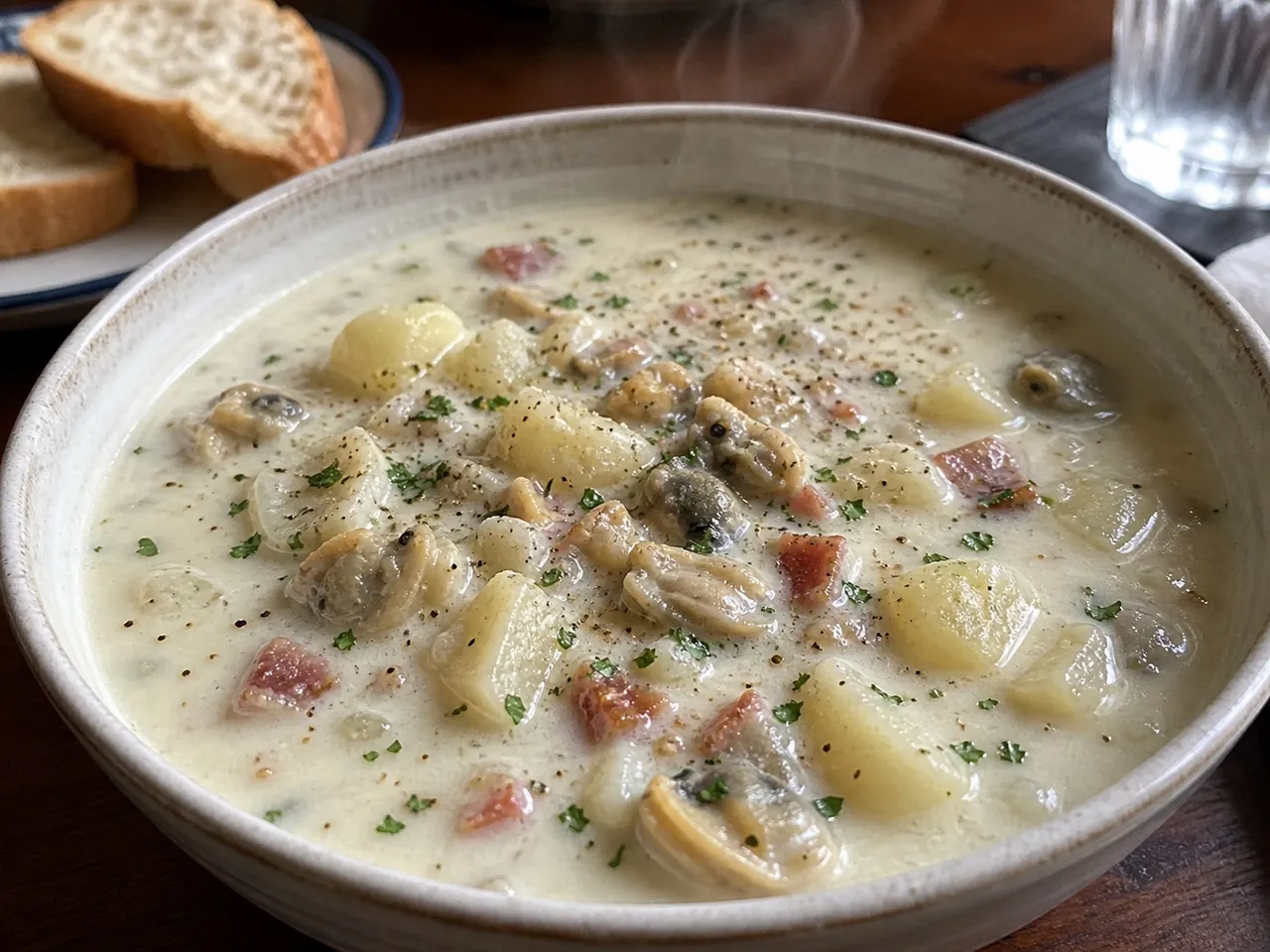
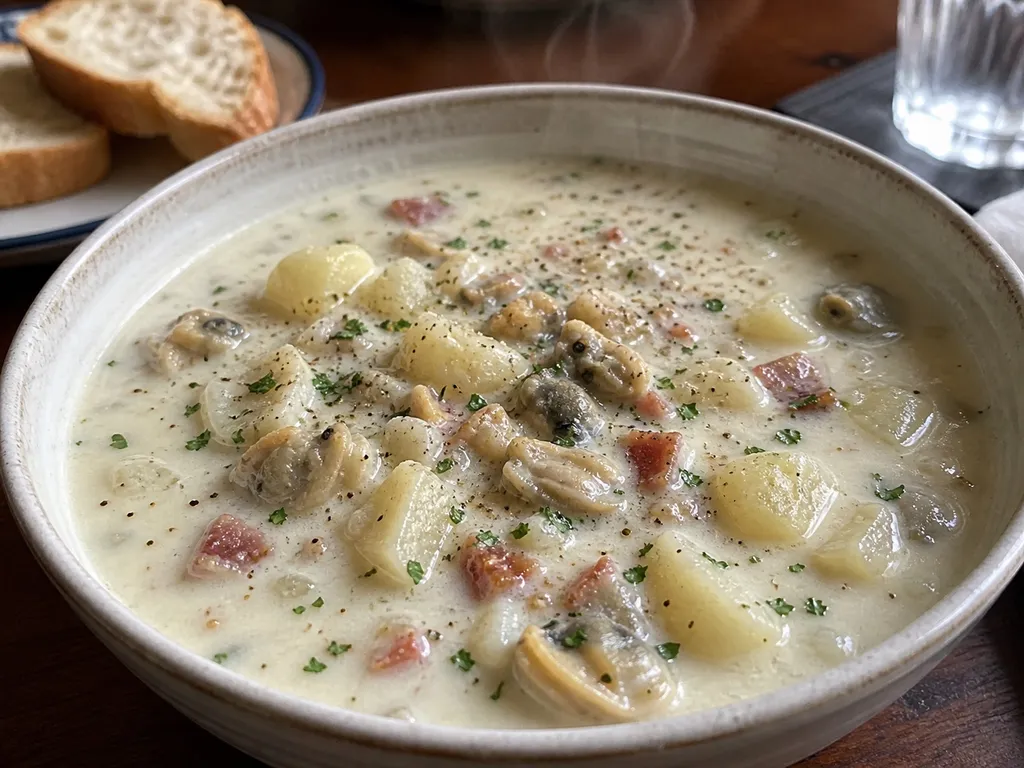
 Clam Chowder
A creamy New England clam chowder of chopped clams, bacon, and Yukon gold potatoes simmered in cream with fresh thyme.
Contains common allergens
In the app, Listahan checks these against your household automatically.
Good to know
- One-pot
Matched from this dish's own ingredients and timing. Browse more: one-pot dinners
Instructions
6 steps- 1
In a large Dutch oven or heavy pot, cook the diced bacon over medium heat until crispy and the fat has rendered out, about 6-8 minutes. Use a slotted spoon to remove the bacon and set aside, leaving the fat in the pot.
- 2
Add the chopped onion to the bacon fat and sauté for 4-5 minutes until translucent and aromatic. Stir in the flour and thyme, cooking for 1 minute to create a roux.
- 3
Slowly pour in the reserved clam juice (from the cans) while constantly whisking to prevent lumps. Add the diced potatoes and bring the mixture to a gentle boil.
- 4
Reduce the heat to low, cover the pot, and simmer for 15-20 minutes until the potatoes are fork-tender.
- 5
Stir in the chopped clams and the heavy cream. Gently heat the chowder for 5 minutes until steaming hot, but do not let it reach a hard boil, as the clams will become tough and the cream may curdle.
- 6
Season to taste with salt and black pepper. Serve hot in bowls, garnished with the crispy bacon bits and a side of oyster crackers.
 Images are for illustrative purposes only, may be inaccurate, and do not guarantee the presence or absence of specific ingredients.
 Listahan Family Score™
63/100
Works for many families
Score reflects how well this recipe fits a typical busy household. In the app, your Family Score is personalized to your household's allergens, kids, and pantry.
Nutrition
per serving360
Calories
9 g
Protein
22 g
Carbs
27 g
Fat
Estimated per serving. Actual values depend on the brands and portions you use.
Listahan cooking guide
Chef notes & practical guide
Technique notes, ingredient swaps, serve-alongside ideas, storage guidance, and equipment for this recipe.
Cultural context
New England clam chowder is one of the oldest distinctively American regional dishes, with documented recipes dating to the mid-1700s in coastal Massachusetts and Rhode Island. Early versions used salt pork, ship biscuits, and whatever clams were at hand; cream was a later addition as dairy became more accessible. The dish became associated with Boston and the New England coast and was famously served in bread bowls at Faneuil Hall, a tradition that persists today. Manhattan clam chowder, which uses tomato instead of cream, emerged in the 19th century and remains a rival regional tradition.
Listahan note
This version builds the base by rendering bacon for fat and flavor rather than using plain oil, then draws body from a roux and reserved clam juice before the cream goes in, so the chowder has depth rather than relying entirely on the dairy.
Technique cues
- Never boil the chowder after the cream is added; hard boiling causes cream-based soups to curdle and the texture becomes grainy rather than silky.
- Add the clams only in the last 3-4 minutes of cooking; clams overcook quickly and become rubbery when simmered too long, which is the most common fault in clam chowder.
- The reserved clam juice is the most important liquid in the pot; it carries the briny, oceanic flavor that plain water or stock cannot replicate.
Kitchen flow
- Parallel prep
- Dice the potatoes and onion while the bacon renders; by the time the onion is sauteed and the roux is built, the potatoes are ready to go in.
- Make-ahead
- Make the chowder through the potato stage and refrigerate; add the cream and clams when reheating gently before serving so the clams are not overcooked.
- Leftover move
- Thin leftover chowder with a splash of whole milk when reheating if it has thickened too much in the refrigerator; it will taste as good as day one.
- Cleanup rhythm
- One Dutch oven for the entire recipe; soak immediately after serving as the cream-based soup sets firmly once cold.
Ingredient brief
Role, handling, and swap guidance for each key ingredient.
3 cans (6.5 oz each) chopped clams (juices reserved)
Primary protein and flavor base
Purpose: Canned clams are a practical substitute for fresh and their juice is the most concentrated source of clam flavor in the recipe.
Handling: Drain the juice into a separate container before opening the clams so you can add it in stages and control the saltiness.
Adaptation: Fresh littleneck or cherrystone clams steamed and chopped produce a superior result but require more work; use about 2 dozen clams to replace the three cans.
4 slices thick-cut bacon (diced)
Fat source and savory base
Purpose: Bacon fat carries smokiness and salt that form the flavor foundation of the chowder; butter or oil produces a blander result.
Handling: Dice into 1/2-inch pieces before rendering so they cook evenly and produce uniform crispy bits for garnish.
Adaptation: Salt pork is the traditional substitute and produces a deeper, less smoky flavor; dice finely and render in the same way.
2 cups Yukon gold potatoes (peeled and diced)
Body and starch thickener
Purpose: Yukon gold potatoes hold their shape better than russets while also releasing enough starch to help thicken the soup.
Handling: Dice to 1/2-inch cubes for even cooking; larger pieces stay raw in the center by the time smaller ones are done.
Adaptation: Red potatoes hold their shape even better and have a waxy texture that does not break down; the soup will be slightly thinner without the starch contribution of Yukon golds.
1 cup heavy whipping cream
Richness and body
Purpose: Heavy cream contributes the silky, rich texture that defines New England chowder; lower-fat dairy produces a thinner, less coating soup.
Handling: Add the cream after the potatoes are fully tender and the heat is lowered; never let it boil.
Adaptation: Half-and-half reduces the richness but produces an acceptable lighter chowder; use whole-fat coconut cream for a dairy-free version that approximates the texture.
1/2 tsp fresh thyme
Herbal accent
Purpose: Thyme adds a quiet earthy note that bridges the briny clams and rich cream without dominating either.
Handling: Add with the flour at the roux stage so the heat blooms the herb's volatile oils into the fat.
Adaptation: Dried thyme can substitute at 1/4 teaspoon; fresh flat-leaf parsley stirred in at the end is a common alternative that gives a brighter, greener note.
Technique notes
- Taste for seasoning only after the cream and clams are added; canned clam juice varies considerably in salt content and the chowder may need no additional salt at all.
- A good chowder should coat the back of a spoon but still be loose enough to pour; if it is too thick after the cream, add a splash of reserved clam juice to loosen it.
- Serve with oyster crackers or crusty sourdough for textural contrast; the crunch plays directly against the creamy base and is part of the classic experience.
Ingredient swaps
- Gluten-free direction
- Replace the all-purpose flour roux with 2 tablespoons of cornstarch whisked into 1/4 cup of cold clam juice and added after the potatoes are tender.
- Dairy-free option
- Use full-fat coconut cream in place of heavy cream and skip the butter by building the roux with a neutral oil; the flavor will be slightly different but the texture is close.
- Smokier version
- Add a 1/4 teaspoon of smoked paprika with the thyme for a background smoke note that deepens the chowder without requiring a smoked shellfish ingredient.
Serve alongside
- Oyster crackers for stirring into the soup
- Crusty sourdough bread or sourdough bread bowl
- Simple green salad with lemon vinaigrette
- Dry Chardonnay or Viognier
- Cold pilsner or pale ale
- Sparkling water with lemon
Serving suggestions only — check pairings for your household's allergens.
Storage & reheating
- Refrigerate in a sealed container for up to 3 days; the chowder thickens considerably as the potatoes continue absorbing liquid.
- Reheat gently over medium-low heat, stirring frequently and adding a splash of milk or clam juice to restore the original consistency; do not boil.
- Clam chowder does not freeze well; the cream base separates and the potatoes become grainy after thawing.
Equipment
- Dutch oven or heavy-bottomed soup pot for even heat and volume
- Slotted spoon for removing bacon before sauteing the onion
- Whisk for building the roux and preventing lumps
Make this household-aware
Listahan Pro checks this recipe against your household's allergens, finds pantry-aware swaps, builds the shopping list, and helps you plan the week around it.
Plan it in Listahan
Add Clam Chowder to your week, check it against your household's allergens, and build the shopping list automatically.
More North American recipes
 North American Lens Verified Images are for illustrative purposes only, may be inaccurate, and do not guarantee the presence or absence of specific ingredients.
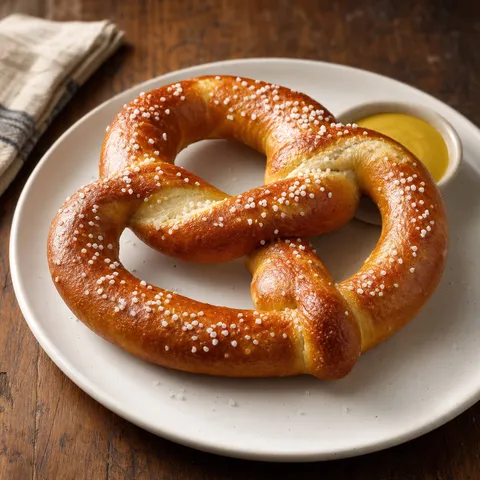
 Soft Pretzels
Chewy golden mall-style pretzels with a salty crust, brushed in butter.
 North American Lens Verified Images are for illustrative purposes only, may be inaccurate, and do not guarantee the presence or absence of specific ingredients.
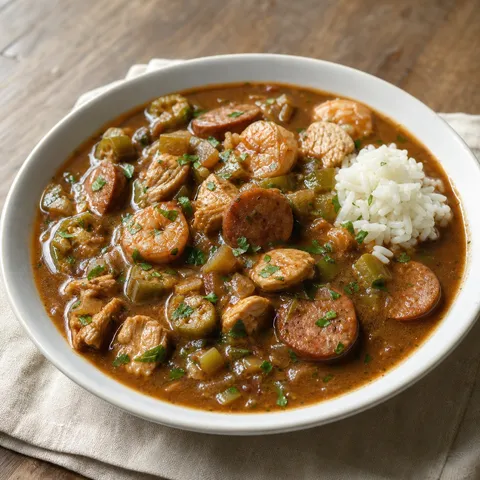
 Gumbo
A Louisiana-style gumbo of chicken thighs and Andouille sausage simmered with okra, the Cajun holy trinity, and a dark roux, served over rice.
 North American Lens Verified Images are for illustrative purposes only, may be inaccurate, and do not guarantee the presence or absence of specific ingredients.
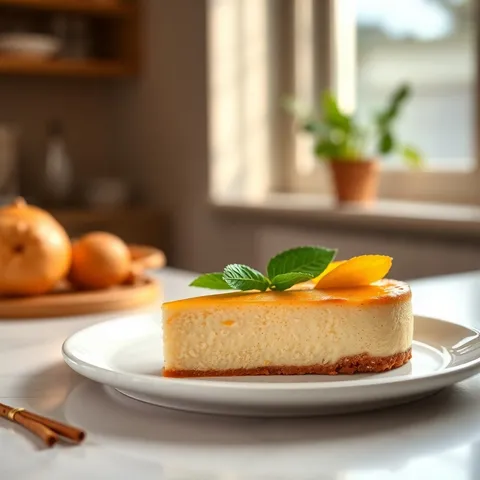
 New York Cheesecake
A dense, ultra-creamy baked cheesecake with a buttery graham cracker crust and a faintly tangy, melt-in-your-mouth filling.