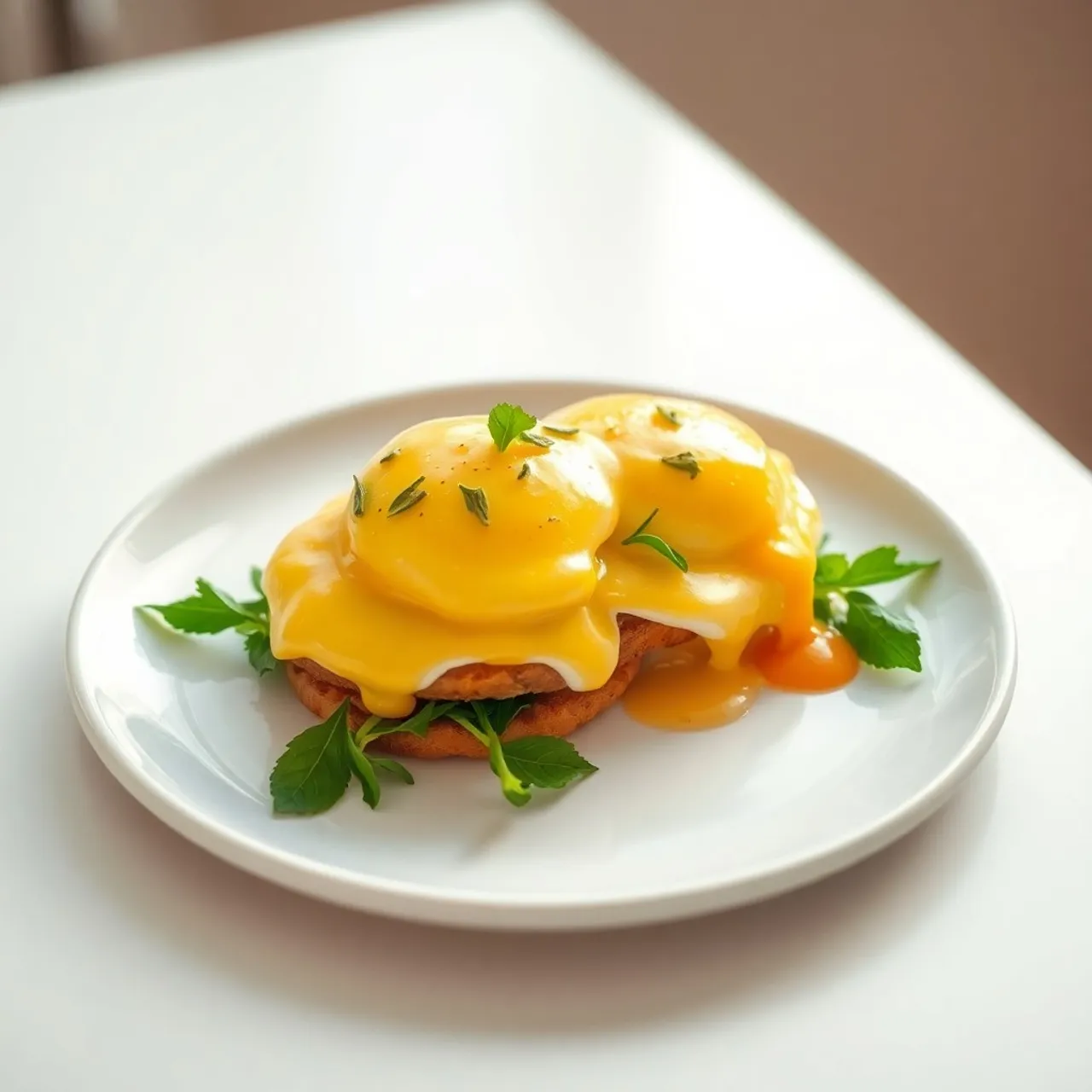
 North American Images are for illustrative purposes only, may be inaccurate, and do not guarantee the presence or absence of specific ingredients.
 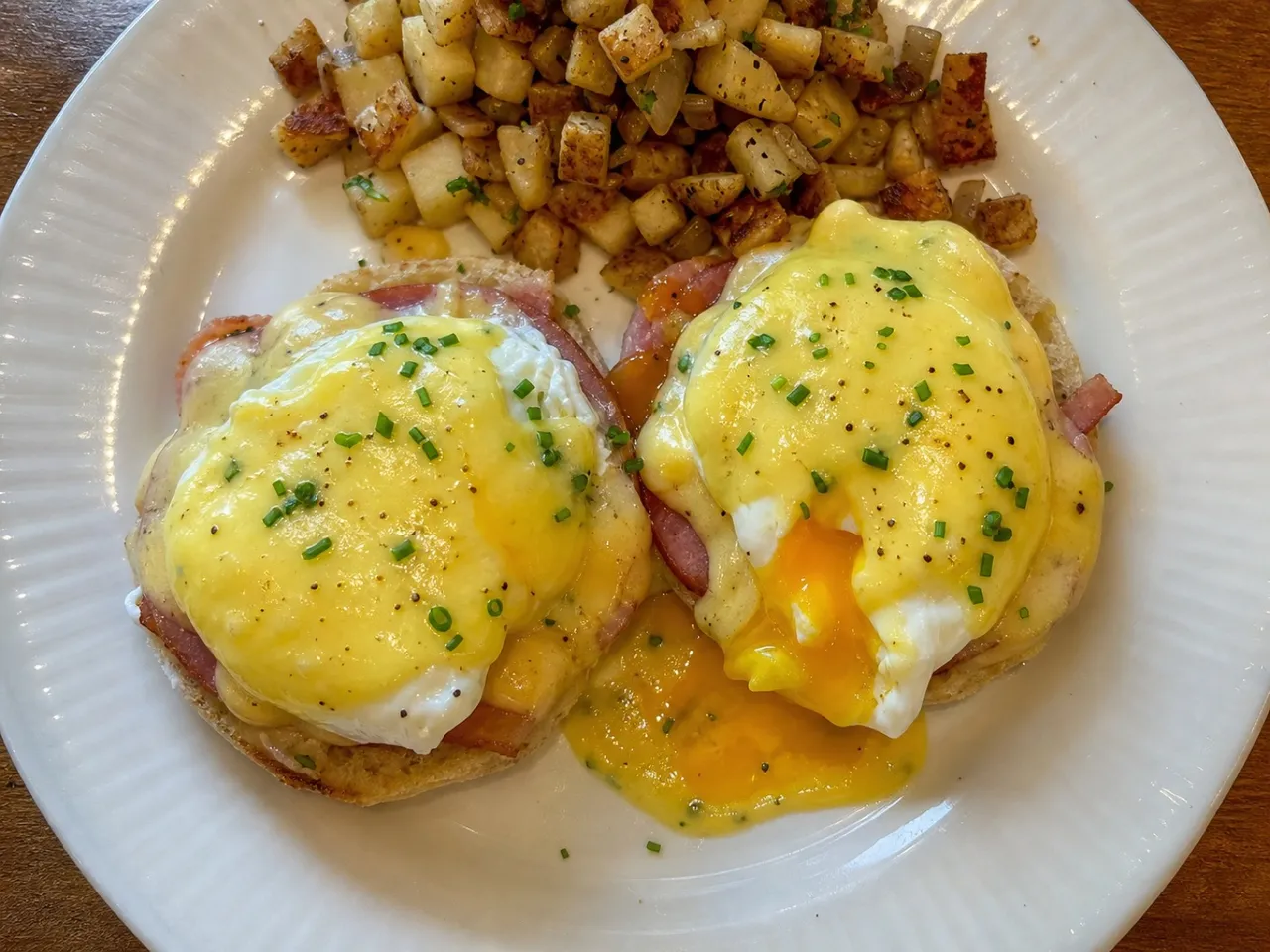 Serving Images are for illustrative purposes only, may be inaccurate, and do not guarantee the presence or absence of specific ingredients.
 Eggs Benedict
An open-faced sandwich of English muffin halves topped with bacon, poached egg, and hollandaise sauce.
Contains common allergens
In the app, Listahan checks these against your household automatically.
Good to know
- Ready in under 30 minutes
Matched from this dish's own ingredients and timing. Browse more: 30-minute meals
Instructions
6 steps- 1
Make the Hollandaise: Vigorously whisk the 3 egg yolks and lemon juice in a glass bowl over a saucepan of gently simmering water (a double boiler) until the yolks thicken and pale.
- 2
Slowly drizzle the melted warm butter into the yolk mixture while whisking constantly until an emulsion forms and the sauce is thick and creamy. Remove from heat and stir in the cayenne. Keep warm.
- 3
Bring a wide pot of water with 1 tsp of white vinegar to a gentle simmer. Create a gentle whirlpool with a spoon and carefully slip in the 4 cracked eggs one by one. Poach for exactly 3 minutes for perfectly runny yolks.
- 4
While the eggs poach, lightly toast the split English muffins and warm the Canadian bacon slices in a skillet.
- 5
Remove the poached eggs with a slotted spoon and briefly blot them dry on a paper towel.
- 6
Assemble: Place a slice of Canadian bacon on each English muffin half, carefully top with a poached egg, and drape generously with the warm Hollandaise sauce. Serve immediately.
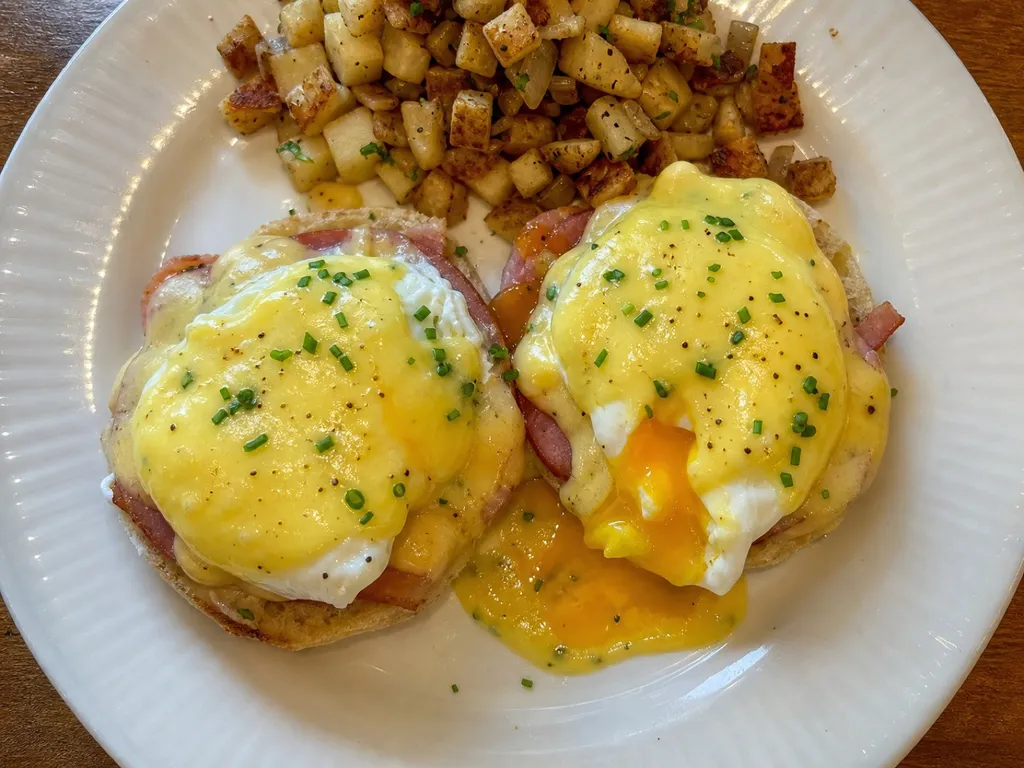 Images are for illustrative purposes only, may be inaccurate, and do not guarantee the presence or absence of specific ingredients.
 Listahan Family Score™
63/100
Works for many families
Score reflects how well this recipe fits a typical busy household. In the app, your Family Score is personalized to your household's allergens, kids, and pantry.
Nutrition
per serving340
Calories
11 g
Protein
1 g
Carbs
33 g
Fat
Estimated per serving. Actual values depend on the brands and portions you use.
Listahan cooking guide
Chef notes & practical guide
Technique notes, ingredient swaps, serve-alongside ideas, storage guidance, and equipment for this recipe.
Cultural context
Eggs Benedict is said to have originated at Delmonico's restaurant in New York City in the 1890s, though the exact story is contested between a few different accounts of who ordered or suggested it first. What is certain is that it became the signature American brunch dish of the late 20th century, a restaurant staple that home cooks rarely attempt because of the Hollandaise. The combination of textures -- toasted muffin, silky Canadian bacon, soft poached egg, and rich buttery sauce -- is what made it endure.
Listahan note
This version treats Hollandaise as a learnable technique rather than a magic trick; the double boiler and constant whisking are what control the temperature and prevent the yolks from scrambling, and both are within reach for any careful cook.
Technique cues
- The Hollandaise lives or dies on temperature: the bowl must be warm but not hot, the butter must be melted and warm but not bubbling, and if you see the eggs beginning to look grainy or scrambled, pull the bowl off the heat immediately and whisk fast.
- White vinegar in the poaching water changes the surface tension around the egg white and helps it wrap the yolk more tightly rather than feathering out into strings across the pot.
- Poach the eggs in batches of two and keep finished ones in warm water while the rest cook; this is how restaurants produce multiple Benedicts simultaneously without any being cold.
Kitchen flow
- Parallel prep
- Make the Hollandaise first and keep it warm in a covered bowl set over the warm water; then poach eggs and toast muffins in the last 5 minutes.
- Make-ahead
- Hollandaise does not store well; make it to order. You can pre-poach eggs and hold them in cold water in the fridge, then rewarm in hot water for 30 seconds per egg.
- Leftover move
- Leftover Canadian bacon makes an excellent addition to a fried egg sandwich the next morning.
- Cleanup rhythm
- The double boiler and poaching pot share water; fill both from the same tap run to minimize effort, and clean the Hollandaise bowl while still warm.
Ingredient brief
Role, handling, and swap guidance for each key ingredient.
large eggs
Core protein (poached)
Purpose: The runny yolk is the central flavor event of Eggs Benedict; it breaks into the Hollandaise and creates the sauce that coats everything on the plate.
Handling: Crack each egg into a small cup first so you can lower it gently into the water; never crack directly into the pot.
Adaptation: No true substitute for the poached egg, but a soft-fried egg with a runny center captures most of the experience without the technique.
egg yolks
Hollandaise emulsifier
Purpose: The yolks contain lecithin, which allows fat from the butter to emulsify into a stable, creamy sauce rather than breaking into greasy liquid.
Handling: Whisk the yolks and lemon juice vigorously over the double boiler before adding any butter; they should thicken and turn pale before the butter starts going in.
Adaptation: No egg substitute replicates this; for a dairy-free sauce, a blender avocado Hollandaise can work as a conceptual stand-in.
unsalted butter
Hollandaise fat base
Purpose: Warm melted butter is what transforms the yolk emulsion into the rich, velvety Hollandaise texture; the quantity of butter relative to yolks sets the richness.
Handling: Melt and keep warm, not hot; if butter is too hot it will scramble the yolks the moment it hits them.
Adaptation: Clarified butter (ghee) gives a more stable Hollandaise with less risk of breaking, since the water content has been removed.
Canadian bacon
Savory cured meat layer
Purpose: Canadian bacon is leaner and milder than regular bacon, which lets the poached egg and Hollandaise remain the dominant flavors.
Handling: Warm the slices in a dry skillet for 1 minute per side to develop a slight sear and heat them through.
Adaptation: Regular bacon, smoked salmon, or sauteed spinach (for Eggs Florentine) each change the character of the dish in interesting ways.
English muffins
Textural base
Purpose: The nooks and crannies of a toasted English muffin hold the egg and sauce without the whole assembly sliding apart.
Handling: Split with a fork, not a knife, to get more surface texture; toast under the broiler until the edges are golden and slightly crisp.
Adaptation: A toasted thick slice of sourdough works as a base if English muffins are unavailable, though the proportions shift slightly.
Technique notes
- If the Hollandaise breaks and becomes greasy, start a fresh yolk in a clean bowl over the double boiler, then slowly whisk the broken sauce into the new yolk as if it were butter; it almost always comes back.
- A gentle clockwise swirl in the poaching water before adding the egg helps the white spiral around the yolk naturally; you do not need a strong whirlpool.
- Three minutes of poaching produces a fully set white with a completely runny yolk for a large egg at sea level; add 30 seconds at high altitude.
Ingredient swaps
- Gluten-free direction
- Use certified gluten-free English muffins or a thick slice of gluten-free sourdough; all other components are naturally gluten-free.
- Dairy-free option
- Use a blender avocado-lemon sauce in place of Hollandaise; it does not emulsify the same way but delivers creaminess and acid contrast.
Serve alongside
- Simple green salad with lemon vinaigrette
- Home fries or crispy hash browns
- Fresh fruit salad with mint
- Mimosa
- Fresh-brewed coffee
- Sparkling water with citrus
Serving suggestions only — check pairings for your household's allergens.
Storage & reheating
- Eggs Benedict does not store or reheat well as an assembled dish; enjoy immediately after plating.
- Hollandaise can be held warm for up to 1 hour if kept covered over barely warm water; do not refrigerate and reheat.
- Pre-poached eggs can be held in cold water in the fridge for up to 24 hours; rewarm in simmering water for 30-45 seconds before serving.
Equipment
- Glass or stainless bowl that fits over a saucepan without touching the water (double boiler setup)
- Wide shallow pot for poaching (at least 3 inches of water)
- Slotted spoon for lifting poached eggs
- Small cups or ramekins for cracking eggs before poaching
Make this household-aware
Listahan Pro checks this recipe against your household's allergens, finds pantry-aware swaps, builds the shopping list, and helps you plan the week around it.
Plan it in Listahan
Add Eggs Benedict to your week, check it against your household's allergens, and build the shopping list automatically.
More North American recipes
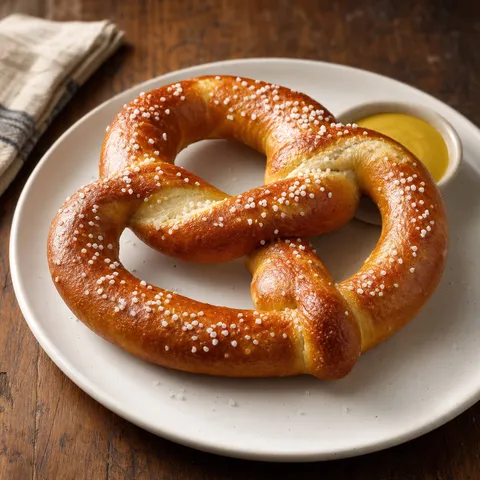 North American Lens Verified Images are for illustrative purposes only, may be inaccurate, and do not guarantee the presence or absence of specific ingredients.
 Soft Pretzels
Chewy golden mall-style pretzels with a salty crust, brushed in butter.
 North American Lens Verified Images are for illustrative purposes only, may be inaccurate, and do not guarantee the presence or absence of specific ingredients.
 Gumbo
A Louisiana-style gumbo of chicken thighs and Andouille sausage simmered with okra, the Cajun holy trinity, and a dark roux, served over rice.
 North American Lens Verified Images are for illustrative purposes only, may be inaccurate, and do not guarantee the presence or absence of specific ingredients.
 New York Cheesecake
A dense, ultra-creamy baked cheesecake with a buttery graham cracker crust and a faintly tangy, melt-in-your-mouth filling.