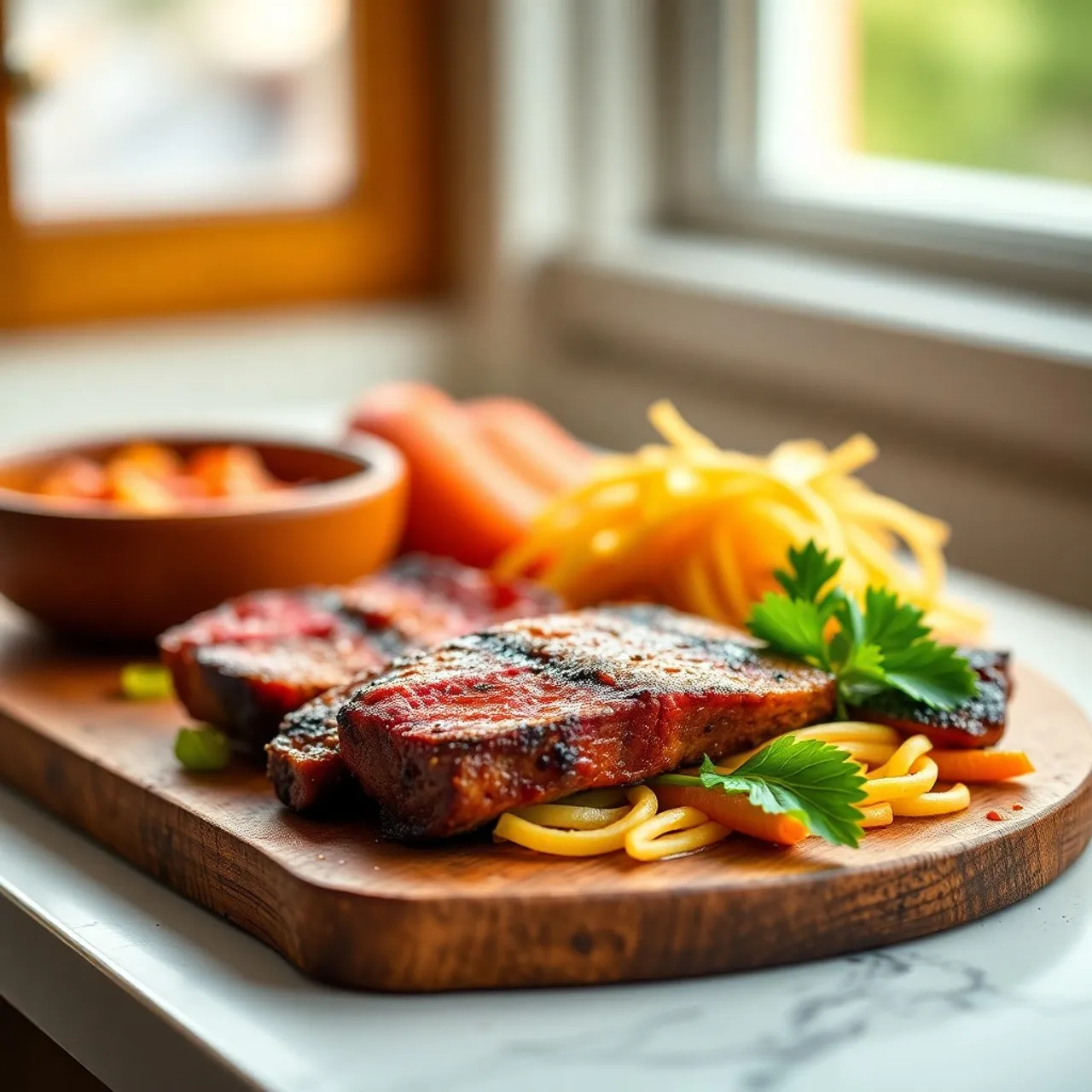
 South American Images are for illustrative purposes only, may be inaccurate, and do not guarantee the presence or absence of specific ingredients.
 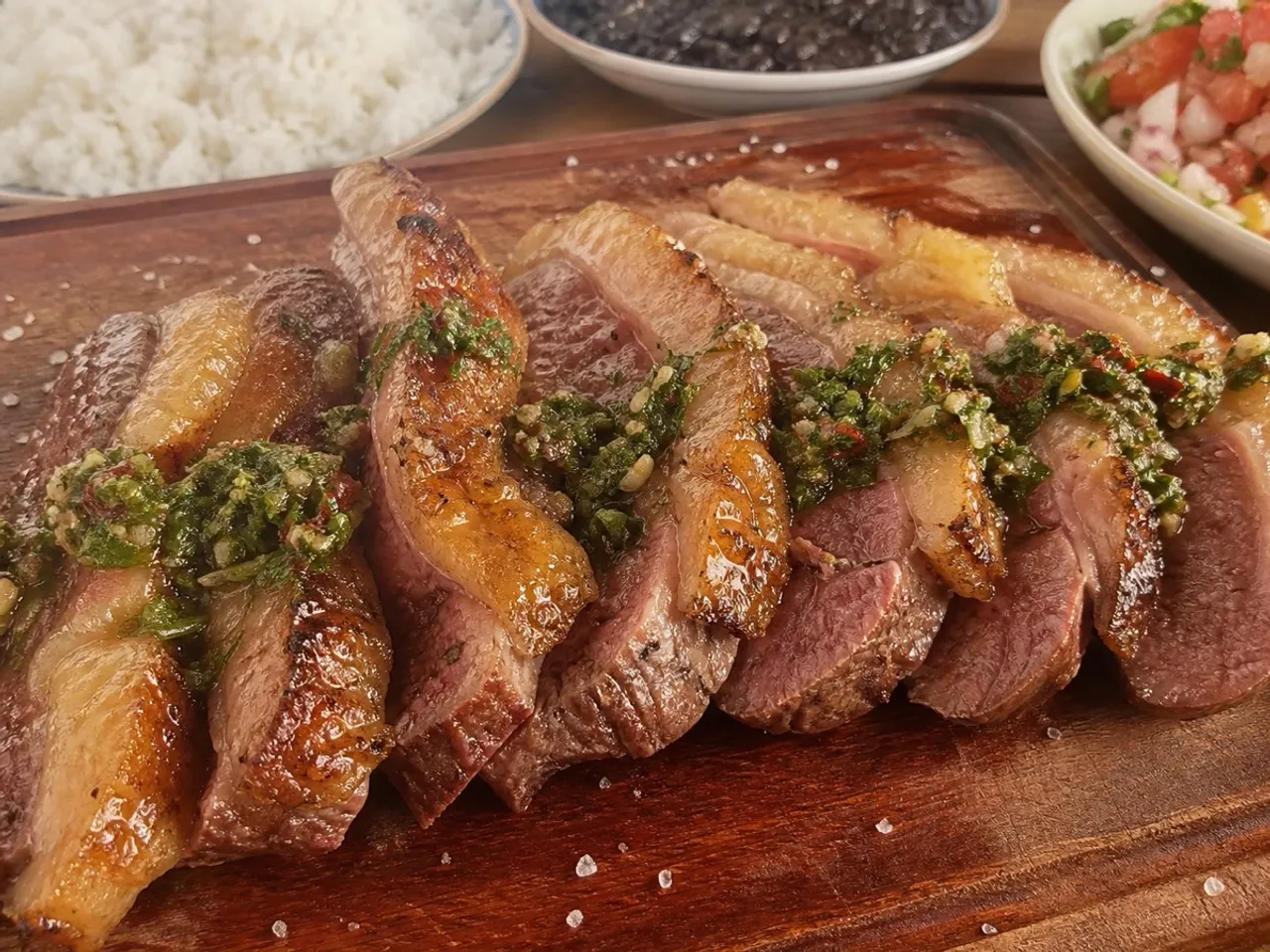 Serving Images are for illustrative purposes only, may be inaccurate, and do not guarantee the presence or absence of specific ingredients.
 Churrasco
South America's sizzling grilled beef tradition — thick cuts seasoned simply with salt and cooked over open flame until beautifully seared and juicy at the center.
No common allergens detected
Based on this recipe's ingredient list. Always verify with your own brands and labels.
Instructions
6 steps- 1
Prepare the fire: Start a charcoal or wood fire and wait until the coals are glowing white-hot with no active flames.
- 2
Slice the meat: Cut the picanha into thick, 2-inch steaks, slicing with the grain so that each piece has a layer of the fat cap on top.
- 3
Skewer and fold: Fold each piece of meat into a 'C' shape, with the fat cap facing outward. Thread them onto a long, heavy-duty metal skewer.
- 4
Season: Generously coat the entire surface of the meat with coarse rock salt. Let it sit for 5 minutes, then shake off any excess loose salt.
- 5
Grill: Place the skewers high above the hot coals. Cook, rotating the skewer frequently, until the fat renders, turns golden, and begins to crisp (about 20-30 minutes).
- 6
Serve (Rodízio style): Remove the skewer from the heat and slice the thin, crusty outer layer directly onto plates. Return the skewer to the fire to continue roasting the interior.
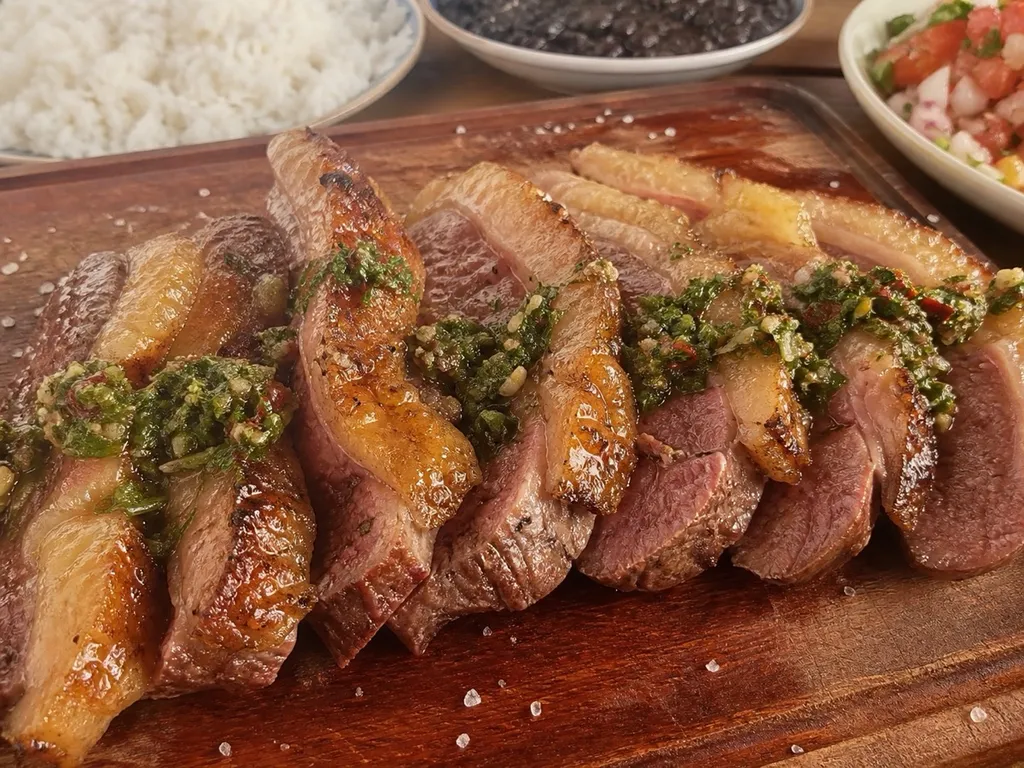 Images are for illustrative purposes only, may be inaccurate, and do not guarantee the presence or absence of specific ingredients.
 Listahan Family Score™
72/100
Good fit for most families
Score reflects how well this recipe fits a typical busy household. In the app, your Family Score is personalized to your household's allergens, kids, and pantry.
Nutrition
per serving1465
Calories
0 g
Protein
1 g
Carbs
163 g
Fat
Estimated per serving. Actual values depend on the brands and portions you use.
Listahan cooking guide
Chef notes & practical guide
Technique notes, ingredient swaps, serve-alongside ideas, storage guidance, and equipment for this recipe.
Cultural context
Churrasco refers across much of South America to beef grilled over wood or charcoal, a tradition rooted in the cattle culture of the pampas where gauchos cooked whole cuts on open fires. In countries like Argentina, Brazil, and Uruguay it became a centerpiece of weekend gatherings, the asado, where the grill itself is a social occasion. The word also names a specific thin, butterflied steak in places like Colombia and Central America, but the throughline is simple beef, fire, and salt.
Listahan note
This version treats churrasco as a weeknight-friendly grilled steak, leaning on a thin, fast-cooking cut and a bright chimichurri instead of a multi-hour asado. The point is great char with very little fuss.
Technique cues
- Salt the steak at least 40 minutes ahead or right before it hits the grill, never in the 10-minute window between, so surface moisture has time to draw out and reabsorb for a better sear.
- Get the grill genuinely hot before the beef goes on; a thin cut overcooks gray if the grates are only warm, and you want a dark crust in two to three minutes a side.
- Rest the meat off the heat for five minutes before slicing against the grain, which lets the juices settle and keeps each slice tender instead of leaking onto the board.
Kitchen flow
- Parallel prep
- Make the chimichurri first and let it sit while the grill heats and the steak comes to temperature.
- Make-ahead
- Chimichurri keeps several days in the fridge and actually improves overnight; make a double batch.
- Leftover move
- Slice cold leftover steak thin into a sandwich or over rice with the extra chimichurri spooned on top.
- Cleanup rhythm
- Scrape the hot grates with a brush right after the beef comes off, while the grill is still hot and the residue lifts easily.
Ingredient brief
Role, handling, and swap guidance for each key ingredient.
skirt or flank steak
the main grilled beef
Purpose: Thin, loose-grained cuts cook fast over high heat and carry char and beefy flavor better than a thick roast.
Handling: Pat very dry and bring to room temperature for 20 minutes before grilling.
Adaptation: Sirloin or thin ribeye works; for a leaner option use top round sliced thin.
coarse salt
primary seasoning
Purpose: Coarse salt is the traditional and often only seasoning for churrasco, drawing out moisture for a crisp crust.
Handling: Sprinkle generously over both sides just before or well before grilling.
Adaptation: Kosher salt is a fine stand-in; avoid fine table salt which oversalts quickly.
fresh parsley
base of the chimichurri
Purpose: Flat-leaf parsley gives chimichurri its grassy, fresh backbone that cuts the richness of the beef.
Handling: Chop finely by hand rather than blending so the sauce stays loose, not pureed.
Adaptation: Cilantro can replace part of the parsley for a different but valid herb profile.
garlic
aromatic in the sauce
Purpose: Raw garlic gives chimichurri its sharp bite that wakes up grilled beef.
Handling: Mince very fine or grate so it disperses evenly in the oil.
Adaptation: A pinch of garlic powder works in a pinch but lacks the fresh pungency.
red wine vinegar
acid in the sauce
Purpose: Vinegar brightens the chimichurri and balances the fat of the steak.
Handling: Whisk into the herbs and oil and let sit 15 minutes so flavors marry.
Adaptation: Sherry vinegar or fresh lime juice both work well.
olive oil
carries the sauce
Purpose: Oil binds the chimichurri and coats the meat so the herbs and acid cling.
Handling: Use a fruity extra-virgin oil and stir, do not emulsify, the sauce.
Adaptation: A neutral oil works if you want the herbs to lead instead of the oil.
Technique notes
- A thin cut wants a screaming-hot surface and a short time; if you only have a thick steak, sear hard then finish over indirect heat so the inside catches up without burning the crust.
- Hold the chimichurri until the meat has rested, then spoon it over fresh; cooking the sauce dulls its raw, vibrant edge.
- Slicing against the grain is non-negotiable on skirt and flank, which have long fibers that turn chewy if cut the wrong way.
Ingredient swaps
- Weeknight shortcut
- Cook the steak in a ripping-hot cast-iron pan indoors when grilling is not an option; the crust is nearly as good.
- Lower-sodium direction
- Cut the surface salt and lean on the acid and garlic in the chimichurri to carry the flavor.
- Leaner direction
- Use a top-round or sirloin cut and slice thin to keep it tender while reducing fat.
Serve alongside
- Grilled provolone (provoleta)
- Crusty bread with extra chimichurri
- Simple tomato and onion salad
- Roasted potatoes with rosemary
- Argentine Malbec
- Sparkling water with lime
- Cold lager
Serving suggestions only — check pairings for your household's allergens.
Storage & reheating
- Store cooked steak and chimichurri separately in the fridge for up to three days. Reheat the beef gently in a low oven or eat it cold sliced thin, since high reheat overcooks a thin cut. The meat does not freeze well once cooked, but raw seasoned steak freezes fine for a month.
Equipment
- Charcoal or gas grill with a hot zone
- Sharp chef's knife for slicing against the grain
- Tongs for turning
- Small bowl and spoon for the chimichurri
Make this household-aware
Listahan Pro checks this recipe against your household's allergens, finds pantry-aware swaps, builds the shopping list, and helps you plan the week around it.
Plan it in Listahan
Add Churrasco to your week, check it against your household's allergens, and build the shopping list automatically.
More South American recipes
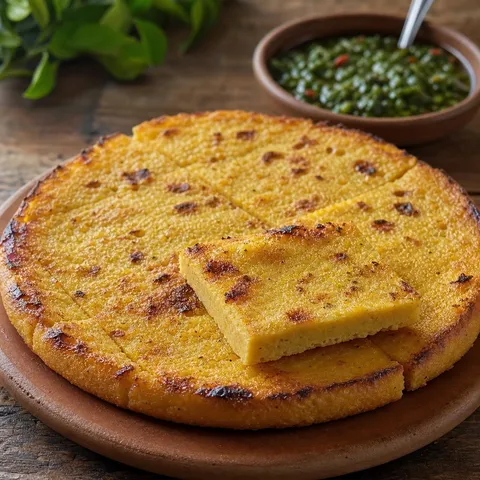 South American Lens Verified Images are for illustrative purposes only, may be inaccurate, and do not guarantee the presence or absence of specific ingredients.
 Fainá
Buenos Aires's thin chickpea flatbread, baked until golden and fragrant — simple, crispy-edged, and traditionally eaten layered right on top of a pizza slice.
 South American Lens Verified Images are for illustrative purposes only, may be inaccurate, and do not guarantee the presence or absence of specific ingredients.
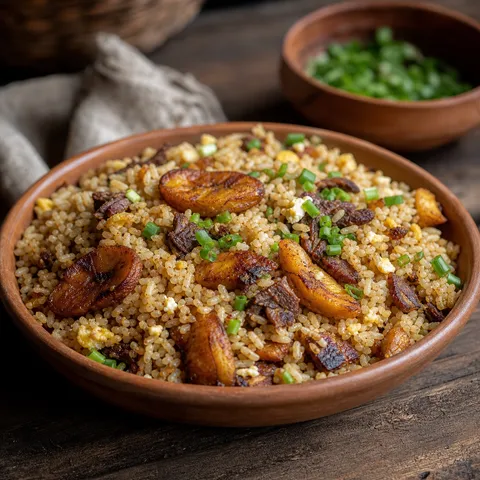
 Majadito
Bolivia's rustic one-pot comfort — dried charque beef simmered down with rice, tomato, and spices into a savory, fragrant dish topped with a fried egg.
 South American Lens Verified Images are for illustrative purposes only, may be inaccurate, and do not guarantee the presence or absence of specific ingredients.
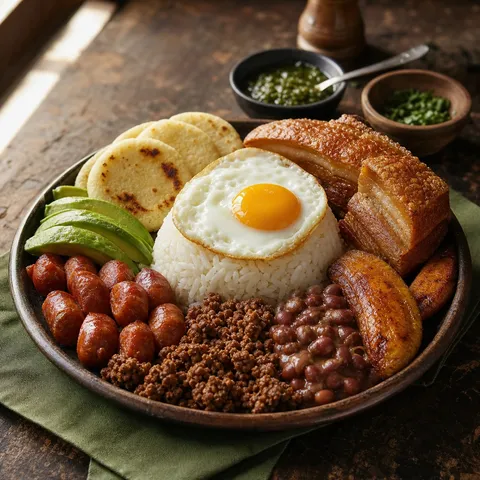
 Bandeja Paisa
Colombia's legendary tray of abundance — red beans, white rice, chicharrón, chorizo, fried egg, plantains, and avocado all piled high for a satisfying feast.