 South American Images are for illustrative purposes only, may be inaccurate, and do not guarantee the presence or absence of specific ingredients.
 Quesillo
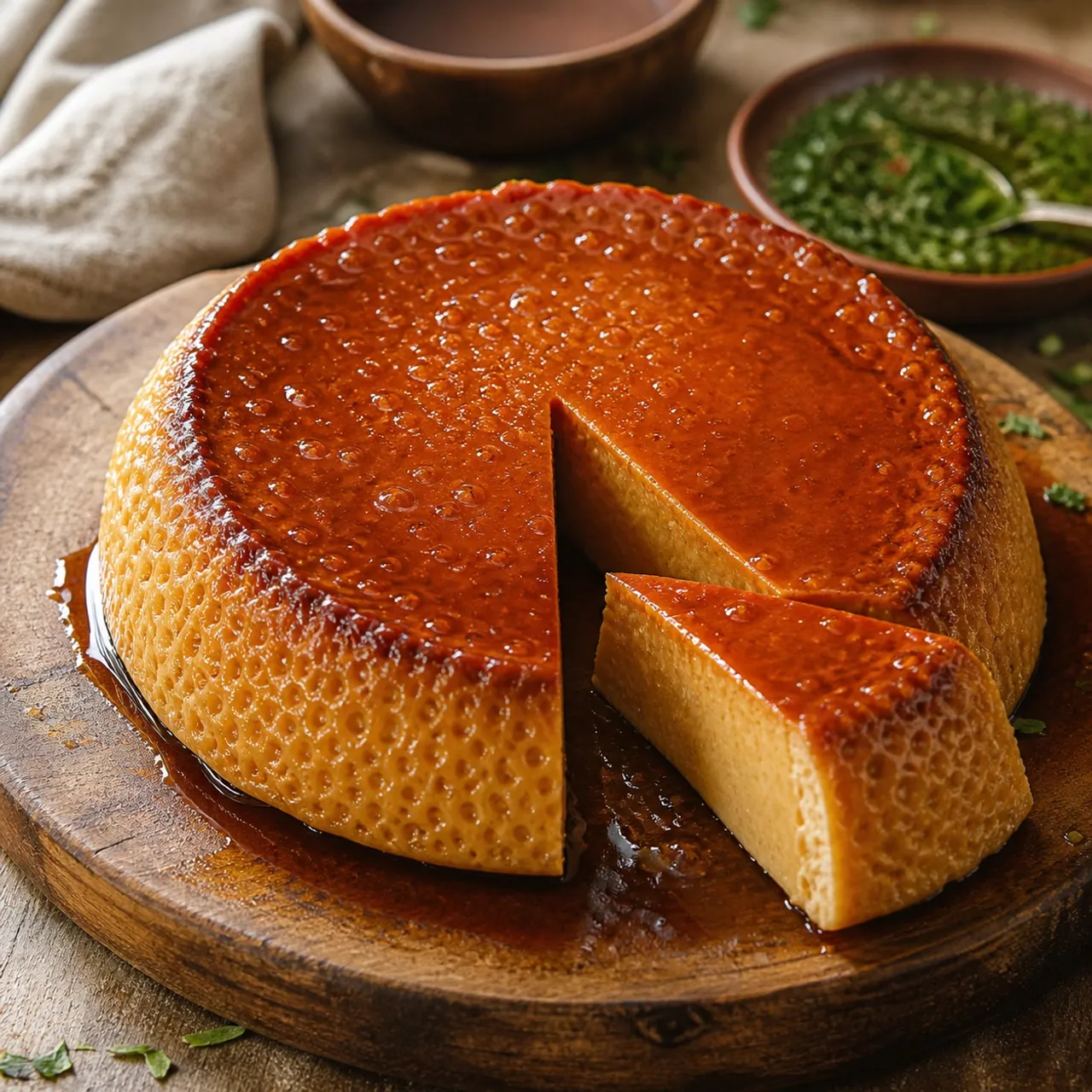
Venezuela's silky caramel custard, a denser cousin of flan with a signature lattice of tiny bubble holes.
Contains common allergens
In the app, Listahan checks these against your household automatically.
Instructions
6 steps- 1
Preheat the oven to 350°F and place a kettle of water on to boil for a water bath.
- 2
Melt the granulated sugar in a dry saucepan over medium heat, swirling occasionally, until it turns a deep amber caramel, then immediately pour it into a flan mold and tilt to coat the bottom and sides.
- 3
In a blender, combine the eggs, sweetened condensed milk, whole milk, and vanilla, then blend for 30 seconds, intentionally incorporating air to create the dessert's characteristic small holes.
- 4
Pour the custard over the set caramel, cover the mold with foil, and place it inside a larger roasting pan filled with about an inch of the boiling water.
- 5
Bake for 50 to 60 minutes until the custard is set but still jiggles slightly in the center, then remove and cool to room temperature.
- 6
Chill in the refrigerator for at least 4 hours, then run a knife around the edge and invert onto a rimmed plate so the caramel sauce flows over the top.
Listahan Family Score™
80/100
Good fit for most families
Score reflects how well this recipe fits a typical busy household. In the app, your Family Score is personalized to your household's allergens, kids, and pantry.
Nutrition
per serving175
Calories
6 g
Protein
28 g
Carbs
4 g
Fat
Estimated per serving. Actual values depend on the brands and portions you use.
Listahan cooking guide
Chef notes & practical guide
Technique notes, ingredient swaps, serve-alongside ideas, storage guidance, and equipment for this recipe.
Cultural context
Quesillo is the Venezuelan branch of the caramel custard family, close to flan but usually blended more vigorously so it sets with tiny tunnels and bubbles. It is a common birthday, holiday, and Sunday-lunch dessert because it can be made ahead, unmolded at the table, and sliced cleanly for a crowd.
Listahan note
This version keeps the classic pantry-short ingredient list and leans into the texture that makes quesillo different: a dense custard with small air holes and a loose caramel sauce. The main priorities are taking the caramel dark enough, blending the custard briefly, and chilling it fully before unmolding.
Technique cues
- Caramel keeps cooking after it leaves the heat, so pour it into the mold as soon as it reaches deep amber instead of waiting for it to look very dark in the pan.
- The blender step is not just convenience here. A short, airy blend helps create the small holes that Venezuelan quesillo is known for.
- The custard should jiggle in the center when it comes out of the oven. It firms as it cools, and overbaking can make the slice rubbery instead of silky-dense.
Kitchen flow
- Parallel prep
- Start the kettle before making the caramel so the water bath is ready as soon as the filled mold goes into the roasting pan.
- Make-ahead
- Bake and chill the quesillo the day before serving; the custard slices more neatly after a full night in the refrigerator.
- Leftover move
- Serve thin slices with extra caramel spooned over fruit or tuck a slice beside plain pound cake for an easy dessert plate.
- Cleanup rhythm
- Fill the caramel saucepan with hot water right after pouring, then let the mold soak after unmolding so the hardened sugar dissolves.
Ingredient brief
Role, handling, and swap guidance for each key ingredient.
Granulated sugar
Caramel base
Purpose: It melts into the amber syrup that coats the mold and becomes the sauce after unmolding.
Handling: Use a dry saucepan and swirl instead of stirring once the sugar starts to liquefy.
Adaptation: Light brown sugar gives a deeper molasses note, but it can foam and darken faster than granulated sugar.
Sweetened condensed milk
Sweet dairy base
Purpose: It gives quesillo its dense body, sweetness, and creamy finish without needing a separate sugar syrup in the custard.
Handling: Scrape the can well so the blender mixture has the right sweetness and thickness.
Adaptation: Evaporated milk plus sugar makes a looser custard and will not taste quite as rounded.
Whole milk
Custard liquid
Purpose: It loosens the condensed milk enough for a smooth pour while keeping the custard rich.
Handling: Add it to the blender before the eggs if your blender needs liquid at the bottom to run smoothly.
Adaptation: Evaporated milk can make the custard taste milkier and slightly more concentrated.
Large eggs
Setting structure
Purpose: Eggs hold the custard together and give quesillo its sliceable texture.
Handling: Blend just long enough to combine and aerate; a long blend can make the foam excessive.
Adaptation: Extra yolks make a richer custard, while fewer eggs make it softer and harder to unmold cleanly.
Vanilla extract
Aromatic finish
Purpose: Vanilla softens the eggy edge and gives the caramel and milk a warmer flavor.
Handling: Add it directly to the blender so it disperses evenly through the custard.
Adaptation: A small strip of lime zest gives a brighter Venezuelan-style accent, but remove any large pieces before baking.
Technique notes
- Use a rimmed serving plate for unmolding because the caramel will run once the custard releases.
- Cover the mold tightly with foil so condensation from the water bath does not drip directly onto the custard surface.
- Run the knife close to the mold wall before inverting, then hold the plate and mold together firmly for one clean flip.
Ingredient swaps
- Richer milk path
- Use evaporated milk in place of whole milk for a slightly denser, more cooked-milk flavor.
- Citrus accent
- Add a small amount of lime zest to the blender for a brighter finish that cuts through the caramel sweetness.
- Less airy texture
- Blend only until smooth if you prefer a smoother flan-like custard with fewer holes.
Serve alongside
- Fresh pineapple with lime
- Arepitas dulces
- Guava paste with queso fresco
- Coconut rice pudding
- Cafe con leche
- Papelon con limon
- Malta
Serving suggestions only — check pairings for your household's allergens.
Storage & reheating
- Refrigerate covered in its caramel sauce for up to 4 days.
- Serve chilled; instead of reheating, let a slice stand at room temperature for 10 minutes so the caramel loosens slightly.
- Freezing can make the custard weep and turn grainy, so thawed slices are better used in a casual dessert bowl than served unmolded.
Equipment
- Dry saucepan
- Covered flan mold
- Blender
- Large roasting pan
Make this household-aware
Listahan Pro checks this recipe against your household's allergens, finds pantry-aware swaps, builds the shopping list, and helps you plan the week around it.
Plan it in Listahan
Add Quesillo to your week, check it against your household's allergens, and build the shopping list automatically.
More South American recipes
 South American Lens Verified Images are for illustrative purposes only, may be inaccurate, and do not guarantee the presence or absence of specific ingredients.
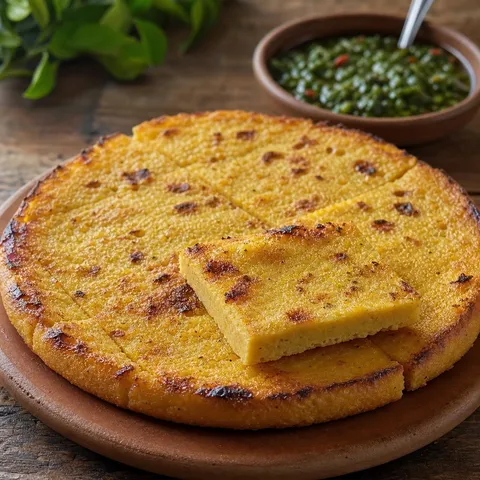
 Fainá
Buenos Aires's thin chickpea flatbread, baked until golden and fragrant — simple, crispy-edged, and traditionally eaten layered right on top of a pizza slice.
 South American Lens Verified Images are for illustrative purposes only, may be inaccurate, and do not guarantee the presence or absence of specific ingredients.
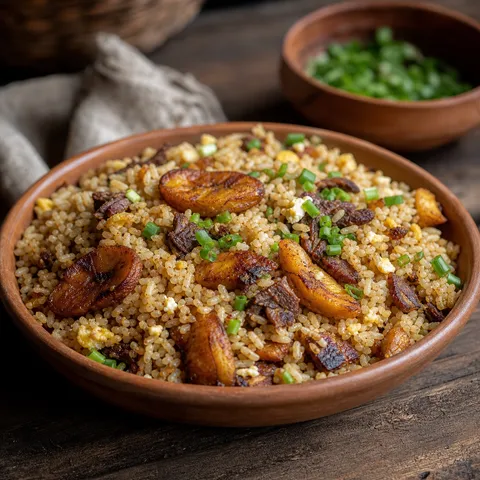
 Majadito
Bolivia's rustic one-pot comfort — dried charque beef simmered down with rice, tomato, and spices into a savory, fragrant dish topped with a fried egg.
 South American Lens Verified Images are for illustrative purposes only, may be inaccurate, and do not guarantee the presence or absence of specific ingredients.
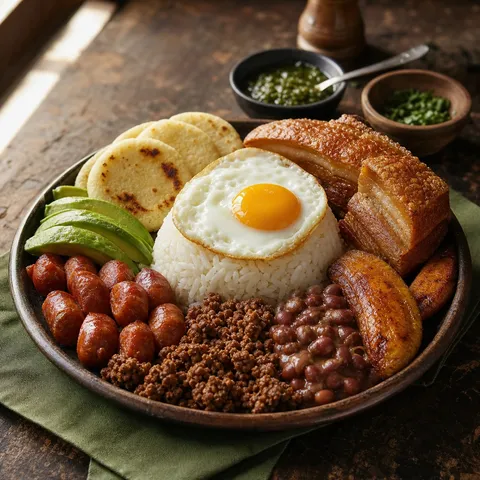
 Bandeja Paisa
Colombia's legendary tray of abundance — red beans, white rice, chicharrón, chorizo, fried egg, plantains, and avocado all piled high for a satisfying feast.