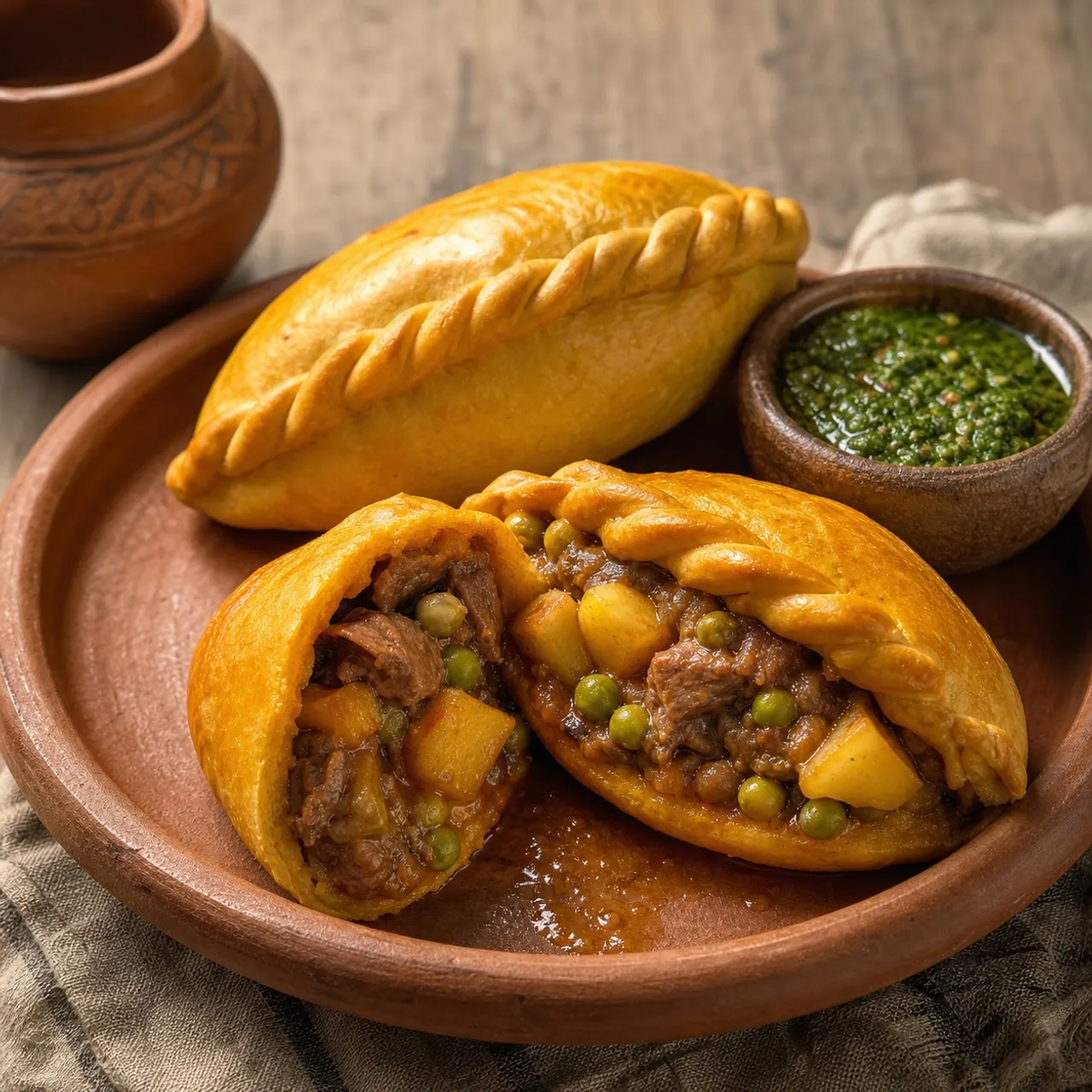
 South American Images are for illustrative purposes only, may be inaccurate, and do not guarantee the presence or absence of specific ingredients.
 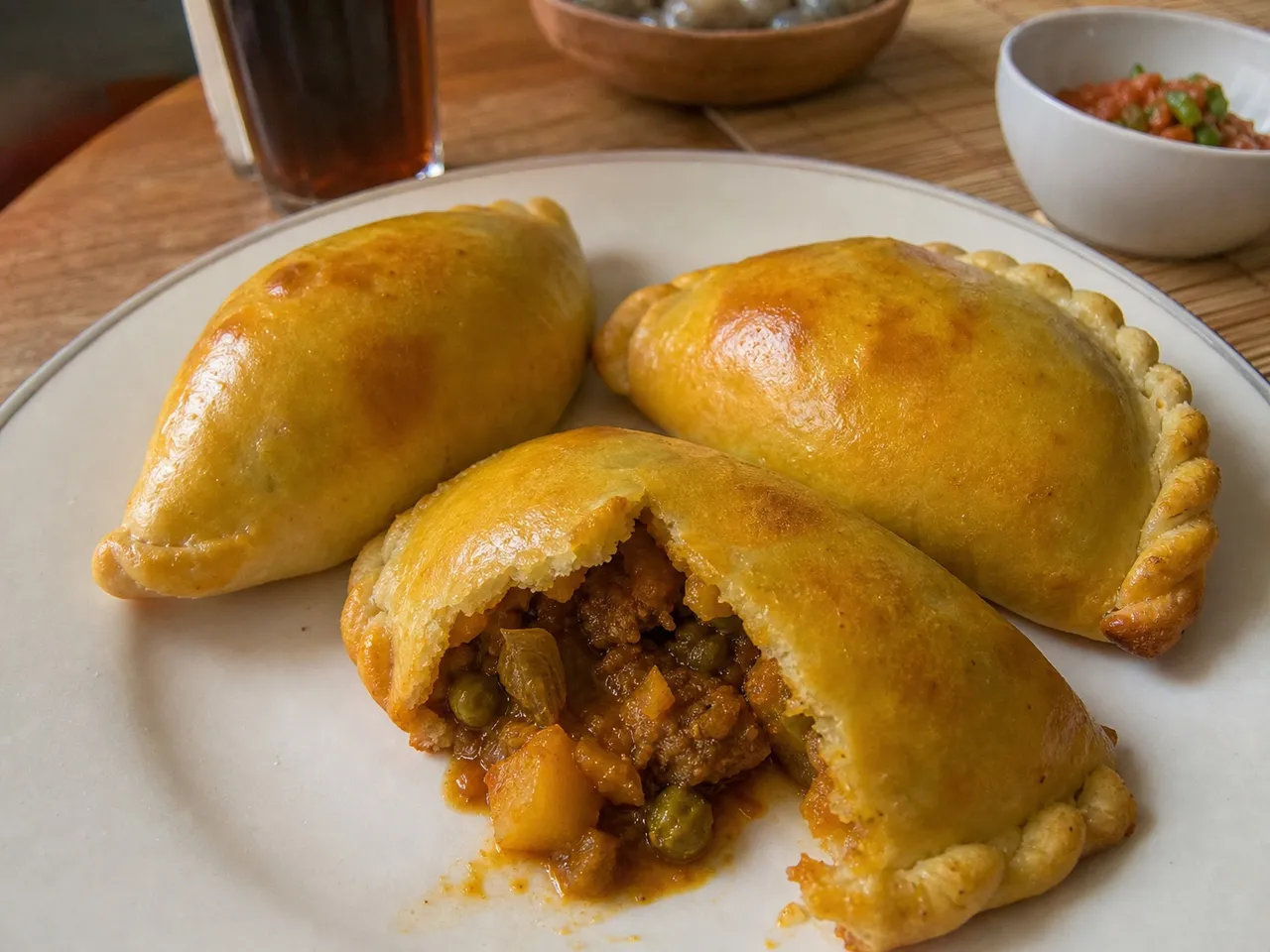 Serving Images are for illustrative purposes only, may be inaccurate, and do not guarantee the presence or absence of specific ingredients.
 Salteñas
Bolivia's prized breakfast pastry — juicy, lightly sweet braised meat and vegetable filling sealed inside a crimped baked crust with a careful sip of savory broth.
Contains common allergens
In the app, Listahan checks these against your household automatically.
Instructions
6 steps- 1
Make the jigote (stewed filling): Sauté the meat, aji panca, and cumin. Add the potatoes, peas, and 2 cups of beef broth. Simmer until the potatoes are tender.
- 2
Set the filling: Stir the unflavored gelatin into the warm stew. Pour into a container and refrigerate overnight until the gelatin sets completely solid. This ensures the signature juicy, soup-like interior.
- 3
Prepare the dough: Mix flour, melted shortening, warm water, and a pinch of sugar and salt. Knead until smooth, cover, and rest for 2 hours.
- 4
Form the pastry: Roll out the dough into 5-inch discs. Place a scoop of the cold, gelatinized filling in the center.
- 5
Seal tightly: Fold the dough over and create a very tight, braided seal along the top edge to prevent the hot soup from leaking out during baking.
- 6
Bake: Bake in a very hot oven (450°F / 230°C) for 15-20 minutes until golden brown. Serve upright and eat carefully to avoid spilling the hot broth!
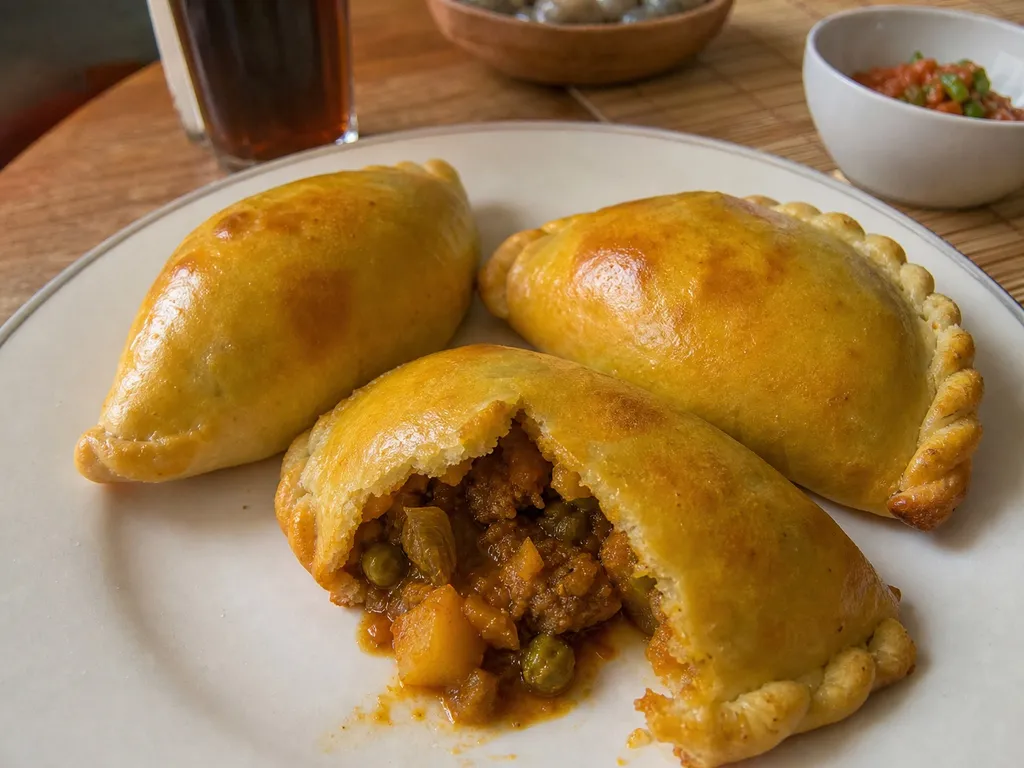 Images are for illustrative purposes only, may be inaccurate, and do not guarantee the presence or absence of specific ingredients.
 Listahan Family Score™
69/100
Works for many families
Score reflects how well this recipe fits a typical busy household. In the app, your Family Score is personalized to your household's allergens, kids, and pantry.
Nutrition
per serving1145
Calories
53 g
Protein
108 g
Carbs
55 g
Fat
Estimated per serving. Actual values depend on the brands and portions you use.
Listahan cooking guide
Chef notes & practical guide
Technique notes, ingredient swaps, serve-alongside ideas, storage guidance, and equipment for this recipe.
Cultural context
Saltenas are Bolivia's beloved morning empanada, baked with a slightly sweet dough around a juicy, soupy filling of meat, potato, peas, and a savory-spicy gravy. They are traditionally eaten mid-morning as a snack, and the trick to eating one without spilling the brothy filling is part of the local lore. The juiciness comes from setting the filling with gelatin so it solidifies cold and melts into broth when baked.
Listahan note
This version chills the gelatin-set filling solid before sealing, the key to the signature soupy interior, and uses a faintly sweet egg-enriched dough for the classic golden shell.
Technique cues
- Set the filling with a little gelatin and chill it solid before filling the dough; this is the secret that makes the interior turn brothy and juicy once baked.
- Seal the saltenas with a tight rope crimp along the top so the molten filling cannot leak out in the oven.
- Bake at high heat so the shell sets and browns quickly before the filling can find a weak spot and escape.
Kitchen flow
- Parallel prep
- Make the filling first and get it chilling, since it must set solid; mix and rest the dough while it cools.
- Make-ahead
- Assembled saltenas freeze well before baking; bake from frozen so the filling stays set until the shell crisps.
- Leftover move
- Reheat baked saltenas in a hot oven to re-crisp the shell; they are a perfect grab-and-go breakfast.
- Cleanup rhythm
- Chill the filling in the same pot you cooked it in, and wipe the floured surface while the saltenas bake.
Ingredient brief
Role, handling, and swap guidance for each key ingredient.
ground or diced beef (or chicken)
the savory filling protein
Purpose: The meat is the heart of the juicy filling, simmered in a spiced gravy.
Handling: Cook with the aromatics and broth, then chill the whole filling until set.
Adaptation: Chicken makes a popular lighter version; both are traditional.
potato and peas
the hearty filling vegetables
Purpose: Diced potato and peas add substance and texture to the brothy filling.
Handling: Dice small and parcook so they finish tender inside the baked pastry.
Adaptation: Carrot can join or replace the peas for color and sweetness.
gelatin
the juiciness mechanism
Purpose: Gelatin sets the broth solid so it can be wrapped cold and melt into the signature soup when baked.
Handling: Bloom and stir into the warm filling, then chill until firm.
Adaptation: Agar can work for a vegetarian set, though it behaves differently and needs adjusting.
aji and cumin
the spiced gravy seasoning
Purpose: Chile and cumin give the filling its warm, savory-spicy Bolivian character.
Handling: Bloom in the aromatics before adding the broth.
Adaptation: Adjust the chile to taste; smoked paprika adds depth without much heat.
egg-enriched dough
the slightly sweet shell
Purpose: A faintly sweet, egg-rich dough is the traditional wrapper that browns to a glossy gold.
Handling: Roll, cut into rounds, and keep cool until filling.
Adaptation: A standard empanada dough works, though it will be less sweet than the classic.
Technique notes
- Work with the filling cold and firm, scooping it onto the dough quickly before it warms and softens.
- Egg-wash and bake until deeply golden for the traditional glossy, sturdy shell.
- Eat them upright and bite carefully into one end, the local way to enjoy the juicy interior without spilling it.
Ingredient swaps
- Poultry direction
- Use chicken in the spiced gravy for a lighter, widely loved version of the filling.
- Vegetarian direction
- Fill with potato, peas, and a meaty mushroom mix set with agar instead of gelatin.
- Lower-sodium direction
- Season the gravy with extra cumin and aji and use unsalted broth, salting lightly at the end.
Serve alongside
- Llajwa (Bolivian hot sauce)
- Simple tomato and onion salad
- Sliced avocado
- Fresh fruit
- Api (purple corn drink)
- Cafe con leche
- Fresh orange juice
Serving suggestions only — check pairings for your household's allergens.
Storage & reheating
- Baked saltenas keep in the fridge for up to three days; reheat in a hot oven for about ten minutes to restore the crisp shell rather than microwaving, which makes them soggy. Freeze assembled raw saltenas for up to two months and bake from frozen. The set filling holds well through freezing.
Equipment
- Rolling pin
- Round cutter
- Sheet pan
- Saucepan for the filling
Make this household-aware
Listahan Pro checks this recipe against your household's allergens, finds pantry-aware swaps, builds the shopping list, and helps you plan the week around it.
Plan it in Listahan
Add Salteñas to your week, check it against your household's allergens, and build the shopping list automatically.
More South American recipes
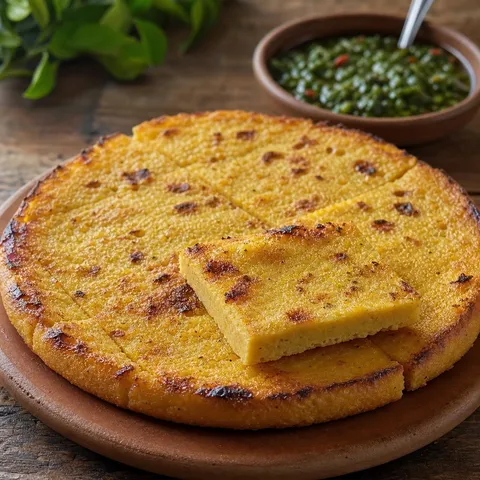 South American Lens Verified Images are for illustrative purposes only, may be inaccurate, and do not guarantee the presence or absence of specific ingredients.
 Fainá
Buenos Aires's thin chickpea flatbread, baked until golden and fragrant — simple, crispy-edged, and traditionally eaten layered right on top of a pizza slice.
 South American Lens Verified Images are for illustrative purposes only, may be inaccurate, and do not guarantee the presence or absence of specific ingredients.
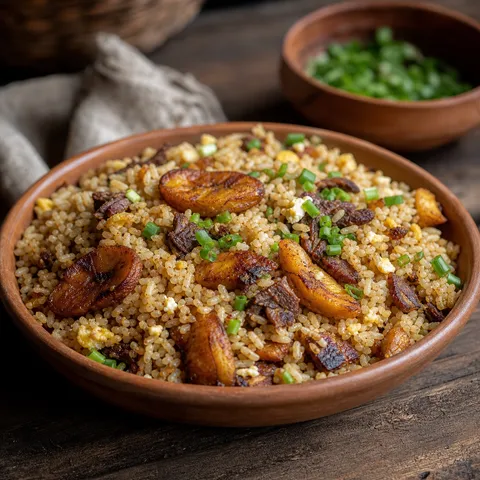
 Majadito
Bolivia's rustic one-pot comfort — dried charque beef simmered down with rice, tomato, and spices into a savory, fragrant dish topped with a fried egg.
 South American Lens Verified Images are for illustrative purposes only, may be inaccurate, and do not guarantee the presence or absence of specific ingredients.
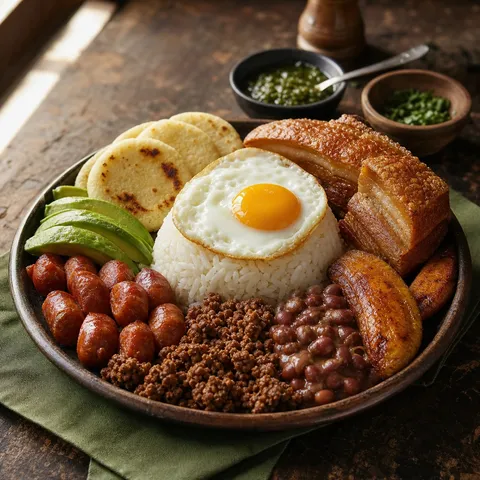
 Bandeja Paisa
Colombia's legendary tray of abundance — red beans, white rice, chicharrón, chorizo, fried egg, plantains, and avocado all piled high for a satisfying feast.