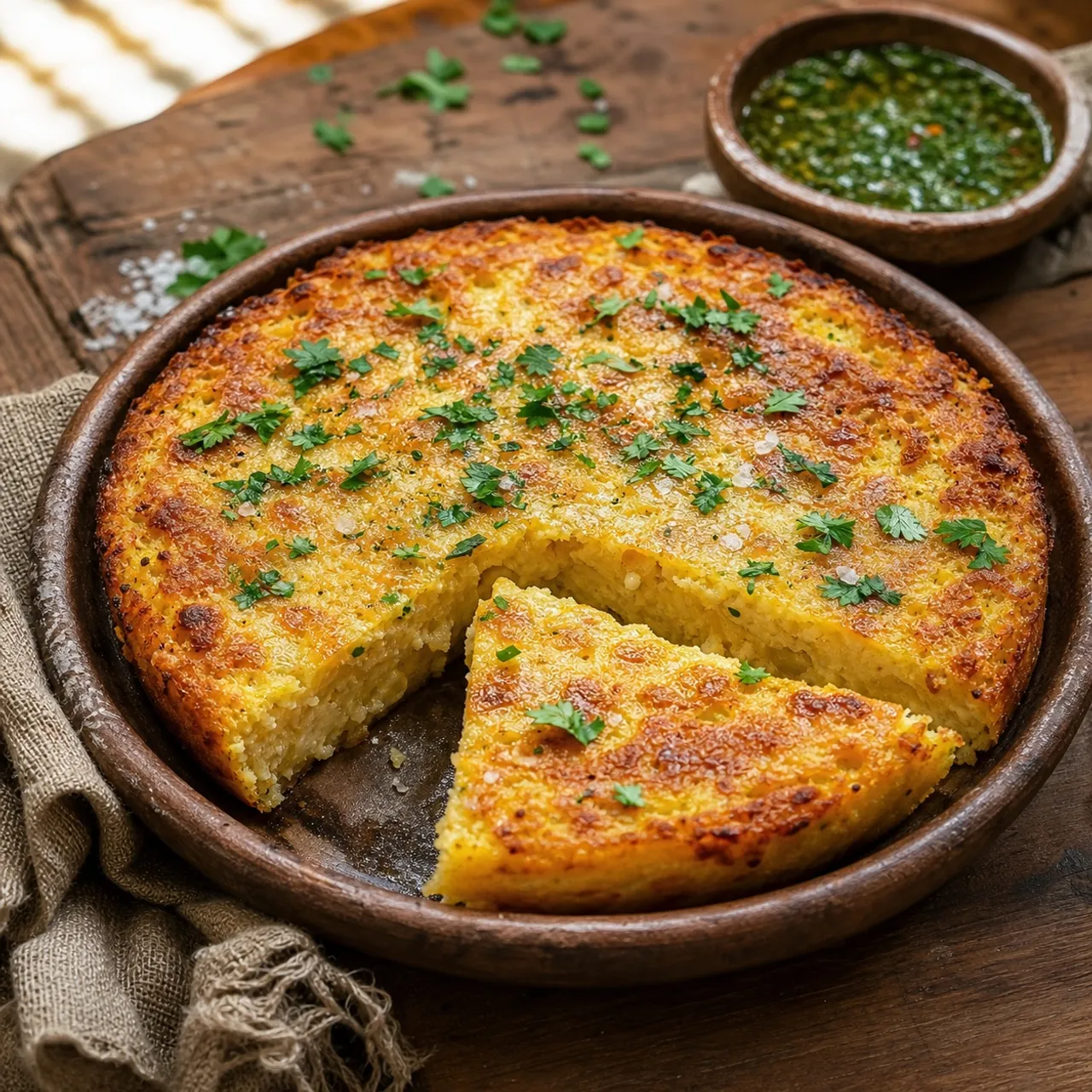
 South American Images are for illustrative purposes only, may be inaccurate, and do not guarantee the presence or absence of specific ingredients.
 Sopa Paraguaya
Paraguay's iconic savory cornbread, a moist cheese-and-onion baked dish despite its misleading name as a soup.
Contains common allergens
In the app, Listahan checks these against your household automatically.
Instructions
6 steps- 1
Preheat the oven to 375°F and grease a 9x13-inch baking dish generously with butter.
- 2
Sauté the diced onions in 2 tablespoons butter over medium heat for 8 to 10 minutes until soft and translucent, then let cool slightly.
- 3
In a large bowl, beat the softened butter with the egg yolks until creamy, then stir in the cornmeal, milk, grated cheese, sautéed onions, and salt to form a thick batter.
- 4
In a separate clean bowl, whip the egg whites to stiff peaks, then gently fold them into the batter in two additions to keep the mixture light.
- 5
Pour the batter into the prepared dish, smooth the top, and bake for 40 to 45 minutes until the top is golden brown and a toothpick inserted in the center comes out clean.
- 6
Let cool for 10 minutes, then cut into squares and serve warm.
Listahan Family Score™
71/100
Good fit for most families
Score reflects how well this recipe fits a typical busy household. In the app, your Family Score is personalized to your household's allergens, kids, and pantry.
Nutrition
per serving775
Calories
28 g
Protein
58 g
Carbs
50 g
Fat
Estimated per serving. Actual values depend on the brands and portions you use.
Listahan cooking guide
Chef notes & practical guide
Technique notes, ingredient swaps, serve-alongside ideas, storage guidance, and equipment for this recipe.
Cultural context
Sopa Paraguaya is Paraguay's famous soup that is not a soup: a baked cornmeal, cheese, onion, milk, and egg dish cut into squares. The name is often explained through household stories about a too-thick cornmeal soup that turned into bread, but what matters at the table is its place beside grilled meats, stews, and family meals where something warm and sturdy is needed.
Listahan note
This version keeps the dish accessible with fine cornmeal and Muenster or queso fresco, then uses whipped egg whites to make the crumb lighter than a dense cornbread. The onions are cooked first so their sweetness spreads through the batter instead of tasting sharp.
Technique cues
- Fine cornmeal is important here because the batter does not have a long soaking time; coarse meal can bake up gritty in the center.
- Cool the sauteed onions slightly before mixing so they do not melt the butter unevenly or start cooking the egg yolks.
- Fold the egg whites gently but thoroughly. White streaks leave uneven pockets, while heavy stirring knocks out the lift that keeps the squares moist but not heavy.
Kitchen flow
- Parallel prep
- Preheat the oven and grease the baking dish before starting the onions; while they cool, separate the eggs and grate the cheese.
- Make-ahead
- Bake earlier in the day, cool, cover, and rewarm before serving; the squares hold together better after a short rest.
- Leftover move
- Toast slices in a skillet and serve with fried eggs, tomato salad, or leftover grilled meat.
- Cleanup rhythm
- Wash the egg-white bowl right after folding, then soak the onion pan while the cornbread bakes.
Ingredient brief
Role, handling, and swap guidance for each key ingredient.
Fine cornmeal
Corn base
Purpose: It gives Sopa Paraguaya its signature yellow crumb and gentle grain texture.
Handling: Measure it before starting the wet mixture so it can be stirred in without overworking the batter.
Adaptation: Medium cornmeal can work for a rougher texture, but avoid very coarse meal unless you give the batter time to hydrate.
Grated Muenster or queso fresco
Salty dairy body
Purpose: The cheese melts into the cornmeal and gives the bread its savory, tender center.
Handling: Grate or crumble it finely so it disperses instead of sinking into heavy pockets.
Adaptation: Queso fresco gives a milder, more crumbly result; Muenster melts smoother and tastes richer.
Large onions
Sweet aromatic base
Purpose: Slow-cooked onion is the main savory flavor behind the cheese and cornmeal.
Handling: Dice finely and saute until translucent so the pieces soften fully before baking.
Adaptation: Yellow onions are the easiest fit; white onions taste a little sharper and should be cooked until fully mellow.
Whole milk
Moisture and tenderness
Purpose: Milk hydrates the cornmeal and helps the finished squares stay soft rather than sandy.
Handling: Add it with the cornmeal and stir just until the batter is thick and even.
Adaptation: Evaporated milk gives a richer, slightly sweeter profile; 2 percent milk makes the crumb a bit lighter.
Large eggs, separated
Structure and lift
Purpose: Yolks enrich the batter while whipped whites help the heavy cornmeal mixture rise.
Handling: Separate cleanly, then whip the whites in a grease-free bowl until they hold stiff peaks.
Adaptation: If you do not separate the eggs, the dish will still bake, but it will be denser and more like a firm casserole.
Butter, softened
Fat and browning
Purpose: Butter carries the onion flavor, tenderizes the crumb, and helps the top brown.
Handling: Use part of it for the onions and beat the softened remainder with the yolks until creamy.
Adaptation: A neutral oil changes the flavor and makes the crumb less rich, but it can keep the batter moist.
Technique notes
- Do not brown the onions hard. Golden edges are fine, but deeply browned onions can dominate the mild corn and cheese flavor.
- Grease the baking dish generously, especially the corners, because the cheese can stick as it browns.
- Let the pan rest for 10 minutes before cutting. Straight from the oven, the center is too soft to make clean squares.
Ingredient swaps
- Cheese direction
- Use queso fresco for a more traditional crumbly bite or Muenster for a softer, meltier North American version.
- Texture adjustment
- For a firmer slice, bake closer to 45 minutes and let it cool longer before cutting; for a moister center, pull it when the toothpick has only a few damp crumbs.
- Onion shortcut
- Cook the onions a day ahead and refrigerate them, then bring them close to room temperature before mixing the batter.
Serve alongside
- Bife koygua
- Paraguayan beef stew
- Tomato and red onion salad
- Grilled chorizo with chimichurri
- Terere with mint
- Cold yerba mate
- Light lager
Serving suggestions only — check pairings for your household's allergens.
Storage & reheating
- Refrigerate cooled squares in a sealed container for up to 4 days.
- Reheat in a 325 F oven or dry skillet until warmed through and the edges regain a little crispness.
- Freeze wrapped squares for up to 2 months; thaw overnight in the refrigerator before reheating uncovered.
Equipment
- 9x13-inch baking dish
- Wide skillet
- Large mixing bowl
- Electric mixer or balloon whisk
Make this household-aware
Listahan Pro checks this recipe against your household's allergens, finds pantry-aware swaps, builds the shopping list, and helps you plan the week around it.
Plan it in Listahan
Add Sopa Paraguaya to your week, check it against your household's allergens, and build the shopping list automatically.
More South American recipes
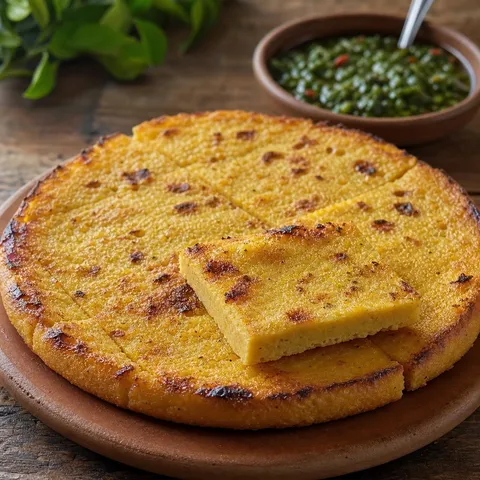 South American Lens Verified Images are for illustrative purposes only, may be inaccurate, and do not guarantee the presence or absence of specific ingredients.
 Fainá
Buenos Aires's thin chickpea flatbread, baked until golden and fragrant — simple, crispy-edged, and traditionally eaten layered right on top of a pizza slice.
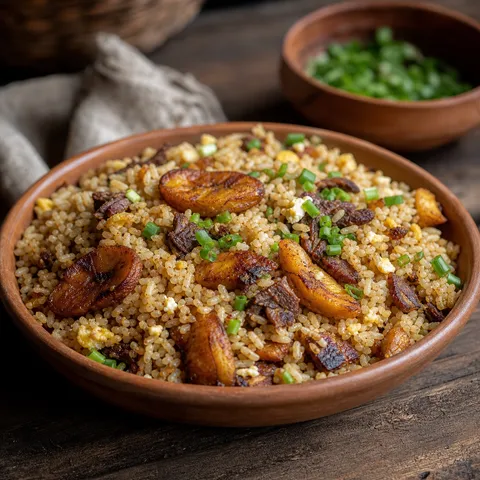 South American Lens Verified Images are for illustrative purposes only, may be inaccurate, and do not guarantee the presence or absence of specific ingredients.
 Majadito
Bolivia's rustic one-pot comfort — dried charque beef simmered down with rice, tomato, and spices into a savory, fragrant dish topped with a fried egg.
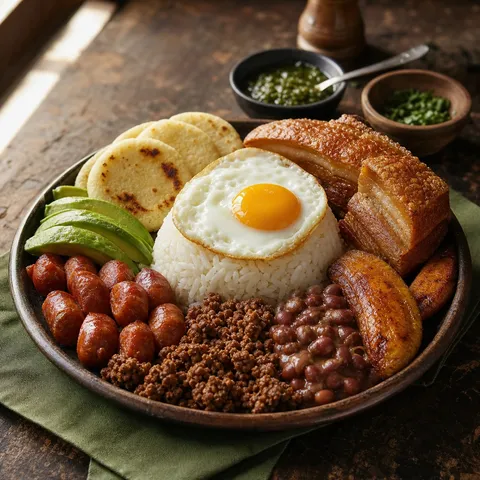 South American Lens Verified Images are for illustrative purposes only, may be inaccurate, and do not guarantee the presence or absence of specific ingredients.
 Bandeja Paisa
Colombia's legendary tray of abundance — red beans, white rice, chicharrón, chorizo, fried egg, plantains, and avocado all piled high for a satisfying feast.