 Thai Images are for illustrative purposes only, may be inaccurate, and do not guarantee the presence or absence of specific ingredients.
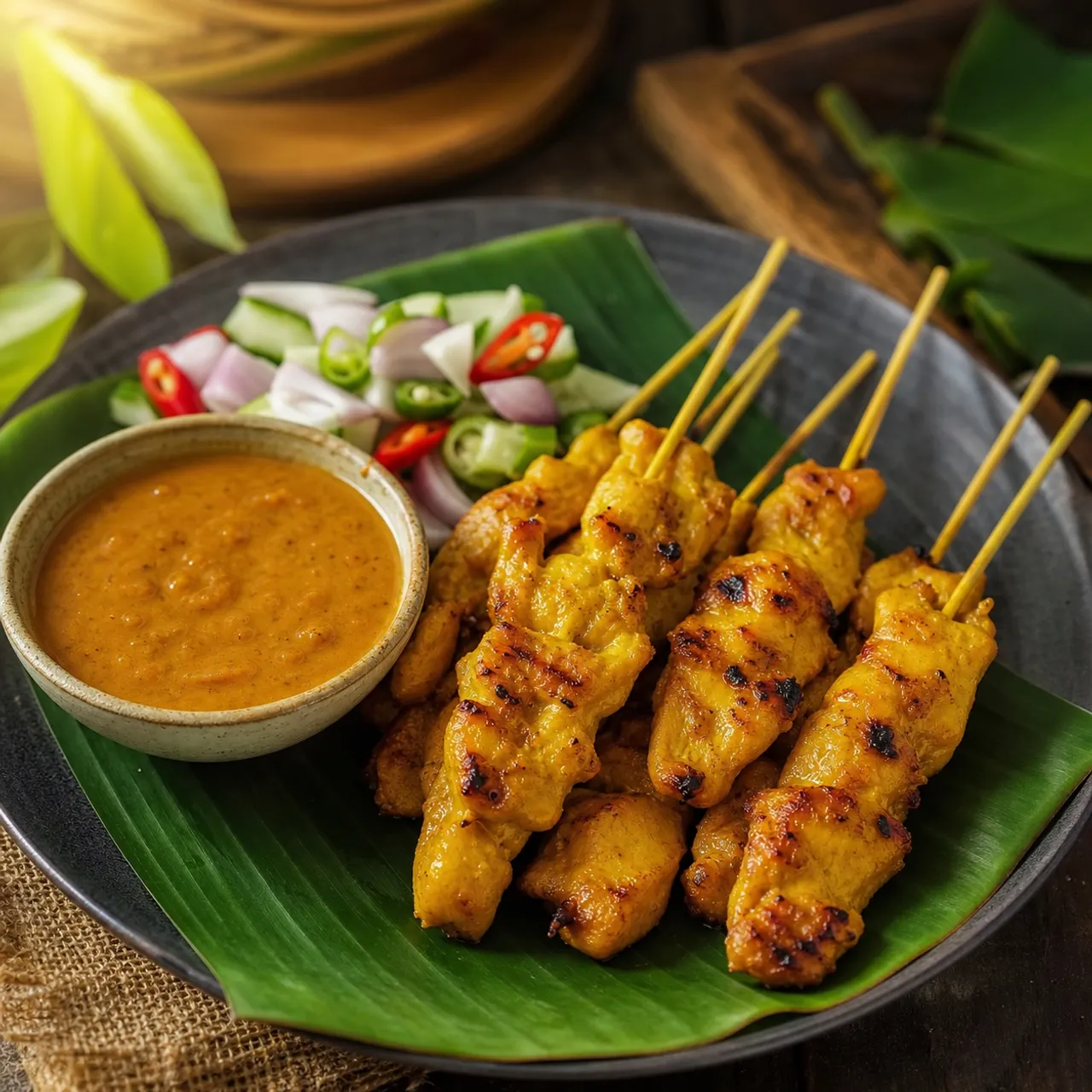
 Gai Satay
Tender skewers of turmeric-marinated chicken grilled until charred and served with a rich, creamy peanut sauce.
Contains common allergens
In the app, Listahan checks these against your household automatically.
Instructions
5 steps- 1
In a bowl, whisk 1/2 cup coconut milk with the curry powder, turmeric, 1 tbsp brown sugar, and 1 tbsp fish sauce, then add the chicken strips and marinate in the refrigerator for at least 30 minutes (up to overnight) so the flavors penetrate.
- 2
Thread the marinated chicken lengthwise onto the soaked skewers in a flat ribbon shape, pressing gently so the meat lies snug against the bamboo for even cooking.
- 3
To make the peanut sauce, simmer the remaining 1/2 cup coconut milk in a small saucepan over medium heat, then whisk in the peanut butter, 1 tbsp brown sugar, and 1 tbsp fish sauce until smooth and thickened, about 3-4 minutes; thin with a splash of water if needed.
- 4
Heat a grill or grill pan to medium-high (around 400°F) and lightly oil the grates, then grill the skewers for 2-3 minutes per side until the edges are caramelized and the chicken reaches an internal temperature of 165°F.
- 5
Transfer the satay to a platter and serve hot alongside the warm peanut sauce and a few slices of cucumber for dipping.
Listahan Family Score™
75/100
Good fit for most families
Score reflects how well this recipe fits a typical busy household. In the app, your Family Score is personalized to your household's allergens, kids, and pantry.
Nutrition
per serving725
Calories
55 g
Protein
20 g
Carbs
50 g
Fat
Estimated per serving. Actual values depend on the brands and portions you use.
Listahan cooking guide
Chef notes & practical guide
Technique notes, ingredient swaps, serve-alongside ideas, storage guidance, and equipment for this recipe.
Cultural context
Satay traveled through Southeast Asia through trade, migration, and street-food cooking, with each region shaping the skewers around local seasonings. Thai gai satay usually leans on coconut milk, turmeric, curry spices, and a sweet-salty peanut sauce, making it softer and more aromatic than versions that rely mainly on smoke and spice.
Listahan note
This version keeps the satay practical for a home grill or grill pan: thin chicken strips, a short coconut-turmeric marinade, and a peanut sauce built from pantry-friendly ingredients. The goal is tender chicken with browned edges and a sauce thick enough to cling.
Technique cues
- Slice the chicken into even 1/4-inch strips so the skewers cook quickly without the outside drying before the center is done.
- Thread the chicken in flat ribbons, not tight bunches. More surface area means better browning and less chewy overlap.
- Keep the peanut sauce at a gentle simmer after the peanut butter goes in. Hard boiling can make it tighten too quickly.
Kitchen flow
- Parallel prep
- Soak the bamboo skewers while the chicken marinates, then make the peanut sauce while the grill or grill pan heats.
- Make-ahead
- Marinate the chicken the night before and keep the sauce separate; warm the sauce gently before serving.
- Leftover move
- Slide leftover chicken off the skewers and tuck it into rice bowls with cucumber, herbs, and a spoonful of peanut sauce.
- Cleanup rhythm
- Line up the raw-chicken bowl, skewer tray, and sauce pot before grilling, then soak the sauce pot right after serving.
Ingredient brief
Role, handling, and swap guidance for each key ingredient.
Boneless skinless chicken thighs
Main protein
Purpose: Thigh meat stays tender over direct heat and has enough richness to carry the turmeric and curry powder.
Handling: Slice across the grain into thin strips so each piece folds easily onto a skewer.
Adaptation: Boneless chicken breast works if sliced thin and cooked carefully, but it will be leaner and less forgiving.
Full-fat coconut milk
Marinade and sauce base
Purpose: It softens the spice mixture, helps the chicken brown, and gives the peanut sauce a rounded body.
Handling: Stir the can well before dividing so the thick cream and thinner liquid are evenly mixed.
Adaptation: Light coconut milk makes a thinner sauce and less rich marinade, so reduce the sauce a little longer.
Yellow curry powder
Spice backbone
Purpose: It brings the warm, familiar curry aroma that makes the chicken taste seasoned all the way through.
Handling: Whisk it fully into the coconut milk before adding the chicken so there are no dry spice patches.
Adaptation: Thai yellow curry paste can move the flavor sharper and saltier; use less and adjust the fish sauce.
Ground turmeric
Color and earthy warmth
Purpose: It gives gai satay its golden color and a gentle earthy note under the curry powder.
Handling: Mix it with the coconut milk rather than sprinkling it directly onto the chicken to avoid staining clumps.
Adaptation: A little extra curry powder can stand in, but the color will be less vivid and the flavor more blended.
Creamy peanut butter
Sauce body
Purpose: It thickens the coconut milk into a dip that coats the skewer instead of running off the plate.
Handling: Whisk it in once the coconut milk is hot so it melts smoothly into the sauce.
Adaptation: Sunflower seed butter gives a similar thickness with a more roasted, slightly bitter finish.
Fish sauce
Salty savory seasoning
Purpose: It balances the sweetness of the brown sugar and gives both the chicken and sauce a deeper Thai pantry flavor.
Handling: Measure it into the marinade and sauce separately so neither part ends up flat or overly salty.
Adaptation: Soy sauce changes the profile to darker and less briny; start with a little less and adjust at the end.
Technique notes
- Oil the grates after they are hot so the thin chicken strips release instead of tearing.
- Do not overload each skewer. A little exposed bamboo between folds helps the heat reach the meat evenly.
- If the sauce gets too thick, whisk in water one spoonful at a time until it dips cleanly but still coats.
Ingredient swaps
- Peanut butter alternative
- Use sunflower seed butter for a similar creamy texture; expect a less sweet, more roasted flavor.
- Grill pan path
- Use a very hot ridged grill pan and cook in batches so the chicken browns instead of steaming.
- Fish sauce backup
- Use soy sauce when fish sauce is not available, then add a small squeeze of lime to bring back some brightness.
- Short marinade path
- Marinate for 30 minutes when time is tight; overnight gives deeper color and more even seasoning.
Serve alongside
- Thai jasmine rice
- Cucumber shallot relish
- Green papaya salad
- Coconut rice
- Thai iced tea
- Lime soda
- Light lager
Serving suggestions only — check pairings for your household's allergens.
Storage & reheating
- Refrigerate cooked skewers and peanut sauce in separate sealed containers for up to 3 days.
- Reheat the chicken gently in a covered skillet or low oven, and loosen the sauce with a splash of water as it warms.
- Freeze cooked chicken off the skewers for up to 2 months; thaw overnight and make a fresh batch of sauce for the best texture.
Equipment
- Mixing bowl
- 12 bamboo skewers
- Grill or ridged grill pan
- Small saucepan
Make this household-aware
Listahan Pro checks this recipe against your household's allergens, finds pantry-aware swaps, builds the shopping list, and helps you plan the week around it.
Plan it in Listahan
Add Gai Satay to your week, check it against your household's allergens, and build the shopping list automatically.
More Thai recipes
 Thai Lens Verified Images are for illustrative purposes only, may be inaccurate, and do not guarantee the presence or absence of specific ingredients.
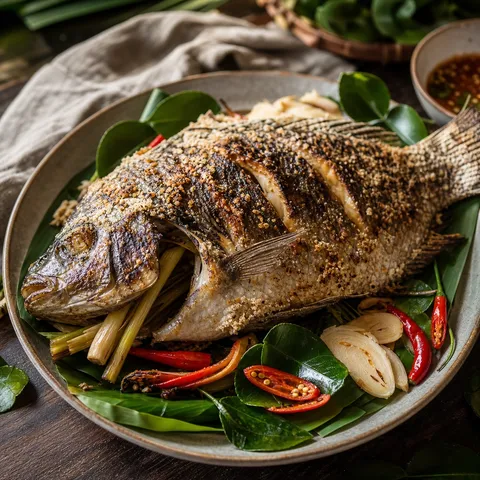
 Pla Pao
A whole salt-crusted fish stuffed with lemongrass and grilled until the skin is crackling and the flesh is silky.
 Thai Lens Verified Images are for illustrative purposes only, may be inaccurate, and do not guarantee the presence or absence of specific ingredients.
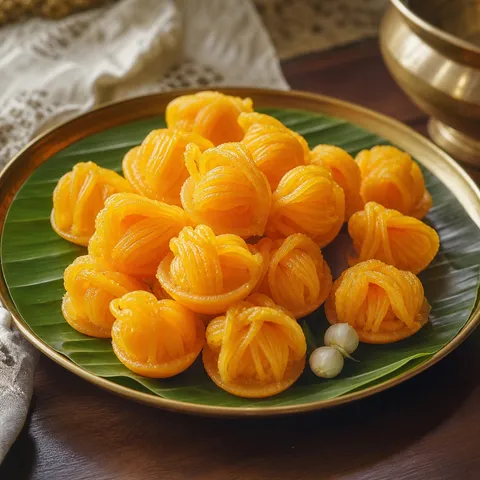
 Thong Yip
Petite golden flowers pressed from egg yolk and sugar, simmered in jasmine-scented syrup until set — a centuries-old Thai royal confection as beautiful as it is sweet.
 Thai Lens Verified Images are for illustrative purposes only, may be inaccurate, and do not guarantee the presence or absence of specific ingredients.
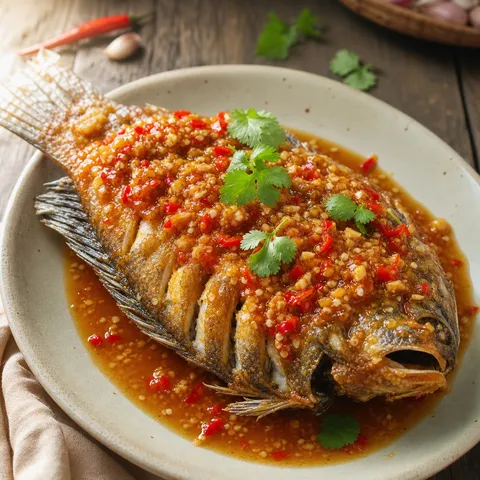
 Pla Rad Prik
Whole fish fried to a shatteringly crisp shell, then blanketed in a sticky, sweet-hot chili-tamarind sauce with garlic and basil — dramatic, punchy, and made for sharing.