 Thai Images are for illustrative purposes only, may be inaccurate, and do not guarantee the presence or absence of specific ingredients.
 Khanom Buang
Delicate, crispy Thai crepes folded over a sweet meringue cream and crowned with golden egg threads.
Contains common allergens
In the app, Listahan checks these against your household automatically.
Good to know
- Crispy
Matched from this dish's own ingredients and timing. Browse more: crispy recipes
Instructions
5 steps- 1
Whisk the rice flour, mung bean flour, and water into a thin, smooth batter and let it rest for 20 minutes so the flours hydrate.
- 2
Beat the egg whites with the cream of tartar to soft peaks, then gradually add the sugar and beat to a stiff, glossy meringue.
- 3
Heat a nonstick skillet over low heat and spread a thin 3-inch circle of batter, cooking gently for 1-2 minutes until the edges lift and the crepe turns crisp without browning.
- 4
While still on the heat, pipe a line of meringue cream down the center, then top with a pinch of golden egg threads and shredded coconut.
- 5
Use a thin spatula to fold the crisp crepe in half over the filling, then transfer to a rack to set and crisp further before serving.
Listahan Family Score™
67/100
Works for many families
Score reflects how well this recipe fits a typical busy household. In the app, your Family Score is personalized to your household's allergens, kids, and pantry.
Nutrition
per serving140
Calories
4 g
Protein
27 g
Carbs
2 g
Fat
Estimated per serving. Actual values depend on the brands and portions you use.
Listahan cooking guide
Chef notes & practical guide
Technique notes, ingredient swaps, serve-alongside ideas, storage guidance, and equipment for this recipe.
Cultural context
Khanom buang is a Thai market snack built around a very thin, crisp crepe shell and a sweet filling, often finished with bright golden egg threads. The egg-yolk topping connects it to Thailand's old family of foi thong-style sweets, where delicate strands signal care, celebration, and a cook with a steady hand.
Listahan note
This version keeps the crepe batter simple and focuses on the two details that make khanom buang work at home: low heat for a brittle shell and a stiff meringue that holds its shape while the crepe finishes crisping.
Technique cues
- Resting the batter matters because rice flour and mung bean flour need time to hydrate; without that pause, the crepes can cook up chalky or uneven.
- Low heat is better than speed here. The shell should dry and crisp before it colors, so a pale crepe with lifted edges is a good sign.
- Pipe or spoon the meringue while the crepe is still on the skillet so the filling settles into the warm shell before folding.
Kitchen flow
- Parallel prep
- Rest the batter while you beat the meringue, then set the coconut and egg-thread topping beside the stove before the first crepe goes down.
- Make-ahead
- Make the meringue shortly before cooking; the batter can rest a little longer at room temperature while you organize the pan and toppings.
- Leftover move
- Use broken crisp crepes as a crunchy topping over coconut yogurt or vanilla ice cream, with extra coconut scattered over the top.
- Cleanup rhythm
- Wipe the skillet between batches if sugar or meringue drips onto the surface, and rinse piping tips or spoons before the meringue dries hard.
Ingredient brief
Role, handling, and swap guidance for each key ingredient.
Rice flour
Crisp crepe base
Purpose: Rice flour gives the shell its light snap instead of a soft pancake texture.
Handling: Whisk until the batter is thin and smooth, then rest it before cooking.
Adaptation: A small amount of all-purpose flour would make the shell less brittle and more bendy, so it changes the style of the crepe.
Mung bean flour
Structure and crunch
Purpose: Mung bean flour helps the thin crepe set firmly and crisp at the edges.
Handling: Whisk it thoroughly with the rice flour before adding water so it does not clump.
Adaptation: If you omit it, expect a more delicate shell that may need slightly longer drying time in the pan.
Egg whites
Meringue body
Purpose: Beaten egg whites create the light, glossy cream that sits inside the crisp shell.
Handling: Use a clean bowl and beat to soft peaks before adding the sugar gradually.
Adaptation: A whipped cream filling would be softer and richer, but it will not hold the same shiny, marshmallow-like shape.
Superfine sugar
Sweetness and stability
Purpose: Fine sugar dissolves quickly into the egg whites and helps the meringue stay glossy.
Handling: Add it slowly once the whites are foamy so the meringue does not turn grainy.
Adaptation: Regular granulated sugar can work if added very gradually, though the texture may be slightly less smooth.
Egg yolks (for foi thong topping)
Golden topping
Purpose: The yolks provide the color and rich egg flavor associated with foi thong-style threads.
Handling: Strain the yolks if making fine threads so the mixture flows cleanly.
Adaptation: For a simpler finish, use a smaller pinch of prepared golden egg threads or lean more on the coconut topping.
Shredded sweetened coconut
Sweet chewy garnish
Purpose: Coconut gives contrast to the brittle shell and airy meringue.
Handling: Use a light hand so the crepe can still fold cleanly without cracking.
Adaptation: Unsweetened shredded coconut gives a drier, less candy-like finish.
Technique notes
- Keep each crepe small, about 3 inches wide, so it is easy to lift and fold before it shatters.
- Do not overfill the center. A narrow line of meringue leaves enough exposed shell to fold neatly and stay crisp.
- Transfer finished crepes to a rack instead of a plate so steam does not soften the underside.
Ingredient swaps
- No piping bag path
- Use a small spoon to drag a neat line of meringue down the center; the look is less precise, but the filling still lands where it needs to.
- Less sweet finish
- Use a lighter hand with the meringue and coconut rather than cutting too much sugar from the meringue, since sugar helps its structure.
- Topping shortcut
- Use prepared golden egg threads if available, or make the coconut the main topping for a simpler home version.
Serve alongside
- Mango sticky rice
- Thai fruit salad with lime
- Coconut tapioca pudding
- Fresh pineapple with chili-lime sugar
- Thai iced tea
- Iced jasmine tea
- Cold pandan water
Serving suggestions only — check pairings for your household's allergens.
Storage & reheating
- For best texture, keep unfilled crepe shells in an airtight container at room temperature and refrigerate the meringue separately.
- Re-crisp empty shells briefly in a low oven, then fill just before serving.
- Freezing is not a good fit for the filled crepes because the shell softens and the meringue loses its clean texture.
Equipment
- Nonstick skillet
- Thin offset spatula
- Mixing bowl and electric mixer
- Wire cooling rack
Make this household-aware
Listahan Pro checks this recipe against your household's allergens, finds pantry-aware swaps, builds the shopping list, and helps you plan the week around it.
Plan it in Listahan
Add Khanom Buang to your week, check it against your household's allergens, and build the shopping list automatically.
More Thai recipes
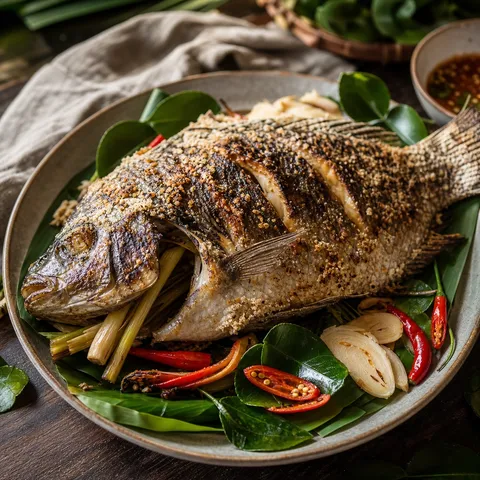 Thai Lens Verified Images are for illustrative purposes only, may be inaccurate, and do not guarantee the presence or absence of specific ingredients.
 Pla Pao
A whole salt-crusted fish stuffed with lemongrass and grilled until the skin is crackling and the flesh is silky.
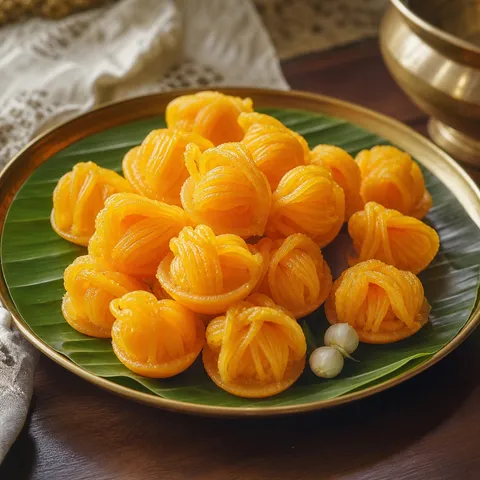 Thai Lens Verified Images are for illustrative purposes only, may be inaccurate, and do not guarantee the presence or absence of specific ingredients.
 Thong Yip
Petite golden flowers pressed from egg yolk and sugar, simmered in jasmine-scented syrup until set — a centuries-old Thai royal confection as beautiful as it is sweet.
 Thai Lens Verified Images are for illustrative purposes only, may be inaccurate, and do not guarantee the presence or absence of specific ingredients.
 Pla Rad Prik
Whole fish fried to a shatteringly crisp shell, then blanketed in a sticky, sweet-hot chili-tamarind sauce with garlic and basil — dramatic, punchy, and made for sharing.