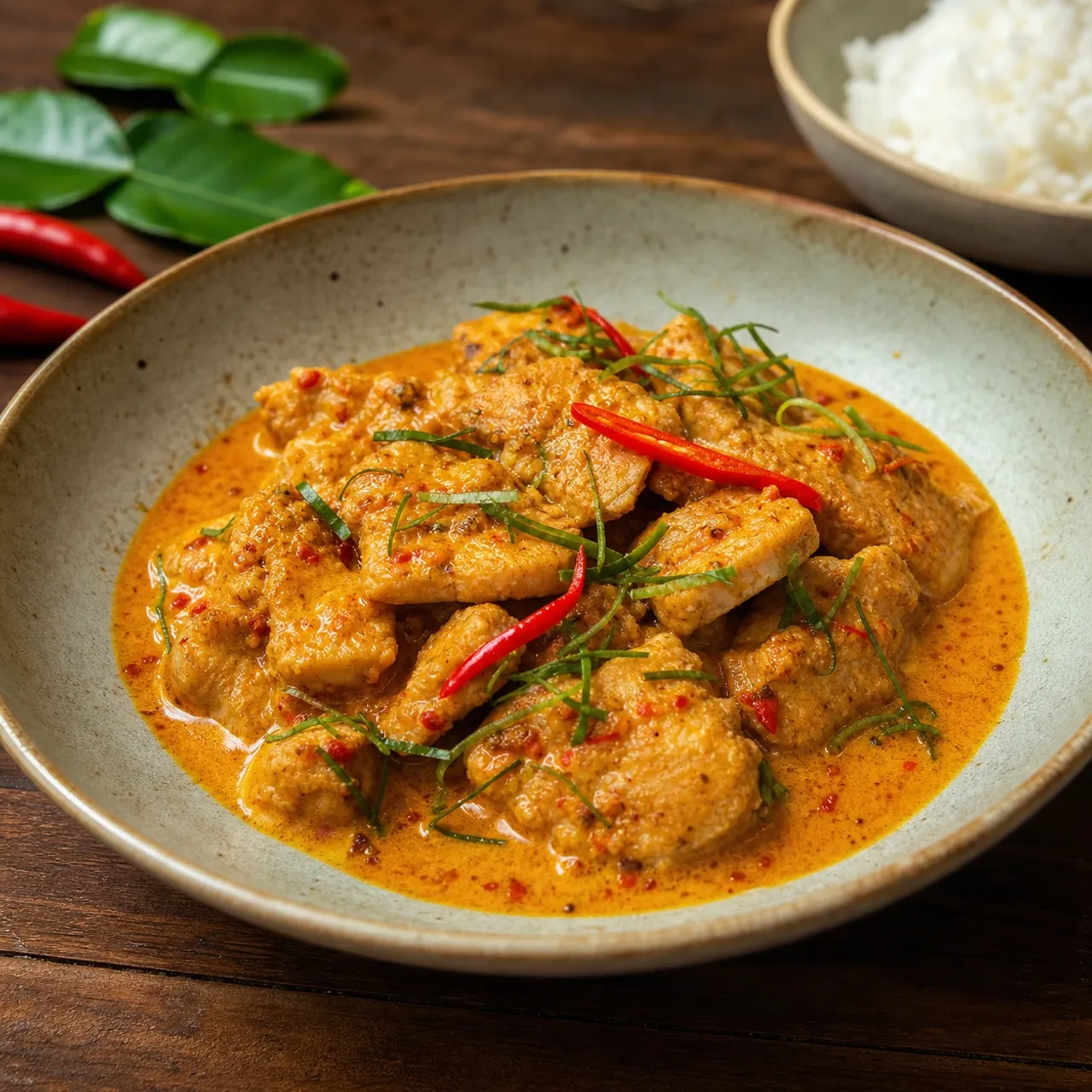
 Thai Images are for illustrative purposes only, may be inaccurate, and do not guarantee the presence or absence of specific ingredients.
 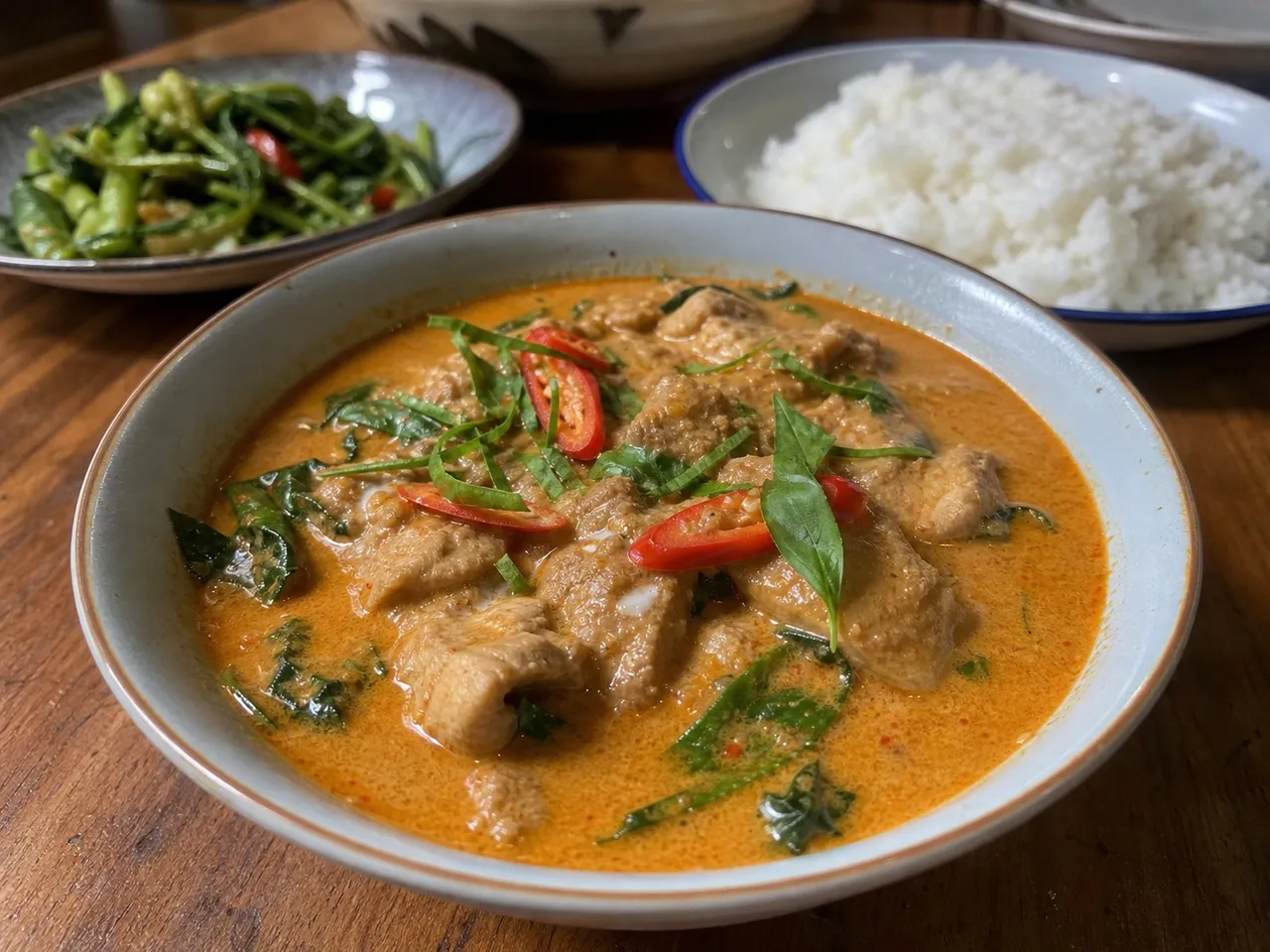 Serving Images are for illustrative purposes only, may be inaccurate, and do not guarantee the presence or absence of specific ingredients.
 Panang Curry
A thick, rich, salty-sweet curry infused with crushed peanuts and kaffir lime.
Contains common allergens
In the app, Listahan checks these against your household automatically.
Instructions
5 steps- 1
Reduce Coconut Milk: In a wok over medium heat, simmer 1 cup of coconut cream (from the top of the can) until it thickens and the coconut oil clearly separates (about 5 mins).
- 2
Bloom Paste: Stir in the Panang curry paste and fry for 2-3 minutes. It should smell deeply roasted and slightly spicy.
- 3
Cook the Pork: Add the sliced pork, tossing well so the meat is coated in the thick, oily paste. Cook for 3-4 minutes until the outside is cooked.
- 4
Thicken: Add remaining coconut milk, crushed peanuts, palm sugar, and fish sauce. Turn heat to medium-low and simmer uncovered for 8-10 minutes. This curry should be quite thick, clinging to the meat rather than soupy.
- 5
Garnish: Remove from heat and stir in half of the julienned kaffir lime leaves. Garnish with the rest before serving.
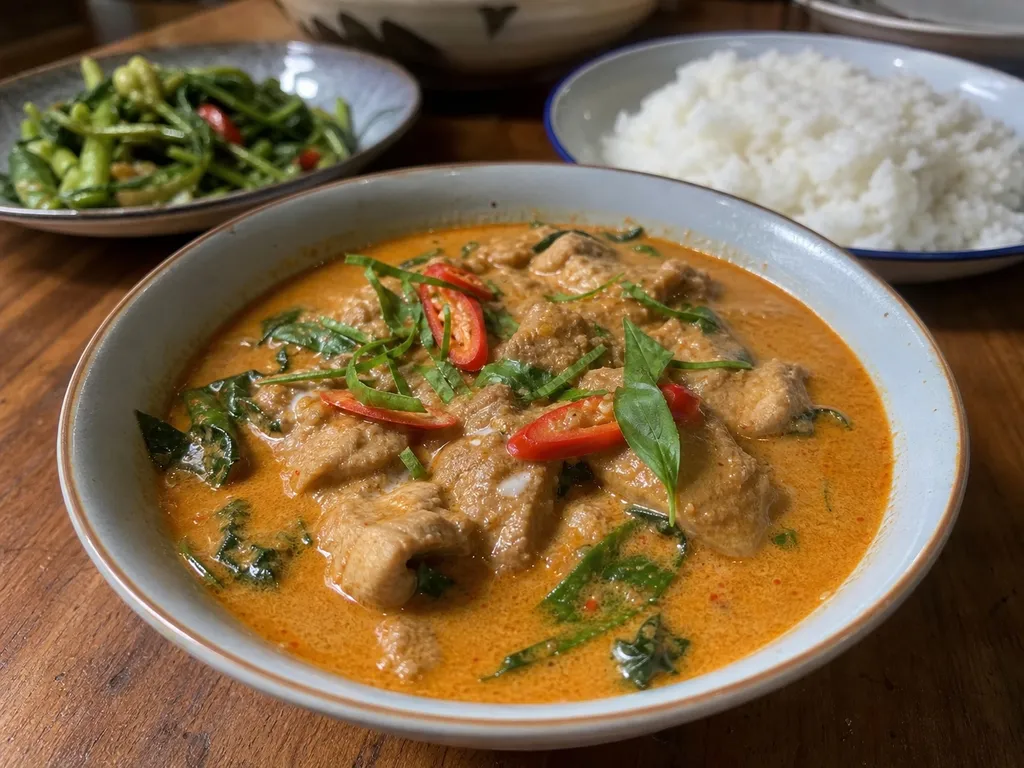 Images are for illustrative purposes only, may be inaccurate, and do not guarantee the presence or absence of specific ingredients.
 Listahan Family Score™
55/100
Works for many families
Score reflects how well this recipe fits a typical busy household. In the app, your Family Score is personalized to your household's allergens, kids, and pantry.
Nutrition
per serving330
Calories
50 g
Protein
13 g
Carbs
10 g
Fat
Estimated per serving. Actual values depend on the brands and portions you use.
Listahan cooking guide
Chef notes & practical guide
Technique notes, ingredient swaps, serve-alongside ideas, storage guidance, and equipment for this recipe.
Cultural context
Panang curry is a Thai curry style thicker and less soupy than red or green curry, built by first reducing coconut cream until its oil separates out, a technique that concentrates the fat so the curry paste fries directly in it rather than simmering in a diluted liquid.
Listahan note
This version reduces the coconut cream fully before the curry paste goes in, since that separated coconut oil is what actually fries the paste rather than just simmering it in liquid.
Technique cues
- Simmering the thick coconut cream from the top of the can until it thickens and the oil visibly separates, about five minutes, creates the fat the curry paste is fried in rather than simmered.
- Frying the curry paste in that separated coconut oil for two to three minutes, until it smells deeply roasted, builds the base flavor; adding raw paste directly to a thin liquid leaves it tasting flat and underdeveloped.
- The meat is added while still coated in the fried paste, tossing to sear the outside before any remaining coconut milk goes in, rather than poaching it in the sauce from the start.
- Simmering uncovered over medium-low heat for the final eight to ten minutes lets the sauce reduce to a thick consistency that clings to the meat rather than pooling loosely like a soup.
Kitchen flow
- Parallel prep
- Prep any side dishes while Panang Curry finishes with the pork tenderloin or chicken breast — the hands-off cook time is the window to use. Everything else is quick — the roast is the one step that takes real time.
- Make-ahead
- Panang Curry reheats well, so cooking it a day ahead and finishing it just before serving is a reasonable way to spread out the work. This one leans on the pork tenderloin or chicken breast. Everything else is quick — the roast is the one step that takes real time.
- Leftover move
- Leftover Panang Curry reheats well covered on the stove or in the oven with a splash of liquid; avoid the microwave, which tends to toughen the pork tenderloin or chicken breast on a fast reheat. The roast step is what sets the pace here.
- Cleanup rhythm
- Deglaze the pan used for Panang Curry with a splash of water or broth right after cooking — it lifts the browned bits before they dry on and saves scrubbing later. This one leans on the pork tenderloin or chicken breast. The roast step is what sets the pace here.
Ingredient brief
Role, handling, and swap guidance for each key ingredient.
1 lb pork tenderloin or chicken breast, thinly sliced
Main protein or body
Purpose: lb pork tenderloin or chicken breast, thinly sliced gives Panang Curry its main substance and carries the seasoning.
Handling: Pat dry, cut evenly, and season before cooking so browning or sauce coverage is consistent.
Adaptation: Use the closest fresh equivalent and expect a modest shift in flavor or texture.
3 tbsp Panang curry paste
Seasoning backbone
Purpose: tbsp Panang curry paste gives the dish its recognizable flavor direction.
Handling: Prep before heat is high so the cooking step can move without rushing.
Adaptation: Use the closest fresh equivalent and expect a modest shift in flavor or texture.
1 can coconut milk
Richness and texture
Purpose: can coconut milk rounds the texture and helps the dish feel complete.
Handling: Prep before heat is high so the cooking step can move without rushing.
Adaptation: Use unsweetened dairy-free alternatives only where they still provide enough fat and body.
2 tbsp crushed roasted peanuts
Flavor support
Purpose: tbsp crushed roasted peanuts supports the balance of Panang Curry and should taste integrated.
Handling: Prep before heat is high so the cooking step can move without rushing.
Adaptation: Use verified safe seeds or omit the crunch when peanut or tree-nut safety matters.
4 kaffir lime leaves
Acid and brightness
Purpose: kaffir lime leaves balances richness and keeps the finished dish lively.
Handling: Prep before heat is high so the cooking step can move without rushing.
Adaptation: Use the closest fresh equivalent and expect a modest shift in flavor or texture.
Technique notes
- Kaffir lime leaves are split between cooking and garnish, since leaves added at the end retain a brighter, fresher aroma than leaves cooked the whole time.
- Panang curry is meant to be noticeably thicker than red or green curry, so resisting the urge to thin it with extra liquid keeps it true to style.
- Crushed peanuts folded in near the end stay somewhat textured rather than fully softening into the sauce.
Ingredient swaps
- Dairy-free direction
- Swap the coconut milk for a neutral dairy-free butter or oil and a full-fat plant milk (oat or coconut work best for body) — the texture shifts slightly but the dish holds together. This one leans on the pork tenderloin or chicken breast.
- Seafood-aware direction
- Replace the fish sauce with a vegetarian fish-sauce alternative or extra soy sauce and a pinch of dried seaweed for umami to keep the savory depth without any fish or shellfish. This one leans on the pork tenderloin or chicken breast.
- Nut-aware direction
- Omit the nuts here; a seed garnish keeps the texture without the tree-nut or peanut concern. This one leans on the pork tenderloin or chicken breast.
- Lower-sodium direction
- Use a low-sodium or no-salt-added version of the fish sauce, then season to taste with fresh herbs, citrus, or vinegar at the end instead of more salt. This one leans on the pork tenderloin or chicken breast.
Serve alongside
- Steamed rice
- Simple green salad
- Roasted vegetables
- Cucumber salad
- Iced tea
- Sparkling water with lemon
- Citrus water
Serving suggestions only — check pairings for your household's allergens.
Storage & reheating
- Refrigerate in a sealed container for up to 4 days.
- Reheat gently with a splash of water, broth, milk, or sauce as appropriate.
- Freeze up to 2 months when the texture is braised, baked, or stew-like.
Equipment
- Dutch oven or soup pot
- Wooden spoon
- Ladle
Make this household-aware
Listahan Pro checks this recipe against your household's allergens, finds pantry-aware swaps, builds the shopping list, and helps you plan the week around it.
Plan it in Listahan
Add Panang Curry to your week, check it against your household's allergens, and build the shopping list automatically.
More Thai recipes
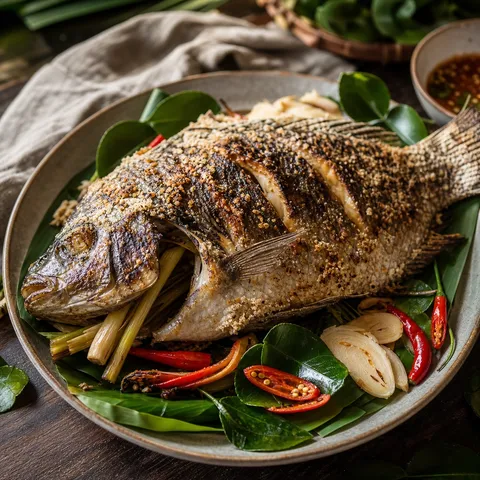 Thai Lens Verified Images are for illustrative purposes only, may be inaccurate, and do not guarantee the presence or absence of specific ingredients.
 Pla Pao
A whole salt-crusted fish stuffed with lemongrass and grilled until the skin is crackling and the flesh is silky.
 Thai Lens Verified Images are for illustrative purposes only, may be inaccurate, and do not guarantee the presence or absence of specific ingredients.
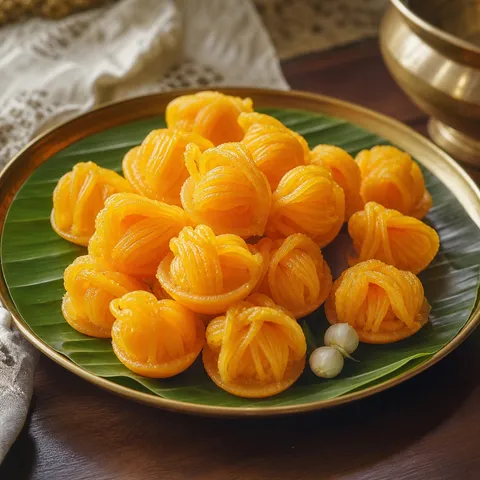
 Thong Yip
Petite golden flowers pressed from egg yolk and sugar, simmered in jasmine-scented syrup until set — a centuries-old Thai royal confection as beautiful as it is sweet.
 Thai Lens Verified Images are for illustrative purposes only, may be inaccurate, and do not guarantee the presence or absence of specific ingredients.
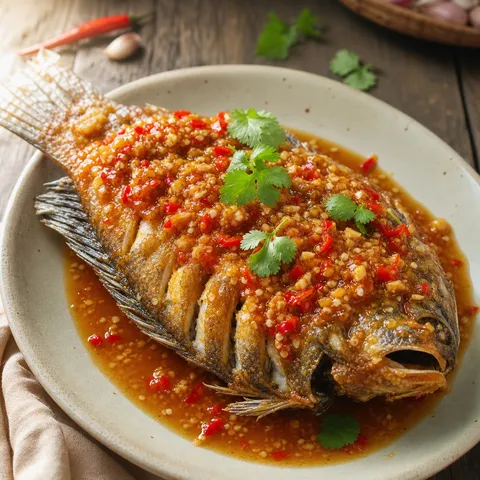
 Pla Rad Prik
Whole fish fried to a shatteringly crisp shell, then blanketed in a sticky, sweet-hot chili-tamarind sauce with garlic and basil — dramatic, punchy, and made for sharing.