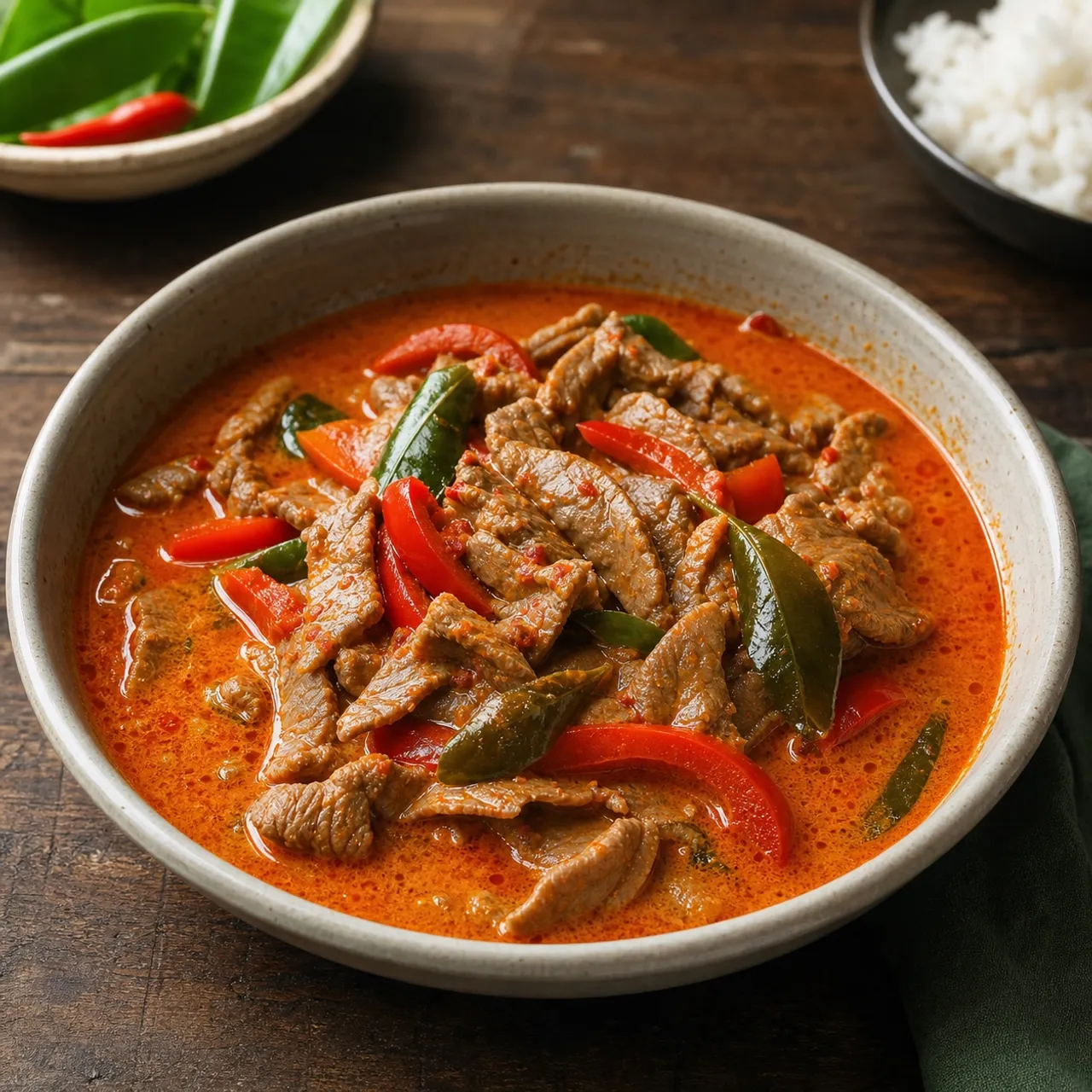
 Thai Images are for illustrative purposes only, may be inaccurate, and do not guarantee the presence or absence of specific ingredients.
 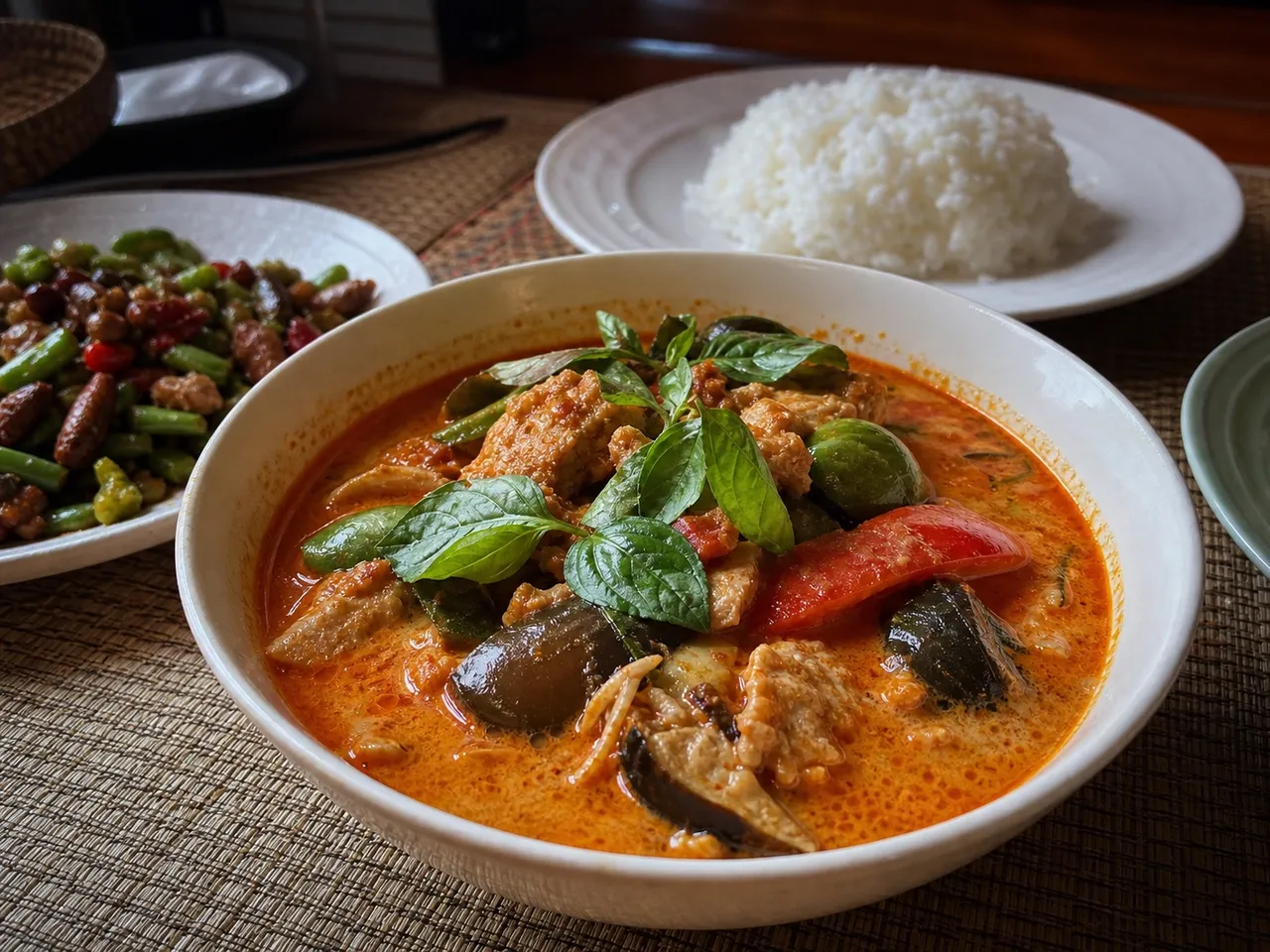 Serving Images are for illustrative purposes only, may be inaccurate, and do not guarantee the presence or absence of specific ingredients.
 Red Curry
A deeply flavored, moderately spicy curry with a red chili base.
Contains common allergens
In the app, Listahan checks these against your household automatically.
Instructions
5 steps- 1
Prepare the Base: In a large pan over medium heat, simmer 1/2 cup of the thickest part of the coconut milk until it bubbles and oil begins to pool at the edges.
- 2
Bloom the Paste: Add the red curry paste to the pan, stirring continuously for 2 minutes until the aroma is pungent and the color darkens slightly.
- 3
Brown the Beef: Increase heat to medium-high. Add the sliced beef and cook for 2-3 minutes, stirring to coat evenly in the curry paste.
- 4
Simmer: Pour in the rest of the coconut milk. Add the bell pepper and thinly sliced kaffir lime leaves. Reduce heat to medium-low and simmer gently for 10-12 minutes until beef is tender.
- 5
Season and Serve: Stir in fish sauce and palm sugar. Taste to balance salty, sweet, and spicy. Serve hot over steamed rice.
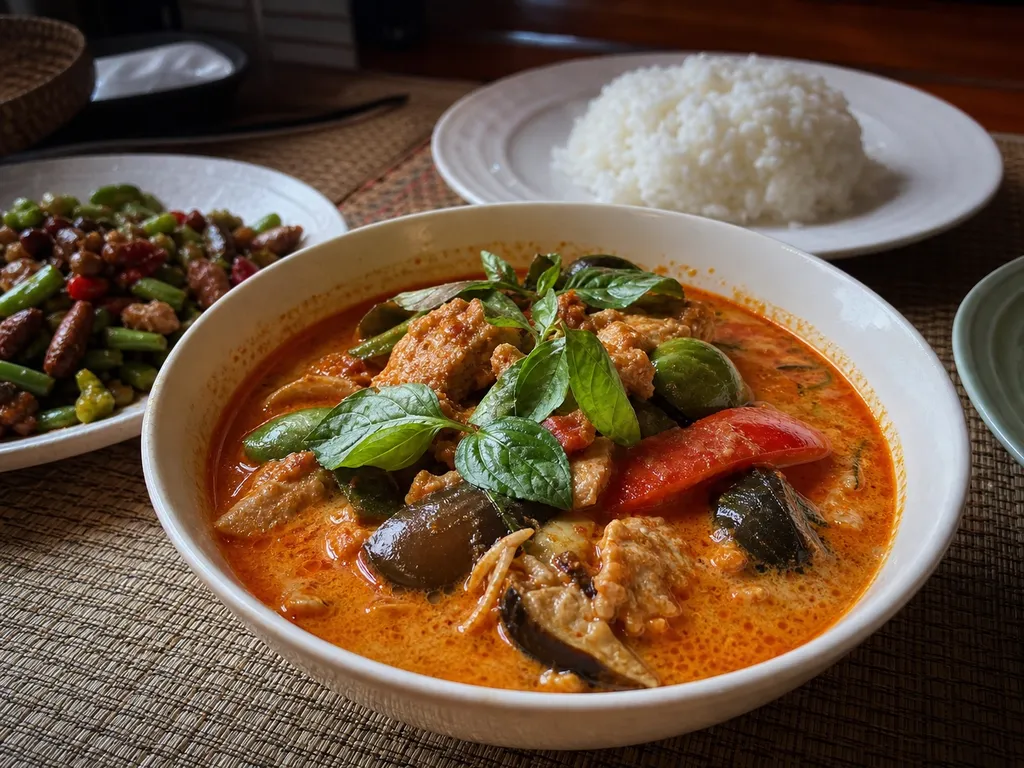 Images are for illustrative purposes only, may be inaccurate, and do not guarantee the presence or absence of specific ingredients.
 Listahan Family Score™
58/100
Works for many families
Score reflects how well this recipe fits a typical busy household. In the app, your Family Score is personalized to your household's allergens, kids, and pantry.
Nutrition
per serving470
Calories
39 g
Protein
14 g
Carbs
30 g
Fat
Estimated per serving. Actual values depend on the brands and portions you use.
Listahan cooking guide
Chef notes & practical guide
Technique notes, ingredient swaps, serve-alongside ideas, storage guidance, and equipment for this recipe.
Cultural context
Thai red curry builds its depth by frying curry paste directly in the thick cream that rises to the top of an unshaken can of coconut milk, a technique sometimes called cracking the coconut cream, letting the paste's oils bloom before any thinner liquid gets added.
Listahan note
This version cracks the coconut cream to bloom the paste before the thinner coconut milk goes in, and balances fish sauce and palm sugar at the end since curry pastes vary widely by brand.
Technique cues
- Scooping just the thick cream from the top of an unshaken can of coconut milk and frying the curry paste directly in it, until the oil separates and the paste turns fragrant, builds far more depth than simmering paste straight into thin coconut milk.
- The remaining, thinner coconut milk is stirred in only after the paste has properly bloomed in the cream; thinning it too early mutes the paste's aromatics before they've had a chance to cook out.
- Kaffir lime leaves are torn or bruised slightly before they go into the pot, releasing more of their citrus oil than leaves added whole.
- The balance of fish sauce and palm sugar is adjusted at the end, tasting as you go, since curry pastes vary widely by brand in how salty or sweet they already are.
Kitchen flow
- Parallel prep
- Prep any side dishes while Red Curry finishes with the kaffir lime leaves — the hands-off cook time is the window to use. Plan around the simmer; that's the slow part.
- Make-ahead
- Red Curry reheats well, so cooking it a day ahead and finishing it just before serving is a reasonable way to spread out the work. This one leans on the kaffir lime leaves. The simmer step is what sets the pace here.
- Leftover move
- Leftover Red Curry reheats well covered on the stove or in the oven with a splash of liquid; avoid the microwave, which tends to toughen the flank steak on a fast reheat. This one leans on the kaffir lime leaves. Plan around the simmer; that's the slow part.
- Cleanup rhythm
- Deglaze the pan used for Red Curry with a splash of water or broth right after cooking — it lifts the browned bits before they dry on and saves scrubbing later. This one leans on the kaffir lime leaves. Plan around the simmer; that's the slow part.
Ingredient brief
Role, handling, and swap guidance for each key ingredient.
1 lb flank steak, sliced thinly against the grain
Flavor support
Purpose: lb flank steak, sliced thinly against the grain supports the balance of Red Curry and should taste integrated.
Handling: Prep before heat is high so the cooking step can move without rushing.
Adaptation: Use the closest fresh equivalent and expect a modest shift in flavor or texture.
3 tbsp red curry paste
Seasoning backbone
Purpose: tbsp red curry paste gives the dish its recognizable flavor direction.
Handling: Prep before heat is high so the cooking step can move without rushing.
Adaptation: Use the closest fresh equivalent and expect a modest shift in flavor or texture.
1 can coconut milk
Richness and texture
Purpose: can coconut milk rounds the texture and helps the dish feel complete.
Handling: Prep before heat is high so the cooking step can move without rushing.
Adaptation: Use unsweetened dairy-free alternatives only where they still provide enough fat and body.
1 red bell pepper, sliced
Aromatic base
Purpose: red bell pepper, sliced creates the savory foundation before stronger ingredients are added.
Handling: Wash, trim, and cut evenly so the pieces cook at the same pace.
Adaptation: Use the closest fresh equivalent and expect a modest shift in flavor or texture.
4 kaffir lime leaves, 1 tbsp fish sauce, 1 tbsp palm sugar
Main protein or body
Purpose: kaffir lime leaves, 1 tbsp fish sauce, 1 tbsp palm sugar gives Red Curry its main substance and carries the seasoning.
Handling: Pat dry, cut evenly, and season before cooking so browning or sauce coverage is consistent.
Adaptation: Use a non-seafood protein only with adjusted seasoning and cooking time.
Technique notes
- Slice the flank steak thin and against the grain, thick or along-the-grain slices turn chewy no matter how well the curry itself is cooked.
- Add quick-cooking vegetables like bell pepper only in the final few minutes, so they keep some bite rather than turning soft and dull colored.
- Serve over plain jasmine rice, since the curry itself already carries enough seasoning for the whole plate.
Ingredient swaps
- Dairy-free direction
- Swap the coconut milk for a neutral dairy-free butter or oil and a full-fat plant milk (oat or coconut work best for body) — the texture shifts slightly but the dish holds together. This one leans on the kaffir lime leaves.
- Seafood-aware direction
- Skip any fish-derived seasoning and build savoriness with soy sauce plus a little dried seaweed instead. This one leans on the kaffir lime leaves.
- Nut-aware direction
- Leave off any nut topping — toasted seeds give a similar crunch without the risk. This one leans on the kaffir lime leaves.
- Lower-sodium direction
- Season lighter on salt than the recipe calls for, then adjust right before serving — it's easier to add more than to fix an oversalted batch. This one leans on the kaffir lime leaves.
Serve alongside
- Steamed rice
- Simple green salad
- Roasted vegetables
- Cucumber salad
- Iced tea
- Sparkling water with lemon
- Citrus water
Serving suggestions only — check pairings for your household's allergens.
Storage & reheating
- Refrigerate in a sealed container for up to 4 days.
- Reheat gently with a splash of water, broth, milk, or sauce as appropriate.
- Freeze up to 2 months when the texture is braised, baked, or stew-like.
Equipment
- Dutch oven or soup pot
- Wooden spoon
- Ladle
Make this household-aware
Listahan Pro checks this recipe against your household's allergens, finds pantry-aware swaps, builds the shopping list, and helps you plan the week around it.
Plan it in Listahan
Add Red Curry to your week, check it against your household's allergens, and build the shopping list automatically.
More Thai recipes
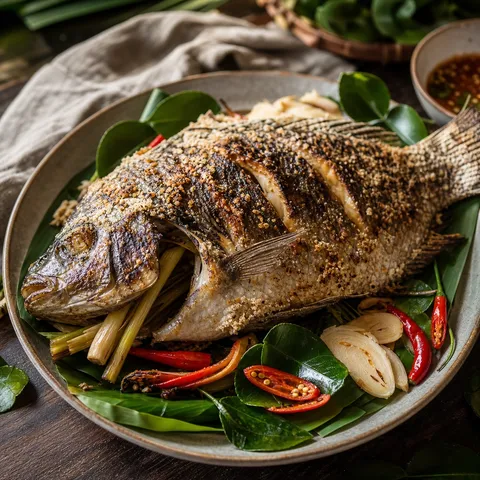 Thai Lens Verified Images are for illustrative purposes only, may be inaccurate, and do not guarantee the presence or absence of specific ingredients.
 Pla Pao
A whole salt-crusted fish stuffed with lemongrass and grilled until the skin is crackling and the flesh is silky.
 Thai Lens Verified Images are for illustrative purposes only, may be inaccurate, and do not guarantee the presence or absence of specific ingredients.
 Thong Yip
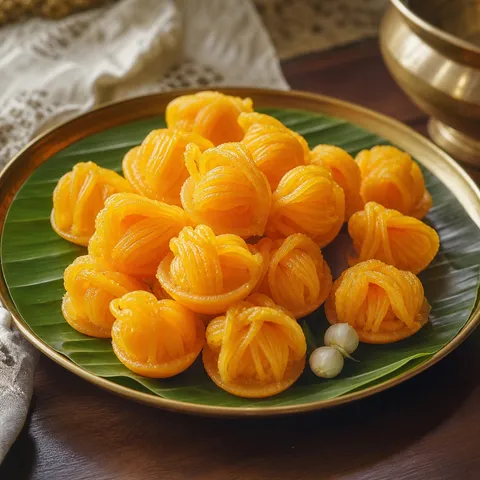
Petite golden flowers pressed from egg yolk and sugar, simmered in jasmine-scented syrup until set — a centuries-old Thai royal confection as beautiful as it is sweet.
 Thai Lens Verified Images are for illustrative purposes only, may be inaccurate, and do not guarantee the presence or absence of specific ingredients.
 Pla Rad Prik
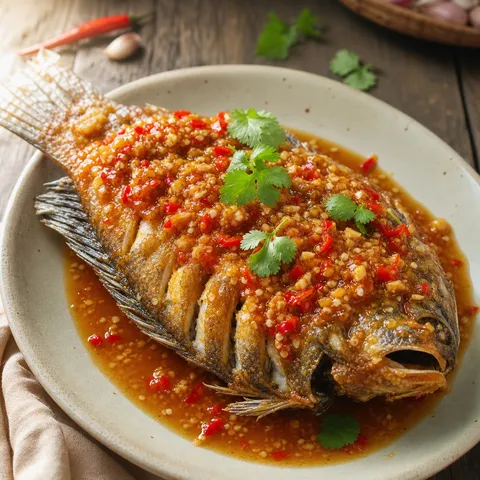
Whole fish fried to a shatteringly crisp shell, then blanketed in a sticky, sweet-hot chili-tamarind sauce with garlic and basil — dramatic, punchy, and made for sharing.