 Thai Images are for illustrative purposes only, may be inaccurate, and do not guarantee the presence or absence of specific ingredients.
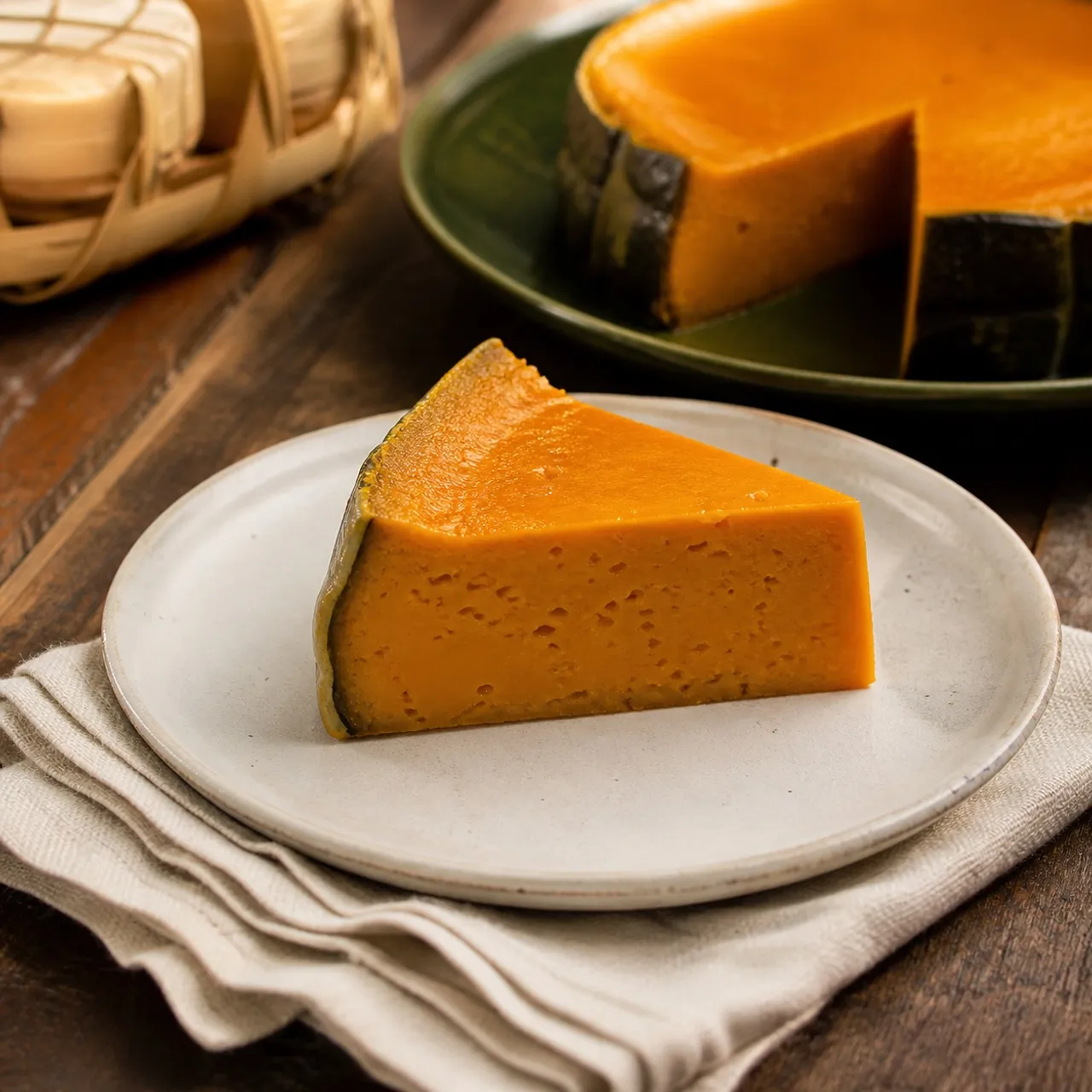
 Sangkhaya Fak Thong
A silky pandan-coconut custard steamed inside a whole kabocha pumpkin until set and sliceable.
Contains common allergens
In the app, Listahan checks these against your household automatically.
Instructions
6 steps- 1
Cut a wide lid off the top of the kabocha, scoop out the seeds and stringy pulp, then wipe the cavity dry with a paper towel.
- 2
In a bowl, gently whisk the eggs with the palm sugar until the sugar dissolves, taking care not to create foam that would mar the custard's smooth texture.
- 3
Stir in the coconut milk, salt, and pandan extract until fully combined, then strain the mixture through a fine sieve for a flawless custard.
- 4
Pour the custard into the hollowed pumpkin, filling it to just below the rim, then place it in a steamer over simmering water.
- 5
Steam covered over medium heat for 45-55 minutes until a toothpick inserted into the custard comes out clean and the pumpkin flesh is tender.
- 6
Let cool to room temperature, then chill for at least 2 hours before slicing into wedges and serving.
Listahan Family Score™
73/100
Good fit for most families
Score reflects how well this recipe fits a typical busy household. In the app, your Family Score is personalized to your household's allergens, kids, and pantry.
Nutrition
per serving180
Calories
4 g
Protein
21 g
Carbs
10 g
Fat
Estimated per serving. Actual values depend on the brands and portions you use.
Listahan cooking guide
Chef notes & practical guide
Technique notes, ingredient swaps, serve-alongside ideas, storage guidance, and equipment for this recipe.
Cultural context
Sangkhaya fak thong is a Thai dessert built around a simple idea: coconut custard steamed inside pumpkin until the two set together. The custard style reflects Thai uses of eggs, palm sugar, and coconut milk in steamed sweets, while the whole pumpkin presentation makes it easy to slice into wedges for sharing.
Listahan note
This version prioritizes a clean, sliceable custard and a tender kabocha shell. The key moves are whisking gently, straining the mixture, and letting the finished pumpkin chill fully before cutting.
Technique cues
- Kabocha works well here because its flesh is dense, sweet, and sturdy enough to hold the custard while steaming.
- Foam is the enemy of a smooth custard. Stir gently and strain the mixture so the final slice looks clean instead of bubbly.
- The dessert needs cooling time as much as cooking time. Slicing while warm can make the custard slump even if it was properly steamed.
Kitchen flow
- Parallel prep
- Set up the steamer water while you clean the kabocha, then mix the custard once the pumpkin is ready to fill.
- Make-ahead
- Steam and chill the whole pumpkin a day ahead; slice it cold for the neatest wedges.
- Leftover move
- Serve cold wedges with a spoonful of extra coconut milk or a small pinch of flaky salt to sharpen the sweetness.
- Cleanup rhythm
- Rinse the sieve and custard bowl right after filling the pumpkin, before the egg mixture dries.
Ingredient brief
Role, handling, and swap guidance for each key ingredient.
Small kabocha pumpkin
Edible custard vessel
Purpose: Its dense flesh softens into a sweet, chestnut-like layer around the custard.
Handling: Cut a wide lid, scrape out seeds and strings, and wipe the inside dry so the custard sits cleanly.
Adaptation: A small sugar pumpkin can work, but it will taste milder and may have a wetter texture.
Large eggs
Custard structure
Purpose: They set the coconut milk into a firm, sliceable filling.
Handling: Whisk slowly with the palm sugar until combined rather than beating in air.
Adaptation: Duck eggs are traditional in some versions and make a richer, firmer custard.
Full-fat coconut milk
Custard body
Purpose: It gives the filling its creamy texture and carries the pandan aroma.
Handling: Stir well before measuring so the thick cream and thinner liquid are evenly mixed.
Adaptation: Coconut cream makes a heavier custard; thin it slightly if the mixture looks very thick.
Palm sugar, grated
Sweetener
Purpose: It adds caramel depth that suits both the pumpkin and coconut.
Handling: Grate or chop it finely so it dissolves without needing hard whisking.
Adaptation: Light brown sugar gives a more direct sweetness and less rounded caramel flavor.
Pandan extract
Fragrant flavoring
Purpose: It gives the custard the grassy, vanilla-like aroma associated with many Thai coconut desserts.
Handling: Measure carefully; extract can become loud if poured casually.
Adaptation: Fresh pandan leaves can be steeped in warm coconut milk, then removed before mixing with the eggs.
Technique notes
- Keep the steam at a steady medium level. A hard boil can make the custard puff and crack before the pumpkin is tender.
- Fill the pumpkin just below the rim so the custard has room to settle as you move it into the steamer.
- Test near the center of the custard, not only the edge. The edge firms first while the middle needs the full steaming time.
Ingredient swaps
- Fresh pandan direction
- Warm the coconut milk with a few knotted pandan leaves, let it steep, then cool it before mixing with the eggs.
- Pumpkin backup
- Use a small sugar pumpkin if kabocha is unavailable; expect a softer, less nutty shell.
- Less-sweet direction
- Reduce the palm sugar slightly, but keep enough sweetness to balance the eggs and coconut milk.
Serve alongside
- Mango sticky rice
- Thai coconut jelly
- Fresh pineapple with lime
- Black sesame rice dumplings
- Thai iced tea
- Hot jasmine tea
- Iced pandan water
Serving suggestions only — check pairings for your household's allergens.
Storage & reheating
- Refrigerate sliced wedges or the whole cooled pumpkin in a sealed container for up to 3 days.
- Serve chilled or let slices stand at room temperature for 15-20 minutes; reheating can loosen the custard.
- Freezing is not ideal because the pumpkin and custard can turn watery after thawing.
Equipment
- Large steamer pot with lid
- Fine-mesh sieve
- Sharp chef's knife
- Heatproof bowl
Make this household-aware
Listahan Pro checks this recipe against your household's allergens, finds pantry-aware swaps, builds the shopping list, and helps you plan the week around it.
Plan it in Listahan
Add Sangkhaya Fak Thong to your week, check it against your household's allergens, and build the shopping list automatically.
More Thai recipes
 Thai Lens Verified Images are for illustrative purposes only, may be inaccurate, and do not guarantee the presence or absence of specific ingredients.
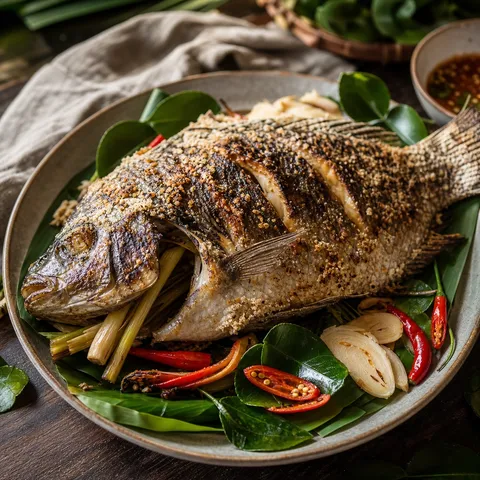
 Pla Pao
A whole salt-crusted fish stuffed with lemongrass and grilled until the skin is crackling and the flesh is silky.
 Thai Lens Verified Images are for illustrative purposes only, may be inaccurate, and do not guarantee the presence or absence of specific ingredients.
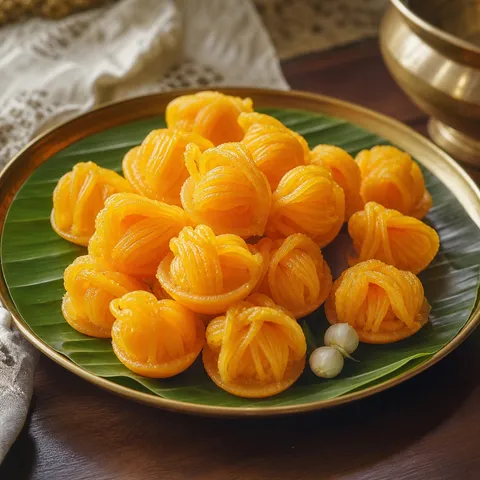
 Thong Yip
Petite golden flowers pressed from egg yolk and sugar, simmered in jasmine-scented syrup until set — a centuries-old Thai royal confection as beautiful as it is sweet.
 Thai Lens Verified Images are for illustrative purposes only, may be inaccurate, and do not guarantee the presence or absence of specific ingredients.
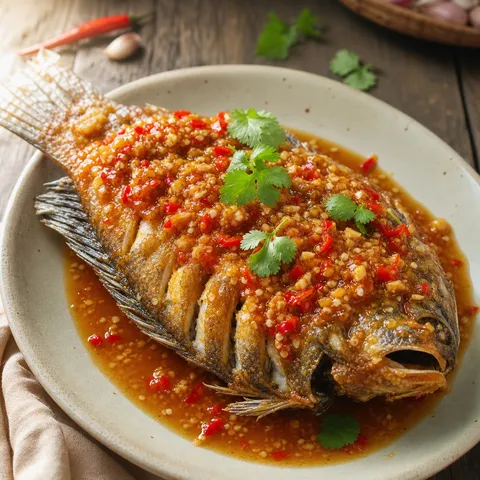
 Pla Rad Prik
Whole fish fried to a shatteringly crisp shell, then blanketed in a sticky, sweet-hot chili-tamarind sauce with garlic and basil — dramatic, punchy, and made for sharing.