 French Images are for illustrative purposes only, may be inaccurate, and do not guarantee the presence or absence of specific ingredients.
  Serving Images are for illustrative purposes only, may be inaccurate, and do not guarantee the presence or absence of specific ingredients.
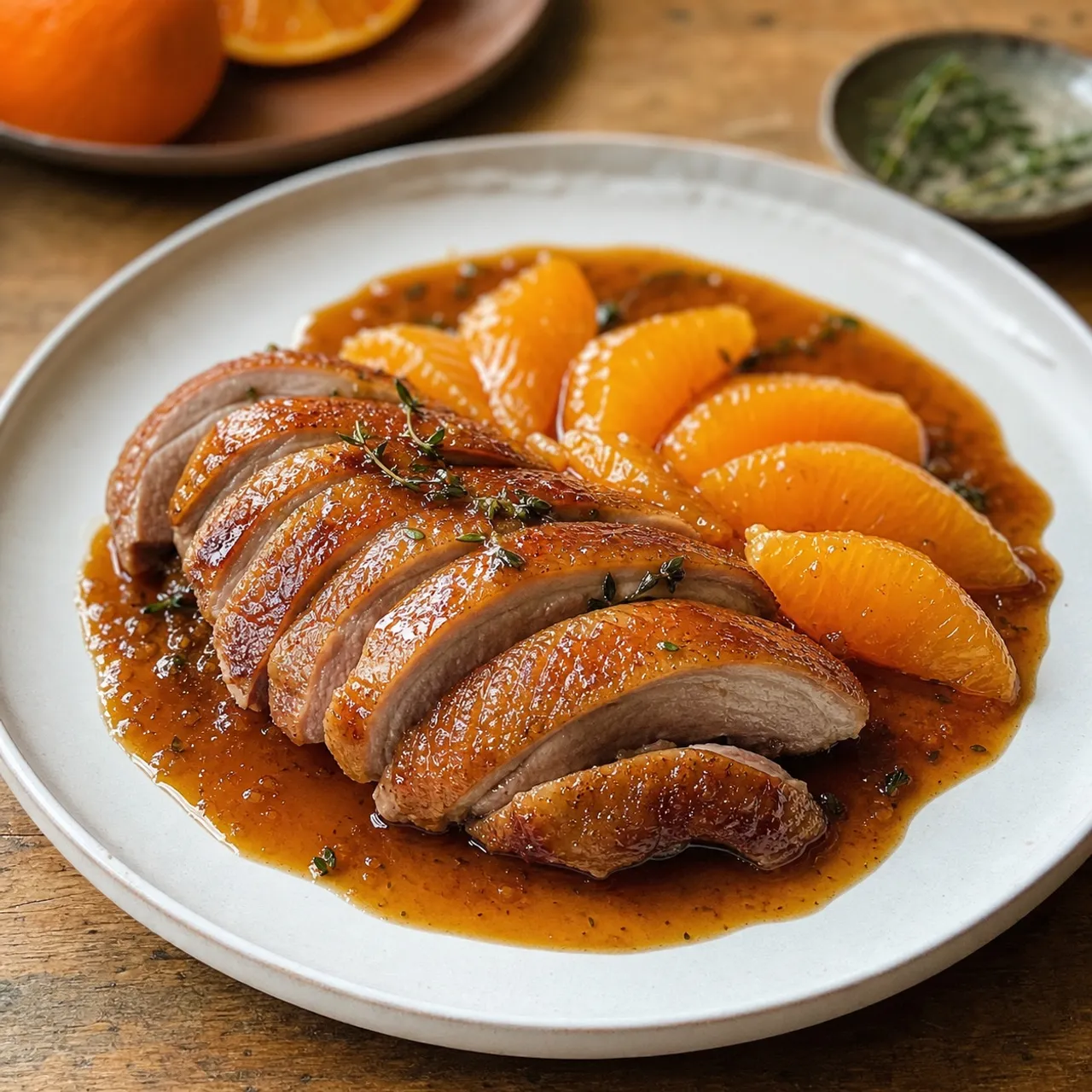
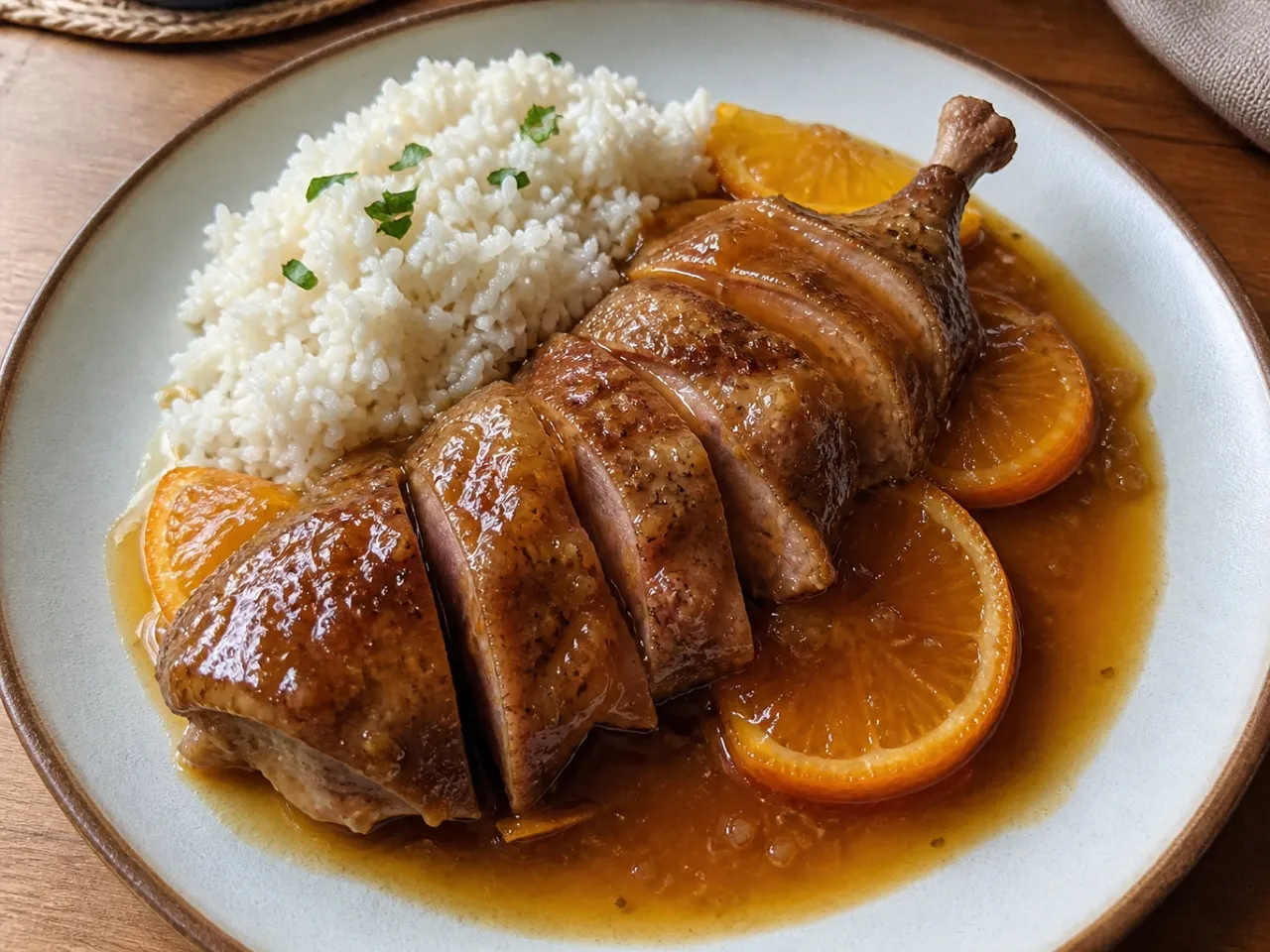
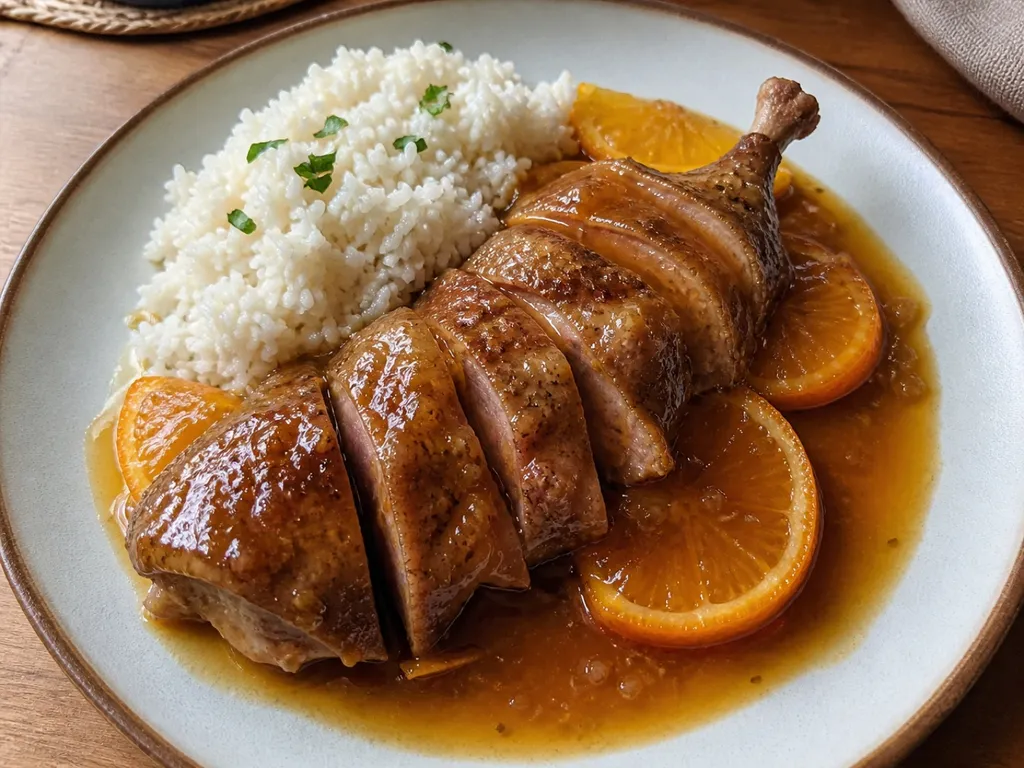
 Canard à l'Orange
A classic French roast duck glazed with a glossy, sweet-tart orange sauce that balances rich meat with bright citrus.
Contains common allergens
In the app, Listahan checks these against your household automatically.
Instructions
6 steps- 1
Pat the duck completely dry, prick the skin all over with a fork without piercing the meat, season generously inside and out with salt and pepper, then roast breast-up on a rack at 425°F for 30 minutes to render the fat.
- 2
Lower the oven to 350°F and continue roasting for about 1 hour 15 minutes, basting occasionally with the rendered fat, until the juices run clear and an instant-read thermometer in the thigh reads 165°F.
- 3
While the duck roasts, make a gastrique by cooking the sugar and red wine vinegar in a saucepan over medium heat until it turns a deep amber caramel, about 6 minutes, swirling but not stirring.
- 4
Carefully whisk the orange juice and stock into the caramel (it will sputter), bring to a simmer, and reduce by half until lightly syrupy, about 15 minutes.
- 5
Stir in the Grand Marnier and orange segments, then whisk in the cold butter off the heat to give the sauce a glossy finish and adjust salt to taste.
- 6
Rest the roasted duck for 10 minutes, carve into portions, and spoon the warm orange sauce generously over the top before serving.
 Images are for illustrative purposes only, may be inaccurate, and do not guarantee the presence or absence of specific ingredients.
 Listahan Family Score™
69/100
Works for many families
Score reflects how well this recipe fits a typical busy household. In the app, your Family Score is personalized to your household's allergens, kids, and pantry.
Nutrition
per serving370
Calories
21 g
Protein
41 g
Carbs
13 g
Fat
Estimated per serving. Actual values depend on the brands and portions you use.
Listahan cooking guide
Chef notes & practical guide
Technique notes, ingredient swaps, serve-alongside ideas, storage guidance, and equipment for this recipe.
Cultural context
Canard à l'Orange is a classic of French haute cuisine, pairing rich roasted duck with a glossy, sweet-tart orange sauce built from a caramel gastrique. Long a showpiece of formal French dining, it demonstrates the technique of balancing a fatty, rich protein against a bright, acidic sauce built almost entirely from sugar, vinegar, and citrus.
Listahan note
This version treats the sauce as its own careful project, built from a true caramel gastrique rather than just simmered orange juice, which is what gives it real depth instead of tasting like sweetened juice.
Technique cues
- Pricking the duck skin all over without piercing the meat lets rendered fat escape during roasting, which is essential for crisp skin rather than a soft, greasy exterior.
- Cooking the sugar and vinegar to a deep amber caramel before adding liquid is what gives the sauce its complex, slightly bitter-sweet backbone rather than a flat, one-note sweetness.
- Whisking cold butter into the finished sauce off the heat gives it a glossy, restaurant-style sheen and a rounder mouthfeel.
Kitchen flow
- Parallel prep
- Make the gastrique while the duck roasts during its long second stage, so the sauce and duck are ready at nearly the same time.
- Make-ahead
- The orange sauce can be made a day ahead and gently reheated, whisking in the cold butter fresh just before serving.
- Leftover move
- Shred leftover duck meat into a salad with orange segments and a spoonful of the leftover sauce as dressing.
- Cleanup rhythm
- Use the same saucepan for the gastrique from start to finish, adding ingredients in sequence rather than switching pans.
Ingredient brief
Role, handling, and swap guidance for each key ingredient.
Whole duck
Main protein
Purpose: Duck's rich, fatty meat is built to stand up against the sweet-tart orange sauce in a way leaner poultry can't.
Handling: Pat completely dry and prick the skin all over before roasting so the fat renders out properly.
Adaptation: A whole chicken can be roasted the same way for a lighter, more accessible version, though it won't have the same richness.
Oranges (juiced and segmented)
Sauce backbone
Purpose: The juice becomes the base of the sauce once whisked into the caramel, while the segments add fresh bursts of citrus in the finished dish.
Handling: Segment two oranges carefully, removing all pith, for a clean garnish; juice the other two for the sauce base.
Adaptation: Blood oranges add a deeper color and slightly different tartness if they're in season.
Sugar and red wine vinegar
Gastrique base
Purpose: Cooked together into a caramel, they form the sweet-and-sour foundation that defines the sauce's character.
Handling: Cook without stirring, only swirling the pan, until it turns a deep amber color, watching closely since it can burn quickly past that point.
Adaptation: White wine vinegar can replace red for a slightly milder tartness.
Grand Marnier
Aromatic finish
Purpose: This orange liqueur deepens the citrus flavor of the sauce beyond what fresh orange juice alone provides.
Handling: Stir it in near the end of cooking, after the sauce has reduced, to preserve its aromatic quality.
Adaptation: Cointreau is a very similar orange liqueur that works the same way; orange juice concentrate can be used for a non-alcoholic version with less complexity.
Technique notes
- Watch the caramel closely once it starts to color; sugar can go from perfect amber to burnt within moments.
- Whisk the orange juice and stock in carefully, since the caramel will sputter and steam violently on contact.
- Whisk in the cold butter off the heat, not on it, or the sauce can separate instead of turning glossy.
Ingredient swaps
- Non-alcoholic direction
- Replace the Grand Marnier with a splash of orange juice concentrate and a drop of vanilla for a similar depth without alcohol.
- Chicken direction
- Use a whole roasted chicken instead of duck for a lighter, more everyday version of the same sauce technique.
- Make-ahead sauce direction
- Prepare the gastrique base up to two days ahead and refrigerate, reheating gently before finishing with butter.
Serve alongside
- Roasted fingerling potatoes
- Sautéed green beans
- Simple watercress salad
- Pinot Noir
- Sparkling water with orange
- Dry rosé
Serving suggestions only — check pairings for your household's allergens.
Storage & reheating
- Refrigerate carved duck and sauce separately in airtight containers for up to 3 days.
- Reheat the duck gently in a low oven to avoid drying it out; warm the sauce separately on the stovetop.
- Freezing is possible for up to 2 months, though the skin will lose its crispness after thawing and reheating.
Equipment
- Roasting rack and pan
- Instant-read thermometer
- Heavy saucepan for the gastrique
- Fine strainer for the sauce
Make this household-aware
Listahan Pro checks this recipe against your household's allergens, finds pantry-aware swaps, builds the shopping list, and helps you plan the week around it.
Plan it in Listahan
Add Canard à l'Orange to your week, check it against your household's allergens, and build the shopping list automatically.
More French recipes
 French Lens Verified Images are for illustrative purposes only, may be inaccurate, and do not guarantee the presence or absence of specific ingredients.
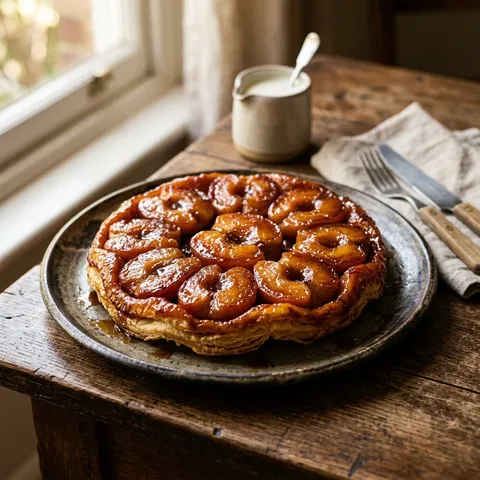
 Tarte Tatin
Apples cooked in caramel until jammy and burnished, then flipped onto buttery pastry — a rustic upside-down tart from the Loire Valley.
 French Lens Verified Images are for illustrative purposes only, may be inaccurate, and do not guarantee the presence or absence of specific ingredients.
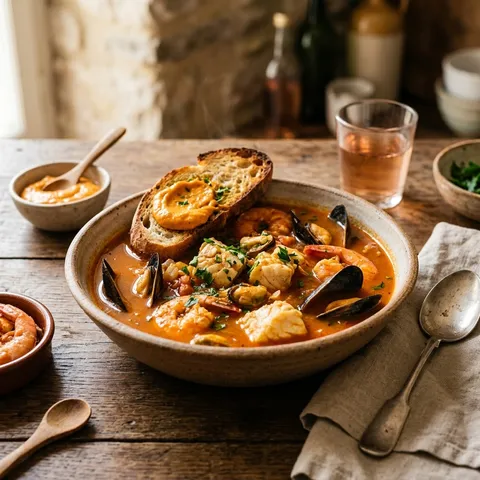
 Bouillabaisse
Marseille's legendary saffron-scented fisherman's stew, brimming with fresh seafood and served with garlicky rouille on toasted baguette.
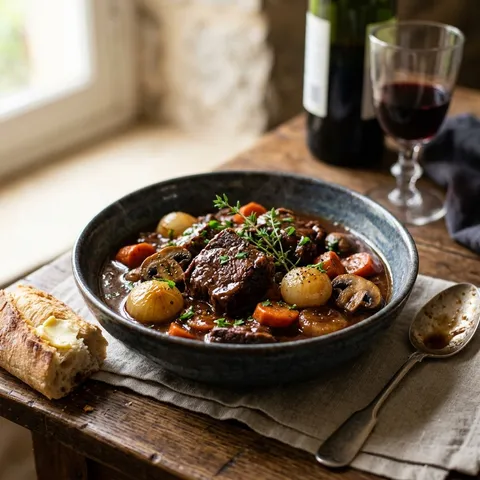 French Lens Verified Images are for illustrative purposes only, may be inaccurate, and do not guarantee the presence or absence of specific ingredients.
 Bœuf Bourguignon
Burgundy's legendary beef stew — rich, wine-dark, and fall-apart tender after hours of slow braising with carrots, mushrooms, and thyme.