 French Images are for illustrative purposes only, may be inaccurate, and do not guarantee the presence or absence of specific ingredients.
  Serving Images are for illustrative purposes only, may be inaccurate, and do not guarantee the presence or absence of specific ingredients.
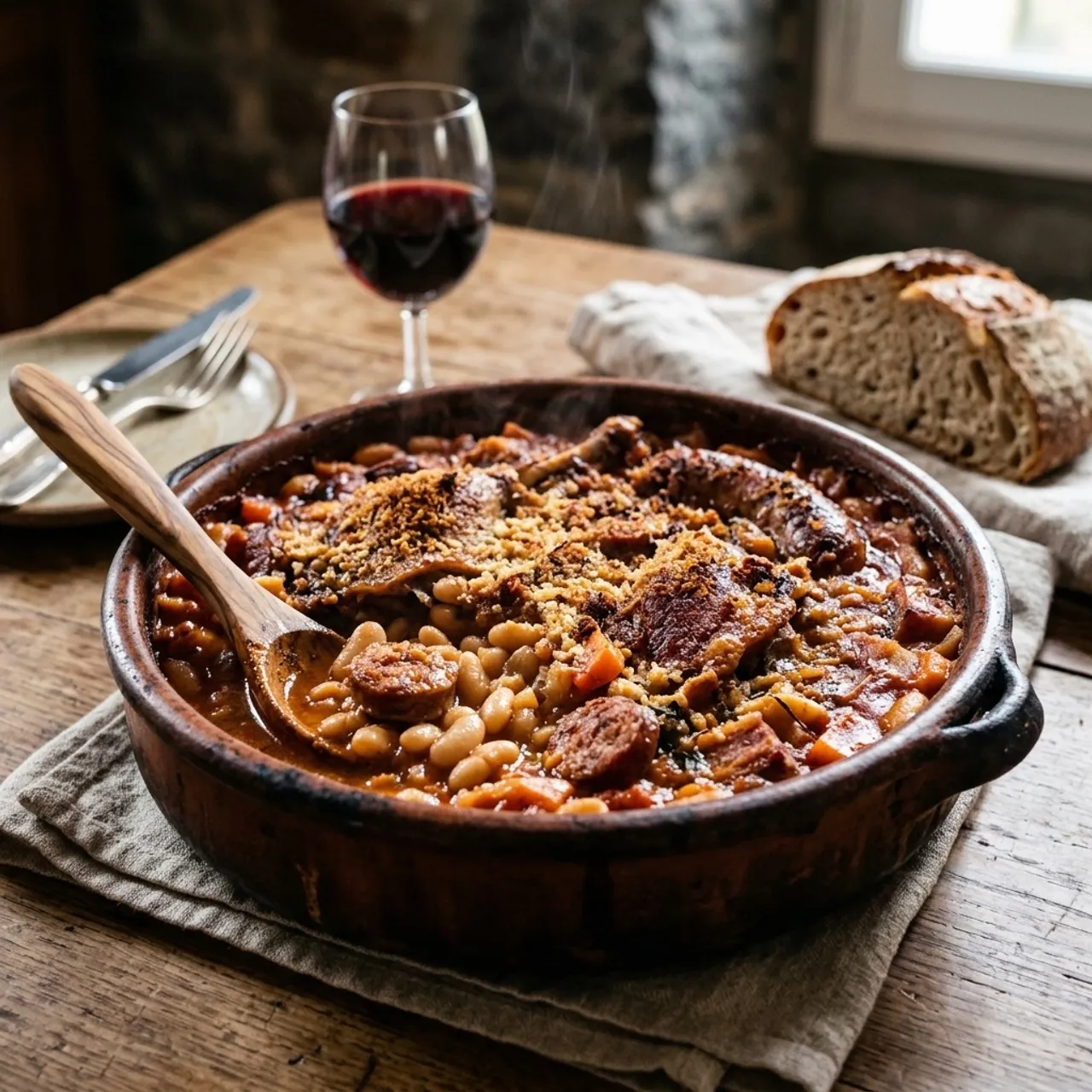
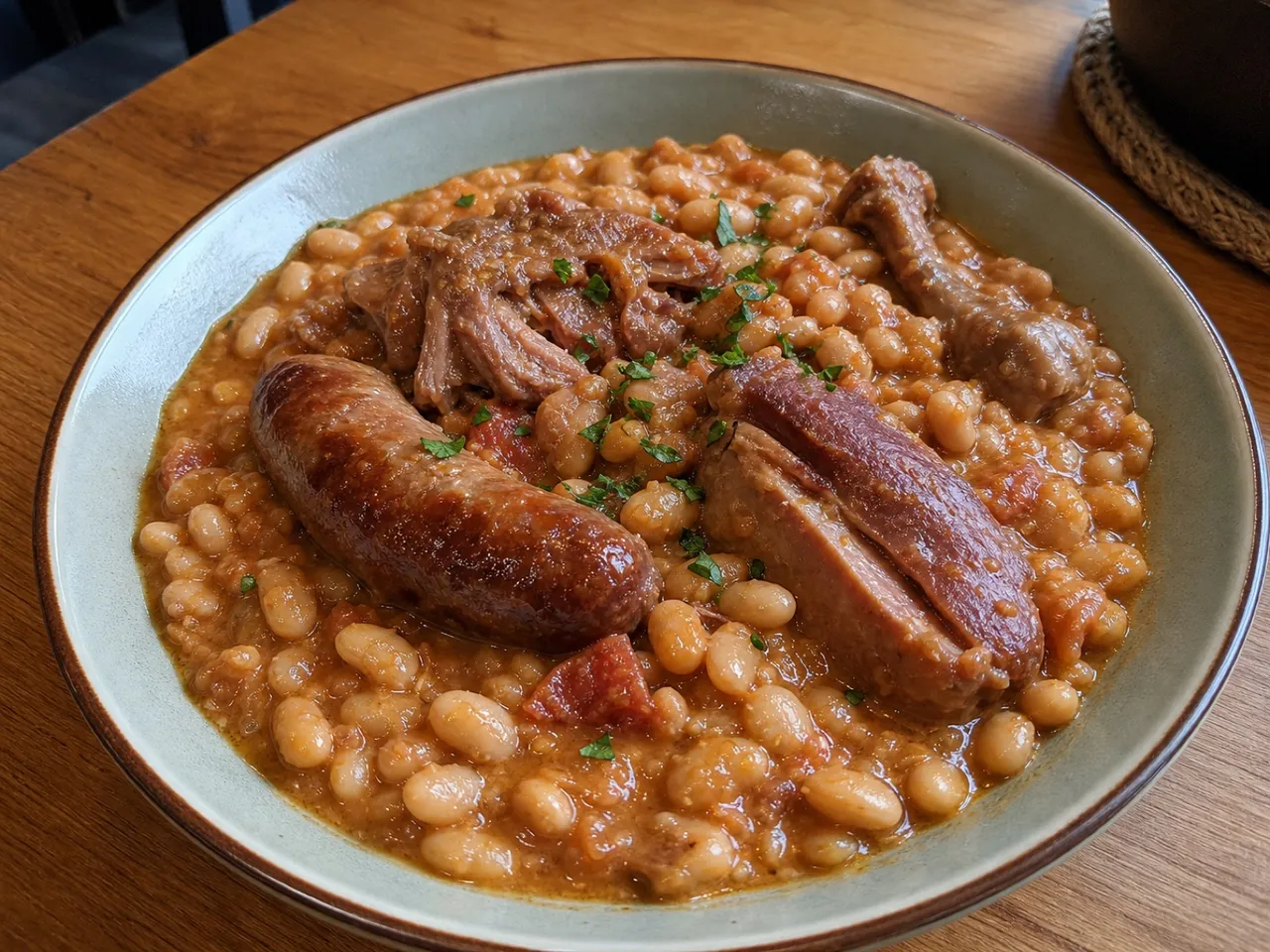
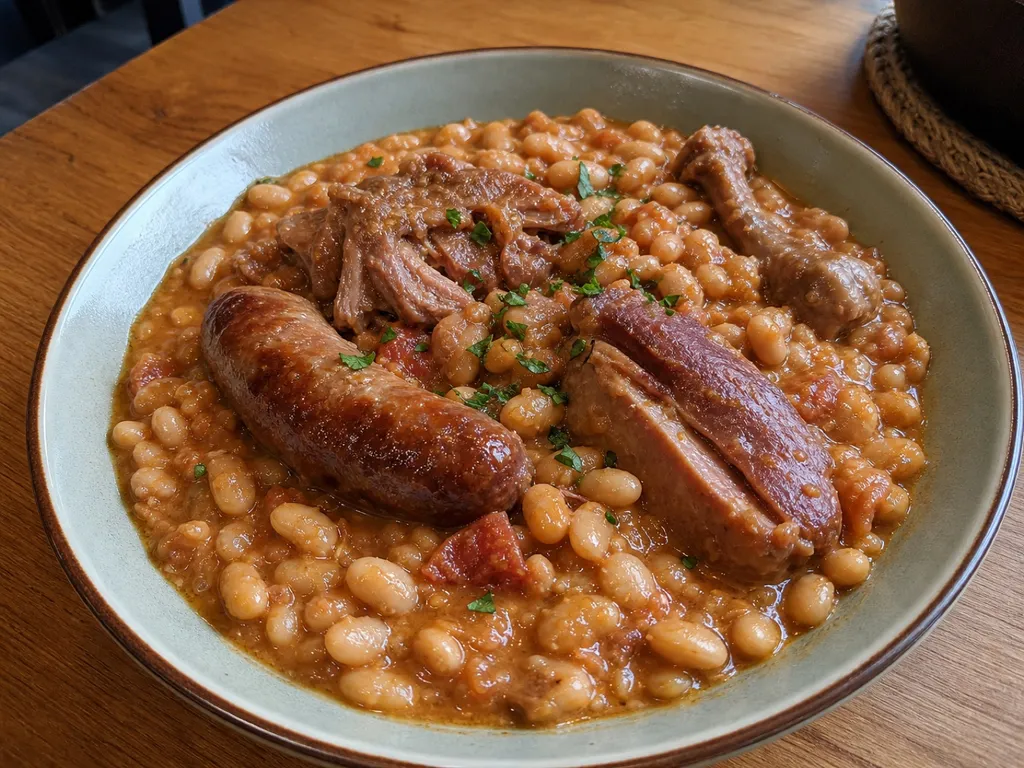
 Cassoulet
The great slow-cooked casserole of the south — creamy white beans, duck confit, garlicky sausage, and a golden breadcrumb crust on top.
No common allergens detected
Based on this recipe's ingredient list. Always verify with your own brands and labels.
Instructions
6 steps- 1
Drain the soaked beans. Place them in a large pot with fresh water, the pork belly, a halved onion, and the bouquet garni. Simmer gently for 1 hour until the beans are just tender. Drain and reserve the liquid.
- 2
In a skillet, brown the Toulouse sausages over medium heat until golden. Cut them into thick slices.
- 3
Rub a deep, heavy earthenware casserole dish (cassole) with a crushed garlic clove. Layer half the cooked beans at the bottom.
- 4
Nestle the browned sausages, pork belly, and duck confit legs into the beans. Cover with the remaining beans.
- 5
Pour the warm stock over the top until it just barely covers the beans. Add a little reserved bean cooking liquid if needed.
- 6
Bake uncovered at 300°F (150°C) for 3-4 hours. Every hour, press the thick, golden crust that forms on top back down into the stew, adding a splash of liquid if it looks dry. The final crust should be deeply caramelized and crisp.
 Images are for illustrative purposes only, may be inaccurate, and do not guarantee the presence or absence of specific ingredients.
 Listahan Family Score™
72/100
Good fit for most families
Score reflects how well this recipe fits a typical busy household. In the app, your Family Score is personalized to your household's allergens, kids, and pantry.
Nutrition
per serving1280
Calories
120 g
Protein
3 g
Carbs
87 g
Fat
Estimated per serving. Actual values depend on the brands and portions you use.
Listahan cooking guide
Chef notes & practical guide
Technique notes, ingredient swaps, serve-alongside ideas, storage guidance, and equipment for this recipe.
Cultural context
Cassoulet comes from the Languedoc region of southern France and takes its name from the 'cassole,' the earthenware casserole in which it is traditionally cooked. Three towns — Castelnaudary, Carcassonne, and Toulouse — each claim the original version, differing mainly in which meats are required: Castelnaudary insists on pork and duck confit, Carcassonne adds lamb, and Toulouse includes its famous sausages. The dish is said to have medieval origins and became a symbol of Languedoc peasant cooking — slow, thrifty, deeply sustaining — before being elevated into a celebrated regional specialty.
Listahan note
This version uses duck confit legs, garlic sausage, and pork shoulder rather than chasing every regional tradition, keeping the dish achievable without sacrificing the bean-enriched depth that defines it.
Technique cues
- Use dried white beans and soak them overnight; canned beans become too soft and fall apart through the long braise, losing the creamy-yet-intact texture that makes cassoulet satisfying rather than mushy.
- Break the bread crumb crust that forms on top and push it back into the stew two or three times during cooking — this is the traditional technique that builds layers of flavor into the sauce rather than discarding the crust.
- Low and slow is the only approach: 300 degrees Fahrenheit for 2 to 3 hours produces the kind of gentle bubbling that breaks down the beans' exterior starch into a natural thickener without burning the bottom.
Kitchen flow
- Parallel prep
- The day before: soak the beans, make or source the duck confit, and brown all the meats; on the day, assemble and bake — most of the work is done ahead.
- Make-ahead
- Cassoulet is a 2-day project by design; assemble and bake on day one, cool overnight, and reheat gently on day two — the flavor is noticeably better.
- Leftover move
- Cassoulet reheats beautifully on the stovetop with a splash of stock; it keeps for 4 days in the fridge and the beans continue to thicken the sauce over time.
- Cleanup rhythm
- Use the same Dutch oven or cassole for everything from browning to baking; soak it in hot water immediately after serving to loosen the crust.
Ingredient brief
Role, handling, and swap guidance for each key ingredient.
dried white beans (Great Northern or cannellini)
creamy, starchy base
Purpose: Dried beans slowly absorb the braising liquid and meaty juices, becoming creamy-tender while thickening the sauce naturally as their starch leaches out.
Handling: Soak overnight in cold water, drain, and simmer in fresh water with aromatics until barely tender before adding to the cassoulet.
Adaptation: Tarbais beans are the traditional choice and worth sourcing online for a special occasion; Great Northern beans are the most accessible everyday substitute.
duck confit legs
rich, falling-off-the-bone protein
Purpose: Duck confit is already fully cooked in its own fat, so it adds intense duck flavor and tender shredded meat without requiring additional cooking time.
Handling: Remove from the can or package, scrape off most of the fat, and nestle into the cassoulet for the last hour of cooking.
Adaptation: Bone-in chicken thighs braised in duck fat or olive oil before adding to the cassoulet produce a lighter but still satisfying result.
garlic sausage or Toulouse sausage
seasoning and textural contrast
Purpose: The sausage seasons the beans as it cooks, releasing fat and aromatics into the sauce that permeate every component.
Handling: Brown the sausages in a skillet before nestling them into the beans so they add fond to the fat used for the rest of the dish.
Adaptation: Any garlicky fresh pork sausage works; kielbasa is a widely available alternative with a similar fat content and garlic presence.
pork shoulder or pork belly
collagen-rich braising meat
Purpose: Pork shoulder has enough fat and connective tissue to become silky and tender over the long cook while contributing gelatin to enrich the bean cooking liquid.
Handling: Cut into 1.5-inch cubes, season, and brown in batches before incorporating with the beans.
Adaptation: Pork ribs (country-style) are an easy substitute that adds bone-in gelatin; reduce the amount by weight since ribs are heavier.
fresh bread crumbs
top crust
Purpose: The bread crumb crust forms during baking and, when pushed back in and re-formed, absorbs the bean liquid and creates successive layers of flavor.
Handling: Pulse day-old bread in a food processor into rough crumbs and scatter in a generous layer over the top before the final bake.
Adaptation: Panko gives a crunchier crust; traditional dried crumbs from a baguette are most authentic.
Technique notes
- The cassoulet should look like a lake of barely bubbling beans with a golden crust — if it is boiling vigorously or drying out, add a ladleful of stock and reduce the oven temperature.
- Duck fat renders from the confit during cooking and floats to the surface; spoon off some but not all of it — some remains in the dish for richness and is part of the character.
- Add a parmesan rind or a small piece of smoked ham hock to the beans while they simmer to build an extra layer of umami that rounds the finished dish.
Ingredient swaps
- Lower-fat direction
- Use skinless chicken thighs instead of duck confit and leaner turkey sausage in place of pork sausage; drain excess fat after browning the meats before assembling.
- Weeknight shortcut
- Use canned white beans (drained) and reduce the bake time to 60 minutes at 325 degrees; the texture will be softer but the flavor is still very good.
Serve alongside
- Simple green salad with mustard vinaigrette
- Crusty sourdough baguette
- Roasted carrots with thyme
- Languedoc red wine such as Minervois or Corbières
- Sparkling water with a lemon wedge
Serving suggestions only — check pairings for your household's allergens.
Storage & reheating
- Store covered in the refrigerator for up to 4 days; add a splash of chicken stock when reheating because the beans will absorb more liquid as they sit.
- Freeze in an airtight container for up to 3 months; thaw overnight in the refrigerator and reheat low and slow on the stovetop.
Equipment
- Large Dutch oven or traditional cassole (earthenware casserole) with a lid
- Food processor for making fresh bread crumbs
- Ladle for checking liquid level during the long bake
Make this household-aware
Listahan Pro checks this recipe against your household's allergens, finds pantry-aware swaps, builds the shopping list, and helps you plan the week around it.
Plan it in Listahan
Add Cassoulet to your week, check it against your household's allergens, and build the shopping list automatically.
More French recipes
 French Lens Verified Images are for illustrative purposes only, may be inaccurate, and do not guarantee the presence or absence of specific ingredients.
 Tarte Tatin
Apples cooked in caramel until jammy and burnished, then flipped onto buttery pastry — a rustic upside-down tart from the Loire Valley.
 French Lens Verified Images are for illustrative purposes only, may be inaccurate, and do not guarantee the presence or absence of specific ingredients.
 Bouillabaisse
Marseille's legendary saffron-scented fisherman's stew, brimming with fresh seafood and served with garlicky rouille on toasted baguette.
 French Lens Verified Images are for illustrative purposes only, may be inaccurate, and do not guarantee the presence or absence of specific ingredients.
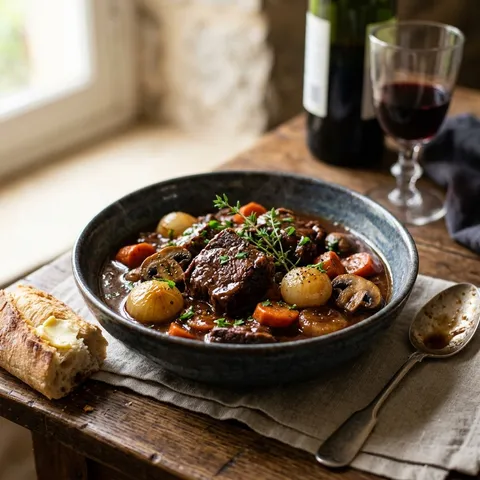
 Bœuf Bourguignon
Burgundy's legendary beef stew — rich, wine-dark, and fall-apart tender after hours of slow braising with carrots, mushrooms, and thyme.