 French Images are for illustrative purposes only, may be inaccurate, and do not guarantee the presence or absence of specific ingredients.
  Serving Images are for illustrative purposes only, may be inaccurate, and do not guarantee the presence or absence of specific ingredients.
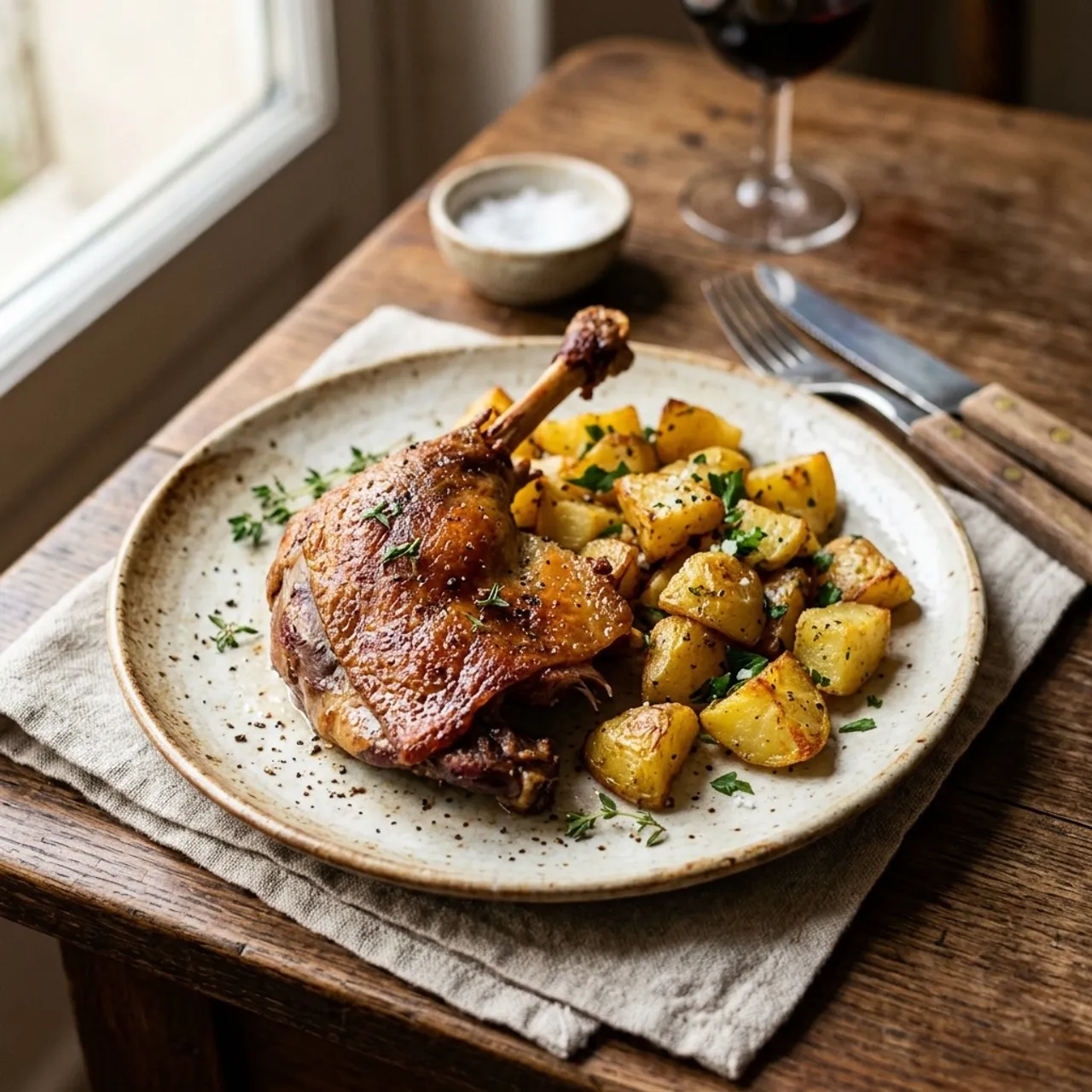
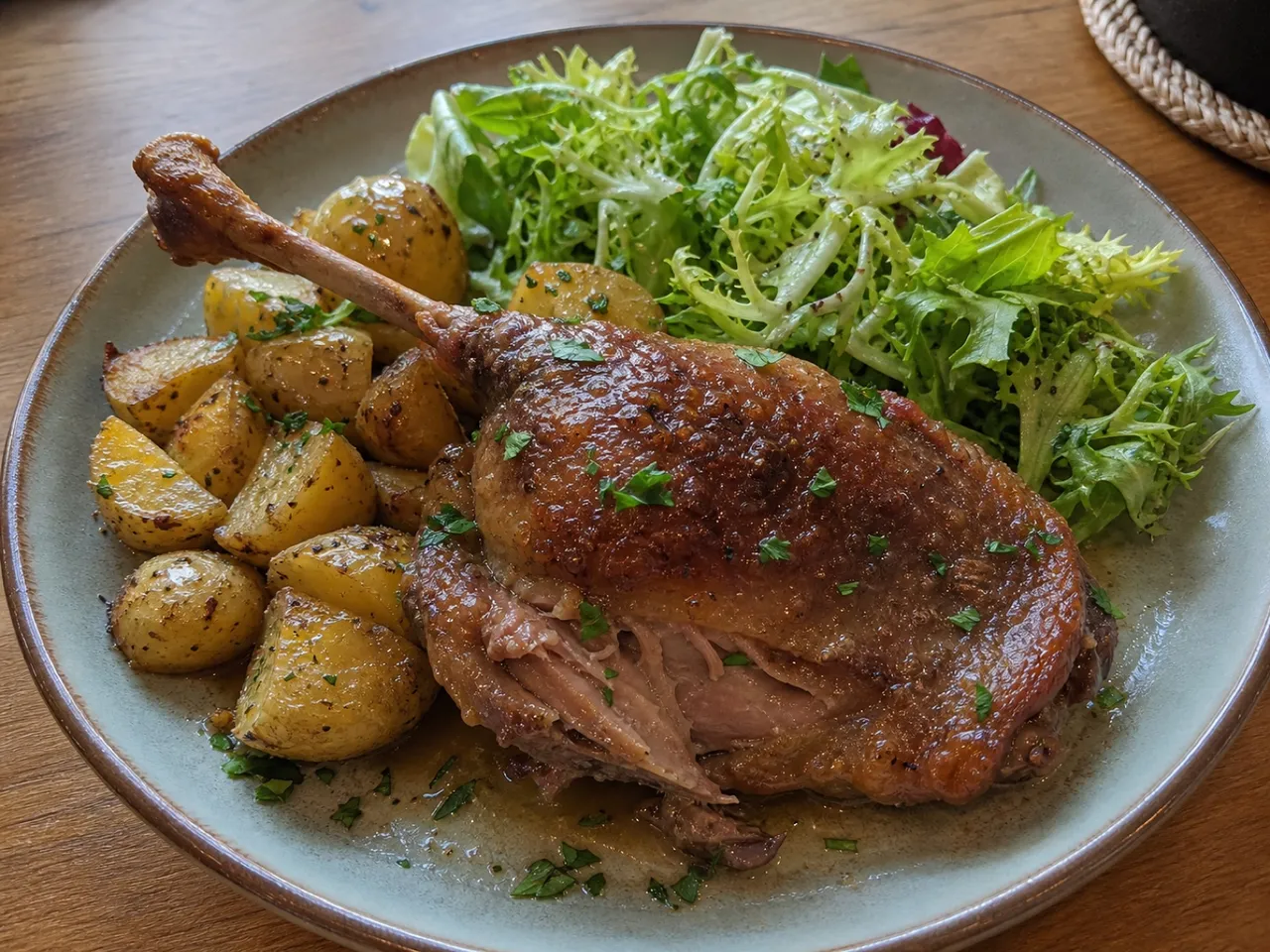
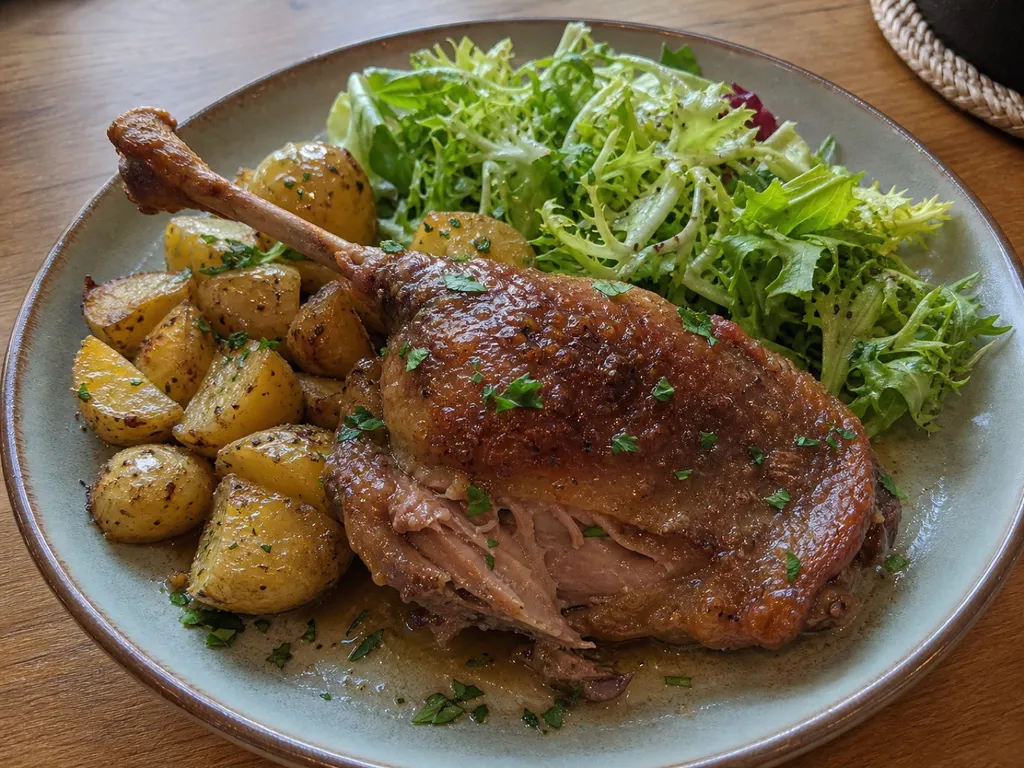
 Confit de Canard
Duck legs cured with salt and herbs, then slow-cooked in their own fat until yielding and rich, crisped in a pan before serving.
No common allergens detected
Based on this recipe's ingredient list. Always verify with your own brands and labels.
Good to know
- One-pot
- Crispy
- Ready in under 30 minutes
Matched from this dish's own ingredients and timing. Browse more: one-pot dinnerscrispy recipes30-minute meals
Instructions
6 steps- 1
Rub the duck legs generously with the coarse sea salt, smashed garlic, crushed peppercorns, crumbled bay leaves, and thyme. Place in a non-reactive dish, cover, and refrigerate for 24-36 hours to cure.
- 2
Preheat the oven to 225°F (110°C). Rinse the duck legs thoroughly under cold water to remove the salt and pat completely dry with paper towels.
- 3
Place the duck legs snugly in an oven-proof pot. Pour the melted duck fat over them until they are completely submerged.
- 4
Cover the pot and transfer to the oven. Cook slowly for 2.5 to 3 hours, until the meat is exceedingly tender and yields easily when pierced with a skewer.
- 5
Let the duck cool completely in the fat. Store in the refrigerator submerged in the fat for up to a month to mature the flavor.
- 6
To serve, extract a leg from the solid fat, scrape off the excess, and pan-fry skin-side down over medium heat until the skin is shatteringly crisp and golden brown (about 8-10 minutes). Flip to warm the meat through.
 Images are for illustrative purposes only, may be inaccurate, and do not guarantee the presence or absence of specific ingredients.
 Listahan Family Score™
71/100
Good fit for most families
Score reflects how well this recipe fits a typical busy household. In the app, your Family Score is personalized to your household's allergens, kids, and pantry.
Nutrition
per serving545
Calories
31 g
Protein
1 g
Carbs
45 g
Fat
Estimated per serving. Actual values depend on the brands and portions you use.
Listahan cooking guide
Chef notes & practical guide
Technique notes, ingredient swaps, serve-alongside ideas, storage guidance, and equipment for this recipe.
Cultural context
Duck confit is one of the oldest preservation techniques in France, originating in the Gascony region of southwestern France where ducks raised for foie gras were common. Before refrigeration, curing the legs in salt and slow-cooking them submerged in their own fat was the way to store meat through the winter months; the fat created an airtight seal that kept the duck edible for months. The technique has been practiced in Gascony for at least five hundred years and remains central to the cassoulet tradition. Today, confit de canard is valued not for its preserving qualities but for the incomparable richness and silky texture that the low-and-slow fat bath produces.
Listahan note
This version uses store-bought duck legs and olive oil supplemented with whatever duck fat is available, making an otherwise demanding preparation genuinely accessible without sacrificing the characteristic texture.
Technique cues
- The cure step is not optional: salt the duck legs with aromatics for 12 to 24 hours before cooking — this seasons the meat all the way through and draws out moisture that would otherwise steam the duck rather than confit it.
- The fat bath temperature must stay at 200 to 210 degrees Fahrenheit throughout; higher than that and you are braising, not confiting, and the texture will be stringy rather than silky.
- The final skin-side-down sear in a hot dry skillet is the make-or-break step: the fat-saturated skin renders into a lacquer of mahogany crackling that is what most people remember most about the dish.
Kitchen flow
- Parallel prep
- The cure is hands-off time in the refrigerator; start it the day before and the confit itself takes only 2 to 3 hours of unattended oven time.
- Make-ahead
- This is one of the great make-ahead dishes: confited legs submerged in their fat keep in the refrigerator for up to 4 weeks; crisp the skin only when ready to serve.
- Leftover move
- Shred leftover confit meat and toss with lentils, wilted greens, and a mustard dressing for a complete French bistro-style salad.
- Cleanup rhythm
- Save the strained cooking fat in a jar in the refrigerator; it is ideal for roasting potatoes, sauteing vegetables, or starting the next batch of confit.
Ingredient brief
Role, handling, and swap guidance for each key ingredient.
duck legs
main protein
Purpose: Duck legs have the fat, collagen, and dark muscle that benefit most from the slow confit process; breast meat does not have the fat content to survive without drying out.
Handling: Pat dry, rub with the cure mixture, cover, and refrigerate for 12 to 24 hours before rinsing and cooking.
Adaptation: Chicken legs can be confited using the same method and produce an excellent result, though with less richness than duck.
duck fat or olive oil
confit medium
Purpose: The fat conducts heat evenly and gently, essentially poaching the duck at a very low temperature while sealing in juices and creating the silky texture that defines confit.
Handling: Use enough to fully submerge the legs in an oven-safe vessel; olive oil gives a slightly more vegetal flavor than pure duck fat.
Adaptation: A mix of 50% rendered lard and 50% olive oil works well and is more affordable than pure duck fat.
coarse salt
cure and seasoning
Purpose: Salt draws moisture from the surface of the duck during the cure period, seasons the meat deeply, and creates the characteristic firm-yet-silky interior texture.
Handling: Use 1 teaspoon of coarse salt per leg and rub it in with the aromatics before refrigerating.
Adaptation: Kosher salt is a direct substitute; avoid table salt, which is more concentrated by volume and can over-salt.
fresh thyme, bay leaf, and black pepper
cure aromatics
Purpose: These aromatics perfume the cure and transfer their flavor into the fat bath, producing subtle layered complexity in the finished duck.
Handling: Press the herbs and peppercorns directly onto the surface of the duck legs before refrigerating.
Adaptation: Juniper berries and orange zest in place of or alongside the thyme give a Gascon twist that pairs especially well with duck.
Technique notes
- Pull the duck from the fat while it is still warm — cold fat grips the skin and you will tear it trying to remove the leg, losing the very thing you are about to make perfect.
- Score the skin in a cross-hatch pattern before the final sear so the fat under the skin renders quickly and the skin crisps evenly rather than puffing in places.
- Place the seared duck uncovered in a low oven (275 degrees) for 5 minutes after the pan sear to warm the interior; the sear is too fast to heat the meat through, and serving a cold-centered duck leg is a common mistake.
Ingredient swaps
- Lower-fat direction
- The fat content of duck confit is inherent to the technique; a lower-fat alternative is to braise duck legs in wine and stock rather than fat — a different dish, but excellent.
- Shortcut direction
- High-quality canned or vacuum-sealed duck confit legs are available at many specialty grocers; reheat by searing skin-side down in a cold nonstick pan over medium-high heat for 8 to 10 minutes.
Serve alongside
- Sarladaise potatoes (sauteed in duck fat with garlic)
- French green lentils with shallots
- Bitter greens salad with sherry vinaigrette
- Madiran or Cahors red wine from Gascony
- Sparkling water with orange
Serving suggestions only — check pairings for your household's allergens.
Storage & reheating
- Submerge the cooked legs completely in the strained cooking fat in a jar or container; they keep in the refrigerator for up to 4 weeks sealed under fat.
- Without the fat seal, store cooked duck legs in an airtight container for up to 5 days; do not freeze as the texture suffers significantly.
Equipment
- Small Dutch oven or deep oven-safe saucepan that fits the duck legs snugly
- Oven thermometer to verify 200 to 210 degree Fahrenheit fat temperature
- Heavy skillet (preferably cast iron) for the final skin-crisping sear
Make this household-aware
Listahan Pro checks this recipe against your household's allergens, finds pantry-aware swaps, builds the shopping list, and helps you plan the week around it.
Plan it in Listahan
Add Confit de Canard to your week, check it against your household's allergens, and build the shopping list automatically.
More French recipes
 French Lens Verified Images are for illustrative purposes only, may be inaccurate, and do not guarantee the presence or absence of specific ingredients.
 Tarte Tatin
Apples cooked in caramel until jammy and burnished, then flipped onto buttery pastry — a rustic upside-down tart from the Loire Valley.
 French Lens Verified Images are for illustrative purposes only, may be inaccurate, and do not guarantee the presence or absence of specific ingredients.
 Bouillabaisse
Marseille's legendary saffron-scented fisherman's stew, brimming with fresh seafood and served with garlicky rouille on toasted baguette.
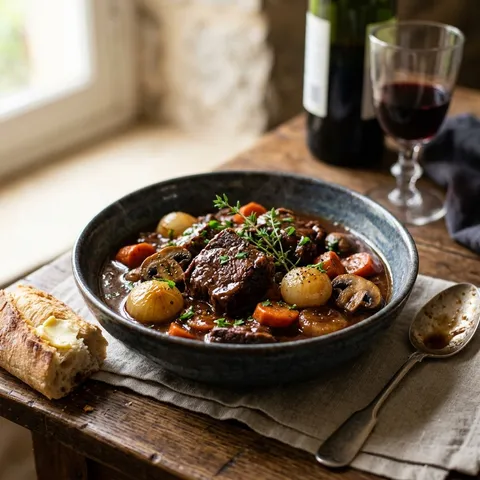 French Lens Verified Images are for illustrative purposes only, may be inaccurate, and do not guarantee the presence or absence of specific ingredients.
 Bœuf Bourguignon
Burgundy's legendary beef stew — rich, wine-dark, and fall-apart tender after hours of slow braising with carrots, mushrooms, and thyme.