 French Images are for illustrative purposes only, may be inaccurate, and do not guarantee the presence or absence of specific ingredients.
 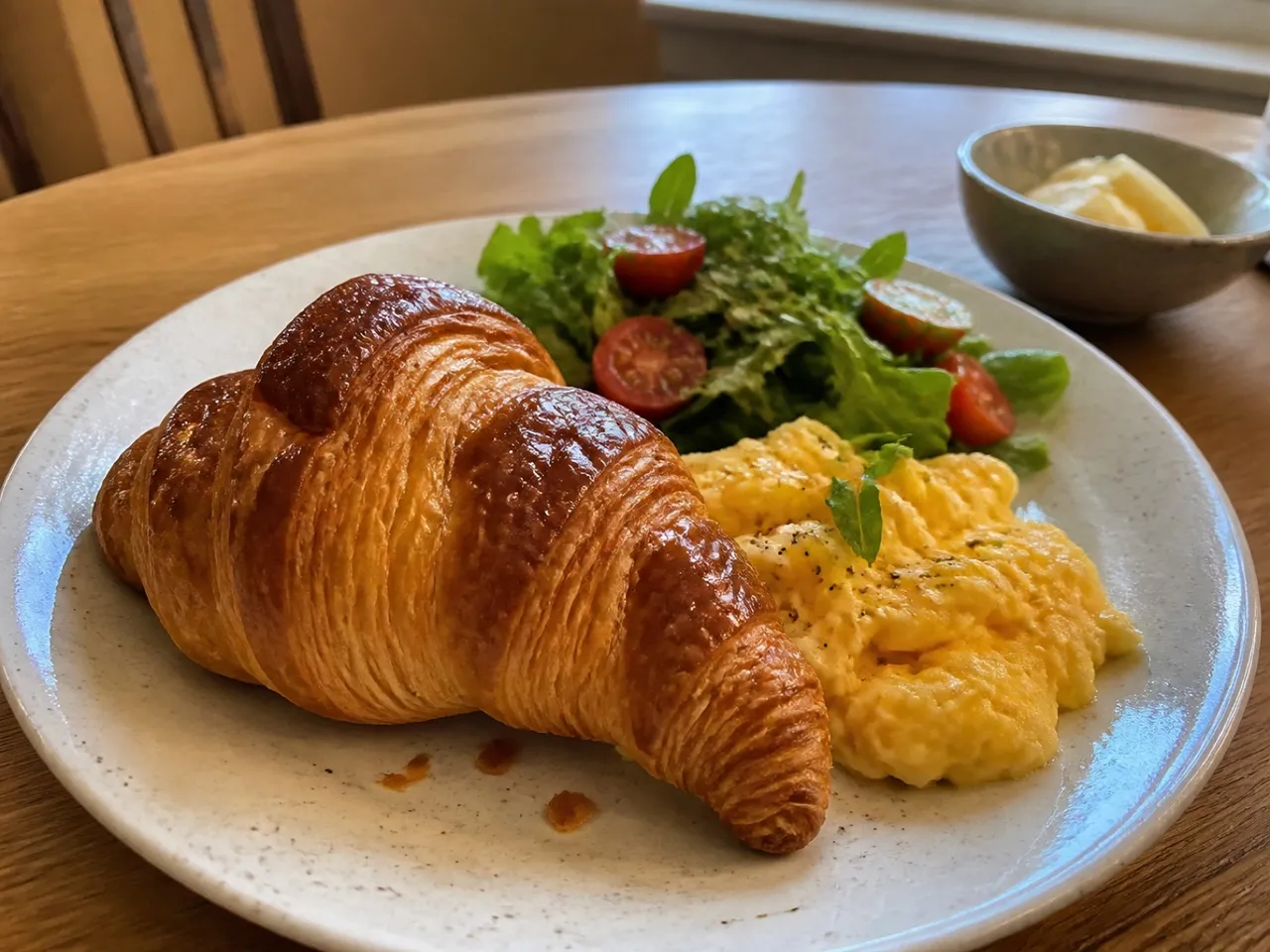 Serving Images are for illustrative purposes only, may be inaccurate, and do not guarantee the presence or absence of specific ingredients.
 Croissant
The buttery, flaky crescent-shaped French pastry built from dozens of delicate laminated layers.
Contains common allergens
In the app, Listahan checks these against your household automatically.
Good to know
- Crispy
Matched from this dish's own ingredients and timing. Browse more: crispy recipes
Instructions
6 steps- 1
Whisk the warm milk, sugar, and yeast together and let stand 5 minutes until foamy, then mix in the flour and salt to form a shaggy dough and knead just until smooth, about 3 minutes.
- 2
Shape the dough into a rectangle, wrap, and refrigerate at least 2 hours, while you pound the cold butter between parchment into a flat 6-inch square slab.
- 3
Roll the chilled dough into a large rectangle, place the butter slab in the center, fold the dough over it to enclose, then roll out and fold in thirds like a letter; chill 1 hour and repeat this fold twice more for laminated layers.
- 4
Roll the laminated dough into a long 1/4-inch-thick sheet, cut into tall thin triangles, then stretch and roll each from the base to the tip into a tight crescent.
- 5
Arrange the croissants on parchment-lined sheets, brush with beaten egg, and proof at warm room temperature for about 2 hours until visibly puffy and jiggly.
- 6
Brush again with egg wash and bake at 400°F for 18 to 22 minutes until deeply golden and crisp, then cool on a rack so the layers set.
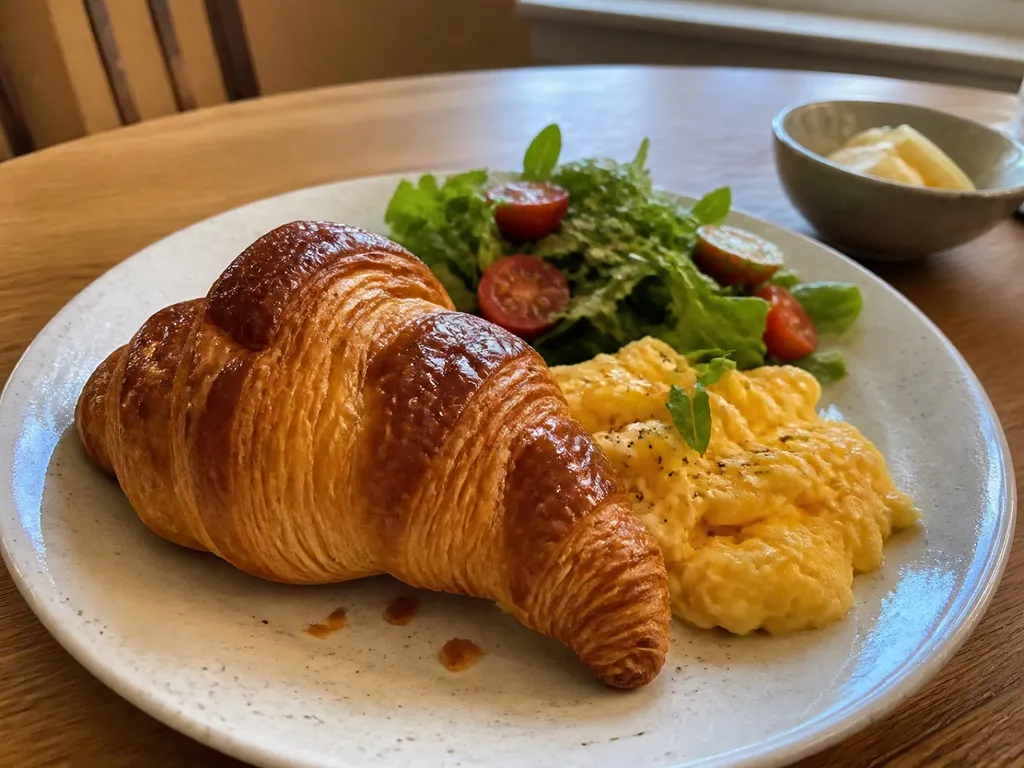 Images are for illustrative purposes only, may be inaccurate, and do not guarantee the presence or absence of specific ingredients.
 Listahan Family Score™
68/100
Works for many families
Score reflects how well this recipe fits a typical busy household. In the app, your Family Score is personalized to your household's allergens, kids, and pantry.
Nutrition
per serving1080
Calories
18 g
Protein
112 g
Carbs
62 g
Fat
Estimated per serving. Actual values depend on the brands and portions you use.
Listahan cooking guide
Chef notes & practical guide
Technique notes, ingredient swaps, serve-alongside ideas, storage guidance, and equipment for this recipe.
Cultural context
The croissant's ancestor is the Austrian kipferl, a crescent-shaped roll that Viennese bakers brought to Paris in the 1830s. French bakers transformed it by applying the technique of lamination -- folding butter repeatedly into the dough to create dozens of flaky layers -- which the kipferl never had. By the late 19th century the croissant had become synonymous with Parisian boulangerie culture, and today its production is regulated well enough that bakers distinguish between a 'croissant au beurre' (made with pure butter, straight ends) and a 'croissant ordinaire' (made with margarine, curved ends) -- a distinction enforced by French consumer law.
Listahan note
This version prioritizes the lamination process over speed; the long cold rests between folds are not optional, they are what creates the honeycomb interior that separates a real croissant from a bread roll shaped like one.
Technique cues
- Keep the butter block and the dough at the same temperature -- around 60 F -- when you laminate; if the butter is too cold it shatters and breaks through the dough layers, and if too warm it absorbs into the dough instead of forming separate sheets.
- After the final fold, refrigerate the shaped croissants overnight before baking; this slow cold proof develops flavor in the dough and firms the butter so the layers hold their structure in the oven's initial heat.
- Brush with egg wash twice -- once just after shaping and once right before baking -- the double coat builds the deep, shiny mahogany color that signals a properly made croissant.
Kitchen flow
- Parallel prep
- Prepare the butter block while the detrempe (initial dough) chills its first rest; by the time the dough is ready, the butter is at the right pliable temperature for lamination.
- Make-ahead
- After the final shaping, place croissants on parchment-lined trays, cover loosely, and refrigerate overnight; bake directly from the refrigerator the next morning after a 30-minute bench rest.
- Leftover move
- Day-old croissants are ideal for croissant bread pudding or for splitting, filling with ham and cheese, and crisping in a pan -- the slightly dry texture holds up much better than fresh.
- Cleanup rhythm
- Keep a bench scraper handy throughout lamination to fold any leaked butter back into the dough package and to keep the work surface clean between folds; wash the rolling pin immediately after each use before butter sets.
Ingredient brief
Role, handling, and swap guidance for each key ingredient.
bread flour
dough structure
Purpose: The higher protein content of bread flour creates enough gluten to hold the laminated layers together under the tension of folding without tearing.
Handling: Measure by weight rather than volume; even small variations in flour quantity significantly affect the dough's extensibility.
Adaptation: All-purpose flour works in a home setting but produces slightly less lift and a softer crumb; avoid cake or pastry flour.
European-style unsalted butter
lamination fat and flavor
Purpose: European butter has a higher fat content (82-84%) and lower water content than standard American butter, which means it layers more cleanly and produces crisper, more distinct layers.
Handling: Pound the cold butter into a flat square between sheets of parchment so it is pliable but still cold before beginning lamination.
Adaptation: High-quality American unsalted butter (at least 80% fat) is a workable substitute; avoid salted butter, which makes the dough's salt level hard to control.
whole milk
dough hydration and tenderness
Purpose: Milk fat enriches the dough and contributes to the golden color and tender bite of the finished crumb.
Handling: Warm to lukewarm (about 95 F) to activate the yeast without killing it; cold milk slows fermentation unpredictably.
Adaptation: Full-fat oat milk or soy milk produces a dairy-free dough with a slightly different crumb but comparable results.
instant yeast
leavening
Purpose: Yeast produces the carbon dioxide that inflates each buttery layer in the oven, creating the characteristic open, honeycomb interior.
Handling: Mix directly into the dry ingredients without proofing; instant yeast activates on contact with the liquid.
Adaptation: Active dry yeast works at the same quantity but should be dissolved in warm milk for 5 minutes before use.
granulated sugar
fermentation fuel and browning aid
Purpose: A small amount of sugar feeds the yeast and accelerates the Maillard reaction that produces the croissant's deep golden-brown crust.
Handling: Add directly to the flour with the salt, keeping them separate from the yeast until combined with liquid.
Adaptation: Honey at the same weight adds a subtle floral note but can make the dough slightly stickier during lamination.
Technique notes
- After cutting the triangles, let them rest for 10 minutes on the counter before rolling; dough that is still elastic will spring back during rolling and the croissants won't hold their shape.
- The proof is done when the croissants jiggle visibly -- not bounce, but wobble like jello -- when the pan is gently shaken; under-proofed croissants will not open into layers, they will just puff like a roll.
- Bake on a preheated heavy baking stone or sheet pan placed in the lower third of the oven; the bottom heat is critical for setting the base layers before the top browns.
Ingredient swaps
- Dairy-free direction
- Substitute full-fat oat milk in the dough and use a high-quality dairy-free butter block (look for one with at least 78% fat); the layers will be slightly less crisp but the croissant will hold its shape.
- Weeknight shortcut
- Use store-bought all-butter puff pastry rolled to 1/4-inch thickness, cut into triangles, and rolled into crescents; the flavor is not the same but the flakiness is comparable for a fraction of the effort.
Serve alongside
- Soft-scrambled eggs with chives
- Fresh fruit with creme fraiche
- Mixed green salad with Dijon vinaigrette
- Cafe au lait
- Freshly squeezed orange juice
- Earl Grey tea
Serving suggestions only — check pairings for your household's allergens.
Storage & reheating
- Baked croissants are best eaten within 4 hours; store at room temperature loosely covered -- never in plastic, which traps steam and softens the crust.
- Freeze fully cooled croissants in a zip-lock bag for up to 1 month; reheat from frozen at 350 F for 12-15 minutes directly on the oven rack to restore crispness.
Equipment
- French-style tapered rolling pin (no handles) -- gives better pressure control during lamination without compressing the edges unevenly
- Bench scraper -- essential for folding leaked butter back into the package and transferring shaped croissants without stretching
- Pastry brush -- for the two-coat egg wash that builds the shiny, deep-colored crust
Make this household-aware
Listahan Pro checks this recipe against your household's allergens, finds pantry-aware swaps, builds the shopping list, and helps you plan the week around it.
Plan it in Listahan
Add Croissant to your week, check it against your household's allergens, and build the shopping list automatically.
More French recipes
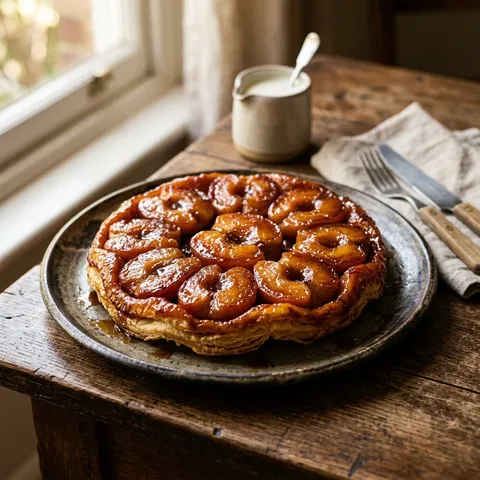 French Lens Verified Images are for illustrative purposes only, may be inaccurate, and do not guarantee the presence or absence of specific ingredients.
 Tarte Tatin
Apples cooked in caramel until jammy and burnished, then flipped onto buttery pastry — a rustic upside-down tart from the Loire Valley.
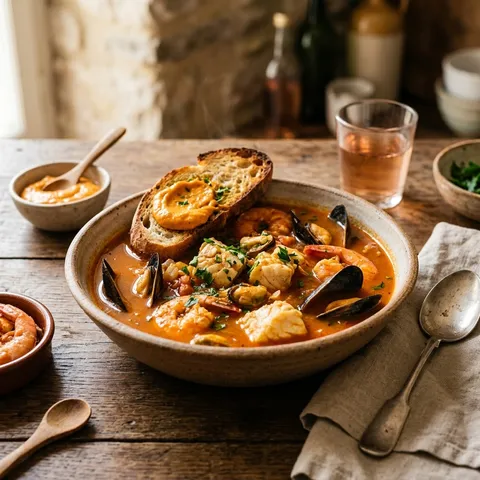 French Lens Verified Images are for illustrative purposes only, may be inaccurate, and do not guarantee the presence or absence of specific ingredients.
 Bouillabaisse
Marseille's legendary saffron-scented fisherman's stew, brimming with fresh seafood and served with garlicky rouille on toasted baguette.
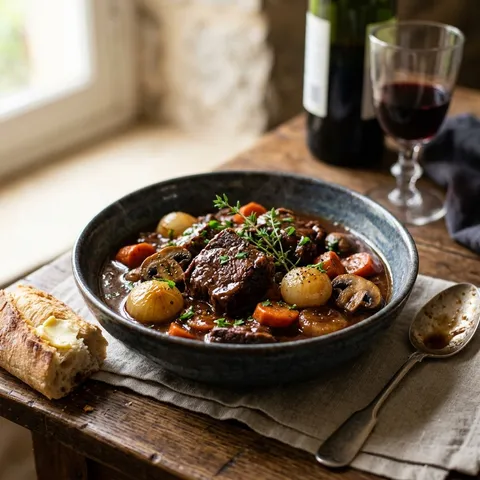 French Lens Verified Images are for illustrative purposes only, may be inaccurate, and do not guarantee the presence or absence of specific ingredients.
 Bœuf Bourguignon
Burgundy's legendary beef stew — rich, wine-dark, and fall-apart tender after hours of slow braising with carrots, mushrooms, and thyme.