 French Images are for illustrative purposes only, may be inaccurate, and do not guarantee the presence or absence of specific ingredients.
 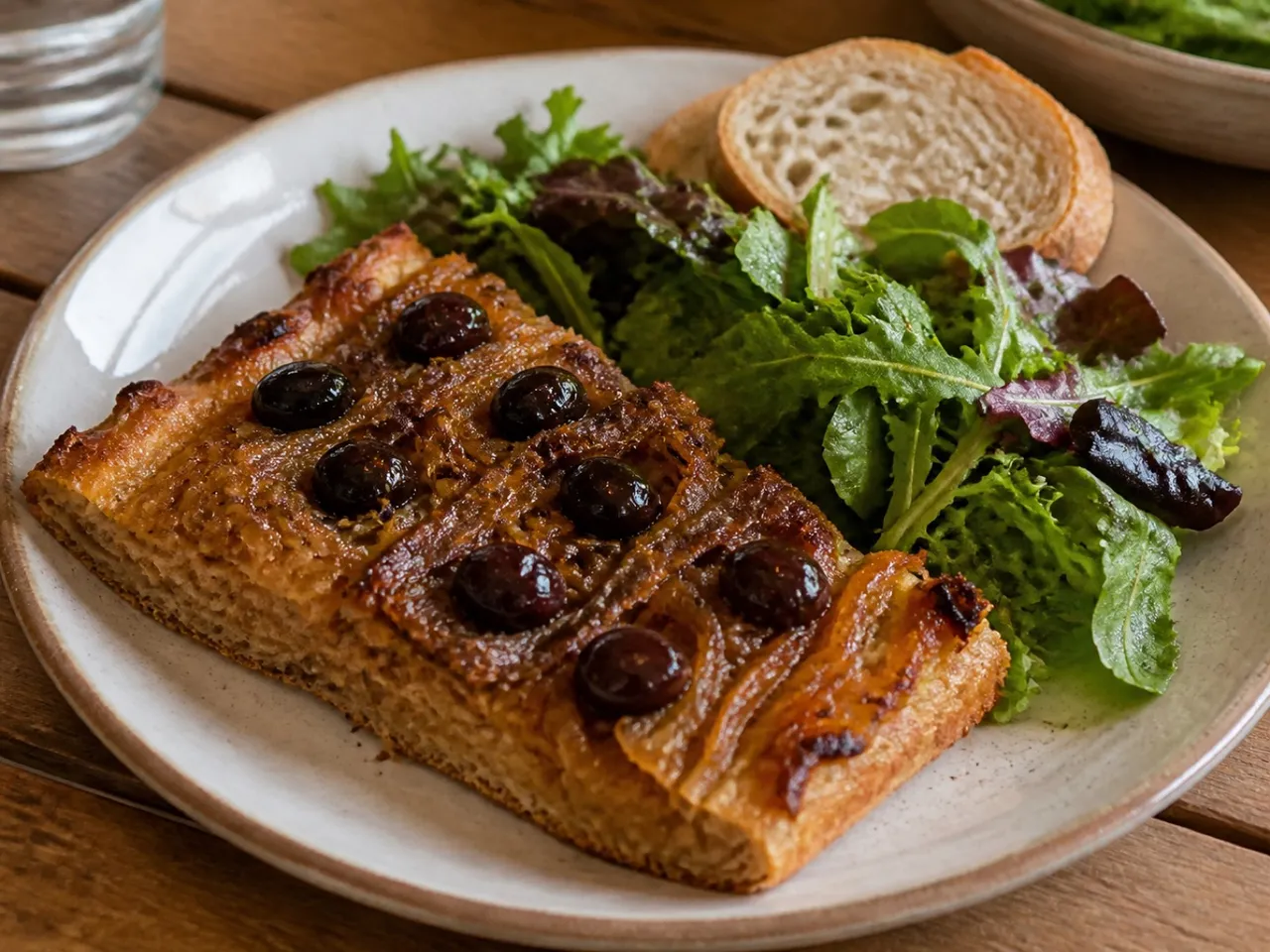 Serving Images are for illustrative purposes only, may be inaccurate, and do not guarantee the presence or absence of specific ingredients.
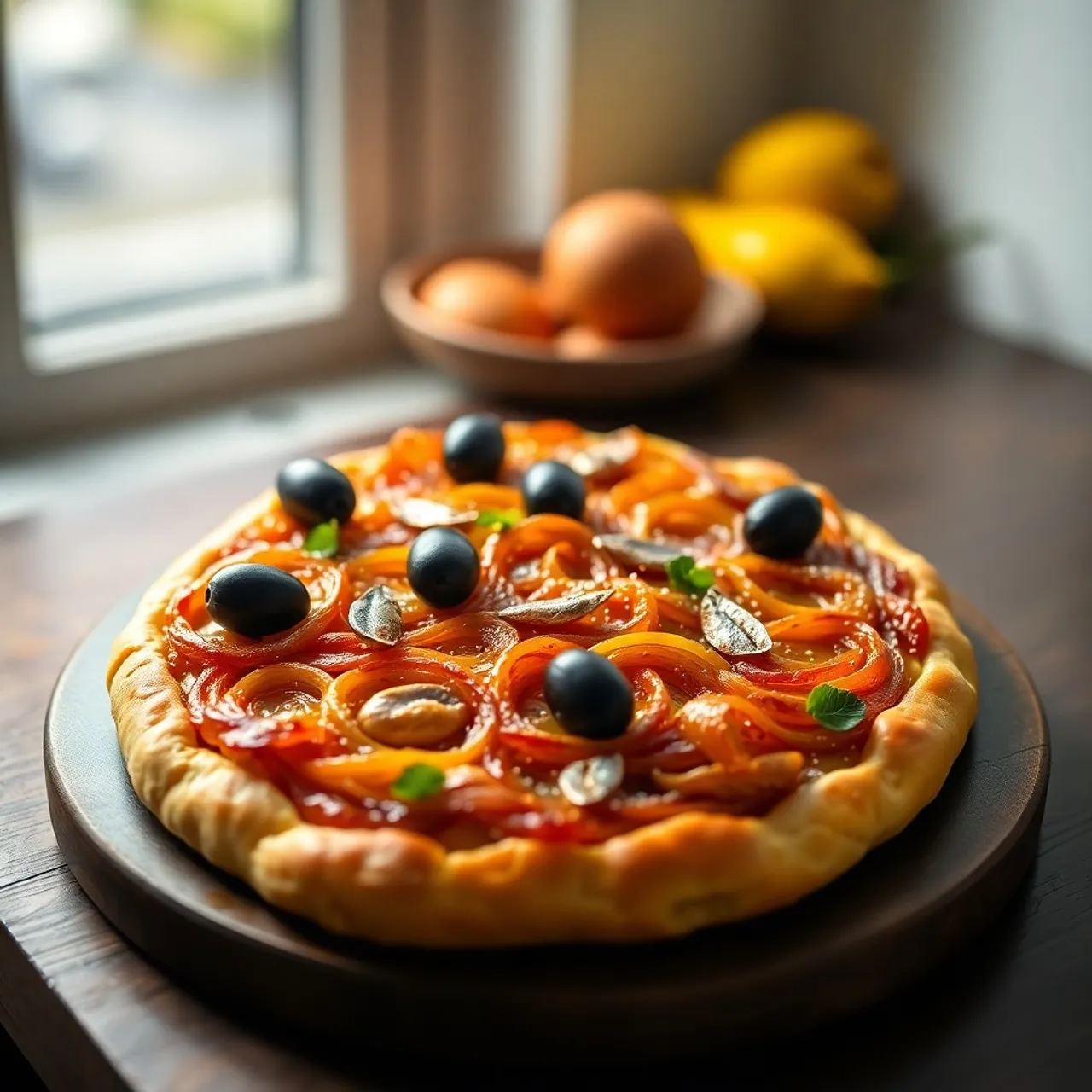
 Pissaladière
Nice's beloved onion tart: a thick olive oil dough piled with slow-caramelized onions, briny black olives, and anchovy fillets.
Contains common allergens
In the app, Listahan checks these against your household automatically.
Instructions
6 steps- 1
Heat the olive oil in a large skillet over very low heat. Add the sliced onions, thyme, and bay leaf.
- 2
Cook the onions slowly, stirring occasionally, until they are reduced to a deeply sweet, soft, caramelized marmalade (this will take 45-60 minutes). Do not let them brown aggressively. Remove the herbs and cool slightly.
- 3
Preheat the oven to 400°F (200°C). Oil a baking sheet.
- 4
Stretch or roll the dough out to a rectangular shape, about 1/4 inch thick, and place it on the baking sheet.
- 5
Spread the caramelized onion purée evenly over the dough, right to the edges.
- 6
Arrange the anchovy fillets in a decorative crisscross lattice pattern over the onions. Place a black olive in the center of each diamond. Bake for 20-25 minutes until the crust is golden and crisp. Serve warm or at room temperature.
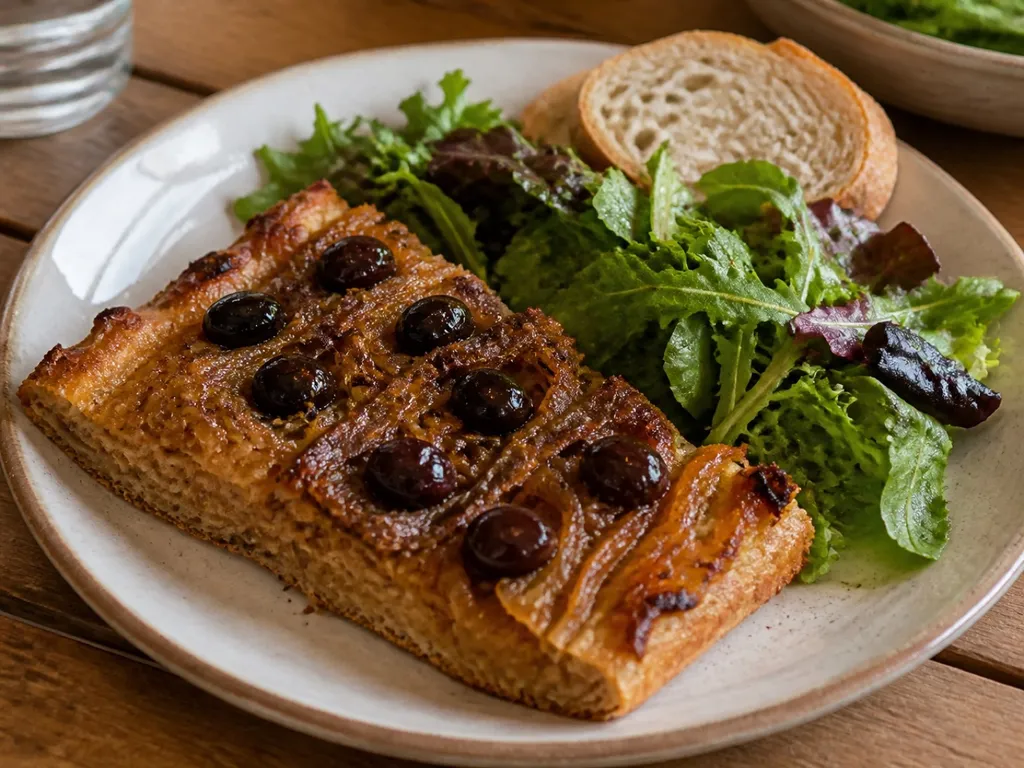 Images are for illustrative purposes only, may be inaccurate, and do not guarantee the presence or absence of specific ingredients.
 Listahan Family Score™
64/100
Works for many families
Score reflects how well this recipe fits a typical busy household. In the app, your Family Score is personalized to your household's allergens, kids, and pantry.
Nutrition
per serving265
Calories
6 g
Protein
25 g
Carbs
16 g
Fat
Estimated per serving. Actual values depend on the brands and portions you use.
Listahan cooking guide
Chef notes & practical guide
Technique notes, ingredient swaps, serve-alongside ideas, storage guidance, and equipment for this recipe.
Cultural context
Pissaladière is the signature flatbread of Nice and the surrounding Ligurian coast, its name derived from pissala, the local fermented anchovy condiment that gives the tart its distinctive salty backbone. Unlike pizza, with which it shares a dough base, pissaladière is defined by a thick layer of onions slow-cooked to near-jam consistency, a lattice of salt-cured anchovies, and the briny punctuation of Nicoise olives — there is no tomato and no melted cheese. It occupies a cultural position between street food and first course, sold by the slice at bakeries throughout the old town of Nice each morning.
Listahan note
This version lingers on the caramelized onion layer, cooking them low and slow for a full 45 minutes until they collapse into a sweet, deeply savory spread that anchors everything above it.
Technique cues
- Cook the onions on the lowest possible heat with a lid on for the first 20 minutes to let them sweat without browning, then remove the lid for the final 20 minutes to evaporate the liquid and concentrate their sweetness.
- Rinse salt-packed anchovies under cold water and pat dry before using; they will still be intensely flavorful but will not overwhelm the dish with fishiness if their surface salt is removed.
- Press the dough into the pan with oiled fingers rather than rolling it; the slight thickness and dimpling hold the onion layer in place and keep it from sliding during baking.
Kitchen flow
- Parallel prep
- Start the onions first since they take 45 minutes; mix and rest the dough while they cook so both are ready at the same time.
- Make-ahead
- Caramelize the onions up to 3 days ahead and refrigerate; assemble and bake the pissaladière on serving day.
- Leftover move
- Leftover pissaladiere reheats beautifully in a 350 F oven for 8 minutes; it also makes an excellent room-temperature lunch packed for the next day.
- Cleanup rhythm
- The onion pan requires a thorough soak since the sugars caramelize onto the bottom; use a splash of water and a wooden spoon while still hot to deglaze the fond.
Ingredient brief
Role, handling, and swap guidance for each key ingredient.
yellow onions
primary topping
Purpose: The caramelized onions are not a condiment but the body of the dish; their sweetness offsets the saltiness of the anchovies.
Handling: Slice thinly and evenly so they cook at the same rate; a mandoline speeds this up considerably.
Adaptation: Sweet onions like Vidalia caramelize even faster and add more sugar.
anchovy fillets
salt and umami
Purpose: Anchovies provide the defining salty-savory character that gives pissaladière its name and distinguishes it from pizza.
Handling: Lay in a classic crosshatch pattern over the onions after baking begins so they do not burn under the oven's direct heat.
Adaptation: Capers mashed with a little salt can stand in for a pescatarian-friendly version without anchovies.
Nicoise olives
briny accent
Purpose: Small, slightly bitter Nicoise olives balance the sweet onions and echo the salty anchovies without being as intense.
Handling: Pit before using; press the flat of a knife against each olive and the pit pops out easily.
Adaptation: Kalamata olives work well; avoid large green olives whose flavor profile is too mild.
olive oil
cooking fat and dough enrichment
Purpose: Olive oil is used at every stage — sweating the onions, enriching the dough, and finishing the tart — giving pissaladière its Mediterranean character.
Handling: Use a good-quality Provence-style olive oil with some fruitiness for the finishing drizzle.
Adaptation: Avocado oil can replace it for high-heat cooking but the flavor will be more neutral.
fresh thyme
herbal accent
Purpose: Thyme added to the onions as they cook imparts a subtle earthiness that ties the savory topping together.
Handling: Add whole sprigs during cooking and remove before spreading on the dough.
Adaptation: Dried thyme works at about half the quantity; fresh rosemary is a more assertive but traditional alternative.
Technique notes
- The onions must be completely cooled before spreading on the dough or the heat will begin cooking the dough unevenly and prevent proper crust formation in the oven.
- For a crisper base, preheat the baking pan or pizza stone in the oven and slide the assembled pissaladiere onto it; the bottom crust will set before the toppings can make it soggy.
- Cut into rectangles rather than wedges for serving; it holds its shape better and is traditional to how it is sold at Nicoise bakeries.
Ingredient swaps
- Gluten-free direction
- Use a GF flatbread dough or press GF pizza dough into the pan; the generous topping ratio means texture variations in the crust are less noticeable.
- Vegetarian direction
- Replace anchovies with a paste of mashed capers, a few drops of soy sauce, and olive oil for a umami-forward topping without fish.
- Weeknight shortcut
- Store-bought pizza dough and pre-caramelized onion jam cuts active prep to under 20 minutes.
Serve alongside
- Simple mesclun salad with lemon and olive oil
- Sliced ripe tomatoes with sea salt and basil
- Tapenade with toasted crostini
- Provencal rose from Bandol or Cotes de Provence
- Sparkling Perrier with a slice of lemon
Serving suggestions only — check pairings for your household's allergens.
Storage & reheating
- Keeps at room temperature for several hours; refrigerate for up to 3 days wrapped in foil.
- Reheat in a 350 F oven uncovered; avoid the microwave which softens the crust.
Equipment
- Large heavy skillet or Dutch oven for caramelizing the onions slowly
- Rimmed baking sheet or rectangular tart pan for shaping and baking
- Mandoline for slicing onions thinly and evenly
- Offset spatula for spreading the onion layer without disturbing the dough
Make this household-aware
Listahan Pro checks this recipe against your household's allergens, finds pantry-aware swaps, builds the shopping list, and helps you plan the week around it.
Plan it in Listahan
Add Pissaladière to your week, check it against your household's allergens, and build the shopping list automatically.
More French recipes
 French Lens Verified Images are for illustrative purposes only, may be inaccurate, and do not guarantee the presence or absence of specific ingredients.
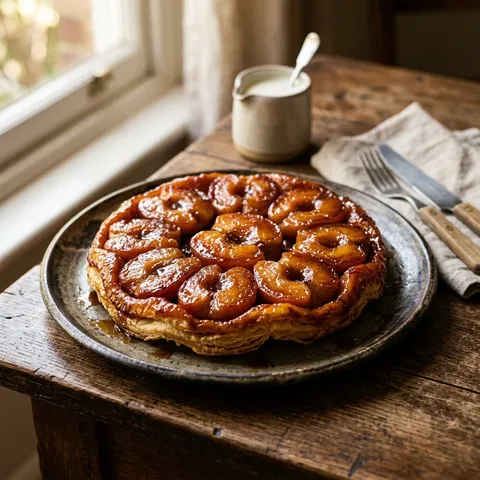
 Tarte Tatin
Apples cooked in caramel until jammy and burnished, then flipped onto buttery pastry — a rustic upside-down tart from the Loire Valley.
 French Lens Verified Images are for illustrative purposes only, may be inaccurate, and do not guarantee the presence or absence of specific ingredients.
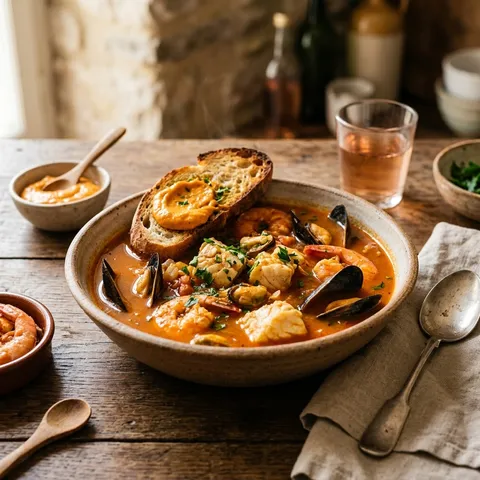
 Bouillabaisse
Marseille's legendary saffron-scented fisherman's stew, brimming with fresh seafood and served with garlicky rouille on toasted baguette.
 French Lens Verified Images are for illustrative purposes only, may be inaccurate, and do not guarantee the presence or absence of specific ingredients.
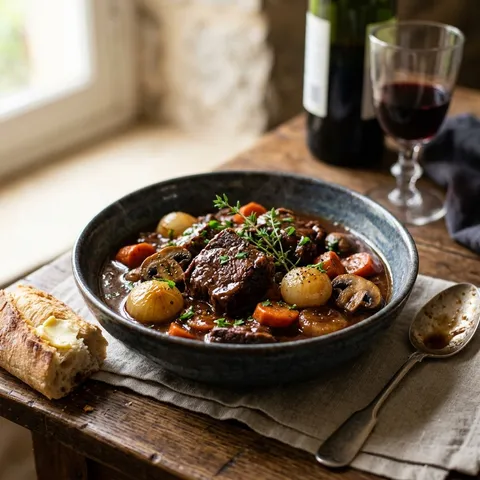
 Bœuf Bourguignon
Burgundy's legendary beef stew — rich, wine-dark, and fall-apart tender after hours of slow braising with carrots, mushrooms, and thyme.