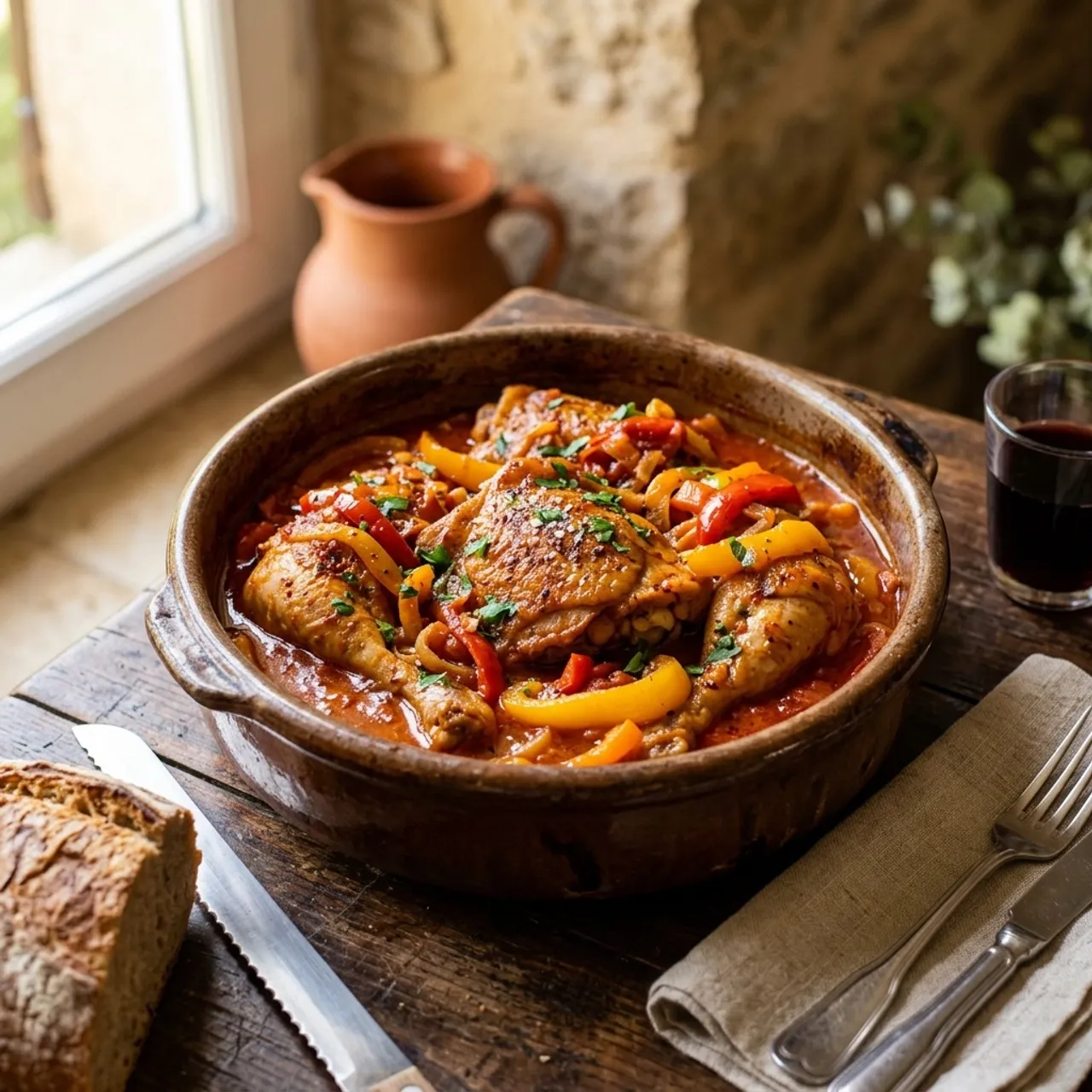
 French Images are for illustrative purposes only, may be inaccurate, and do not guarantee the presence or absence of specific ingredients.
 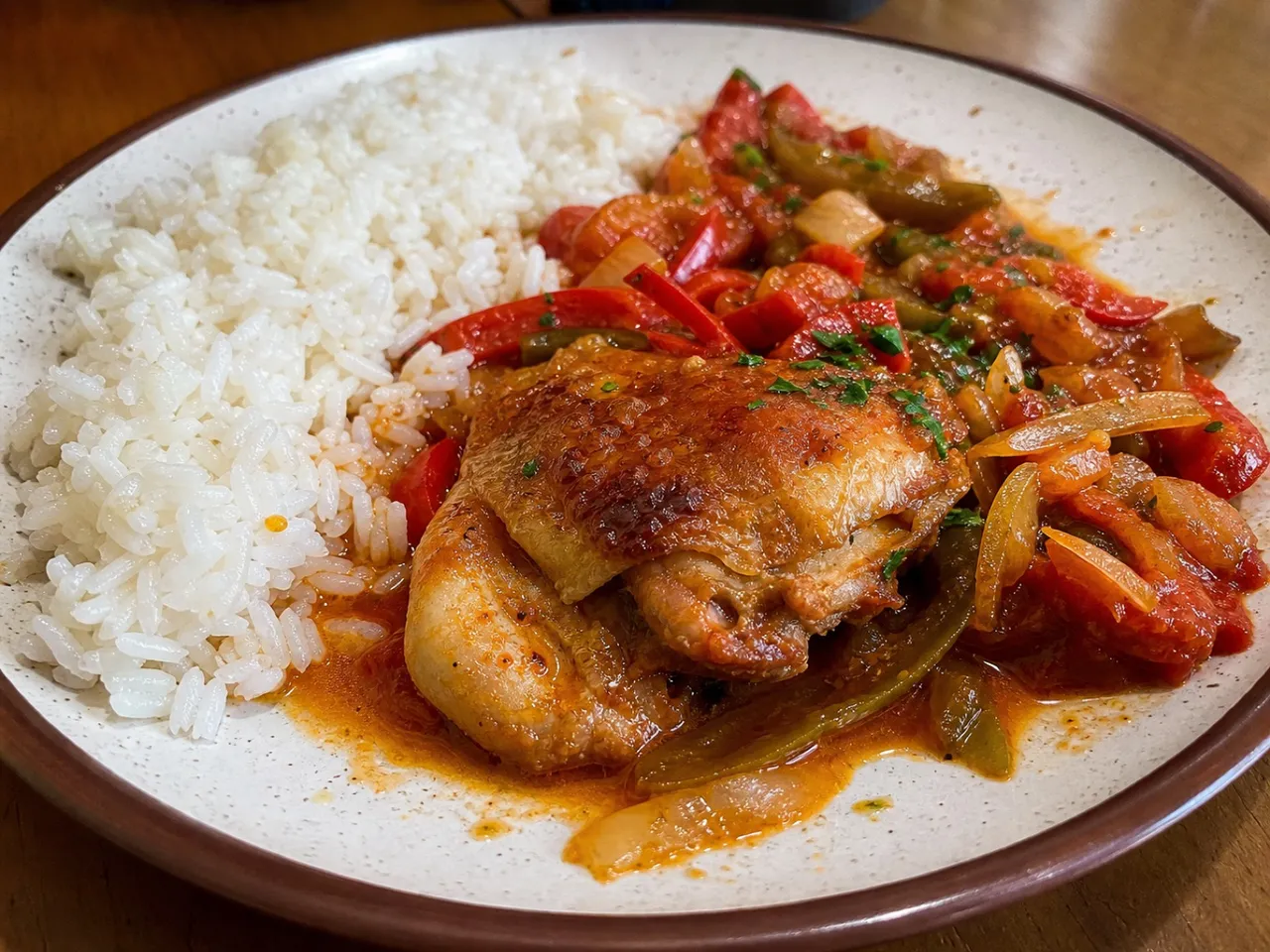 Serving Images are for illustrative purposes only, may be inaccurate, and do not guarantee the presence or absence of specific ingredients.
 Poulet Basque
Chicken braised with roasted red peppers, ripe tomatoes, white wine, and Espelette pepper in a vibrant, satisfying Basque country sauce.
No common allergens detected
Based on this recipe's ingredient list. Always verify with your own brands and labels.
Good to know
- One-pot
Matched from this dish's own ingredients and timing. Browse more: one-pot dinners
Instructions
6 steps- 1
Season the chicken pieces generously with salt and pepper. Heat olive oil in a heavy Dutch oven over medium-high heat.
- 2
Brown the chicken pieces skin-side down until deep golden brown, then flip and brown the other side (about 10 minutes total). Remove to a plate.
- 3
In the same pot, add the sliced onions and bell peppers. Sauté over medium heat until they begin to soften (about 8 minutes). Add the minced garlic and cook for 1 minute.
- 4
Stir in the chopped tomatoes, white wine, Espelette pepper, and fresh thyme. Scrape the bottom of the pot to release any browned bits.
- 5
Nestle the chicken pieces back into the vegetable mixture, along with any accumulated juices.
- 6
Cover the pot, lower the heat, and simmer gently for 40-45 minutes until the chicken is cooked through and tender. Serve with rice or crusty bread to soak up the vibrant sauce.
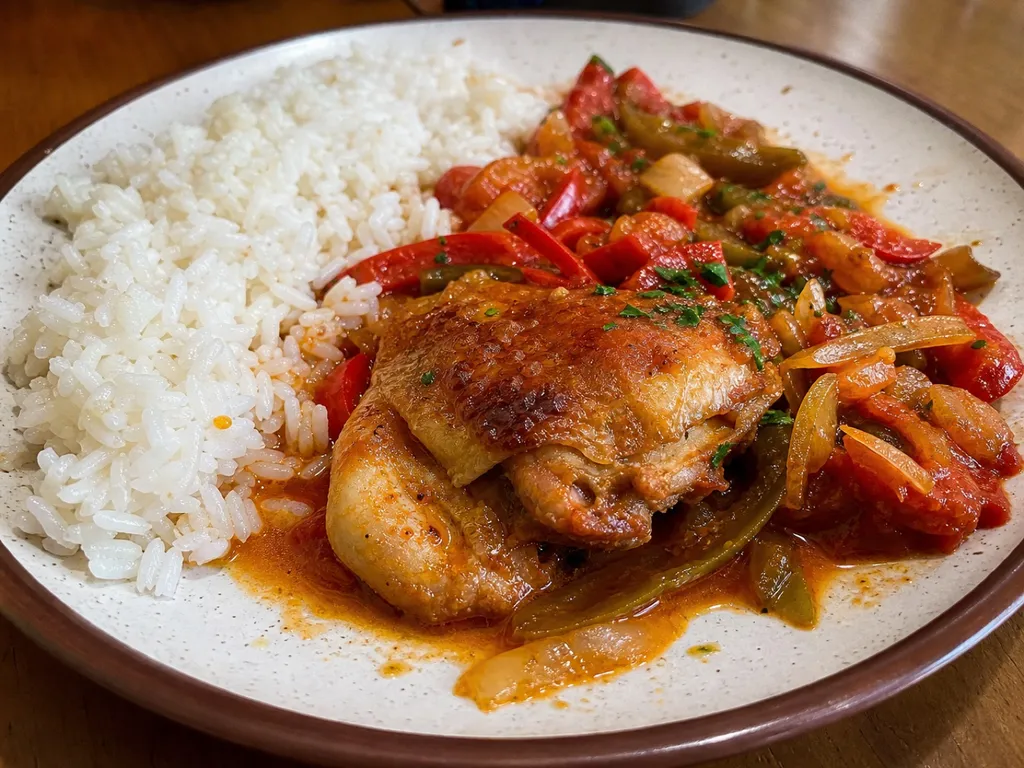 Images are for illustrative purposes only, may be inaccurate, and do not guarantee the presence or absence of specific ingredients.
 Listahan Family Score™
68/100
Works for many families
Score reflects how well this recipe fits a typical busy household. In the app, your Family Score is personalized to your household's allergens, kids, and pantry.
Nutrition
per serving90
Calories
2 g
Protein
14 g
Carbs
1 g
Fat
Estimated per serving. Actual values depend on the brands and portions you use.
Listahan cooking guide
Chef notes & practical guide
Technique notes, ingredient swaps, serve-alongside ideas, storage guidance, and equipment for this recipe.
Cultural context
Poulet Basque comes from the Basque Country, the culturally distinct region straddling the border between southwestern France and northern Spain. It is sometimes called 'poulet a la Basquaise,' and its identity rests on the Basque culinary holy trinity of tomatoes, sweet peppers, and cured ham — the same base that defines piperade, the region's signature pepper and tomato stew. The Basque people have their own language, Euskara, which has no known relatives, and their cooking shares that same distinctiveness: more piquant and pepper-forward than the rest of France, with Spanish influences that appear in the paprika and ham.
Listahan note
This version leans into the pepper base and uses a generous amount of smoked paprika to bring out the characteristically warm, sweet-smoky Basque flavor without requiring Espelette pepper.
Technique cues
- Brown the chicken pieces skin-side down in olive oil over medium-high heat until deeply golden before removing them — the fond left in the pan is the foundation of the sauce and should be dark but not burnt.
- Cook the peppers and onions long enough — at least 15 minutes over medium heat — so they fully soften and almost melt into the tomato sauce; undercooked peppers give the dish a raw, crunchy texture that does not belong.
- Add the chicken back to the sauce, cover, and braise over low heat so the sauce bubbles gently; the chicken will finish cooking in the sauce rather than in the oven, which keeps it moist and allows it to absorb the pepper flavors.
Kitchen flow
- Parallel prep
- While the chicken browns, prep and cut the peppers and onions; the fond left from the chicken goes directly into the pepper saute.
- Make-ahead
- Poulet Basque improves the next day; make it ahead and refrigerate, then reheat gently on the stovetop for 15 minutes before serving.
- Leftover move
- Shred leftover chicken into the sauce and serve over soft polenta or rice for a weeknight meal that feels completely different from the original.
- Cleanup rhythm
- Everything cooks in one wide, deep skillet or Dutch oven from browning through braising; minimal washing up.
Ingredient brief
Role, handling, and swap guidance for each key ingredient.
bone-in chicken pieces
main protein
Purpose: Bone-in pieces stay moist through a long braise and contribute collagen to the sauce, giving it body beyond just the tomato base.
Handling: Pat dry and season with salt and pepper at least 20 minutes before browning.
Adaptation: Bone-in chicken thighs alone are the most practical choice; they are more forgiving than breast pieces in a braised preparation.
red and green bell peppers
defining aromatic base
Purpose: Sweet peppers, softened into the sauce, are what makes this dish Basque rather than just French chicken stew — they provide the characteristic gentle sweetness and body.
Handling: Remove seeds and ribs, cut into 1-inch strips, and cook in olive oil until completely soft before adding tomatoes.
Adaptation: Jarred roasted red peppers, added directly with the tomatoes, give a deeper, sweeter flavor with less prep time.
whole peeled tomatoes
sauce base
Purpose: Tomatoes break down into a sauce that surrounds the chicken and peppers with acidity and a slightly sweet, cooked tomato flavor.
Handling: Crush by hand directly over the pan after draining; irregular pieces break down during cooking for a rustic, chunky texture.
Adaptation: Ripe fresh tomatoes, roughly diced, work beautifully in summer; use two pounds for the equivalent of one 28-ounce can.
Bayonne ham or prosciutto
salty, cured depth
Purpose: A few slices of cured ham stirred into the sauce season it deeply and add the pork richness that bridges the gap between the peppers and the chicken.
Handling: Cut into small pieces and stir in early so it has time to meld into the sauce.
Adaptation: Serrano ham is the closest Spanish equivalent; bacon lardons are a more available substitute with a smokier flavor.
smoked paprika (pimenton)
smoky warmth
Purpose: Smoked paprika brings the characteristic warm, slightly smoky dimension that is the defining flavor note of Basque cuisine outside the region.
Handling: Add to the oil before adding peppers so it blooms in the fat and loses its raw powder taste.
Adaptation: Piment d'Espelette (Basque chili powder) is the authentic seasoning — use half the amount since it is somewhat hotter and more pungent.
Technique notes
- Deglaze the pan with a splash of dry white wine after browning the chicken and scrape up all the fond before adding the peppers — that layer of stuck bits is concentrated chicken flavor and should not be left behind.
- Taste the sauce before returning the chicken and adjust acidity with a pinch of sugar if the tomatoes are sharp, or brighten with a squeeze of lemon at the end if it tastes flat.
- Garnish with good olives stirred in at the end (not cooked with the dish) — they add a clean brininess that cuts through the richness and is very Provencal-Basque in character.
Ingredient swaps
- Gluten-free direction
- All components are naturally gluten-free; serve over rice or polenta instead of bread.
- Dairy-free direction
- No dairy is used in the traditional recipe; this dish is naturally dairy-free.
- Lower-sodium direction
- Reduce or omit the Bayonne ham and use less salt in the initial seasoning; taste the finished sauce before any final seasoning.
Serve alongside
- Steamed white rice
- Crispy roasted potatoes
- Crusty baguette
- Basque white Txakoli wine
- Sparkling water with a slice of lemon
Serving suggestions only — check pairings for your household's allergens.
Storage & reheating
- Refrigerate in an airtight container for up to 3 days; the pepper sauce deepens in flavor overnight.
- Freeze for up to 2 months; thaw in the refrigerator and reheat gently on the stovetop, adding a small splash of water or stock if the sauce has thickened.
Equipment
- Wide, deep skillet or Dutch oven with a lid
- Tongs for browning and turning chicken
- Wooden spoon for scraping up the fond
Make this household-aware
Listahan Pro checks this recipe against your household's allergens, finds pantry-aware swaps, builds the shopping list, and helps you plan the week around it.
Plan it in Listahan
Add Poulet Basque to your week, check it against your household's allergens, and build the shopping list automatically.
More French recipes
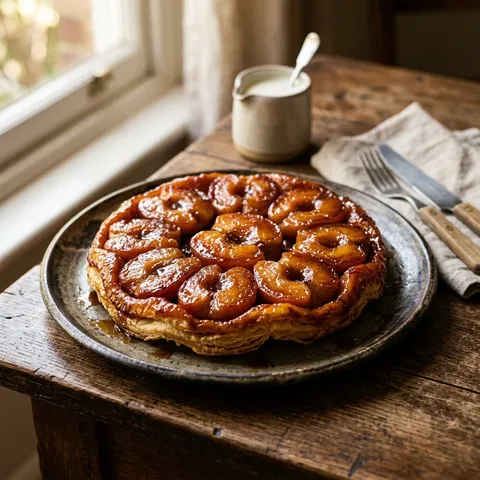 French Lens Verified Images are for illustrative purposes only, may be inaccurate, and do not guarantee the presence or absence of specific ingredients.
 Tarte Tatin
Apples cooked in caramel until jammy and burnished, then flipped onto buttery pastry — a rustic upside-down tart from the Loire Valley.
 French Lens Verified Images are for illustrative purposes only, may be inaccurate, and do not guarantee the presence or absence of specific ingredients.
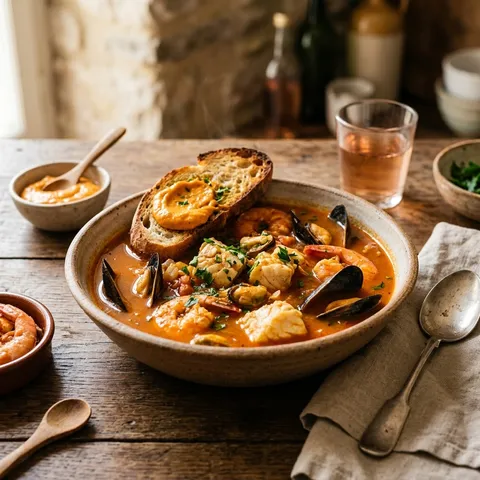
 Bouillabaisse
Marseille's legendary saffron-scented fisherman's stew, brimming with fresh seafood and served with garlicky rouille on toasted baguette.
 French Lens Verified Images are for illustrative purposes only, may be inaccurate, and do not guarantee the presence or absence of specific ingredients.
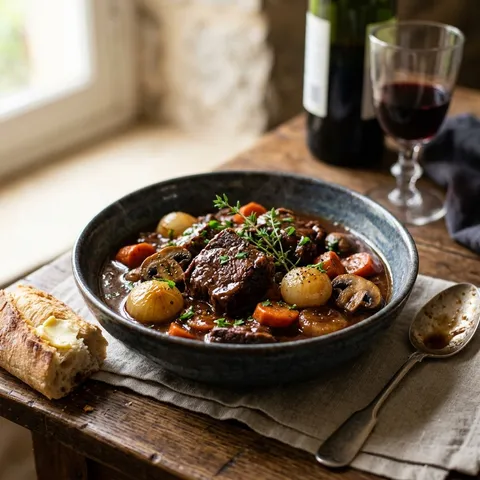
 Bœuf Bourguignon
Burgundy's legendary beef stew — rich, wine-dark, and fall-apart tender after hours of slow braising with carrots, mushrooms, and thyme.