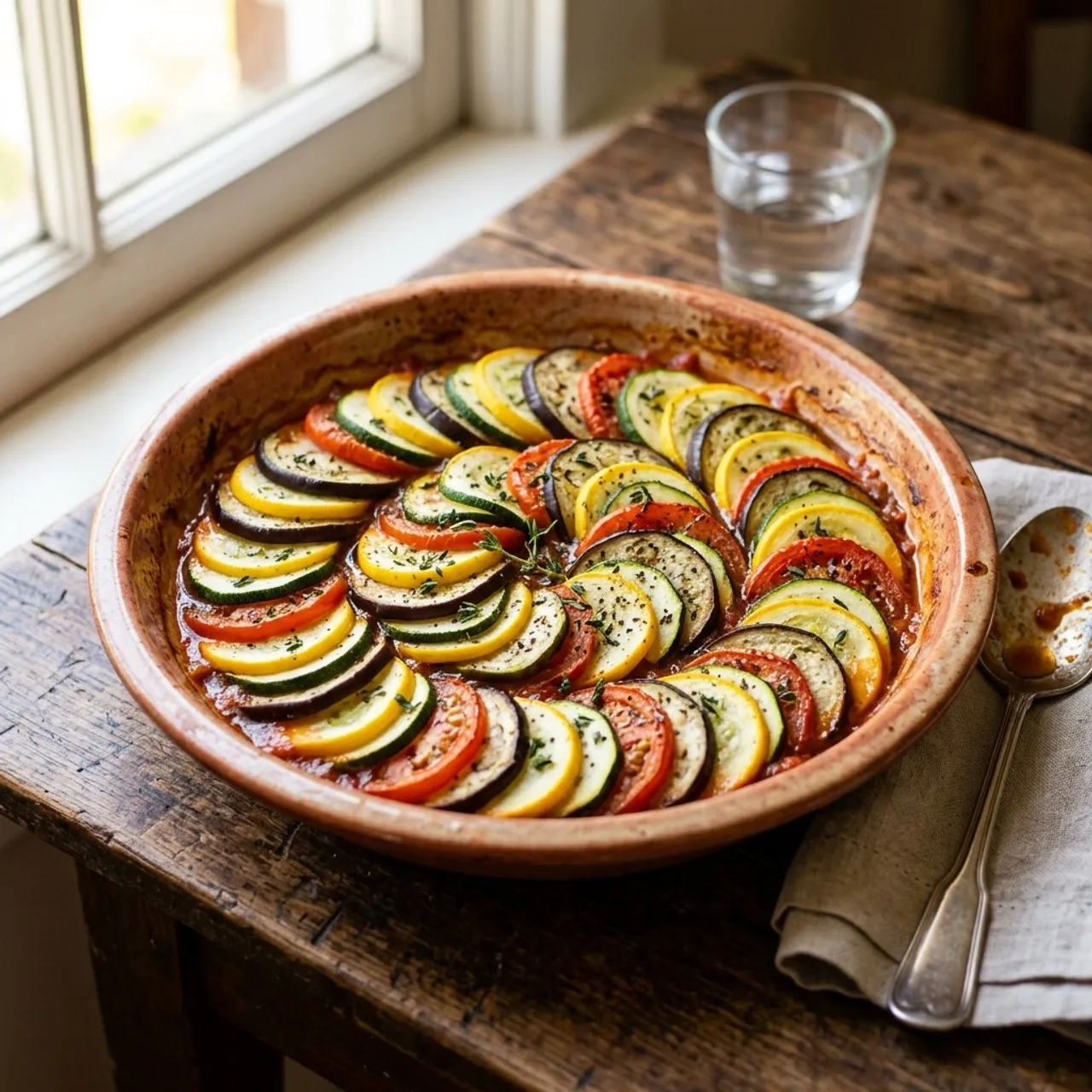
 French Images are for illustrative purposes only, may be inaccurate, and do not guarantee the presence or absence of specific ingredients.
 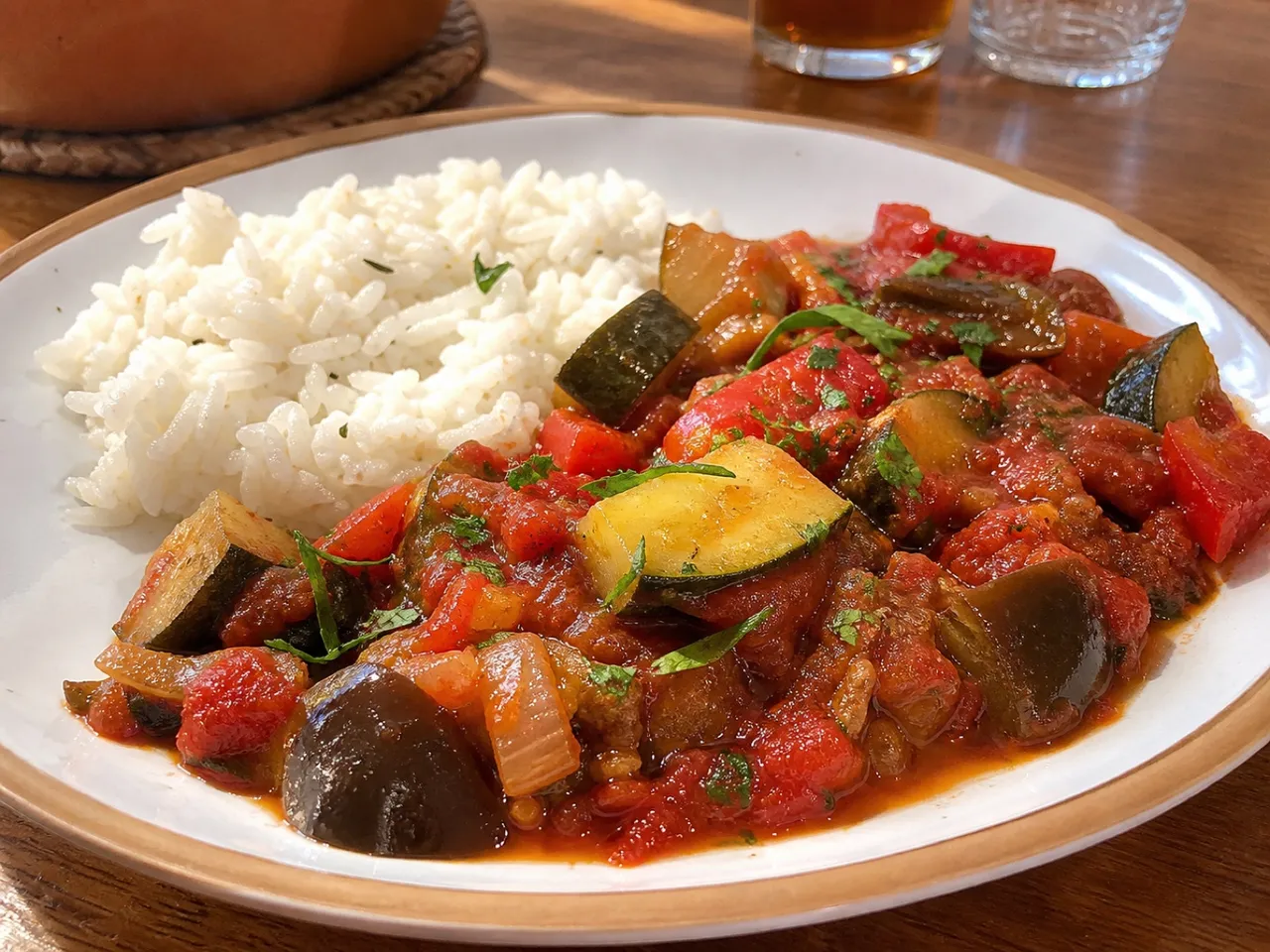 Serving Images are for illustrative purposes only, may be inaccurate, and do not guarantee the presence or absence of specific ingredients.
 Ratatouille
Provençal summer at its best: zucchini, eggplant, and tomatoes slow-stewed in olive oil with garlic and herbs until silky and fragrant.
No common allergens detected
Based on this recipe's ingredient list. Always verify with your own brands and labels.
Instructions
6 steps- 1
Heat 2 tablespoons of olive oil in a large skillet over medium-high heat. Sauté the diced eggplant until golden and tender. Remove and set aside.
- 2
In the same pan, sauté the zucchini and bell peppers until slightly softened. Remove and set aside with the eggplant.
- 3
Add a little more oil and cook the onions until translucent. Stir in the minced garlic and cook for 1 minute until fragrant.
- 4
Add the chopped tomatoes, fresh thyme, and season with salt and pepper. Simmer for 15 minutes until the tomatoes break down into a thick sauce.
- 5
Return the cooked vegetables to the pan, cover, and simmer over low heat for 30-40 minutes so the flavors mingle and the vegetables become silky.
- 6
Garnish generously with torn fresh basil before serving.
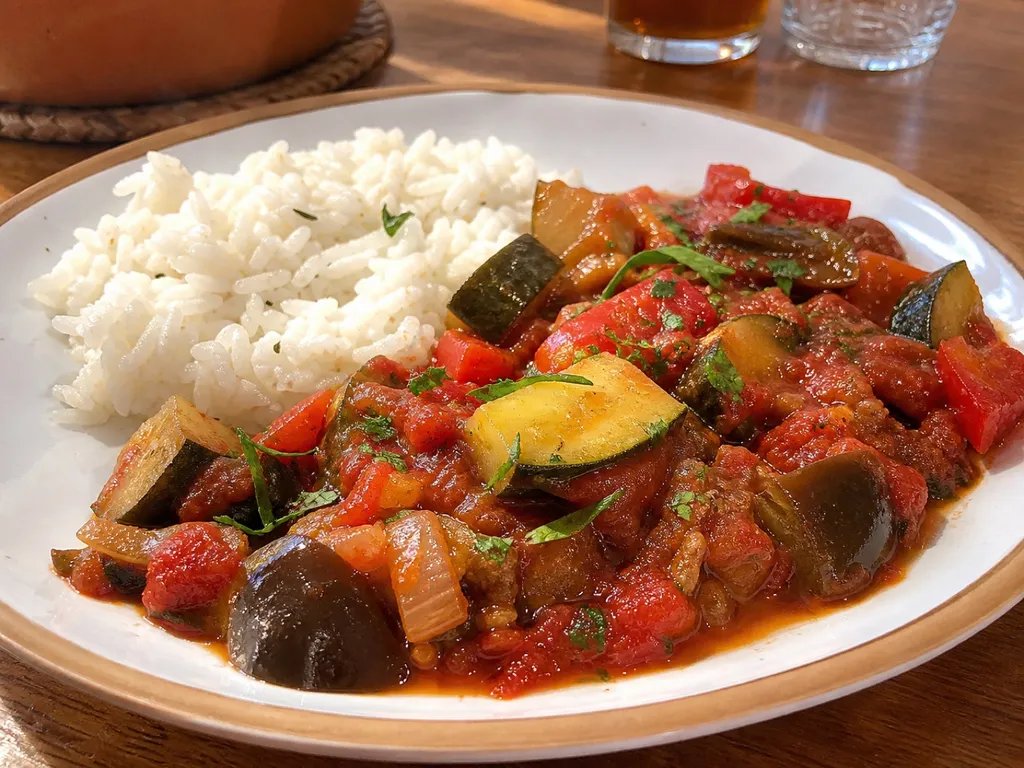 Images are for illustrative purposes only, may be inaccurate, and do not guarantee the presence or absence of specific ingredients.
 Listahan Family Score™
74/100
Good fit for most families
Score reflects how well this recipe fits a typical busy household. In the app, your Family Score is personalized to your household's allergens, kids, and pantry.
Nutrition
per serving220
Calories
5 g
Protein
22 g
Carbs
14 g
Fat
Estimated per serving. Actual values depend on the brands and portions you use.
Listahan cooking guide
Chef notes & practical guide
Technique notes, ingredient swaps, serve-alongside ideas, storage guidance, and equipment for this recipe.
Cultural context
Ratatouille originated in Provence, the sun-drenched southeastern corner of France that borders Italy, where summer produces an abundance of zucchini, eggplant, peppers, and tomatoes all ripening at the same time. The name derives from the French verb 'touiller,' meaning to stir or toss, and for much of its history it was a rustic vegetable stew made by farmworkers using whatever vegetables were at hand. The 2007 Pixar film of the same name introduced a visually refined, layered version — called tian in some interpretations — to millions of people who had never heard of the original.
Listahan note
This version takes the stewed approach rather than the composed tian style, which means less technique and more honest vegetable flavor from a pot that rewards slow cooking.
Technique cues
- Cook each vegetable separately before combining them in the pot — eggplant, zucchini, and peppers all have different moisture levels and cooking times, and throwing them in together produces mush.
- Salt the eggplant cubes and let them drain in a colander for 20 minutes before cooking; this draws out excess moisture and bitterness and helps the pieces hold their shape in the finished dish.
- Add the tomatoes last and cook everything uncovered on low heat for the final 10 minutes so the excess water evaporates and the flavors concentrate instead of staying watery.
Kitchen flow
- Parallel prep
- Salt and drain the eggplant first, then prep and cook the onions, peppers, and zucchini in sequence while the eggplant drains — the timing lines up naturally.
- Make-ahead
- Ratatouille keeps beautifully; make it up to 3 days ahead and store covered in the refrigerator — the flavors improve significantly overnight.
- Leftover move
- Spoon cold ratatouille over scrambled eggs, tuck it into a crepe, or puree it with olive oil into a quick pasta sauce.
- Cleanup rhythm
- Use one wide, heavy skillet for all the vegetable sautes and transfer to a single large pot or Dutch oven to combine — two pans total.
Ingredient brief
Role, handling, and swap guidance for each key ingredient.
eggplant
meaty base vegetable
Purpose: Eggplant absorbs oil and cooking juices like a sponge, becoming silky and rich in a way that gives the stew substance without meat.
Handling: Cut into 1-inch cubes, salt, drain for 20 minutes, then pat dry before cooking.
Adaptation: Japanese eggplant has thinner skin and fewer seeds; it can be used without salting and cooks faster.
zucchini
tender summer squash
Purpose: Zucchini adds a mild sweetness and a different texture layer that balances the earthiness of the eggplant.
Handling: Cut into half-moon slices about 3/4 inch thick so they hold their shape through cooking.
Adaptation: Yellow summer squash is a direct swap with a slightly sweeter flavor and more color contrast.
red and yellow bell peppers
sweetness and color
Purpose: Cooked peppers add natural sweetness that rounds the acidity of the tomatoes and provides visual vibrancy to the finished dish.
Handling: Cut into wide strips or 1-inch squares; remove seeds and ribs completely.
Adaptation: Roasted jarred red peppers stirred in at the end add sweetness without the extra saute step.
ripe tomatoes
sauce and acidity base
Purpose: Fresh tomatoes break down into a light, acidic sauce that ties all the vegetables together without overwhelming them.
Handling: Dice roughly; no need to peel or seed for a rustic preparation.
Adaptation: One 14-ounce can of whole peeled tomatoes, drained and crushed by hand, works perfectly in any season.
fresh basil
Provencal herbal finish
Purpose: Basil stirred in at the end provides the signature perfume of Provence and a brightness that lifts the finished dish.
Handling: Tear leaves by hand rather than chopping to avoid bruising and blackening.
Adaptation: Fresh thyme or a mix of thyme and flat-leaf parsley can substitute if basil is unavailable.
Technique notes
- The best ratatouille has identifiable vegetable pieces with a little resistance; if yours is turning to mush, your heat is too high or you are stirring too often — leave it alone and let the vegetables caramelize.
- A strip of orange zest added with the tomatoes is a Provencal technique that deepens the flavor in a way most people cannot identify but immediately notice.
- Serve it warm, at room temperature, or cold — ratatouille is one of the rare dishes that tastes equally good at any temperature and actually improves as it cools.
Ingredient swaps
- Lower-sodium direction
- Use the salting step for eggplant texture only and rinse thoroughly before cooking; taste and season at the very end rather than throughout.
- Nightshade-free direction
- Omit tomatoes and replace with a cup of vegetable stock plus a tablespoon of white wine vinegar; substitute extra zucchini and mushrooms for the peppers.
- Weeknight shortcut
- Roast all the vegetables on sheet pans at 425 degrees for 25 minutes instead of sauteing in batches, then combine everything in one pot with the tomatoes for 10 minutes.
Serve alongside
- Crusty French bread
- Creamy polenta
- Soft-poached eggs
- Provencal rose wine
- Sparkling water with lemon
Serving suggestions only — check pairings for your household's allergens.
Storage & reheating
- Store in an airtight container in the refrigerator for up to 4 days; the flavor peaks on day two.
- Freeze in 1-cup portions for up to 3 months; thaw overnight and reheat gently or serve at room temperature — it does not need to be hot to be delicious.
Equipment
- Wide, heavy skillet or saute pan for sauteing each vegetable
- Large Dutch oven or heavy pot for combining and finishing
- Colander for draining salted eggplant
Make this household-aware
Listahan Pro checks this recipe against your household's allergens, finds pantry-aware swaps, builds the shopping list, and helps you plan the week around it.
Plan it in Listahan
Add Ratatouille to your week, check it against your household's allergens, and build the shopping list automatically.
More French recipes
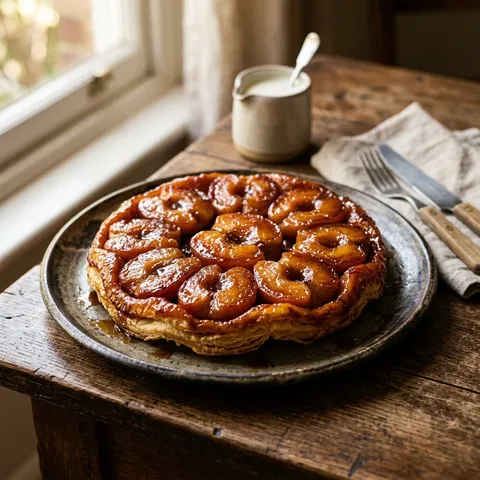 French Lens Verified Images are for illustrative purposes only, may be inaccurate, and do not guarantee the presence or absence of specific ingredients.
 Tarte Tatin
Apples cooked in caramel until jammy and burnished, then flipped onto buttery pastry — a rustic upside-down tart from the Loire Valley.
 French Lens Verified Images are for illustrative purposes only, may be inaccurate, and do not guarantee the presence or absence of specific ingredients.
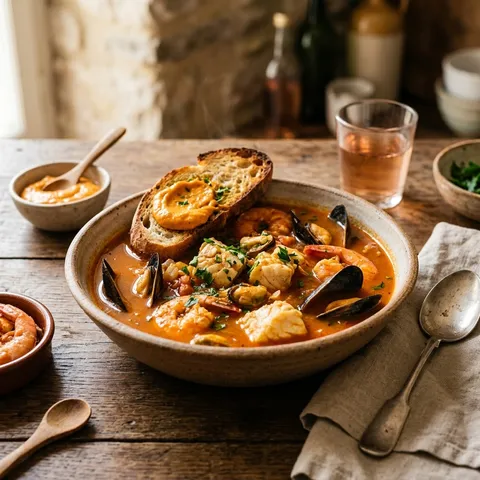
 Bouillabaisse
Marseille's legendary saffron-scented fisherman's stew, brimming with fresh seafood and served with garlicky rouille on toasted baguette.
 French Lens Verified Images are for illustrative purposes only, may be inaccurate, and do not guarantee the presence or absence of specific ingredients.
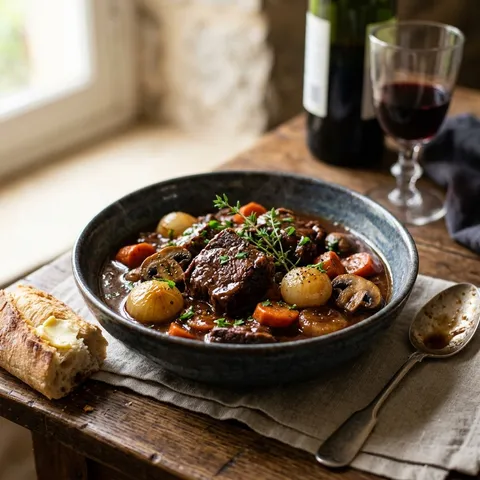
 Bœuf Bourguignon
Burgundy's legendary beef stew — rich, wine-dark, and fall-apart tender after hours of slow braising with carrots, mushrooms, and thyme.