 Indonesian & Malaysian Images are for illustrative purposes only, may be inaccurate, and do not guarantee the presence or absence of specific ingredients.
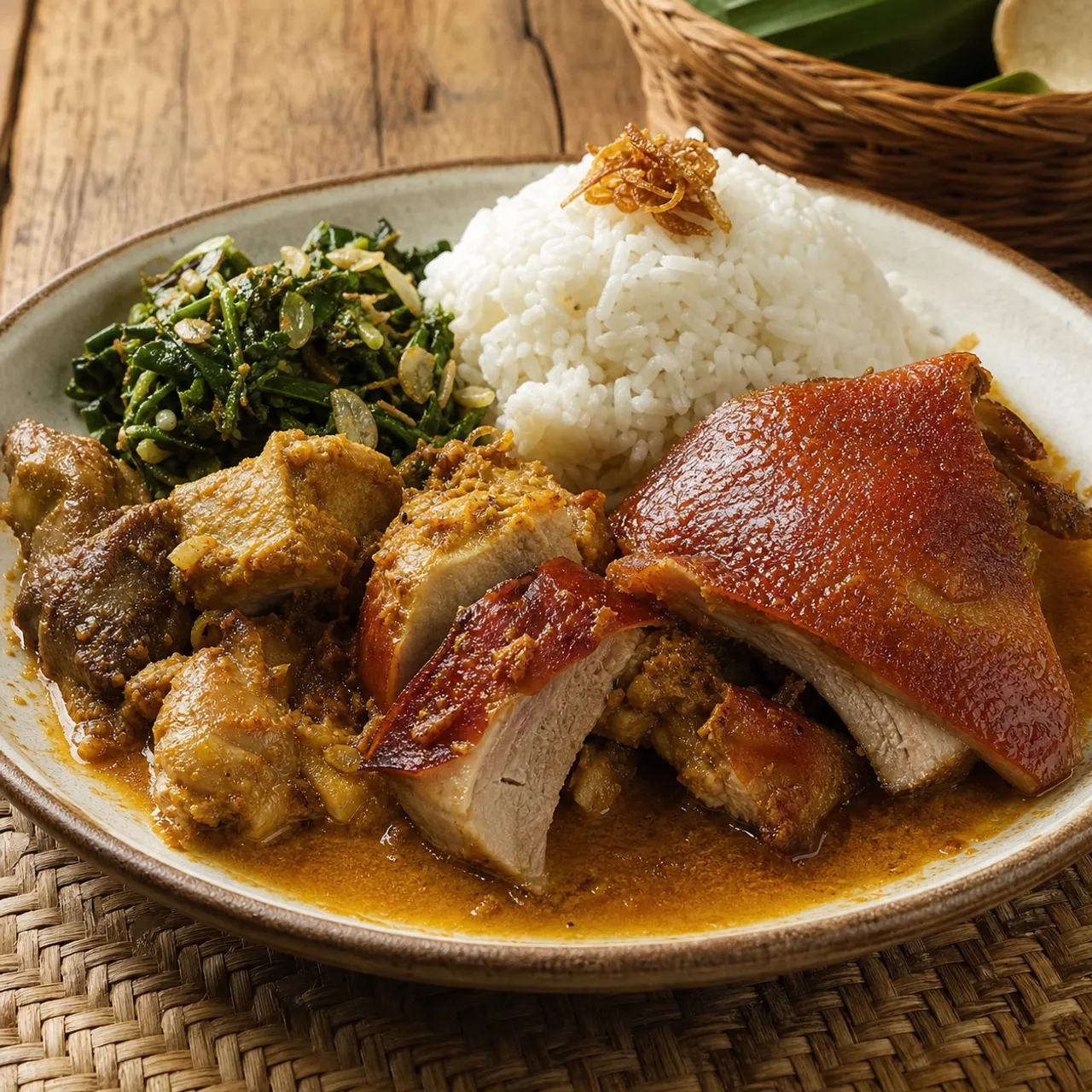
 Babi Guling
Bali's celebrated spice-rubbed roast pork, packed with lemongrass and turmeric and roasted until the skin shatters into crisp crackling.
Contains common allergens
In the app, Listahan checks these against your household automatically.
Good to know
- Crispy
Matched from this dish's own ingredients and timing. Browse more: crispy recipes
Instructions
4 steps- 1
Score the pork skin in a tight crosshatch pattern, then rub the flesh side (not the skin) all over with the blended garlic-shallot-candlenut paste mixed with the sliced lemongrass, turmeric, 1 tablespoon salt, and 2 teaspoons ground coriander. Refrigerate the seasoned belly uncovered for at least 2 hours so the skin dries.
- 2
Preheat the oven to 300°F. Roll the belly tightly with the spice paste inside, tie it firmly with kitchen twine at 1-inch intervals, and pat the skin completely dry, then rub the skin with 1 teaspoon salt and a little oil.
- 3
Roast the rolled pork seam-side down on a rack for 2 hours, until the meat is fork-tender and the internal temperature reaches 190°F.
- 4
Increase the oven to 475°F and roast a further 25 to 35 minutes, watching closely, until the skin blisters and crackles into golden, glassy crackling. Rest 15 minutes, then slice into thick rounds and serve with rice and lawar vegetables.
Listahan Family Score™
68/100
Works for many families
Score reflects how well this recipe fits a typical busy household. In the app, your Family Score is personalized to your household's allergens, kids, and pantry.
Nutrition
per serving455
Calories
49 g
Protein
4 g
Carbs
25 g
Fat
Estimated per serving. Actual values depend on the brands and portions you use.
Listahan cooking guide
Chef notes & practical guide
Technique notes, ingredient swaps, serve-alongside ideas, storage guidance, and equipment for this recipe.
Cultural context
Babi guling is closely associated with Bali, where a whole pig is traditionally stuffed with bumbu, turned over heat, and served at ceremonies, family gatherings, and warung counters. A home oven version usually keeps the essential idea rather than the whole-animal method: turmeric-stained aromatics inside, crisp pork skin outside, and rice or vegetables to balance the richness.
Listahan note
This version uses pork belly so a North American home cook can get the two things that matter most: tender spiced meat and crackling skin. The method puts the paste on the flesh side and keeps the skin dry, because those two surfaces need opposite treatment.
Technique cues
- Dry skin is the whole game for crackling. Season the meat early, then leave the rolled belly uncovered in the fridge so surface moisture can evaporate.
- Keep the spice paste off the skin as much as possible. Lemongrass, shallot, and garlic taste best tucked inside, but they can scorch on the outside during the high-heat finish.
- The low roast makes the pork sliceable and tender before the skin is asked to crisp. Do not rely on the final blast alone to cook the center.
Kitchen flow
- Parallel prep
- Start rice and prepare lawar-style vegetables while the pork is in the last 45 minutes of its slow roast.
- Make-ahead
- Season and roll the pork the night before, then refrigerate it uncovered so the skin dries more thoroughly.
- Leftover move
- Chop cold slices into fried rice with shallots, sambal, and a handful of crisp vegetables.
- Cleanup rhythm
- Line the roasting tray under the rack, then soak the rack as soon as the pork comes off because rendered fat and turmeric paste cling fast.
Ingredient brief
Role, handling, and swap guidance for each key ingredient.
Boneless pork belly, skin on
Main cut and crackling source
Purpose: Pork belly gives enough fat and skin to mimic the rich sliced portions of babi guling without roasting a whole pig.
Handling: Score the skin in a tight crosshatch, rub seasoning on the flesh side, and pat the skin completely dry before oiling and salting it.
Adaptation: Pork shoulder gives meatier slices but much less crackling, so it suits the spice profile more than the texture of this version.
Lemongrass
Citrusy aromatic
Purpose: Finely sliced lemongrass gives the pork a bright, grassy fragrance that cuts through the belly's richness.
Handling: Bruise the stalks first, trim away dry tops, and slice the tender lower portion very finely so it does not feel woody in the roll.
Adaptation: Lemongrass paste can work for convenience, but use a lighter hand because it is often wetter and more concentrated.
Fresh turmeric
Earthy color and warmth
Purpose: Turmeric gives the filling its golden color and a grounded, slightly peppery note.
Handling: Grate fresh turmeric finely and mix it thoroughly into the paste so it does not leave harsh pockets.
Adaptation: Ground turmeric is stronger and drier; use the smaller amount in the recipe and bloom it in the moist paste before rubbing.
Garlic, shallots, and candlenuts
Bumbu paste base
Purpose: Together they create the savory, rounded paste that seasons the pork from the inside as it roasts.
Handling: Blend them as smooth as your equipment allows so the filling spreads evenly and slices cleanly.
Adaptation: Macadamia nuts can stand in for candlenuts, giving a similar richness though the flavor is a little sweeter and less earthy.
Ground coriander
Warm background spice
Purpose: Coriander supports the turmeric and lemongrass with a gentle citrus-spice note that does not dominate the pork.
Handling: Mix it into the paste rather than sprinkling it over the skin, where it can darken too quickly.
Adaptation: Whole coriander seeds can be toasted and ground for a fresher, more aromatic version.
Technique notes
- Tie the roll firmly at close intervals so the filling stays inside and the slices hold their shape after resting.
- Place the pork seam-side down for the slow roast; the weight of the roll helps keep it closed without pressing on the skin.
- During the 475°F finish, stay nearby and rotate the pan if one side blisters faster than the other.
Ingredient swaps
- Nutty paste adjustment
- Use macadamia nuts instead of candlenuts for a similar creamy body in the paste, with a slightly sweeter finish.
- Weeknight shortcut
- Season the pork in the morning, then roast later the same day; the skin will still improve if it gets several uncovered hours in the fridge.
- Less heat at serving
- Keep sambal on the side and let the pork's lemongrass-turmeric paste carry the main seasoning.
- No fresh turmeric
- Use the ground turmeric amount listed in the recipe and mix it evenly with the shallot-garlic paste before spreading.
Serve alongside
- Steamed jasmine rice
- Lawar vegetables
- Sambal matah
- Acar timun
- Es jeruk
- Iced black tea
- Light lager
Serving suggestions only — check pairings for your household's allergens.
Storage & reheating
- Refrigerate sliced pork with any rendered juices in a sealed container for up to 4 days.
- Reheat slices in a low oven until warmed through, then use a hot skillet or brief broil to revive the skin.
- Freeze sliced meat without expecting the crackling to stay crisp; thaw overnight and re-crisp the skin separately.
Equipment
- Roasting rack and rimmed sheet pan
- Kitchen twine
- Sharp knife or box cutter for scoring skin
- Instant-read thermometer
Make this household-aware
Listahan Pro checks this recipe against your household's allergens, finds pantry-aware swaps, builds the shopping list, and helps you plan the week around it.
Plan it in Listahan
Add Babi Guling to your week, check it against your household's allergens, and build the shopping list automatically.
More Indonesian & Malaysian recipes
 Indonesian & Malaysian Lens Verified Images are for illustrative purposes only, may be inaccurate, and do not guarantee the presence or absence of specific ingredients.
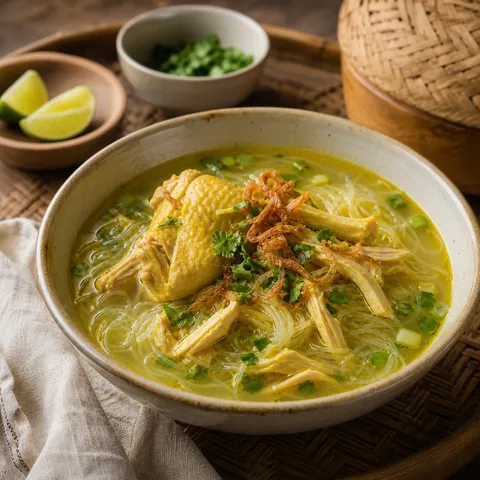
 Soto Ayam
A golden, turmeric-spiced Indonesian chicken soup with glass noodles, crispy shallots, and lime — light, herbal, and deeply comforting.
 Indonesian & Malaysian Lens Verified Images are for illustrative purposes only, may be inaccurate, and do not guarantee the presence or absence of specific ingredients.
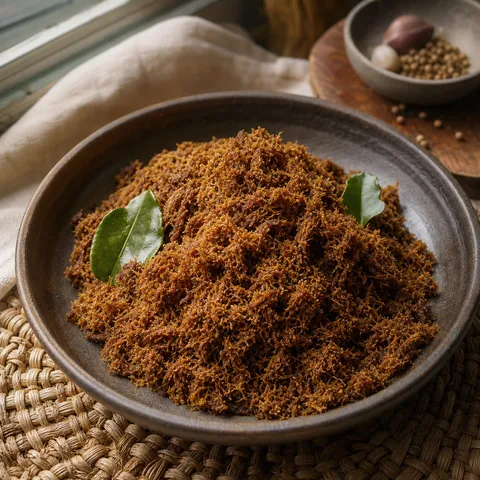
 Beef Serunding
Dry-fried spiced beef floss toasted with coconut and lemongrass until golden and fragrant — a rich, crumbly condiment that transforms plain rice.
 Indonesian & Malaysian Lens Verified Images are for illustrative purposes only, may be inaccurate, and do not guarantee the presence or absence of specific ingredients.
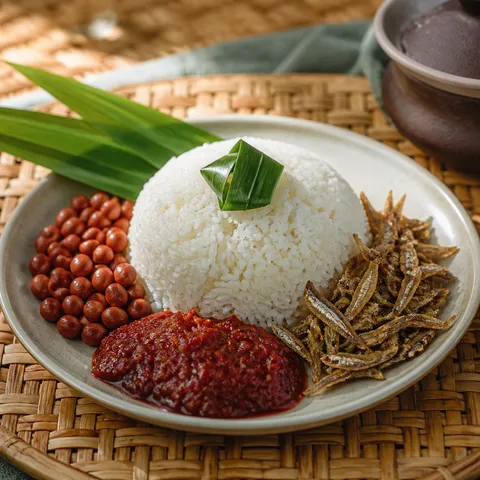
 Nasi Lemak
Malaysia's national comfort dish — fragrant coconut rice paired with sambal, crispy anchovies, roasted peanuts, and a soft-boiled egg.