 Indonesian & Malaysian Images are for illustrative purposes only, may be inaccurate, and do not guarantee the presence or absence of specific ingredients.
  Serving Images are for illustrative purposes only, may be inaccurate, and do not guarantee the presence or absence of specific ingredients.
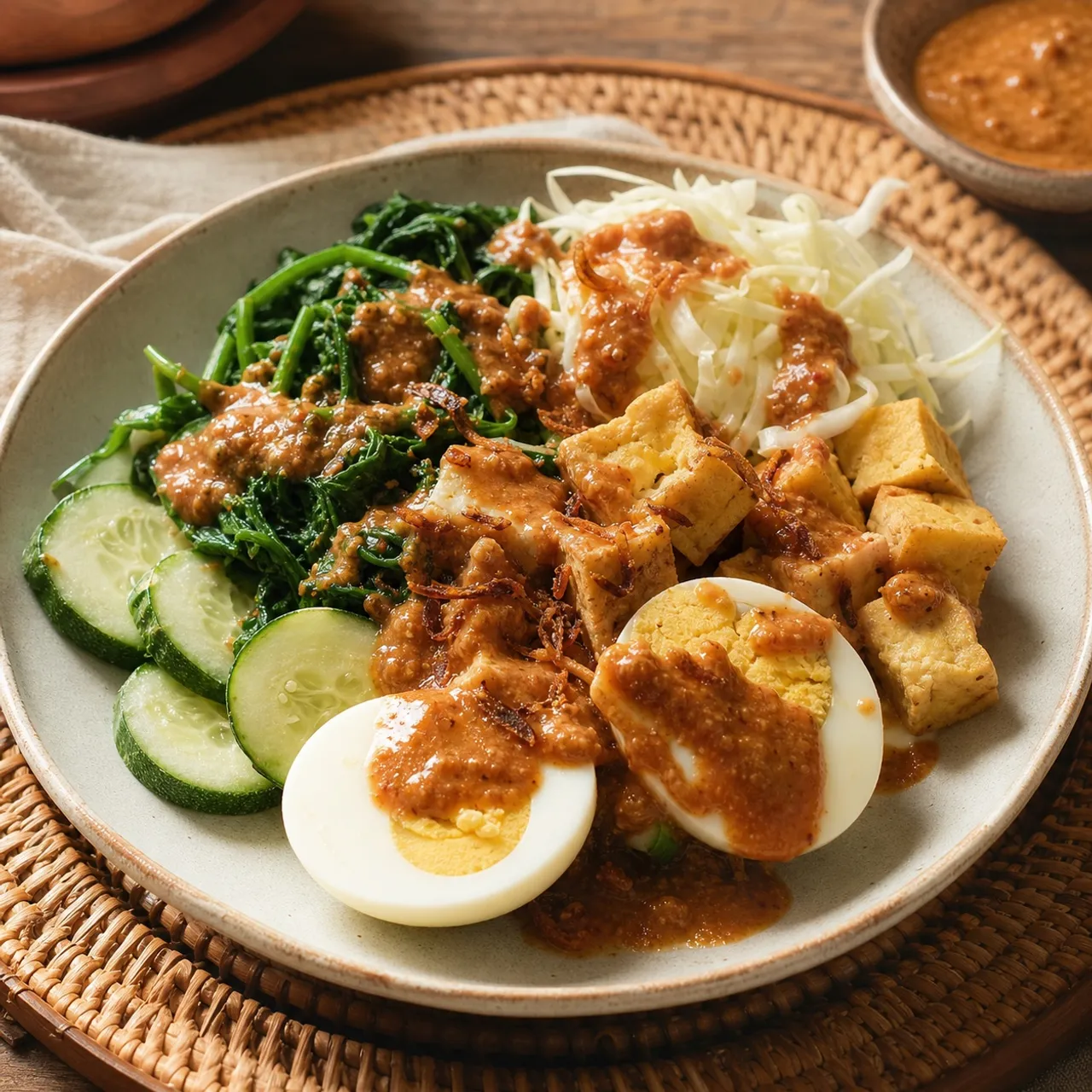
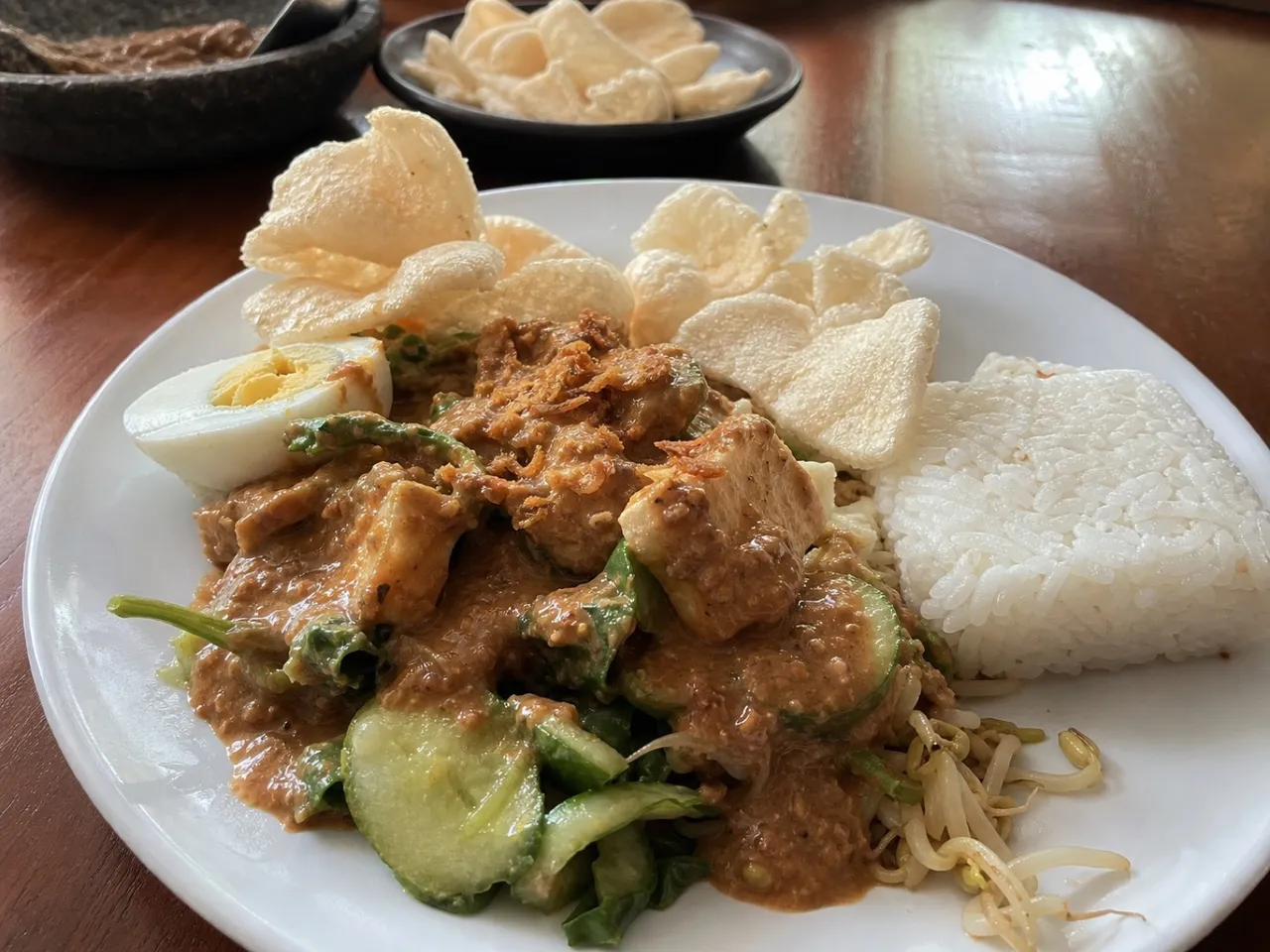
 Gado-Gado
Blanched vegetables, boiled egg, and tofu drenched in a warm, nutty peanut dressing — Indonesia's vibrant, satisfying salad that eats like a full meal.
Contains common allergens
In the app, Listahan checks these against your household automatically.
Good to know
- Ready in under 30 minutes
Matched from this dish's own ingredients and timing. Browse more: 30-minute meals
Instructions
6 steps- 1
Blanch the shredded cabbage and spinach in boiling water for 1-2 minutes, then immediately plunge into ice water.
- 2
Drain the blanched vegetables thoroughly and arrange them on a large serving platter.
- 3
Add the freshly sliced cucumber, fried tofu cubes, and halved hard-boiled eggs to the platter.
- 4
Warm the peanut sauce in a small saucepan over low heat until it reaches a pourable consistency.
- 5
Drizzle the warm peanut sauce generously over the assembled vegetables and protein.
- 6
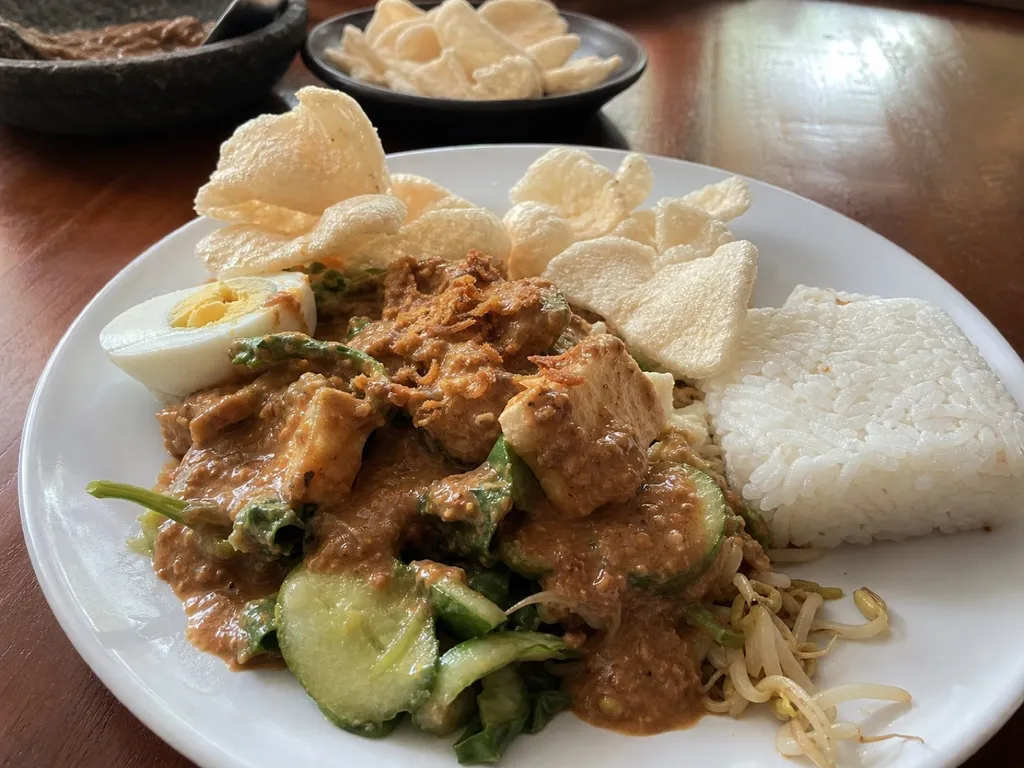
Garnish with prawn crackers (krupuk) and fried shallots before serving.
 Images are for illustrative purposes only, may be inaccurate, and do not guarantee the presence or absence of specific ingredients.
 Listahan Family Score™
67/100
Works for many families
Score reflects how well this recipe fits a typical busy household. In the app, your Family Score is personalized to your household's allergens, kids, and pantry.
Nutrition
per serving50
Calories
4 g
Protein
3 g
Carbs
2 g
Fat
Estimated per serving. Actual values depend on the brands and portions you use.
Listahan cooking guide
Chef notes & practical guide
Technique notes, ingredient swaps, serve-alongside ideas, storage guidance, and equipment for this recipe.
Cultural context
Gado-gado is an Indonesian salad of cooked and raw vegetables dressed in a warm peanut sauce, and its name translates roughly as 'mix mix' in Betawi (Jakarta dialect), reflecting its nature as a composed medley rather than a single-ingredient dish. It was historically a street food of the Betawi people of Jakarta and is considered one of Indonesia's national dishes. The combination of protein-rich peanut sauce over a variety of vegetables made it nutritionally complete enough to serve as a full meal for working-class families.
Listahan note
This version builds the peanut sauce fresh from whole roasted peanuts rather than peanut butter, producing a coarser, more complex sauce that coats the vegetables without drowning them.
Technique cues
- Blanch each vegetable separately and for slightly different times rather than throwing them all in together — green beans need about 3 minutes while cabbage wedges need 2, and cooking them in stages keeps the colors bright and textures distinct.
- Serve the peanut sauce warm, not hot and not cold — it should be just thin enough to pour but thick enough to cling; add warm water a tablespoon at a time to reach this consistency.
- A slight char on the hard-boiled eggs and the fried tofu achieves much better texture contrast against the soft vegetables than plain boiled versions.
Kitchen flow
- Parallel prep
- Make the peanut sauce and fry the tofu while eggs boil and vegetables blanch — all components come together at roughly the same time.
- Make-ahead
- The peanut sauce keeps refrigerated for up to 5 days; vegetables can be blanched a day ahead and stored separately in the refrigerator.
- Leftover move
- Leftover vegetables and tofu can be tossed warm into the remaining peanut sauce the next day and served over steamed rice as a warm bowl.
- Cleanup rhythm
- Use the same pot of boiling water sequentially for each vegetable, starting with the mildest and ending with the most pungent, to reduce washing up.
Ingredient brief
Role, handling, and swap guidance for each key ingredient.
roasted peanuts
sauce foundation
Purpose: Freshly blended roasted peanuts produce a sauce with more texture and a truer roasted nut flavor than jarred peanut butter.
Handling: Blend or pound to a coarse paste before adding liquids — a rough texture in the final sauce is desirable.
Adaptation: Unsweetened natural peanut butter works as a shortcut and still produces an excellent sauce.
firm tofu
protein
Purpose: Fried firm tofu provides protein and a textural contrast — crisp exterior against the soft blanched vegetables.
Handling: Press tofu between paper towels for 15 minutes before frying to remove excess moisture and ensure crisping.
Adaptation: Tempeh, sliced and pan-fried, is a traditional swap with a nuttier flavor and firmer texture.
hard-boiled eggs
protein and richness
Purpose: Eggs add a soft richness and are a traditional component that makes gado-gado a complete meal.
Handling: Cook to just-set yolks (about 9 minutes in simmering water) and halve lengthwise just before serving.
Adaptation: Omit for a vegan version without losing the structural integrity of the dish.
tamarind paste
tartness in sauce
Purpose: A small amount of tamarind balances the richness of the peanut sauce with gentle acidity that keeps the dish from feeling heavy.
Handling: Dissolve in a tablespoon of warm water before adding to the sauce.
Adaptation: Fresh lime juice is the most accessible substitute and provides a brighter but comparable acidity.
green beans
vegetable component
Purpose: Green beans hold their shape and bright color after blanching and provide a satisfying snap alongside softer vegetables.
Handling: Trim ends and blanch for 3 minutes in salted boiling water, then shock in ice water to stop cooking.
Adaptation: Sugar snap peas or asparagus tips can substitute with similar cooking times.
Technique notes
- The peanut sauce should taste slightly too salty and too sweet on its own — it is designed to season bland blanched vegetables, so it needs more assertive seasoning than a dipping sauce you eat alone.
- Arrange the vegetables on the plate in distinct groupings rather than tossing them together; gado-gado is as much about presentation as flavor.
- For the best texture contrast, let the fried tofu rest on a wire rack uncovered for 10 minutes after frying so the crust stays crisp rather than steaming itself soft on a plate.
Ingredient swaps
- Peanut allergy direction
- Sunflower seed butter seasoned with garlic, lime juice, kecap manis, and a touch of chili makes a convincing alternative sauce that captures the same richness and coating quality.
- Vegan direction
- Omit the eggs and use extra tofu or tempeh; the dish is otherwise naturally vegan when the peanut sauce is made without fish sauce.
Serve alongside
- Steamed jasmine rice
- Prawn crackers (krupuk)
- Lontong (compressed rice cakes)
- Iced coconut water
- Lime cordial with soda water
Serving suggestions only — check pairings for your household's allergens.
Storage & reheating
- Store peanut sauce and blanched vegetables separately in the refrigerator for up to 3 days; assembled gado-gado becomes soggy and is best eaten within 1 hour of dressing.
- Reheat peanut sauce in a small saucepan over low heat with a splash of warm water to restore its consistency.
Equipment
- Large pot for blanching vegetables
- Blender or food processor for peanut sauce
- Small nonstick or cast-iron skillet for frying tofu
Make this household-aware
Listahan Pro checks this recipe against your household's allergens, finds pantry-aware swaps, builds the shopping list, and helps you plan the week around it.
Plan it in Listahan
Add Gado-Gado to your week, check it against your household's allergens, and build the shopping list automatically.
More Indonesian & Malaysian recipes
 Indonesian & Malaysian Lens Verified Images are for illustrative purposes only, may be inaccurate, and do not guarantee the presence or absence of specific ingredients.
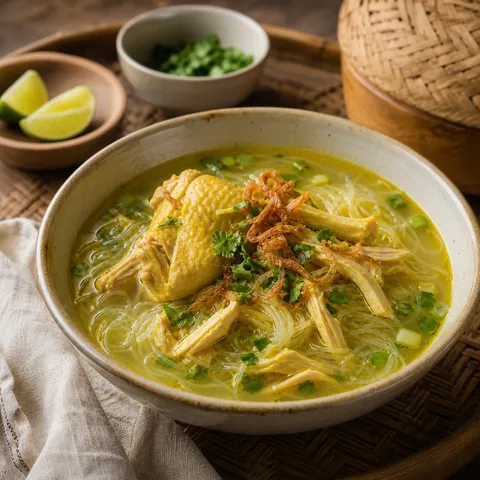
 Soto Ayam
A golden, turmeric-spiced Indonesian chicken soup with glass noodles, crispy shallots, and lime — light, herbal, and deeply comforting.
 Indonesian & Malaysian Lens Verified Images are for illustrative purposes only, may be inaccurate, and do not guarantee the presence or absence of specific ingredients.
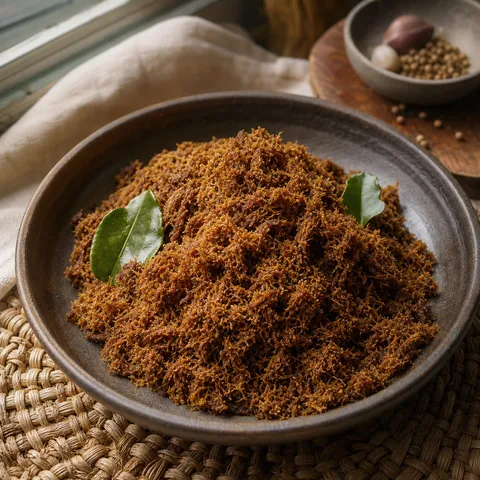
 Beef Serunding
Dry-fried spiced beef floss toasted with coconut and lemongrass until golden and fragrant — a rich, crumbly condiment that transforms plain rice.
 Indonesian & Malaysian Lens Verified Images are for illustrative purposes only, may be inaccurate, and do not guarantee the presence or absence of specific ingredients.
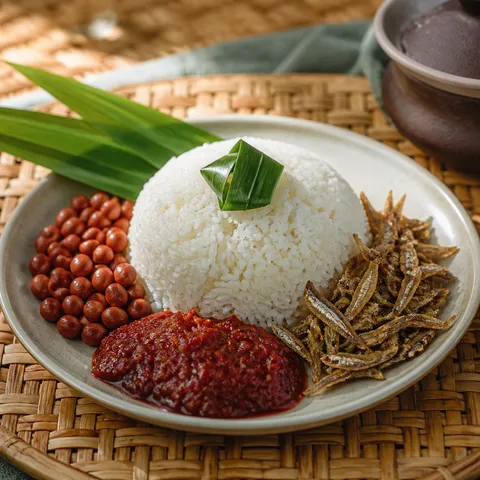
 Nasi Lemak
Malaysia's national comfort dish — fragrant coconut rice paired with sambal, crispy anchovies, roasted peanuts, and a soft-boiled egg.