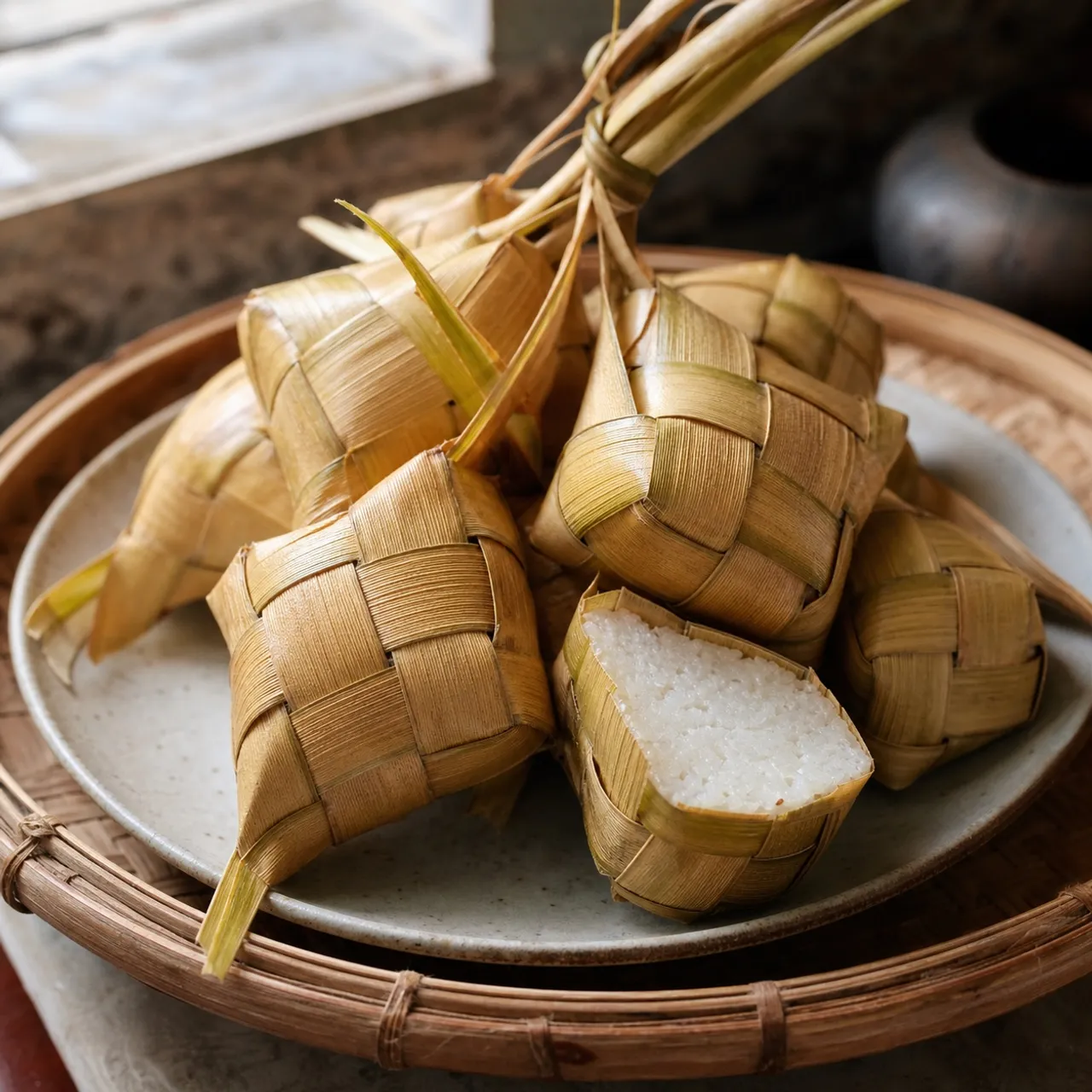
 Indonesian & Malaysian Images are for illustrative purposes only, may be inaccurate, and do not guarantee the presence or absence of specific ingredients.
 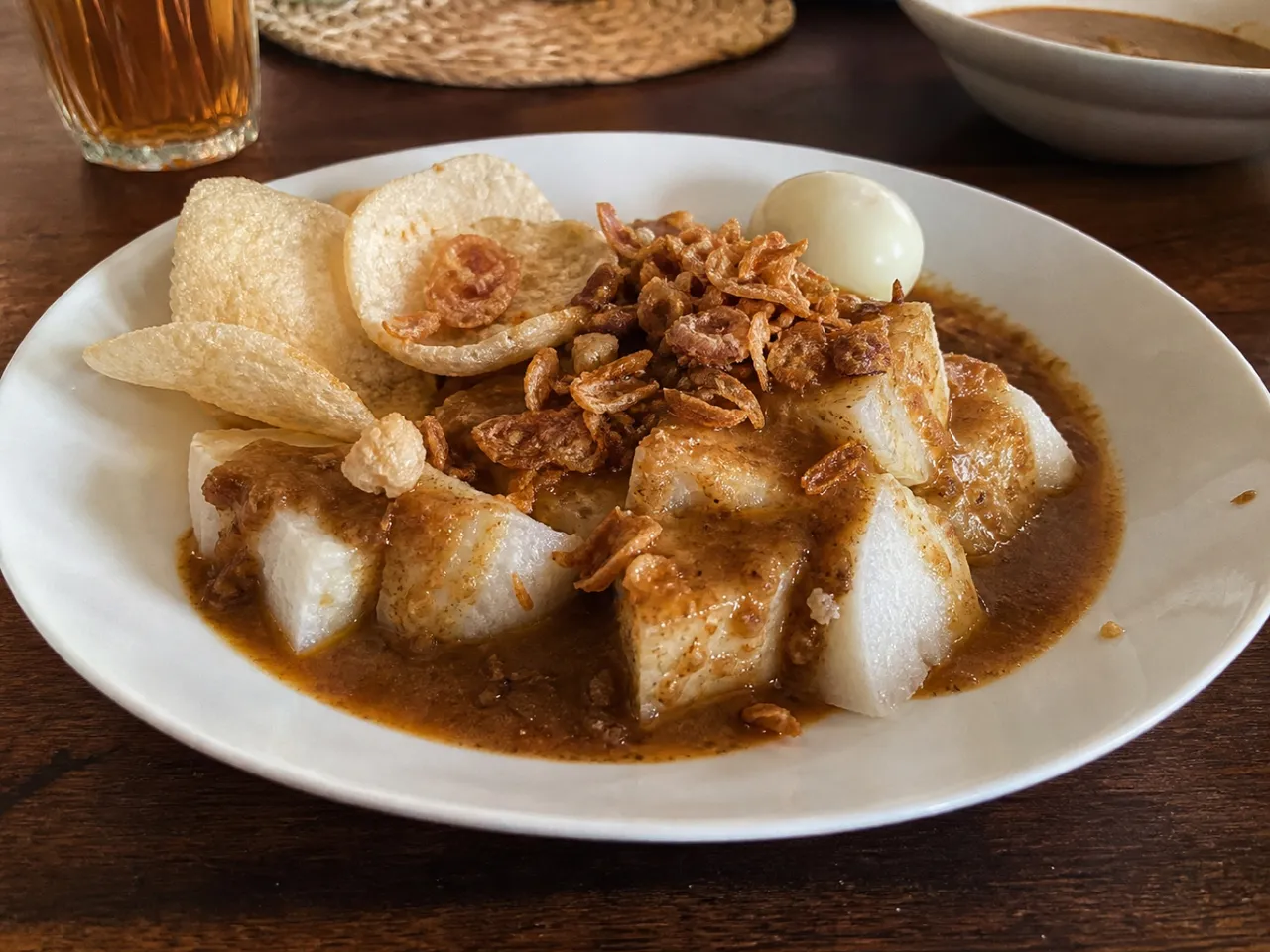 Serving Images are for illustrative purposes only, may be inaccurate, and do not guarantee the presence or absence of specific ingredients.
 Ketupat
Diamond-woven rice dumplings pressed into a firm, sliceable cake — the iconic companion to rendang and satay at every Malaysian celebration.
No common allergens detected
Based on this recipe's ingredient list. Always verify with your own brands and labels.
Good to know
- One-pot
Matched from this dish's own ingredients and timing. Browse more: one-pot dinners
Instructions
6 steps- 1
Wash the rice thoroughly until the water runs completely clear, then drain and soak for 30 minutes. Mix with a little salt.
- 2
Prepare the woven palm leaf pouches. Carefully open the top slit of each pouch.
- 3
Fill each woven pouch only half or two-thirds full with the soaked rice, leaving room for expansion.
- 4
Seal the pouches tightly so no rice grains can escape during cooking.
- 5
Submerge the pouches completely in a large pot of boiling water. Boil continuously for 2 to 3 hours, topping up with hot water as needed.
- 6
Remove the ketupat from the water and hang them to cool and drain thoroughly before slicing into firm, diamond-shaped cakes.
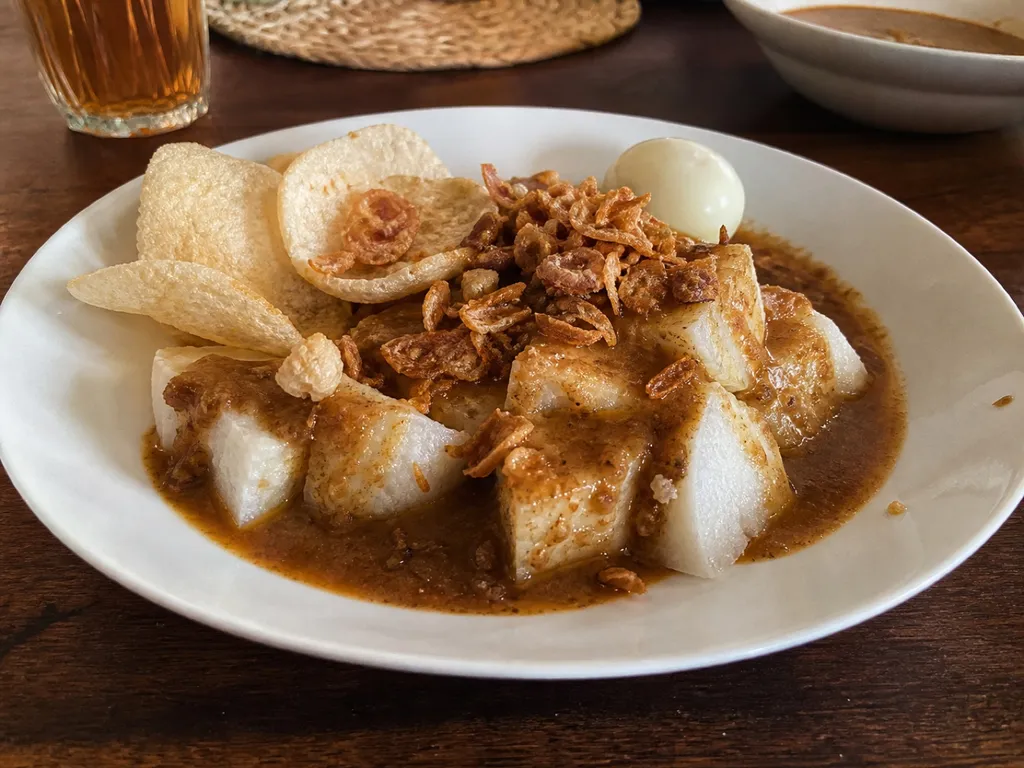 Images are for illustrative purposes only, may be inaccurate, and do not guarantee the presence or absence of specific ingredients.
 Listahan Family Score™
75/100
Good fit for most families
Score reflects how well this recipe fits a typical busy household. In the app, your Family Score is personalized to your household's allergens, kids, and pantry.
Nutrition
per serving340
Calories
6 g
Protein
74 g
Carbs
1 g
Fat
Estimated per serving. Actual values depend on the brands and portions you use.
Listahan cooking guide
Chef notes & practical guide
Technique notes, ingredient swaps, serve-alongside ideas, storage guidance, and equipment for this recipe.
Cultural context
Ketupat is compressed rice cake cooked inside a woven casing of young coconut palm leaves, a tradition with deep ceremonial roots across the Malay archipelago. The technique — filling the leaf pouch only halfway so the rice swells and compresses as it cooks — requires no mold and produces a dense, sliceable cake that holds its shape at room temperature, making it ideal for the crowded communal tables of Eid celebrations. The woven palm diamond shape is so culturally significant that it appears in batik patterns, wall decorations, and food festival imagery across Malaysia and Indonesia.
Listahan note
This version uses a practical alternative of cheese cloth or muslin pouches when palm leaves are unavailable, so the dish can be made anywhere with regular grocery store rice.
Technique cues
- Fill the palm or cloth pouches no more than half full of washed raw rice — the rice needs room to expand by roughly double as it absorbs water, and overfilling creates a gummy, dense cake rather than a compressed but still distinct grain texture.
- Simmer the ketupat for at least 90 minutes fully submerged in water, rotating the pouches occasionally; boiling too hard can split the pouches, while simmering too gently leaves the rice undercooked in the center.
- Let ketupat cool to room temperature in the water for 15 minutes before removing — cutting into a just-boiled pouch releases steam that collapses the structure; resting lets the compressed rice firm up properly.
Kitchen flow
- Parallel prep
- Start the ketupat pot first as it needs 90 minutes; prepare the accompanying rendang or satay while it cooks.
- Make-ahead
- Ketupat keeps at room temperature for up to 2 days in a cool, dry place — a traditional advantage for festival cooking; refrigerate if keeping longer.
- Leftover move
- Slice cold ketupat into cubes and pan-fry in a little oil until crispy for a quick lontong goreng (fried rice cake) topped with sambal.
- Cleanup rhythm
- Use the same large pot of boiling water to blanch vegetables for accompanying dishes while the ketupat finishes its last 20 minutes.
Ingredient brief
Role, handling, and swap guidance for each key ingredient.
short-grain or jasmine white rice
main body
Purpose: Higher-starch white rice creates the sticky, compressed texture that lets ketupat hold a clean slice; long-grain basmati would produce a drier, crumblier cake.
Handling: Rinse three times until the water runs mostly clear to remove excess surface starch that would make the inside gluey.
Adaptation: Glutinous (sweet) rice produces a chewier, more traditional-tasting ketupat used in the Madura style, though it needs more water.
palm leaf pouches
mold and steam vessel
Purpose: The woven palm casing creates even pressure on all sides as the rice expands, which is what gives ketupat its characteristic dense, square cross-section.
Handling: Pre-made pouches are sold at Asian grocery stores; rinse in cold water before filling.
Adaptation: A 6-inch square of double-layered muslin tied into a pouch at the top replicates the compression function for a home-friendly version.
salt
essential seasoning
Purpose: Plain unsalted ketupat tastes flat against the boldly seasoned dishes it accompanies; salt added to the boiling water seasons the compressed rice from the outside in.
Handling: Add 1 teaspoon of kosher salt per liter of boiling water before submerging the pouches.
Adaptation: No substitute; salt is both flavor and a subtle textural aid in compressed rice.
water
cooking medium
Purpose: A large volume of water ensures the ketupat pouches stay fully submerged throughout the 90-minute cook so the rice absorbs evenly on all sides.
Handling: Use enough water to cover the pouches by at least 2 inches; have a kettle of boiling water nearby to top up.
Adaptation: Lightly seasoned chicken or vegetable broth can replace plain water for a more savory-flavored rice cake.
Technique notes
- Add a teaspoon of kosher salt directly to the boiling water — rice cooked with no salt at all tastes flat against the robustly seasoned dishes ketupat is meant to accompany.
- Check water levels every 30 minutes and top up with boiling water so the pouches stay fully submerged; exposed pouches steam rather than boil and cook unevenly.
- Refrigerated ketupat firms significantly and can be difficult to slice cleanly — let it come to room temperature for 30 minutes, or briefly pan-fry slices to soften the exterior.
Ingredient swaps
- Gluten-free direction
- Rice is naturally gluten-free; this recipe requires no substitution.
- Weeknight shortcut
- Lontong — rice cooked in a banana leaf roll or in a plastic bag — achieves a similar compressed texture in less time and is easier to assemble without woven palm pouches.
Serve alongside
- Beef Rendang
- Satay Ayam with peanut sauce
- Sayur lodeh (vegetable coconut curry)
- Bandung (rose syrup milk drink)
- Iced green tea with lemon
Serving suggestions only — check pairings for your household's allergens.
Storage & reheating
- Store at room temperature for up to 2 days, hanging or placed in a dry spot with good airflow to prevent sogginess.
- Refrigerate for up to 5 days; the texture firms considerably in the cold, so slice and pan-fry to reheat rather than microwaving.
Equipment
- Large stockpot with a lid for boiling the pouches
- Kitchen twine or rubber bands for sealing cloth pouches
- Sharp cleaver or serrated knife for slicing the compressed rice cake
Make this household-aware
Listahan Pro checks this recipe against your household's allergens, finds pantry-aware swaps, builds the shopping list, and helps you plan the week around it.
Plan it in Listahan
Add Ketupat to your week, check it against your household's allergens, and build the shopping list automatically.
More Indonesian & Malaysian recipes
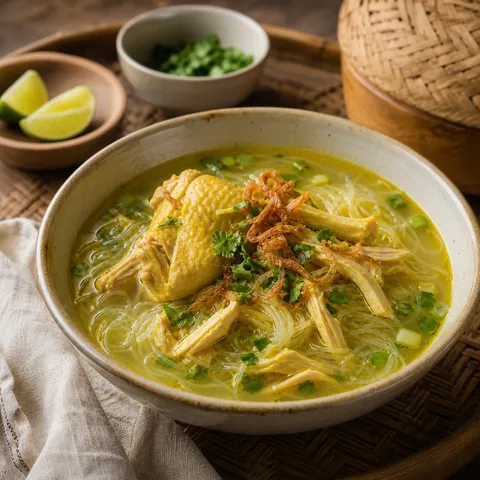 Indonesian & Malaysian Lens Verified Images are for illustrative purposes only, may be inaccurate, and do not guarantee the presence or absence of specific ingredients.
 Soto Ayam
A golden, turmeric-spiced Indonesian chicken soup with glass noodles, crispy shallots, and lime — light, herbal, and deeply comforting.
 Indonesian & Malaysian Lens Verified Images are for illustrative purposes only, may be inaccurate, and do not guarantee the presence or absence of specific ingredients.
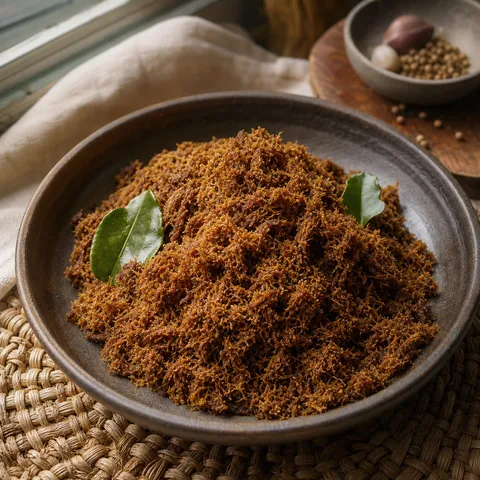
 Beef Serunding
Dry-fried spiced beef floss toasted with coconut and lemongrass until golden and fragrant — a rich, crumbly condiment that transforms plain rice.
 Indonesian & Malaysian Lens Verified Images are for illustrative purposes only, may be inaccurate, and do not guarantee the presence or absence of specific ingredients.
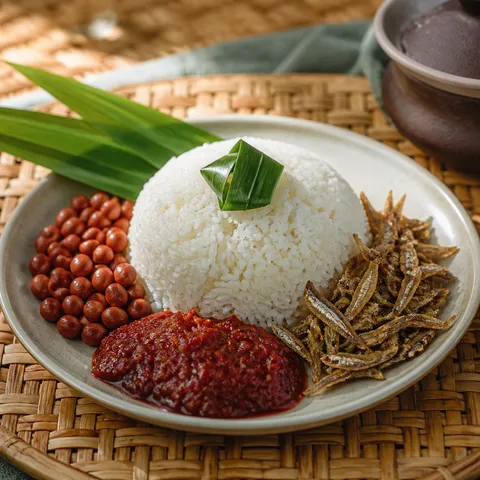
 Nasi Lemak
Malaysia's national comfort dish — fragrant coconut rice paired with sambal, crispy anchovies, roasted peanuts, and a soft-boiled egg.