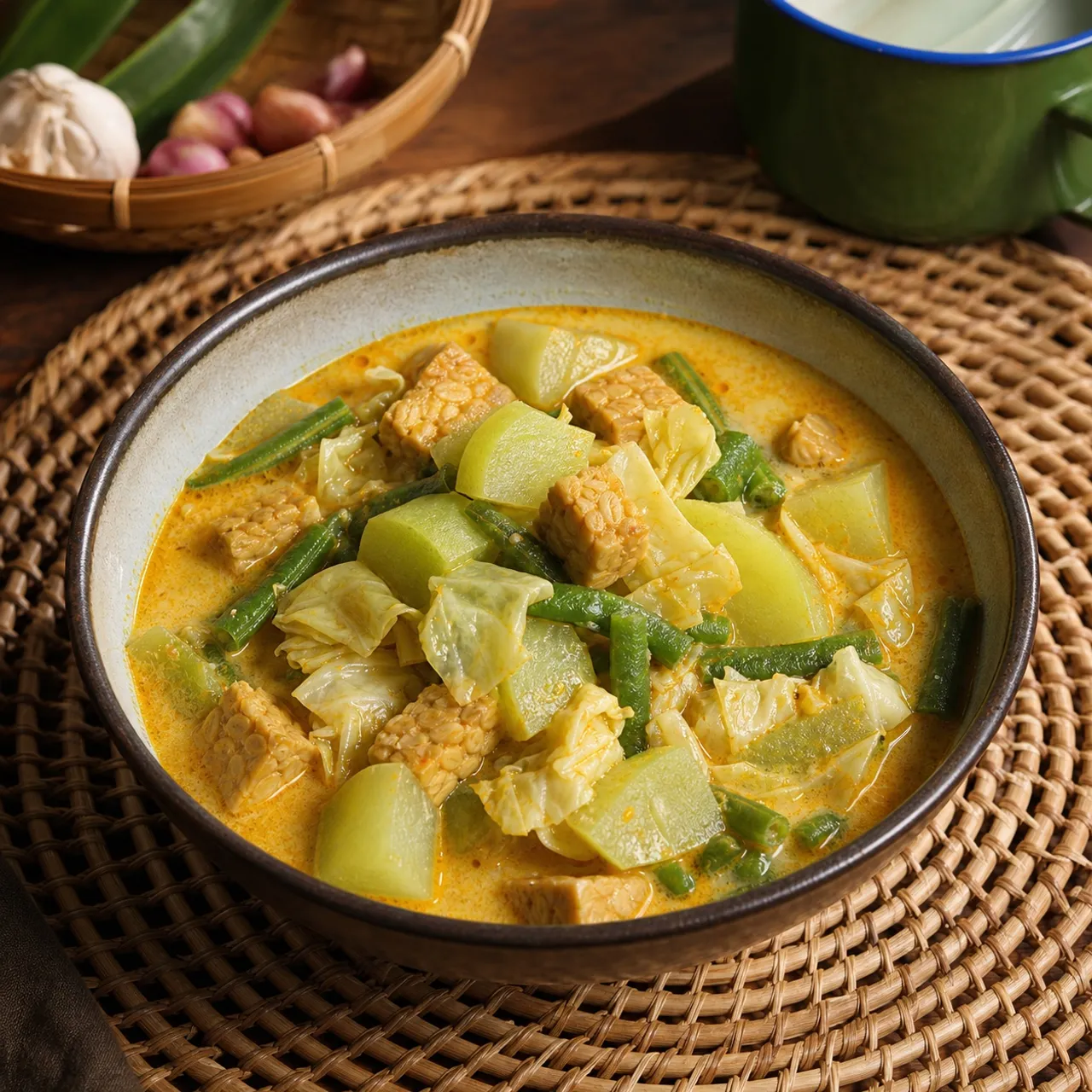
 Indonesian & Malaysian Images are for illustrative purposes only, may be inaccurate, and do not guarantee the presence or absence of specific ingredients.
 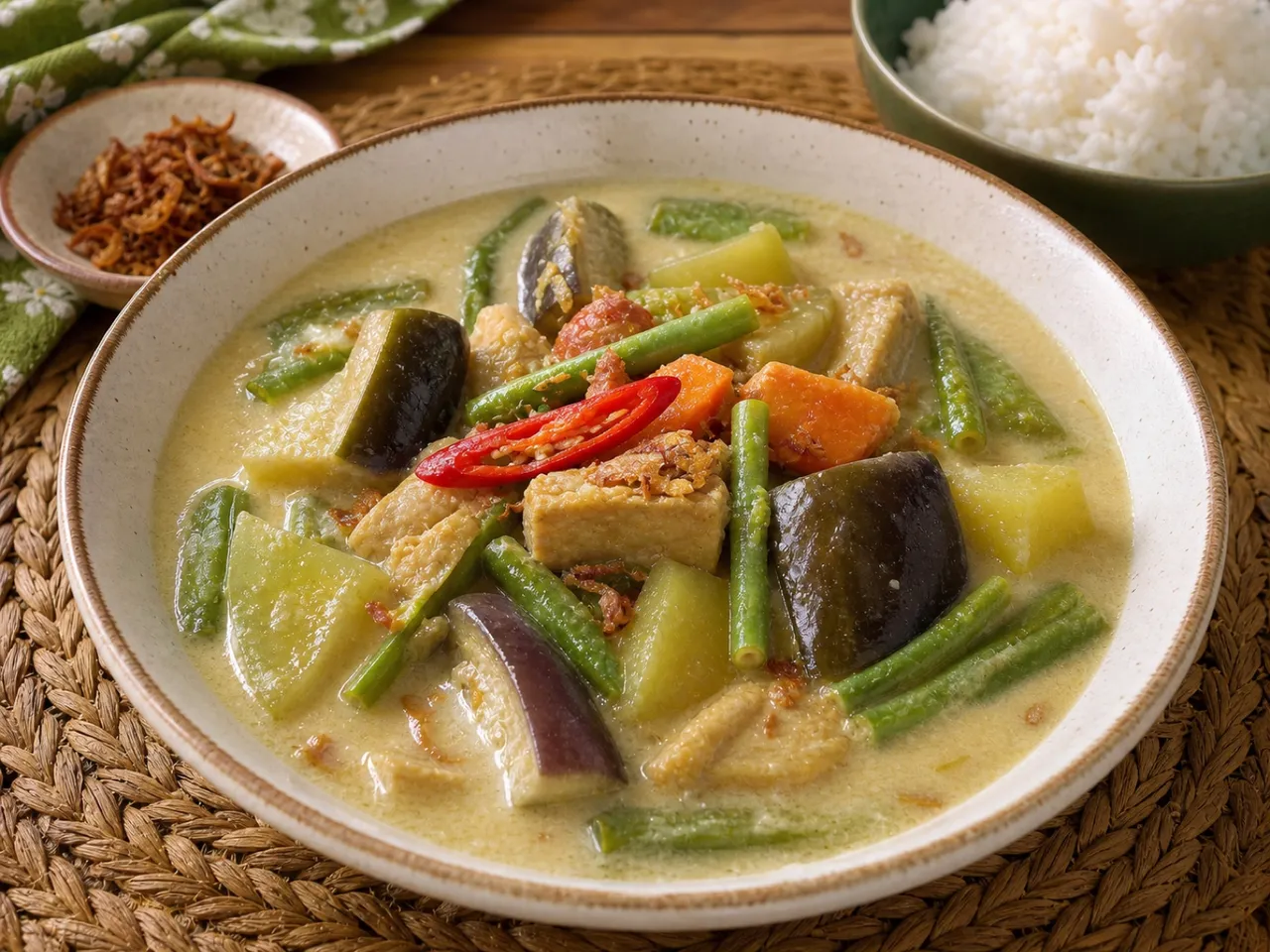 Serving Images are for illustrative purposes only, may be inaccurate, and do not guarantee the presence or absence of specific ingredients.
 Sayur Lodeh
A mild, creamy vegetable curry simmered in coconut milk with lemongrass and galangal — gentle, fragrant, and perfect alongside rice or ketupat.
Contains common allergens
In the app, Listahan checks these against your household automatically.
Good to know
- One-pot
- Ready in under 30 minutes
Matched from this dish's own ingredients and timing. Browse more: one-pot dinners30-minute meals
Instructions
6 steps- 1
Grind shallots, garlic, candlenuts, coriander, and a little dried shrimp paste into a fine spice blend.
- 2
Sauté the spice blend in a large pot with a little oil until fragrant, about 3 minutes.
- 3
Pour in the vegetable broth and bring to a rolling boil.
- 4
Add the firm vegetables (chayote, green beans) and tempeh, boiling for 5-7 minutes until slightly softened.
- 5
Stir in the coconut milk, cabbage, and fresh green chilies.
- 6
Reduce the heat and simmer gently for another 5 minutes (do not let the coconut milk boil rapidly or it will split), then serve with rice.
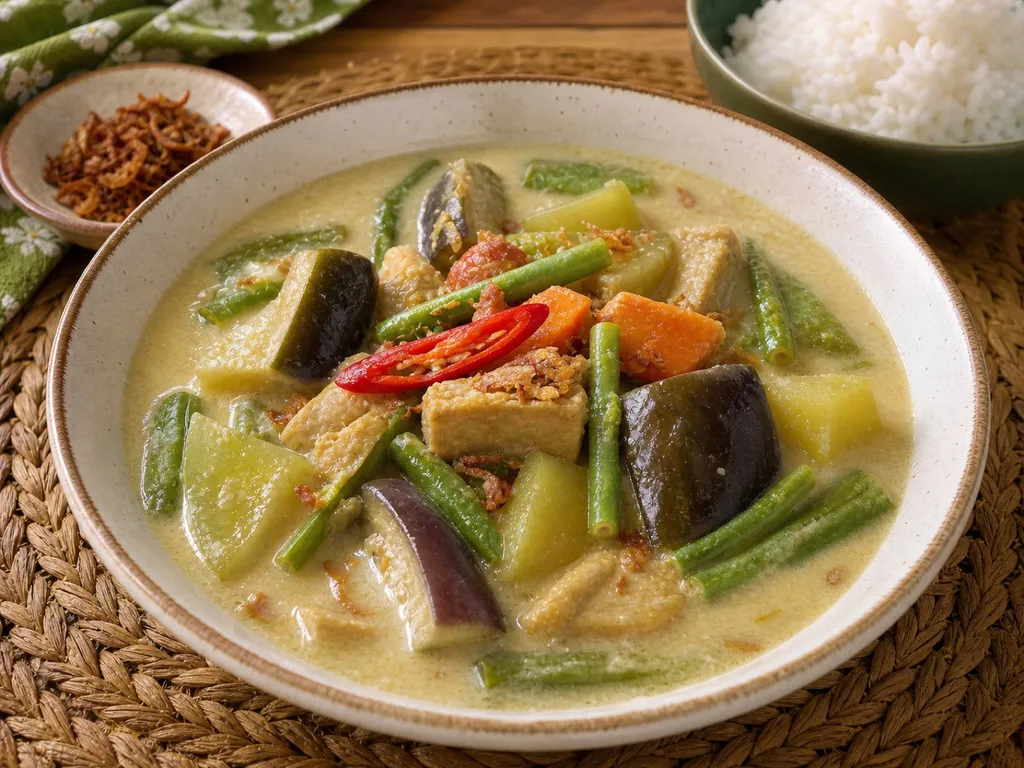 Images are for illustrative purposes only, may be inaccurate, and do not guarantee the presence or absence of specific ingredients.
 Listahan Family Score™
68/100
Works for many families
Score reflects how well this recipe fits a typical busy household. In the app, your Family Score is personalized to your household's allergens, kids, and pantry.
Nutrition
per serving260
Calories
5 g
Protein
10 g
Carbs
24 g
Fat
Estimated per serving. Actual values depend on the brands and portions you use.
Listahan cooking guide
Chef notes & practical guide
Technique notes, ingredient swaps, serve-alongside ideas, storage guidance, and equipment for this recipe.
Cultural context
Sayur lodeh is a mixed-vegetable coconut curry found across Indonesia and Malaysia, traditionally built on a ground spice paste rather than a pre-made curry powder, and it commonly appears alongside ketupat, compressed rice cakes, especially during Eid celebrations.
Listahan note
This version adds the coconut milk only after the firmer vegetables have already softened in the broth, keeping the coconut milk from taking a long simmer that would otherwise risk it splitting.
Technique cues
- The ground spice paste of shallots, garlic, and aromatics is sauteed in oil until fragrant before any liquid is added, which builds a deeper base flavor than simmering raw spices directly in the broth.
- Firmer vegetables like chayote and green beans go into the broth first and simmer until just starting to soften, while quicker-cooking cabbage waits until closer to the end.
- Coconut milk goes in after the firmer vegetables have already softened, then stays at a gentle simmer rather than a rolling boil, since hard boiling coconut milk risks splitting it into a grainy, oily texture.
- Tempeh holds its shape and texture well through simmering, unlike softer proteins, which is part of why it works in a dish that keeps cooking for a stretch after the coconut milk goes in.
Kitchen flow
- Parallel prep
- While Sayur Lodeh simmers, chop any garnish or side bread — the pot doesn't need active attention during the long simmer. This one leans on the vegetable broth.
- Make-ahead
- Sayur Lodeh is a genuine make-ahead dish — it actually tastes better the next day once vegetable broth have had time to meld; make it a day early and reheat gently. Plan around the simmer; that's the slow part.
- Leftover move
- Leftover Sayur Lodeh is often better the next day — refrigerate and reheat gently on the stove, thinning with a splash of water or broth if it's thickened. This one leans on the vegetable broth. Everything else is quick — the simmer is the one step that takes real time.
- Cleanup rhythm
- Let the pot for Sayur Lodeh soak while you eat — a long simmer tends to leave a stuck layer on the bottom that's easier to lift once soaked. This one leans on the vegetable broth.
Ingredient brief
Role, handling, and swap guidance for each key ingredient.
1 chayote
Flavor support
Purpose: chayote supports the balance of Sayur Lodeh and should taste integrated.
Handling: Prep before heat is high so the cooking step can move without rushing.
Adaptation: Use the closest fresh equivalent and expect a modest shift in flavor or texture.
1 cup green beans
Main protein or body
Purpose: cup green beans gives Sayur Lodeh its main substance and carries the seasoning.
Handling: Rinse, soak, whisk, or separate as the recipe requires so the texture stays clean.
Adaptation: Use the closest fresh equivalent and expect a modest shift in flavor or texture.
1 cup cabbage
Flavor support
Purpose: cup cabbage supports the balance of Sayur Lodeh and should taste integrated.
Handling: Prep before heat is high so the cooking step can move without rushing.
Adaptation: Use the closest fresh equivalent and expect a modest shift in flavor or texture.
1 block tempeh
Flavor support
Purpose: block tempeh supports the balance of Sayur Lodeh and should taste integrated.
Handling: Prep before heat is high so the cooking step can move without rushing.
Adaptation: Use the closest fresh equivalent and expect a modest shift in flavor or texture.
400ml coconut milk
Richness and texture
Purpose: ml coconut milk rounds the texture and helps the dish feel complete.
Handling: Prep before heat is high so the cooking step can move without rushing.
Adaptation: Use unsweetened dairy-free alternatives only where they still provide enough fat and body.
Technique notes
- Sayur lodeh is traditionally ladled over rice or served alongside ketupat, the compressed rice cakes common at Eid gatherings.
- The dish keeps and reheats reasonably well, though the vegetables soften further on a second day, so slightly undercooking them the first time helps.
- Fresh chilies added at serving, rather than during cooking, let each bowl be adjusted to taste without changing the whole pot.
Ingredient swaps
- Dairy-free direction
- Swap the coconut milk for full-fat coconut milk or a dairy-free cream alternative, added at the end rather than simmered long — the texture shifts slightly but the dish holds together. This one leans on the vegetable broth.
- Nut-aware direction
- Omit the nuts here; a seed garnish keeps the texture without the tree-nut or peanut concern. This one leans on the vegetable broth.
- Lower-sodium direction
- Use a low-sodium or no-salt-added version of the vegetable broth, then season to taste with fresh herbs, citrus, or vinegar at the end instead of more salt. Budget about 30 minutes for this one — it serves 4. Indonesian And Malaysian technique drives this recipe. Count the ingredient list and it's 6 deep.
- Weeknight shortcut
- For a faster version, prep the longest-cooking component a day ahead so the night-of cook is mostly assembly and finishing. This one leans on the vegetable broth. This one's done in around 30 minutes, plated for 4. It's an Indonesian And Malaysian dish through and through. The ingredient list here is 6 items long.
Serve alongside
- Steamed rice
- Cucumber salad
- Roasted vegetables
- Pickled vegetables
- Iced tea
- Sparkling water with citrus
Serving suggestions only — check pairings for your household's allergens.
Storage & reheating
- Refrigerate in a sealed container for up to 4 days.
- Reheat gently with a splash of water, broth, milk, or sauce as appropriate.
- Freeze up to 2 months when the texture is braised, baked, or stew-like.
Equipment
- Dutch oven or soup pot
- Wooden spoon
- Ladle
Make this household-aware
Listahan Pro checks this recipe against your household's allergens, finds pantry-aware swaps, builds the shopping list, and helps you plan the week around it.
Plan it in Listahan
Add Sayur Lodeh to your week, check it against your household's allergens, and build the shopping list automatically.
More Indonesian & Malaysian recipes
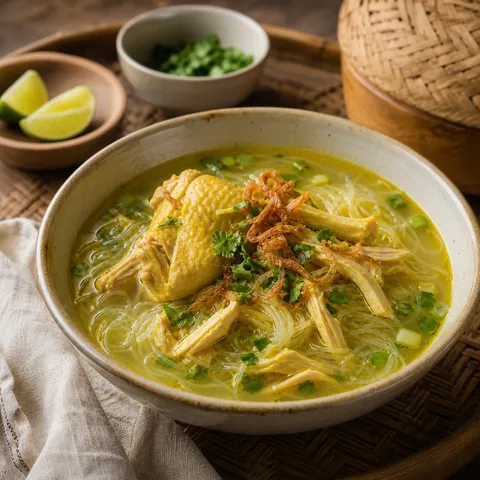 Indonesian & Malaysian Lens Verified Images are for illustrative purposes only, may be inaccurate, and do not guarantee the presence or absence of specific ingredients.
 Soto Ayam
A golden, turmeric-spiced Indonesian chicken soup with glass noodles, crispy shallots, and lime — light, herbal, and deeply comforting.
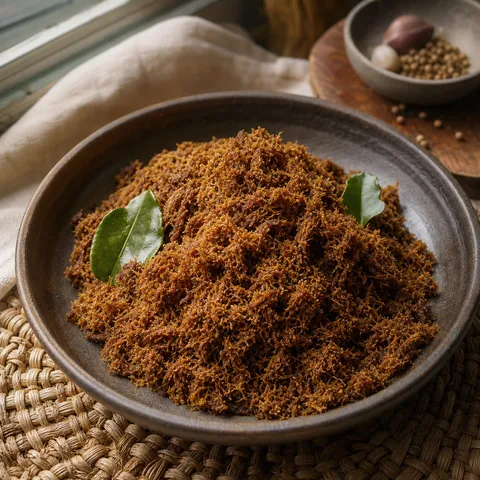 Indonesian & Malaysian Lens Verified Images are for illustrative purposes only, may be inaccurate, and do not guarantee the presence or absence of specific ingredients.
 Beef Serunding
Dry-fried spiced beef floss toasted with coconut and lemongrass until golden and fragrant — a rich, crumbly condiment that transforms plain rice.
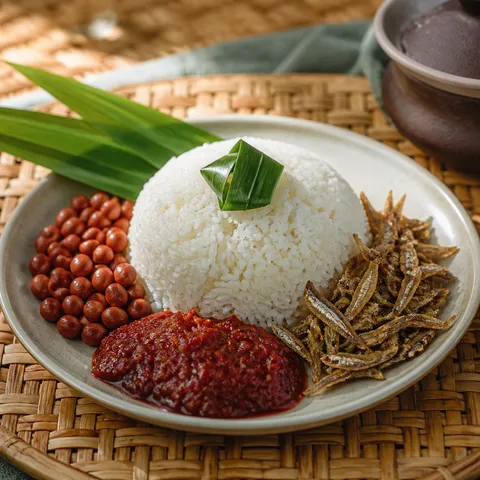 Indonesian & Malaysian Lens Verified Images are for illustrative purposes only, may be inaccurate, and do not guarantee the presence or absence of specific ingredients.
 Nasi Lemak
Malaysia's national comfort dish — fragrant coconut rice paired with sambal, crispy anchovies, roasted peanuts, and a soft-boiled egg.