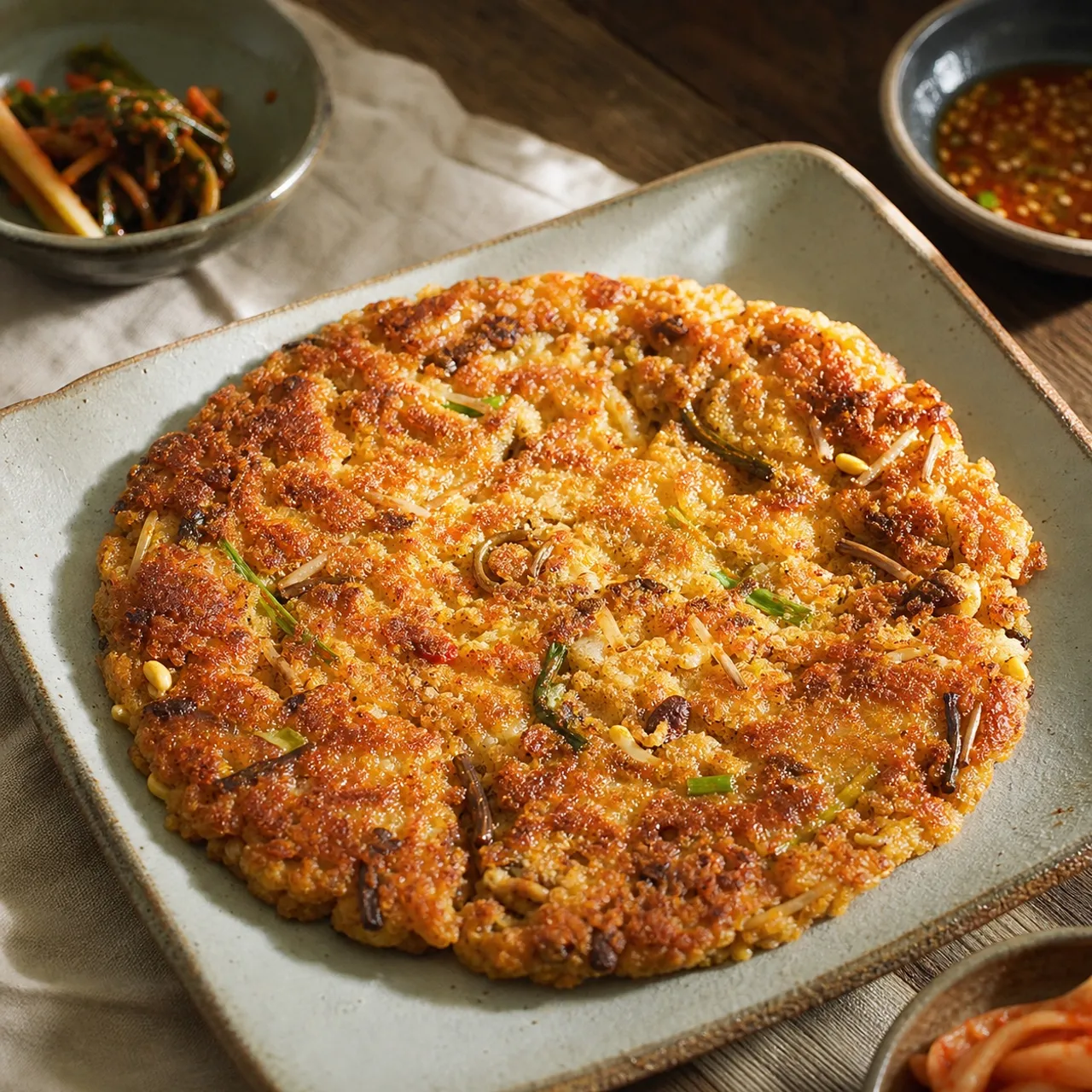
 Korean Images are for illustrative purposes only, may be inaccurate, and do not guarantee the presence or absence of specific ingredients.
 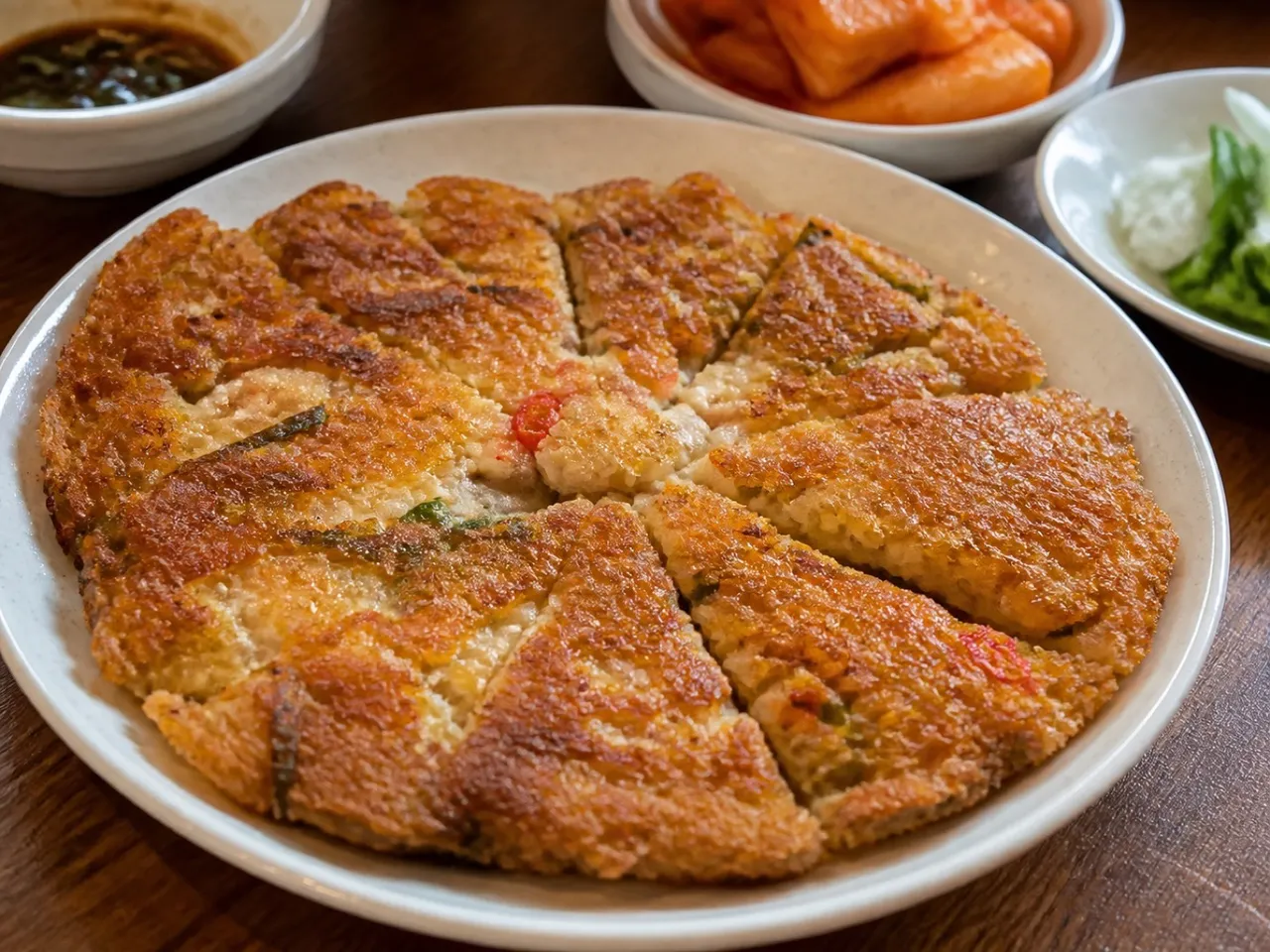 Serving Images are for illustrative purposes only, may be inaccurate, and do not guarantee the presence or absence of specific ingredients.
 Bindaetteok (Mung Bean Pancake)
A savory pancake made by grinding soaked mung beans, adding vegetables and meat, and pan-frying.
No common allergens detected
Based on this recipe's ingredient list. Always verify with your own brands and labels.
Good to know
- Crispy
Matched from this dish's own ingredients and timing. Browse more: crispy recipes
Instructions
6 steps- 1
Soak the dried peeled mung beans in plenty of cold water for at least 4 hours. Drain well.
- 2
In a blender, combine the soaked beans with exactly 1/2 cup of water and 1 tsp of salt. Blend until it forms a thick, slightly grainy batter. Do not make it perfectly smooth.
- 3
In a bowl, mix the ground pork with 1 tsp soy sauce, 1 tsp sesame oil, and 1 tsp minced garlic.
- 4
Gently fold the seasoned pork, chopped dry kimchi, blanched bean sprouts, chopped fernbrake, and scallions directly into the mung bean batter.
- 5
Heat a generous amount of oil (almost shallow frying) in a large skillet over medium heat.
- 6
Ladle the batter into the hot oil, forming thick, 5-inch round pancakes. Fry slowly for 4-5 minutes per side until the edges are incredibly crispy and golden brown and the pork inside is fully cooked. Serve with soy-vinegar dipping sauce.
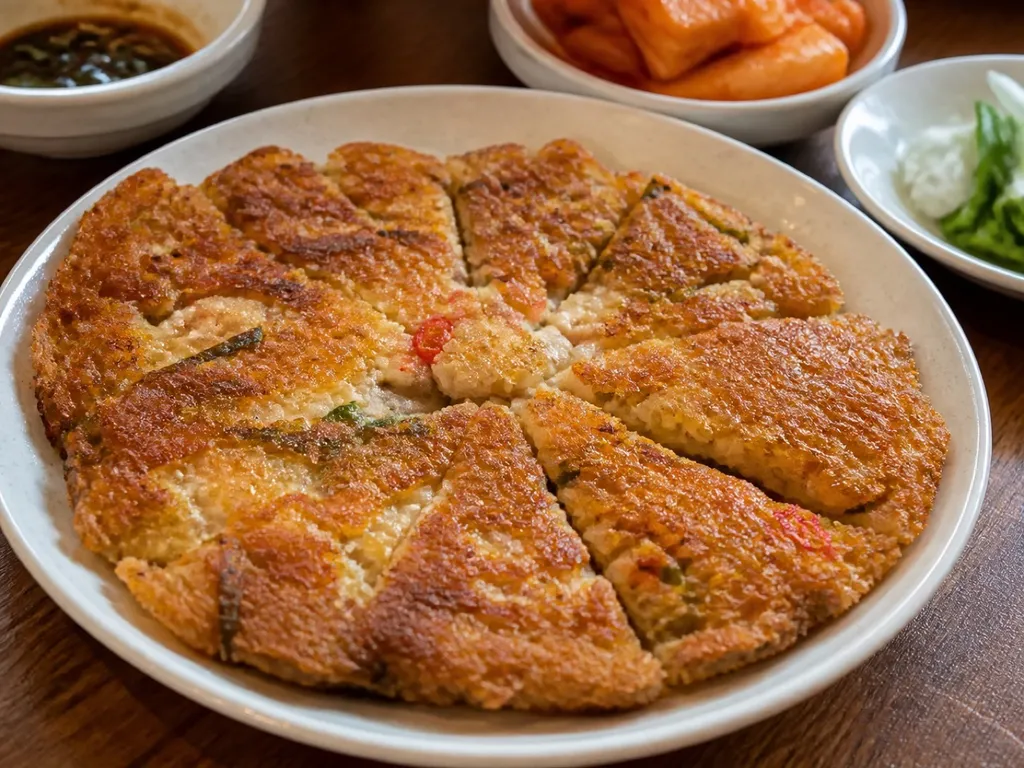 Images are for illustrative purposes only, may be inaccurate, and do not guarantee the presence or absence of specific ingredients.
 Listahan Family Score™
79/100
Good fit for most families
Score reflects how well this recipe fits a typical busy household. In the app, your Family Score is personalized to your household's allergens, kids, and pantry.
Nutrition
per serving870
Calories
80 g
Protein
89 g
Carbs
23 g
Fat
Estimated per serving. Actual values depend on the brands and portions you use.
Listahan cooking guide
Chef notes & practical guide
Technique notes, ingredient swaps, serve-alongside ideas, storage guidance, and equipment for this recipe.
Cultural context
Bindaetteok is a hearty pancake of ground mung beans studded with pork, kimchi, and bean sprouts, fried crisp at the edges. A market and rainy-day favorite, it is more substantial than flour-based jeon thanks to the protein-rich beans. Grinding the soaked beans fresh is what gives it its signature texture.
Listahan note
This version grinds soaked mung beans into a coarse batter and folds in pork, kimchi, and sprouts, frying it in plenty of oil for crisp, lacy edges.
Technique cues
- Grind the soaked mung beans coarse, not smooth, for the right texture.
- Squeeze the kimchi and sprouts dry so the pancake crisps.
- Fry in generous oil for the characteristic crisp edges.
Kitchen flow
- Parallel prep
- Soak and grind the beans ahead; prep the fillings while the oil heats.
- Make-ahead
- Grind the batter ahead; fry close to serving for crisp edges.
- Leftover move
- Re-crisp leftovers in a hot dry pan.
- Cleanup rhythm
- Rinse the grinder or blender promptly before the batter dries.
Ingredient brief
Role, handling, and swap guidance for each key ingredient.
Split mung beans
Base
Purpose: Ground fresh, they give the pancake its hearty, distinctive body.
Handling: Soak, then grind coarse with a little water.
Adaptation: These are essential; there is no real substitute.
Ground pork
Protein
Purpose: Adds savory richness to the bean batter.
Handling: Mix into the batter raw; it cooks as the pancake fries.
Adaptation: Omit for a vegetarian bindaetteok.
Sour kimchi
Flavor and tang
Purpose: Adds the signature tangy, spicy note.
Handling: Wash, squeeze dry, and chop before folding in.
Adaptation: Use more sprouts and scallion if avoiding kimchi.
Mung bean sprouts
Texture
Purpose: Add crunch and freshness inside the pancake.
Handling: Blanch and squeeze dry.
Adaptation: Soybean sprouts work too.
Technique notes
- Keep the grind coarse for a sturdy, textured pancake.
- Dry the fillings well so the pancake crisps rather than steams.
- Use enough oil; bindaetteok should fry, not bake, in the pan.
Ingredient swaps
- Vegetarian direction
- Skip the pork and add more sprouts, mushrooms, and scallion.
- Naturally gluten-free
- Made of mung beans, it is wheat-free; use a tamari-based dip.
- Milder direction
- Rinse the kimchi well or use less for a gentler flavor.
Serve alongside
- Soy-vinegar dipping sauce
- Kimchi
- Pickled radish
- Rice
- Makgeolli
- Soju
- Barley tea
Serving suggestions only — check pairings for your household's allergens.
Storage & reheating
- Best fresh; refrigerate up to 2 days.
- Re-crisp in a hot dry pan rather than a microwave.
- Freeze cooked pancakes up to 1 month; re-crisp from frozen.
Equipment
- Blender or grinder
- Large skillet
- Spatula
- Mixing bowl
Make this household-aware
Listahan Pro checks this recipe against your household's allergens, finds pantry-aware swaps, builds the shopping list, and helps you plan the week around it.
Plan it in Listahan
Add Bindaetteok (Mung Bean Pancake) to your week, check it against your household's allergens, and build the shopping list automatically.
More Korean recipes
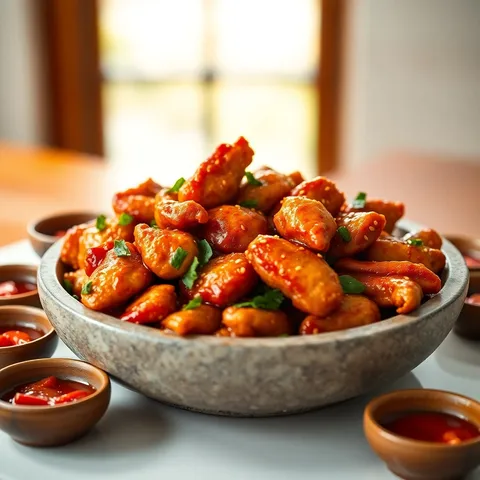 Korean Lens Verified Images are for illustrative purposes only, may be inaccurate, and do not guarantee the presence or absence of specific ingredients.
 Dakgalbi (Spicy Stir-fried Chicken)
Diced chicken marinated in a gochujang-based sauce, stir-fried with sweet potatoes, cabbage, perilla leaves, and tteok.
 Korean Lens Verified Images are for illustrative purposes only, may be inaccurate, and do not guarantee the presence or absence of specific ingredients.
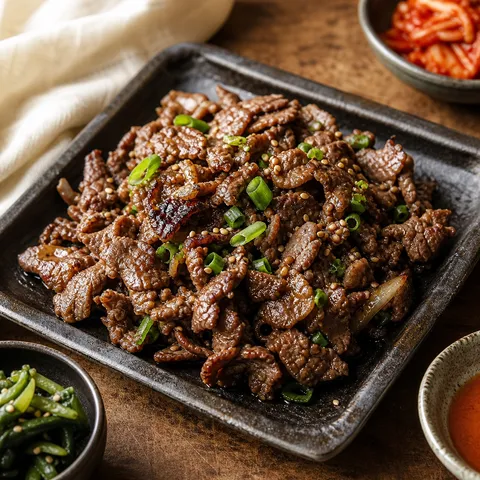
 Bulgogi (Marinated Beef BBQ)
Thinly sliced, marinated beef ribeye or sirloin grilled or stir-fried. Sweet, savory, and tender.
 Korean Lens Verified Images are for illustrative purposes only, may be inaccurate, and do not guarantee the presence or absence of specific ingredients.
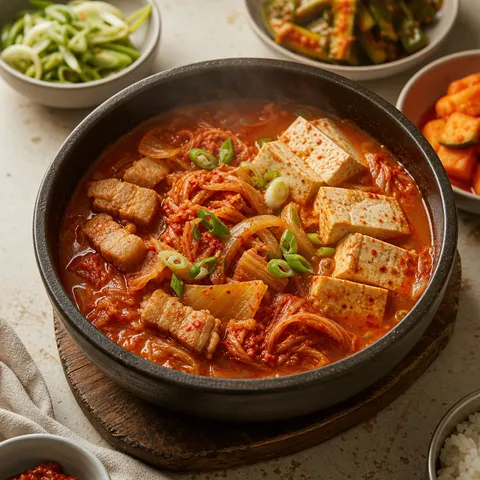
 Kimchi Jjigae (Kimchi Stew)
A classic, comforting stew made with aged kimchi, pork or seafood, scallions, onions, and diced tofu.