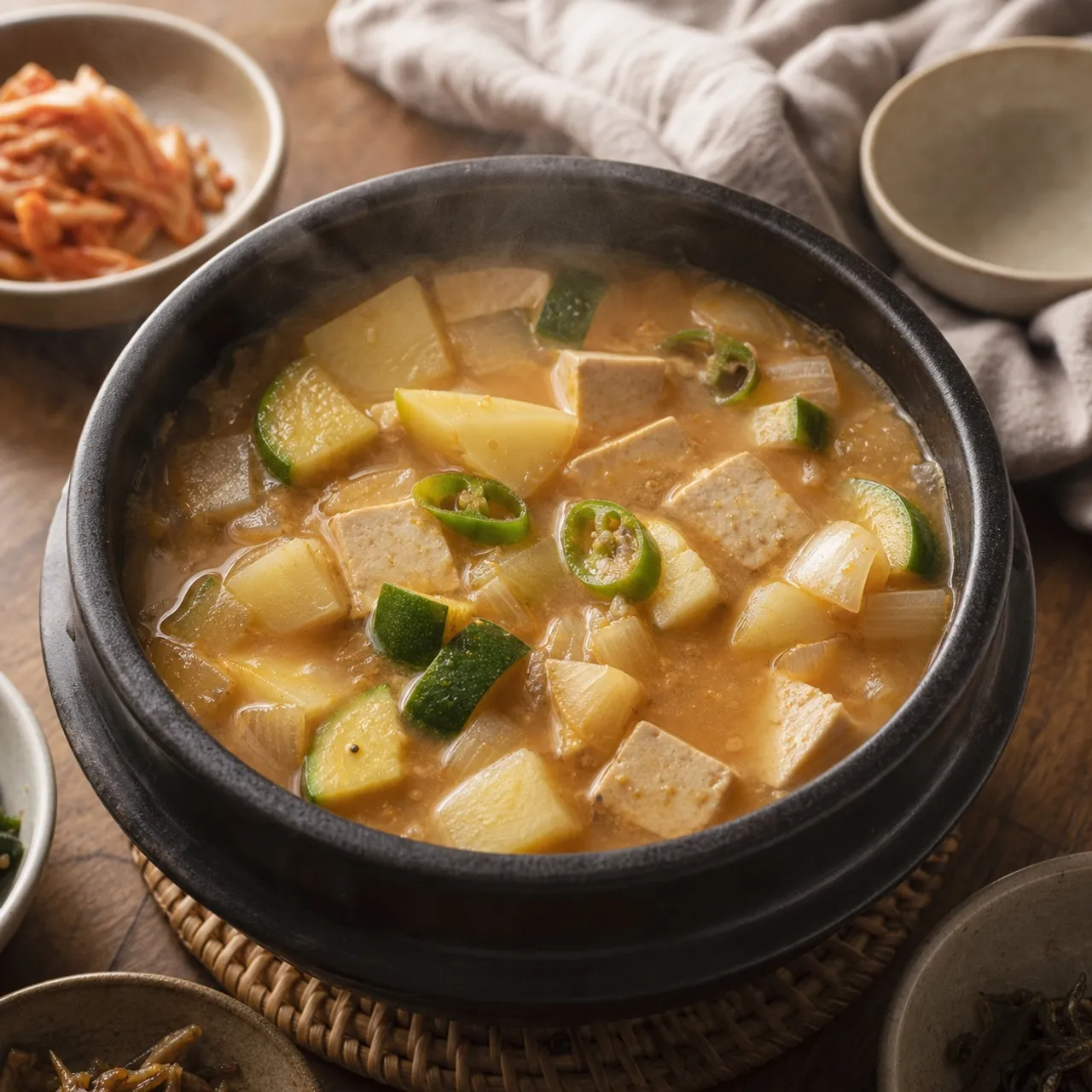
 Korean Images are for illustrative purposes only, may be inaccurate, and do not guarantee the presence or absence of specific ingredients.
 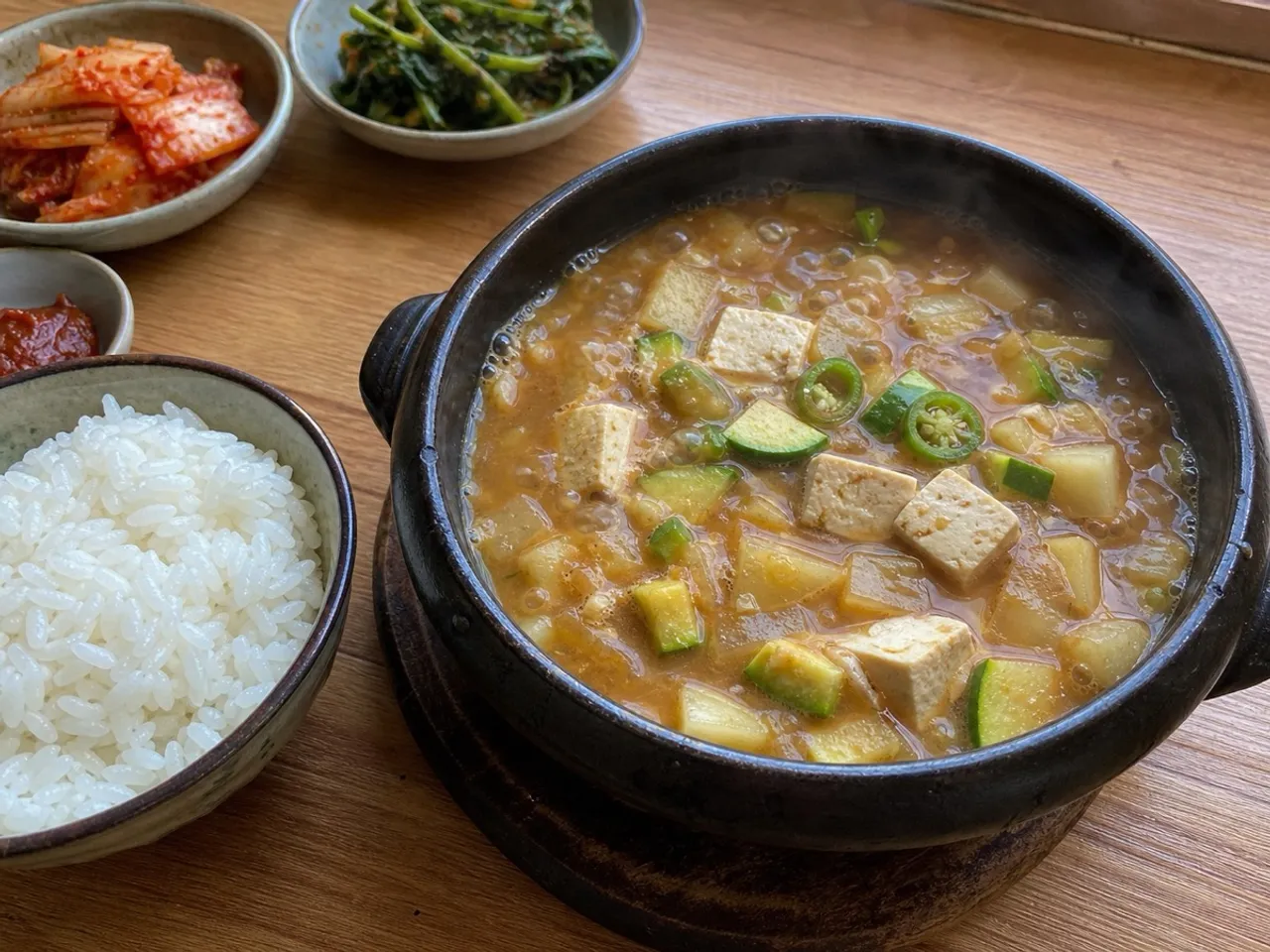 Serving Images are for illustrative purposes only, may be inaccurate, and do not guarantee the presence or absence of specific ingredients.
 Doenjang Jjigae (Soybean Paste Stew)
A traditional Korean stew made with doenjang (fermented soybean paste), vegetables, seafood or meat, and tofu.
Contains common allergens
In the app, Listahan checks these against your household automatically.
Good to know
- One-pot
- Ready in under 30 minutes
Matched from this dish's own ingredients and timing. Browse more: one-pot dinners30-minute meals
Instructions
6 steps- 1
Pour the anchovy-kelp broth into a traditional earthenware pot (ttukbaegi) or small saucepan and bring to a boil over medium-high heat.
- 2
Place the doenjang in a small mesh strainer and lower it into the broth. Use a spoon to push the paste through the strainer, ensuring it dissolves completely without clumps.
- 3
Add the diced potato, onion, and minced garlic to the boiling broth. Reduce the heat to medium and simmer for 5-7 minutes until the potatoes are halfway cooked.
- 4
Stir in the diced zucchini and continue to simmer for another 4-5 minutes until all the vegetables are perfectly tender.
- 5
Add the cubed tofu and sliced green chili pepper. Let the stew bubble for 2-3 more minutes.
- 6
Skim off any excess foam from the top and serve bubbling hot with steamed rice.
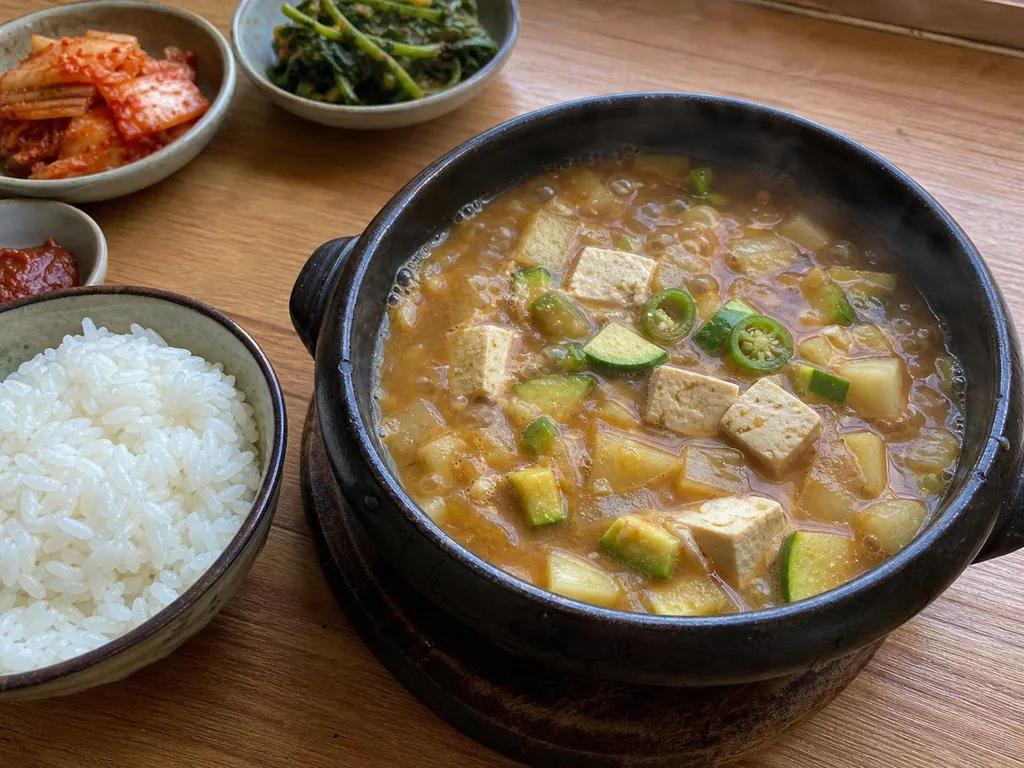 Images are for illustrative purposes only, may be inaccurate, and do not guarantee the presence or absence of specific ingredients.
 Listahan Family Score™
63/100
Works for many families
Score reflects how well this recipe fits a typical busy household. In the app, your Family Score is personalized to your household's allergens, kids, and pantry.
Nutrition
per serving190
Calories
22 g
Protein
11 g
Carbs
6 g
Fat
Estimated per serving. Actual values depend on the brands and portions you use.
Listahan cooking guide
Chef notes & practical guide
Technique notes, ingredient swaps, serve-alongside ideas, storage guidance, and equipment for this recipe.
Cultural context
Doenjang Jjigae is the homey, everyday Korean stew built on doenjang, the funky fermented soybean paste that is a cornerstone of the cuisine. Earthy and deeply savory, it simmers with tofu, vegetables, and sometimes seafood or pork. For many Koreans it is the taste of home and a daily staple at the table.
Listahan note
This version dissolves the doenjang into an anchovy-kelp broth and keeps the vegetables rustic, letting the fermented paste's deep savor lead.
Technique cues
- Dissolve the doenjang fully so the broth is smooth, not lumpy.
- Do not over-salt; doenjang is already deeply salty and savory.
- Add tofu and zucchini late so they hold their shape.
Kitchen flow
- Parallel prep
- Dice the vegetables while the broth comes to a simmer.
- Make-ahead
- The stew keeps and deepens; reheat gently the next day.
- Leftover move
- Spoon leftover stew over rice for a quick, savory bowl.
- Cleanup rhythm
- One pot; rinse soon, as the paste can stick to the sides.
Ingredient brief
Role, handling, and swap guidance for each key ingredient.
Doenjang (fermented soybean paste)
Flavor base
Purpose: Its earthy, fermented savor is the soul of the stew.
Handling: Whisk into the broth until fully dissolved.
Adaptation: Japanese miso is milder; use a bit more and less salt.
Anchovy-kelp broth
Liquid base
Purpose: Adds savory depth that complements the doenjang.
Handling: Simmer the broth first, then stir in the paste.
Adaptation: Vegetable or kelp broth keeps it vegetarian.
Tofu
Soft protein
Purpose: Adds silky body and mild contrast.
Handling: Cube and add near the end.
Adaptation: Firm or soft tofu both work.
Zucchini, potato, onion
Vegetables
Purpose: Give the stew its rustic, hearty body.
Handling: Dice evenly; add potato early and zucchini late.
Adaptation: Use whatever firm vegetables you have.
Technique notes
- Taste before adding any salt; the doenjang usually provides enough.
- Keep the vegetables a little chunky for a rustic, homey stew.
- A small piece of green chili at the end adds aroma without much heat.
Ingredient swaps
- Vegetarian direction
- Use kelp or mushroom broth and skip any seafood.
- Heartier direction
- Add diced pork or beef and brown it first.
- Gluten-free direction
- Confirm the doenjang is wheat-free, as some brands contain wheat.
Serve alongside
- Steamed white rice
- Kimchi
- Seasoned spinach
- Grilled fish
- Barley tea
- Cold water
- Soju
Serving suggestions only — check pairings for your household's allergens.
Storage & reheating
- Refrigerate up to 4 days; the flavor improves with time.
- Reheat gently on the stovetop until bubbling.
- Freeze up to 2 months, though the tofu softens.
Equipment
- Earthenware pot (ttukbaegi) or small pot
- Ladle
- Cutting board
- Whisk
Make this household-aware
Listahan Pro checks this recipe against your household's allergens, finds pantry-aware swaps, builds the shopping list, and helps you plan the week around it.
Plan it in Listahan
Add Doenjang Jjigae (Soybean Paste Stew) to your week, check it against your household's allergens, and build the shopping list automatically.
More Korean recipes
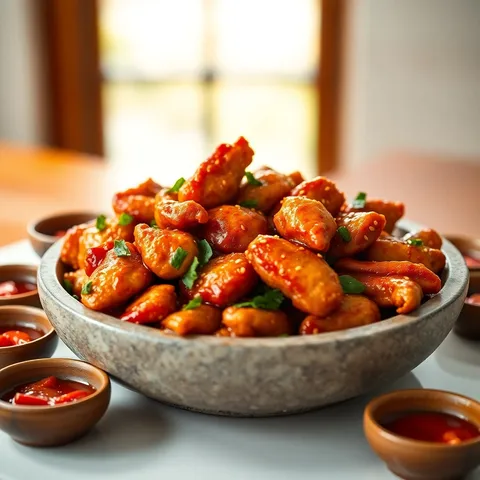 Korean Lens Verified Images are for illustrative purposes only, may be inaccurate, and do not guarantee the presence or absence of specific ingredients.
 Dakgalbi (Spicy Stir-fried Chicken)
Diced chicken marinated in a gochujang-based sauce, stir-fried with sweet potatoes, cabbage, perilla leaves, and tteok.
 Korean Lens Verified Images are for illustrative purposes only, may be inaccurate, and do not guarantee the presence or absence of specific ingredients.
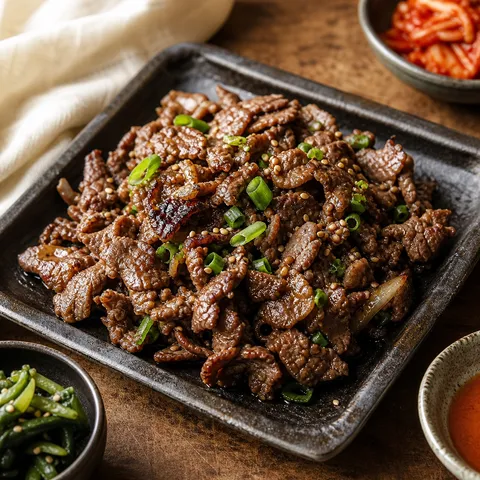
 Bulgogi (Marinated Beef BBQ)
Thinly sliced, marinated beef ribeye or sirloin grilled or stir-fried. Sweet, savory, and tender.
 Korean Lens Verified Images are for illustrative purposes only, may be inaccurate, and do not guarantee the presence or absence of specific ingredients.
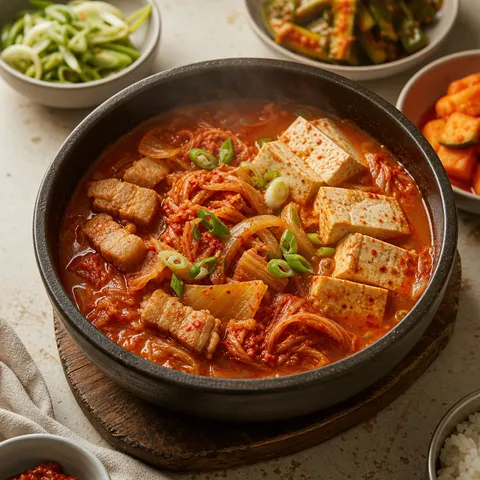
 Kimchi Jjigae (Kimchi Stew)
A classic, comforting stew made with aged kimchi, pork or seafood, scallions, onions, and diced tofu.