 Korean Images are for illustrative purposes only, may be inaccurate, and do not guarantee the presence or absence of specific ingredients.
  Serving Images are for illustrative purposes only, may be inaccurate, and do not guarantee the presence or absence of specific ingredients.
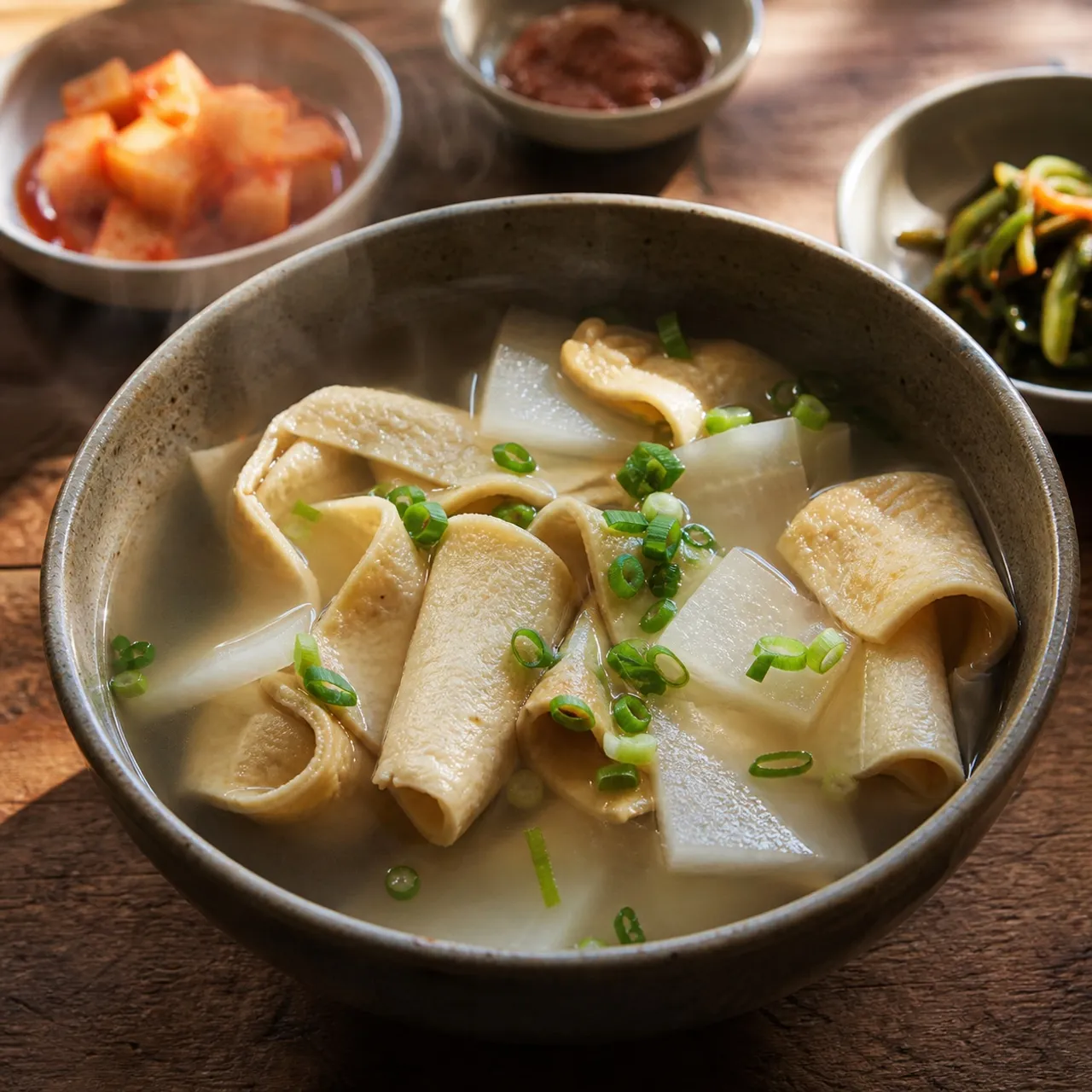
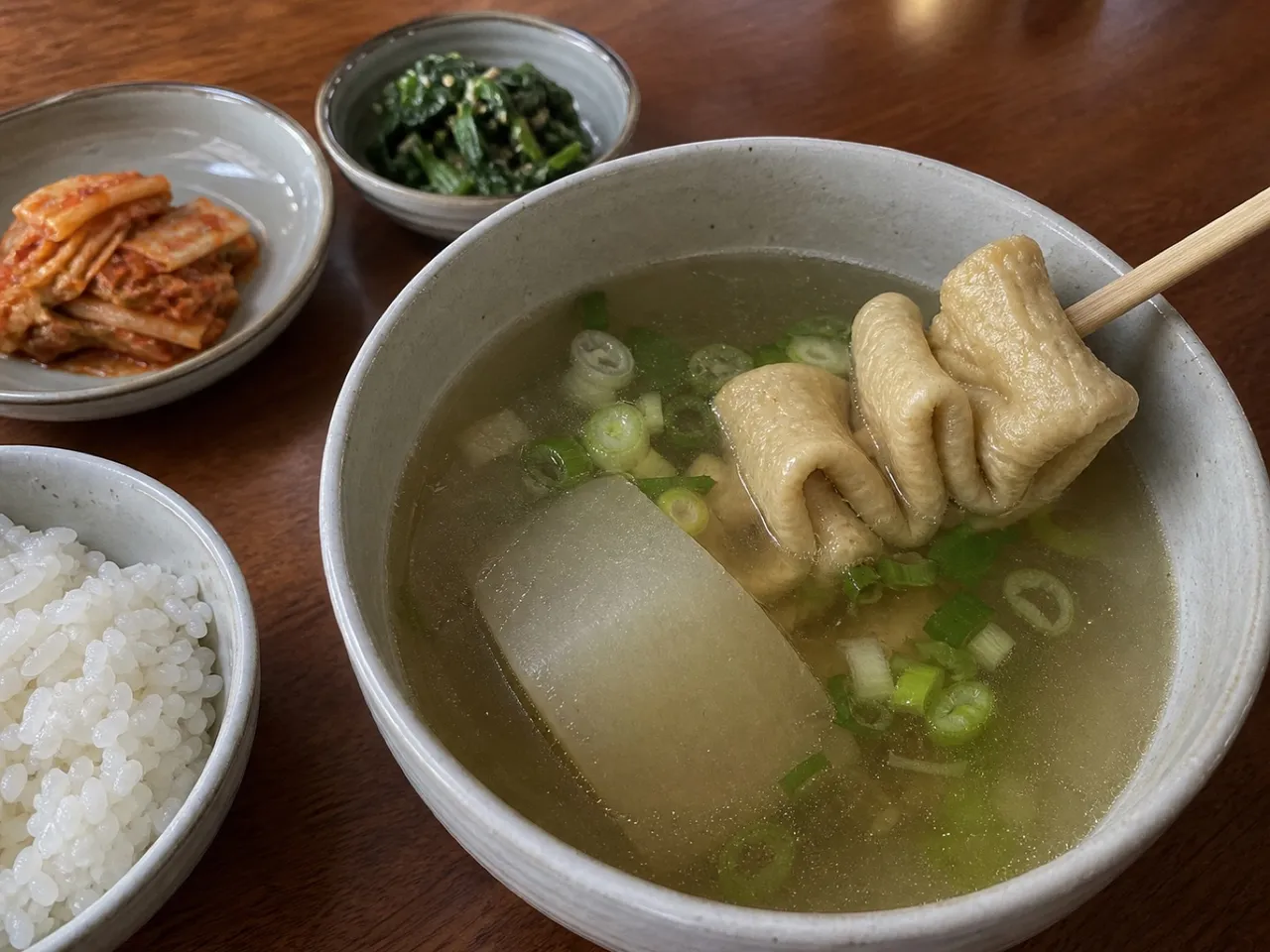
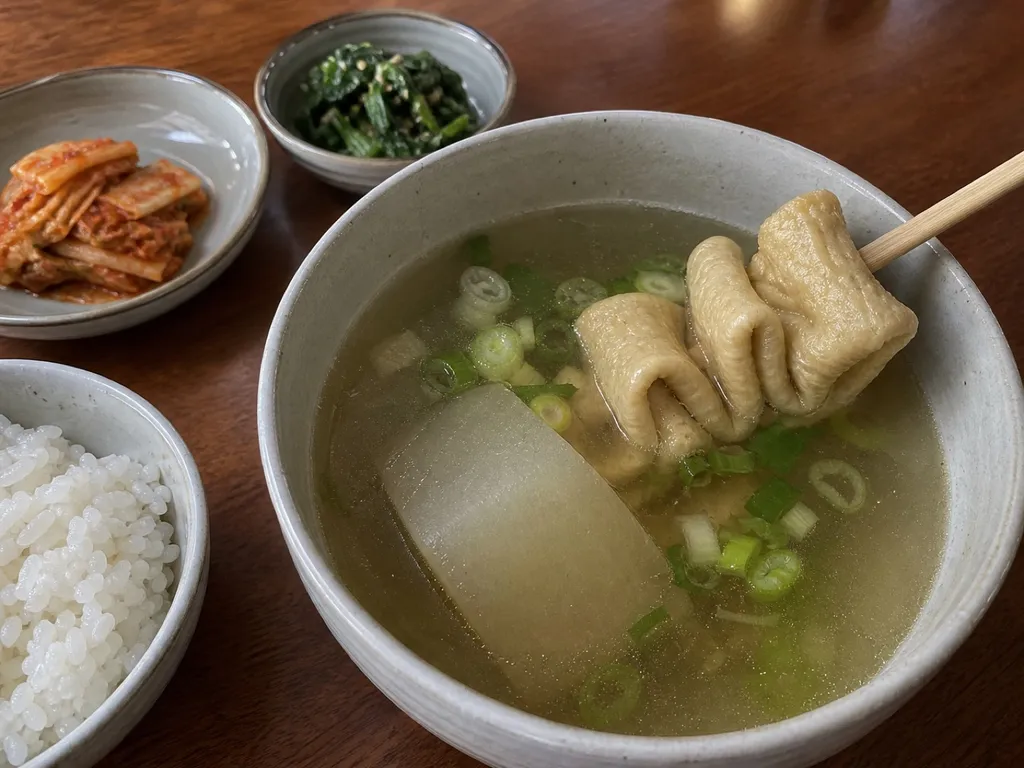
 Eomuk Guk (Fish Cake Soup)
A comforting, light soup made with Korean fish cakes (eomuk) and a delicate radish and anchovy broth.
Contains common allergens
In the app, Listahan checks these against your household automatically.
Good to know
- One-pot
- Ready in under 30 minutes
Matched from this dish's own ingredients and timing. Browse more: one-pot dinners30-minute meals
Instructions
6 steps- 1
Prepare the broth by boiling the water, dried kelp, dried anchovies, and squares of Korean radish in a pot. After 10 minutes of boiling, remove and discard the kelp and anchovies, keeping the radish in the pot.
- 2
Take the rectangular sheets of fish cake, fold them in half lengthwise, and thread them tightly onto long wooden skewers in an accordion-like pattern.
- 3
Season the clear boiling broth with the soup soy sauce. Add a pinch of salt if necessary.
- 4
Place the fish cake skewers directly into the bubbling broth.
- 5
Boil gently for 3-5 minutes until the fish cakes are noticeably swollen, soft, and have released their savory flavor into the soup.
- 6
Serve piping hot in bowls, ladling the broth and a piece of soft radish over the skewer, garnished with chopped scallions.
 Images are for illustrative purposes only, may be inaccurate, and do not guarantee the presence or absence of specific ingredients.
 Listahan Family Score™
63/100
Works for many families
Score reflects how well this recipe fits a typical busy household. In the app, your Family Score is personalized to your household's allergens, kids, and pantry.
Nutrition
per serving10
Calories
1 g
Protein
1 g
Carbs
0 g
Fat
Estimated per serving. Actual values depend on the brands and portions you use.
Listahan cooking guide
Chef notes & practical guide
Technique notes, ingredient swaps, serve-alongside ideas, storage guidance, and equipment for this recipe.
Cultural context
Eomuk guk is a clear, warming fish cake soup found everywhere from street carts to home kitchens in Korea, where skewered fish cakes simmer in a savory anchovy-kelp broth and are sold to passersby on cold days. The broth is traditionally offered free for sipping while you eat the skewers.
Listahan note
This version builds a proper anchovy-kelp-radish broth and folds the fish cake sheets accordion-style onto skewers, the street-cart presentation that lets each diner lift a whole skewer from the pot.
Technique cues
- Removing the kelp and anchovies after exactly ten minutes keeps the broth clean and savory; left longer, the kelp turns the stock slimy and the anchovies bitter.
- Keeping the radish squares in the pot after straining lets them soften and sweeten the clear broth as the soup finishes.
- Folding the fish cake onto skewers in an accordion pattern exposes more surface so the cakes swell and release flavor quickly into the broth.
Kitchen flow
- Parallel prep
- Skewer the fish cakes while the anchovy-kelp broth simmers its first ten minutes.
- Make-ahead
- Make the strained broth a day ahead and refrigerate; add the skewers fresh when you reheat it.
- Leftover move
- Use leftover broth as a savory base for ramyeon or a quick rice-cake tteokguk.
- Cleanup rhythm
- Strain the spent anchovies and kelp out in one pass so cleanup is just the pot and skewers.
Ingredient brief
Role, handling, and swap guidance for each key ingredient.
flat Korean fish cake (eomuk)
Main protein
Purpose: The springy fish cake sheets are the centerpiece and lend the soup its savory seafood body.
Handling: Fold lengthwise and thread accordion-style onto skewers before simmering.
Adaptation: Japanese satsuma-age or any flat fish cake works with no real change.
dried anchovies
Broth base
Purpose: They give the stock its deep, savory backbone.
Handling: Remove the heads and guts first to avoid bitterness, then simmer ten minutes and discard.
Adaptation: Anchovy or dashi stock powder works in a hurry, with a flatter result.
dried kelp (dashima)
Umami base
Purpose: It contributes the clean glutamate depth that rounds out the anchovy stock.
Handling: Simmer only ten minutes then remove, or the broth turns slimy.
Adaptation: A small piece of kombu is the same ingredient under a Japanese name.
Korean radish (mu)
Sweetening vegetable
Purpose: Simmered in large squares it lends a clean sweetness and a soft bite to the bowl.
Handling: Cut into large squares and leave in the pot after straining the broth.
Adaptation: Daikon radish is nearly identical and needs no adjustment.
soup soy sauce
Seasoning
Purpose: It seasons the broth while keeping it clear, unlike darker regular soy sauce.
Handling: Add to the boiling broth and adjust with a pinch of salt if needed.
Adaptation: Regular soy sauce works but darkens the broth; use a little less.
Technique notes
- Pull the kelp and anchovies at the ten-minute mark; this is the single step that keeps the broth from turning slimy or bitter.
- Wait for the fish cakes to swell visibly before serving, the sign they have softened and given their flavor to the broth.
- Keep the simmer gentle once the skewers are in so the delicate fish cakes do not break apart.
Ingredient swaps
- Gluten-free direction
- Use tamari and seek out gluten-free fish cakes, since most eomuk contains wheat starch; the broth itself is naturally gluten-free.
- Lower-sodium direction
- Cut the soup soy sauce and skip the extra salt, leaning on the radish and anchovy stock for savor.
- Spicy direction
- Stir a spoon of gochugaru into the finished broth for a warming spicy-fish-cake version.
Serve alongside
- Tteokbokki (spicy rice cakes)
- Steamed short-grain rice
- Danmuji (yellow pickled radish)
- Gimbap (seaweed rice rolls)
- Soju, neat
- Cold light lager
- Hot barley tea
Serving suggestions only — check pairings for your household's allergens.
Storage & reheating
- Refrigerate broth and skewers together for up to 3 days.
- Reheat gently on the stovetop until steaming; the fish cakes soften further but stay good.
- Freeze the strained broth for up to 2 months and thaw overnight; add fresh fish cakes after reheating.
Equipment
- Medium soup pot
- Long wooden skewers
- Fine strainer for the anchovies and kelp
- Ladle
Make this household-aware
Listahan Pro checks this recipe against your household's allergens, finds pantry-aware swaps, builds the shopping list, and helps you plan the week around it.
Plan it in Listahan
Add Eomuk Guk (Fish Cake Soup) to your week, check it against your household's allergens, and build the shopping list automatically.
More Korean recipes
 Korean Lens Verified Images are for illustrative purposes only, may be inaccurate, and do not guarantee the presence or absence of specific ingredients.
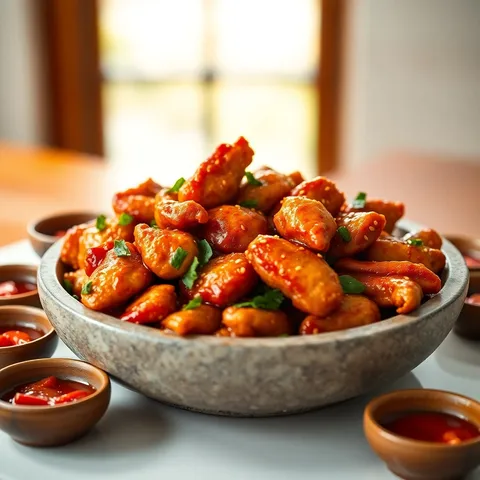
 Dakgalbi (Spicy Stir-fried Chicken)
Diced chicken marinated in a gochujang-based sauce, stir-fried with sweet potatoes, cabbage, perilla leaves, and tteok.
 Korean Lens Verified Images are for illustrative purposes only, may be inaccurate, and do not guarantee the presence or absence of specific ingredients.
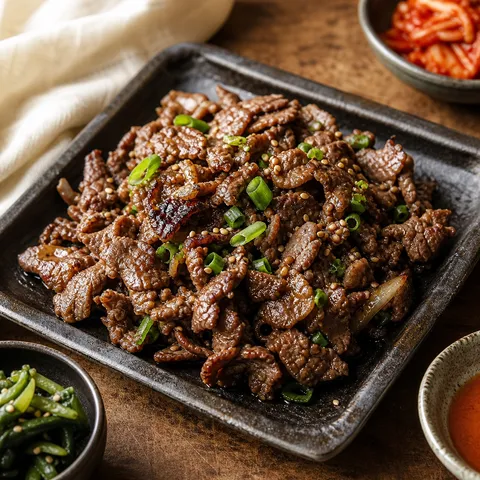
 Bulgogi (Marinated Beef BBQ)
Thinly sliced, marinated beef ribeye or sirloin grilled or stir-fried. Sweet, savory, and tender.
 Korean Lens Verified Images are for illustrative purposes only, may be inaccurate, and do not guarantee the presence or absence of specific ingredients.
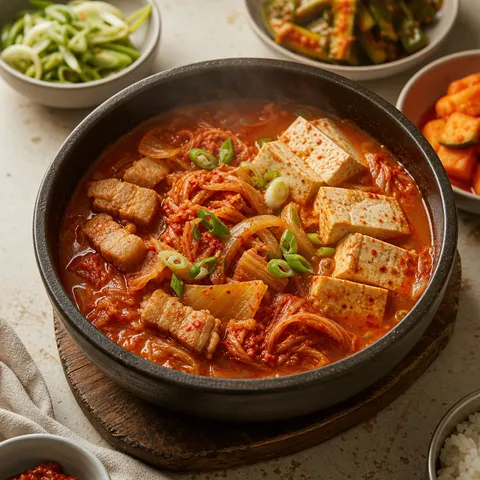
 Kimchi Jjigae (Kimchi Stew)
A classic, comforting stew made with aged kimchi, pork or seafood, scallions, onions, and diced tofu.