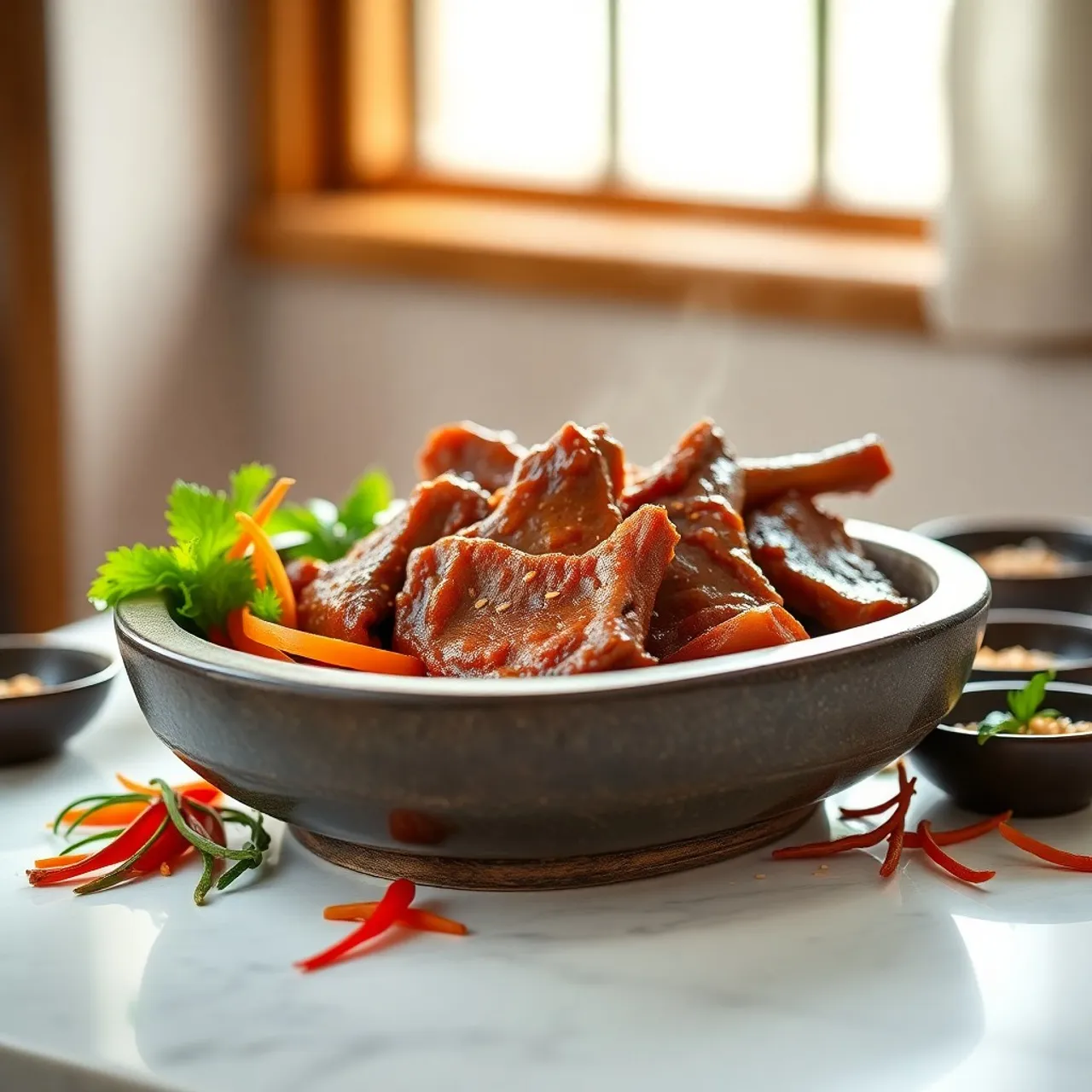
 Korean Images are for illustrative purposes only, may be inaccurate, and do not guarantee the presence or absence of specific ingredients.
 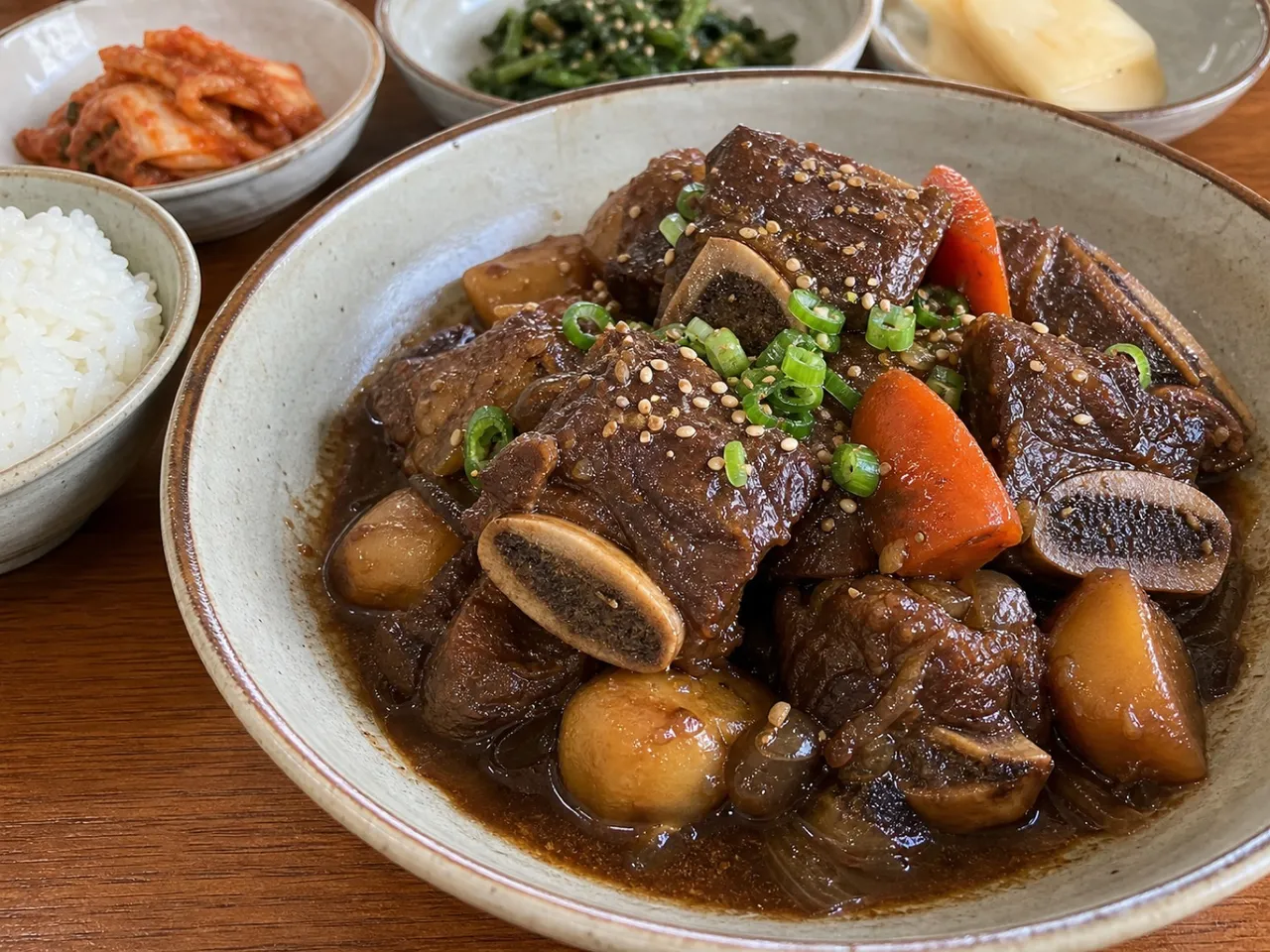 Serving Images are for illustrative purposes only, may be inaccurate, and do not guarantee the presence or absence of specific ingredients.
 Galbijjim (Braised Short Ribs)
A luxurious dish of braised beef short ribs with a sweet and savory sauce, often prepared for holidays.
Contains common allergens
In the app, Listahan checks these against your household automatically.
Instructions
6 steps- 1
Submerge the short ribs in cold water for 30 minutes to draw out excess blood. Drain, then boil the ribs in a large pot of water for 5-7 minutes to remove impurities. Drain again and rinse the ribs thoroughly under cold running water.
- 2
In a blender, puree the Asian pear, onion, and garlic until completely smooth. Mix the puree with the soy sauce, brown sugar, and sesame oil.
- 3
Place the cleaned ribs in a heavy-bottomed pot or Dutch oven, pour the marinade over them, and add 2 cups of water. Bring to a boil over medium-high heat.
- 4
Once boiling, reduce the heat to low, cover the pot tightly, and simmer gently for 1 hour, stirring occasionally to ensure even cooking.
- 5
Add the carved chunks of carrot, Korean radish, and peeled chestnuts to the pot.
- 6
Leave the pot uncovered and increase the heat to medium. Simmer for an additional 30-40 minutes until the vegetables are tender, the meat is falling off the bone, and the sauce has reduced to a thick, glossy glaze.
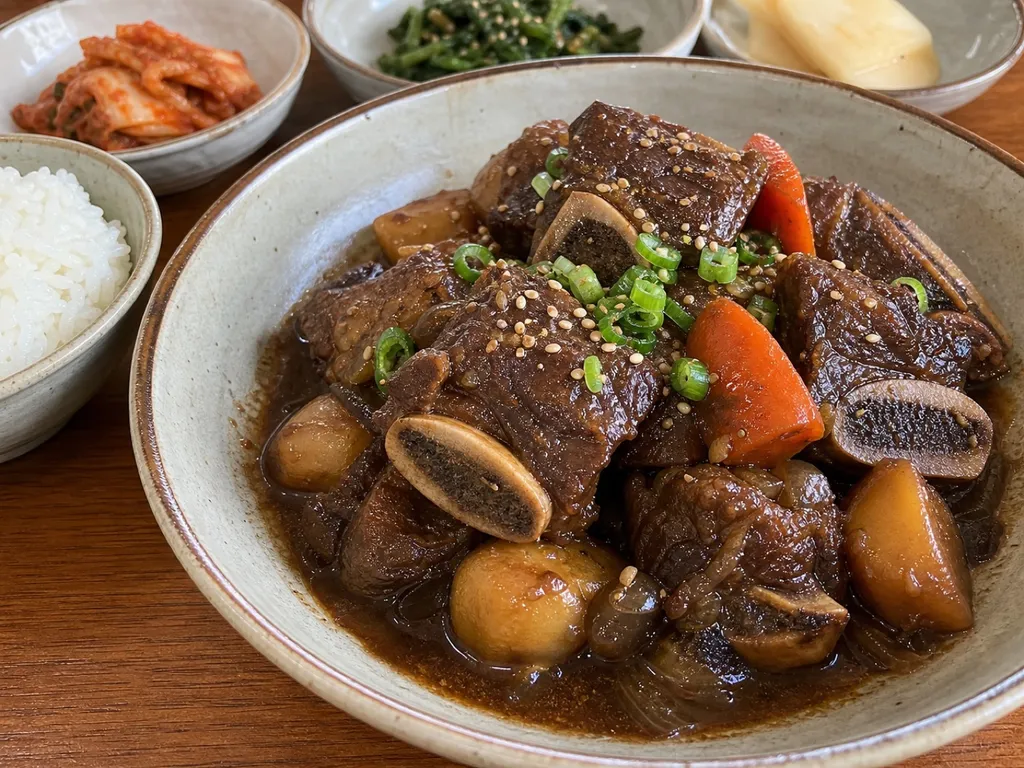 Images are for illustrative purposes only, may be inaccurate, and do not guarantee the presence or absence of specific ingredients.
 Listahan Family Score™
59/100
Works for many families
Score reflects how well this recipe fits a typical busy household. In the app, your Family Score is personalized to your household's allergens, kids, and pantry.
Nutrition
per serving550
Calories
50 g
Protein
12 g
Carbs
32 g
Fat
Estimated per serving. Actual values depend on the brands and portions you use.
Listahan cooking guide
Chef notes & practical guide
Technique notes, ingredient swaps, serve-alongside ideas, storage guidance, and equipment for this recipe.
Cultural context
Galbijjim is a celebratory braise of beef short ribs simmered until fork-tender in a sweet-savory soy sauce with pear, garlic, chestnuts, and root vegetables. A dish for holidays and special occasions, it is richer and more refined than everyday braises. The chestnuts and jujubes mark it as festive food.
Listahan note
This version blanches the ribs first for a clean sauce, then braises them low with grated pear and chestnuts until the meat is glossy and tender.
Technique cues
- Blanch the ribs first and discard the water for a cleaner, clearer braise.
- Grate the pear and onion into the sauce to tenderize and round the sweetness.
- Add the vegetables and chestnuts partway so they cook without falling apart.
Kitchen flow
- Parallel prep
- Blanch the ribs and prep vegetables while the sauce is mixed.
- Make-ahead
- Galbijjim deepens overnight; make it a day ahead and reheat, skimming fat.
- Leftover move
- Shred leftover rib meat over rice with the reduced sauce.
- Cleanup rhythm
- One heavy pot; chill the sauce so the fat lifts off easily.
Ingredient brief
Role, handling, and swap guidance for each key ingredient.
Bone-in beef short ribs
Main protein
Purpose: Their collagen melts into a glossy, tender braise.
Handling: Blanch first to remove impurities, then braise low and slow.
Adaptation: Boneless short ribs work but give a less rich sauce.
Soy sauce and brown sugar
Braise base
Purpose: Provide the sweet-savory backbone of the sauce.
Handling: Balance them and simmer until the sauce reduces.
Adaptation: Tamari keeps it gluten-free.
Asian pear
Tenderizer
Purpose: Softens the meat and adds a clean fruity sweetness.
Handling: Grate into the braising liquid.
Adaptation: Kiwi or pineapple juice tenderizes similarly.
Chestnuts and radish
Festive vegetables
Purpose: Add sweetness, texture, and the celebratory character.
Handling: Round the radish edges so they do not crumble; add partway.
Adaptation: Carrot and potato are common substitutes.
Technique notes
- Blanching the ribs is the key to a clean, glossy sauce.
- Braise gently; a hard boil toughens the meat before it tenderizes.
- Reduce at the end until the sauce coats the ribs.
Ingredient swaps
- Gluten-free direction
- Replace the soy sauce with tamari or a certified gluten-free soy sauce — check that any other packaged ingredients here are labeled gluten-free too. This one leans on the bone-in beef short ribs.
- Nut-free direction
- Skip the chestnuts and add more radish or carrot.
- Lower-sodium direction
- Use low-sodium soy and a touch more pear.
Serve alongside
- Steamed white rice
- Kimchi
- Japchae
- Seasoned spinach
- Barley tea
- Soju
- Light lager
Serving suggestions only — check pairings for your household's allergens.
Storage & reheating
- Refrigerate up to 4 days; the flavor improves overnight.
- Reheat gently, skimming any solidified fat first.
- Freeze up to 2 months; thaw and warm through.
Equipment
- Large heavy pot or Dutch oven
- Tongs
- Box grater
- Ladle
Make this household-aware
Listahan Pro checks this recipe against your household's allergens, finds pantry-aware swaps, builds the shopping list, and helps you plan the week around it.
Plan it in Listahan
Add Galbijjim (Braised Short Ribs) to your week, check it against your household's allergens, and build the shopping list automatically.
More Korean recipes
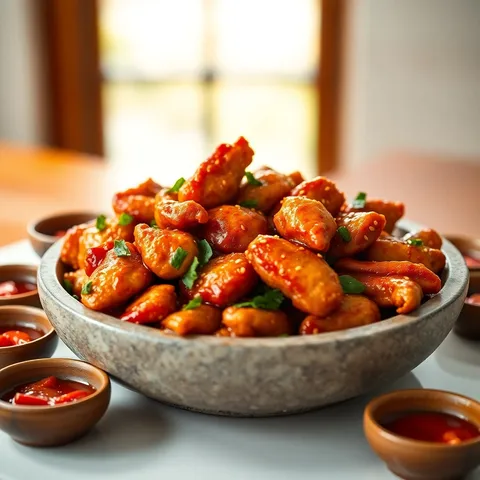 Korean Lens Verified Images are for illustrative purposes only, may be inaccurate, and do not guarantee the presence or absence of specific ingredients.
 Dakgalbi (Spicy Stir-fried Chicken)
Diced chicken marinated in a gochujang-based sauce, stir-fried with sweet potatoes, cabbage, perilla leaves, and tteok.
 Korean Lens Verified Images are for illustrative purposes only, may be inaccurate, and do not guarantee the presence or absence of specific ingredients.
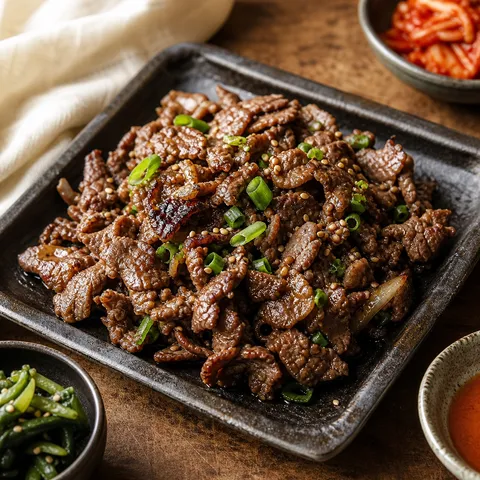
 Bulgogi (Marinated Beef BBQ)
Thinly sliced, marinated beef ribeye or sirloin grilled or stir-fried. Sweet, savory, and tender.
 Korean Lens Verified Images are for illustrative purposes only, may be inaccurate, and do not guarantee the presence or absence of specific ingredients.
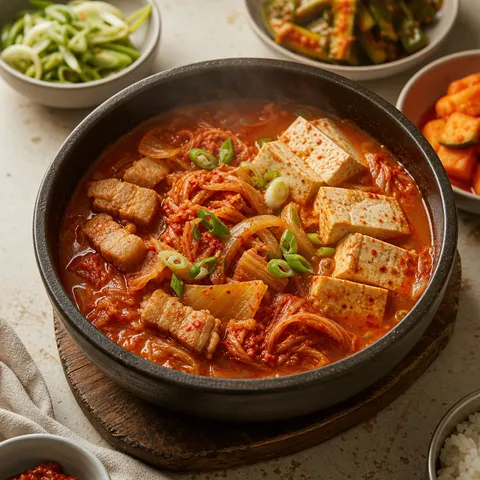
 Kimchi Jjigae (Kimchi Stew)
A classic, comforting stew made with aged kimchi, pork or seafood, scallions, onions, and diced tofu.