 Korean Images are for illustrative purposes only, may be inaccurate, and do not guarantee the presence or absence of specific ingredients.
  Serving Images are for illustrative purposes only, may be inaccurate, and do not guarantee the presence or absence of specific ingredients.
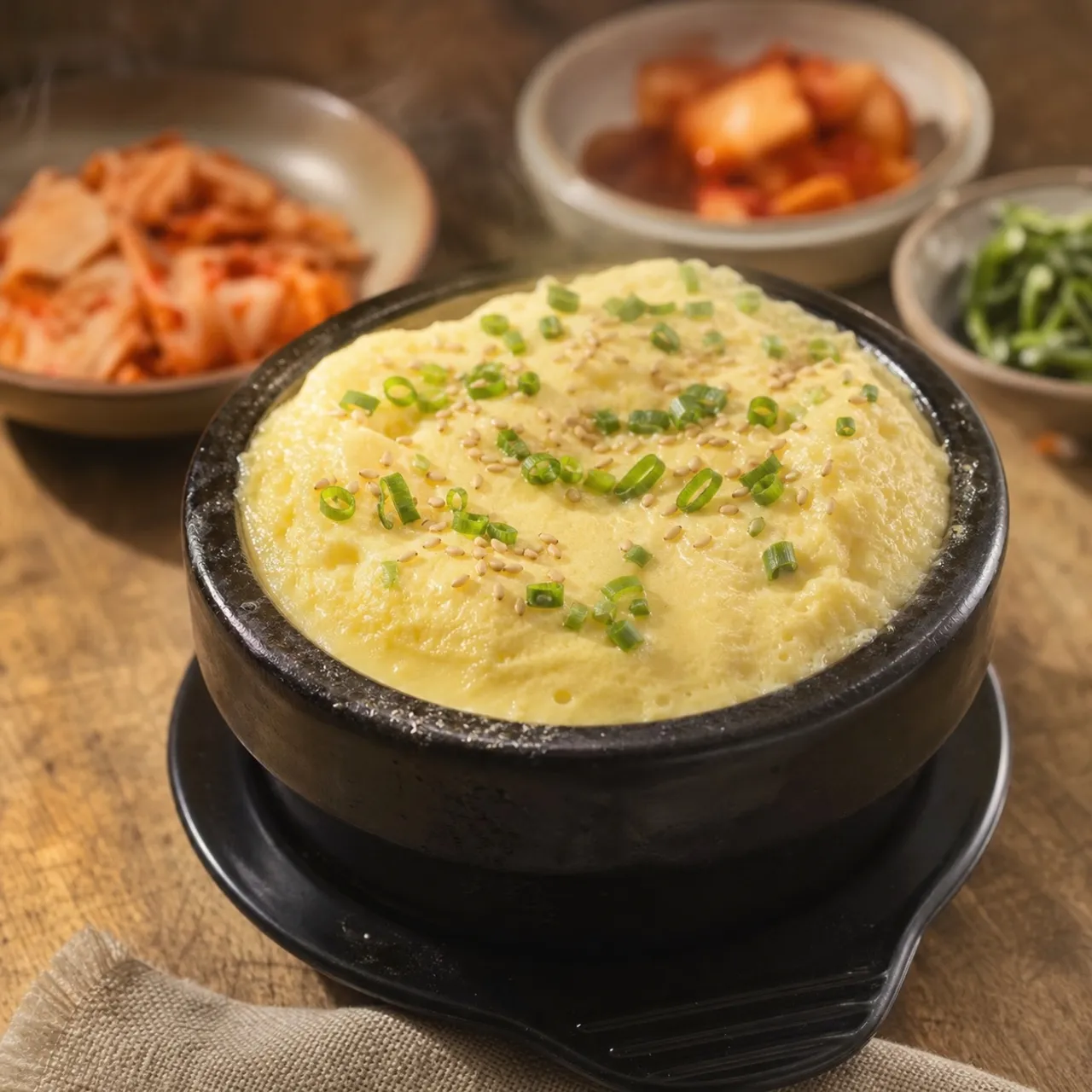
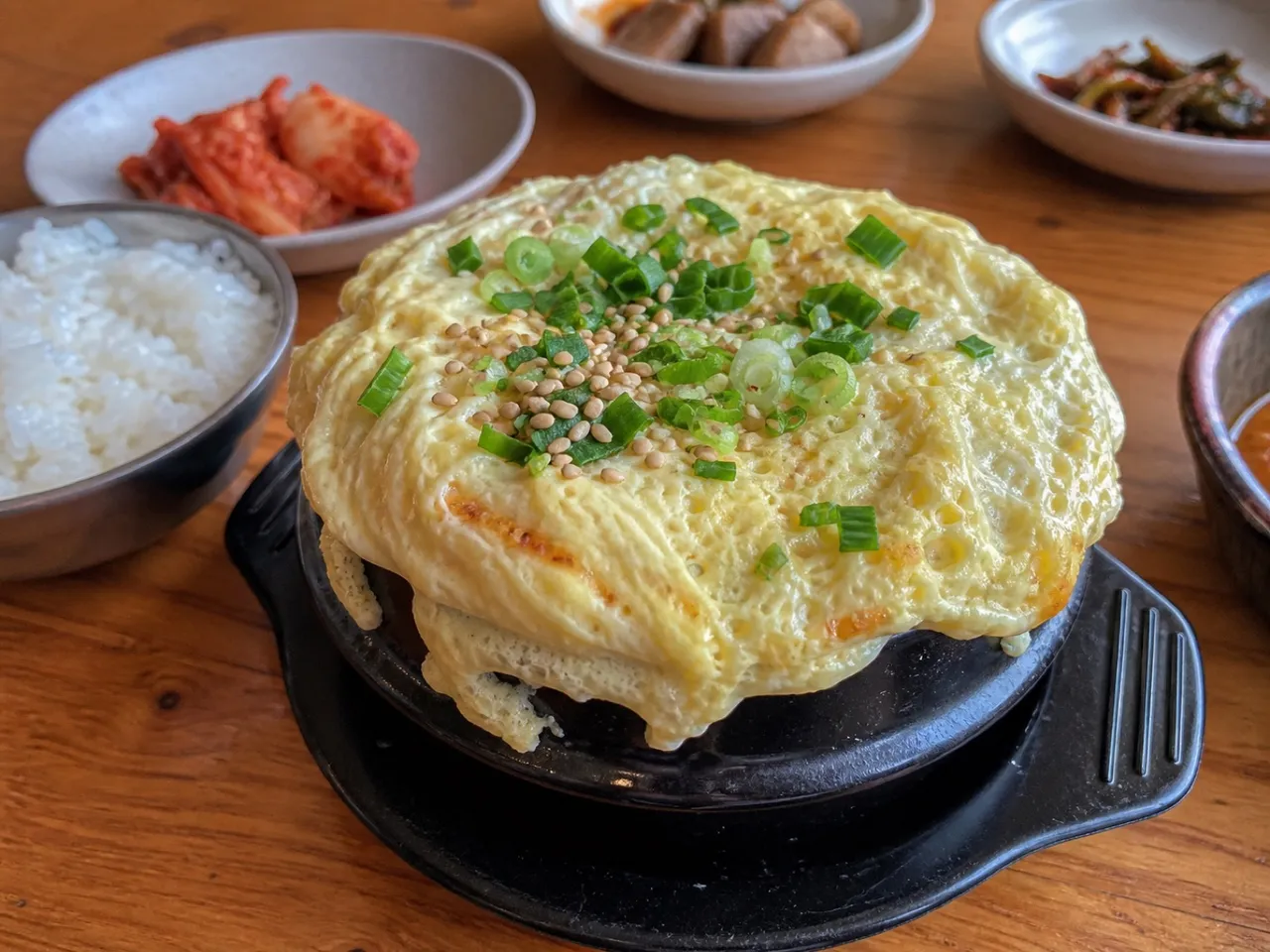
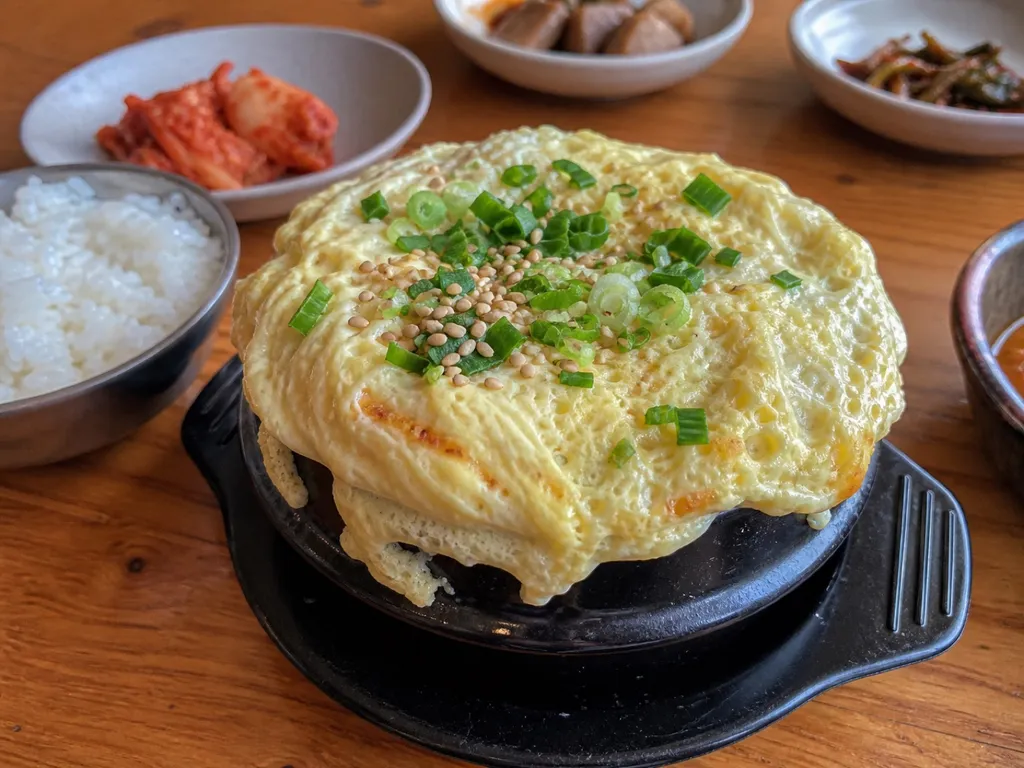
 Gyeran Jjim (Steamed Egg)
A savory, fluffy, and hot steamed egg casserole, usually served in an earthenware pot.
Contains common allergens
In the app, Listahan checks these against your household automatically.
Good to know
- One-pot
- Ready in under 30 minutes
Matched from this dish's own ingredients and timing. Browse more: one-pot dinners30-minute meals
Instructions
6 steps- 1
In a bowl, vigorously whisk the eggs until smooth and uniform. Stir in the chopped salted shrimp (saeujeot) or salt.
- 2
Coat the inside of a small Korean earthenware pot (ttukbaegi) with a thin layer of sesame oil.
- 3
Pour the egg mixture and the anchovy-kelp broth into the pot. Stir to combine.
- 4
Place the pot over medium-low heat. As the edges begin to set, gently scrape the bottom and sides with a spoon to ensure even cooking and prevent burning (about 3-4 minutes).
- 5
Once the egg mixture is about 70-80% set (it will look like wet curds), mound it slightly in the center, cover the pot with a heatproof bowl of the same diameter, and reduce heat to the lowest setting.
- 6
Steam for 3-4 minutes until the eggs puff up dramatically like a soufflé. Uncover carefully, garnish with chopped scallions and sesame seeds, and serve immediately before it deflates.
 Images are for illustrative purposes only, may be inaccurate, and do not guarantee the presence or absence of specific ingredients.
 Listahan Family Score™
62/100
Works for many families
Score reflects how well this recipe fits a typical busy household. In the app, your Family Score is personalized to your household's allergens, kids, and pantry.
Nutrition
per serving140
Calories
15 g
Protein
1 g
Carbs
8 g
Fat
Estimated per serving. Actual values depend on the brands and portions you use.
Listahan cooking guide
Chef notes & practical guide
Technique notes, ingredient swaps, serve-alongside ideas, storage guidance, and equipment for this recipe.
Cultural context
Gyeran jjim is a soft, savory steamed egg dish that appears as a comforting side at Korean tables and barbecue restaurants, where it often arrives dramatically puffed in a hot stone bowl. It is everyday home cooking at its gentlest, prized for a custardy texture rather than any single defining flavor.
Listahan note
This version cooks the eggs directly over the burner in a ttukbaegi, scraping the setting edges and then covering to steam, which is how it gets the dramatic souffle puff instead of a flat custard.
Technique cues
- Cutting the eggs with anchovy-kelp broth rather than water gives the custard a savory depth and a softer set.
- Scraping the bottom and sides as the edges set keeps the eggs cooking evenly and prevents the base from scorching on direct heat.
- Covering the pot once the eggs are 70 to 80 percent set traps steam that puffs the custard up like a souffle, so it must be served immediately before it deflates.
Kitchen flow
- Parallel prep
- Whisk the eggs and chop the scallion while the broth comes to temperature so cooking is continuous.
- Make-ahead
- This dish does not hold; mix the egg base up to an hour ahead but cook it only when ready to serve.
- Leftover move
- Fold cooled leftover steamed egg into fried rice for a soft, savory addition.
- Cleanup rhythm
- Soak the ttukbaegi right away while warm so the egg film lifts off easily.
Ingredient brief
Role, handling, and swap guidance for each key ingredient.
large eggs
Main body
Purpose: Whisked smooth, they form the entire custard, so their texture is the dish.
Handling: Whisk vigorously until completely uniform with no streaks for an even set.
Adaptation: No real substitute; for extra silkiness strain the beaten eggs before cooking.
anchovy-kelp broth
Savory liquid
Purpose: It loosens the eggs into a tender custard while adding umami depth.
Handling: Stir it into the beaten eggs to dilute them to a pourable, custardy ratio.
Adaptation: Plain water works but yields a blander, less savory result; add a pinch more salt.
saeujeot
Salt and umami
Purpose: Korean salted shrimp seasons the custard with a briny depth that plain salt lacks.
Handling: Finely chop and stir into the eggs so it distributes evenly.
Adaptation: Half a teaspoon of salt or a dash of fish sauce stands in, with less complexity.
sesame oil
Coating and aroma
Purpose: Rubbed in the pot it prevents sticking and adds a toasted finish.
Handling: Coat the inside of the ttukbaegi with a thin layer before pouring in the eggs.
Adaptation: Perilla oil or a neutral oil with a few drops of sesame oil works.
scallion
Fresh garnish
Purpose: It adds color and a mild bite against the soft custard.
Handling: Chop finely and scatter on top just before serving.
Adaptation: Chives work for a similar fresh, mild onion note.
Technique notes
- Whisk the eggs until truly uniform; any unmixed white leaves rubbery streaks in the finished custard.
- Watch for the 70 to 80 percent wet-curd stage before covering, the exact point that determines whether it puffs.
- Serve the instant you uncover it; the dramatic souffle rise collapses within a minute or two off the heat.
Ingredient swaps
- Pescatarian-friendly direction
- Keep the saeujeot and anchovy-kelp broth as written; this is already meat-free aside from the seafood seasonings.
- Seafood-free direction
- Use plain salt instead of saeujeot and water instead of anchovy-kelp broth; the custard is milder but free of fish and shellfish.
- Sesame-free direction
- Coat the pot with a neutral oil and skip the sesame-seed garnish; the texture is unchanged.
Serve alongside
- Grilled samgyeopsal (pork belly)
- Steamed short-grain rice
- Baechu kimchi
- Kongnamul muchim (seasoned soybean sprouts)
- Barley tea, served warm
- Soju, neat
- Cold light lager
Serving suggestions only — check pairings for your household's allergens.
Storage & reheating
- Refrigerate for up to 2 days, though the texture firms and loses its puff.
- Reheat briefly in a microwave or covered over low heat just until warm; it will not re-puff.
- Freezing is not recommended because the custard turns watery and grainy on thawing.
Equipment
- Korean ttukbaegi (earthenware pot)
- Heatproof bowl to use as a lid
- Whisk
- Spoon for scraping the edges
Make this household-aware
Listahan Pro checks this recipe against your household's allergens, finds pantry-aware swaps, builds the shopping list, and helps you plan the week around it.
Plan it in Listahan
Add Gyeran Jjim (Steamed Egg) to your week, check it against your household's allergens, and build the shopping list automatically.
More Korean recipes
 Korean Lens Verified Images are for illustrative purposes only, may be inaccurate, and do not guarantee the presence or absence of specific ingredients.
 Dakgalbi (Spicy Stir-fried Chicken)
Diced chicken marinated in a gochujang-based sauce, stir-fried with sweet potatoes, cabbage, perilla leaves, and tteok.
 Korean Lens Verified Images are for illustrative purposes only, may be inaccurate, and do not guarantee the presence or absence of specific ingredients.
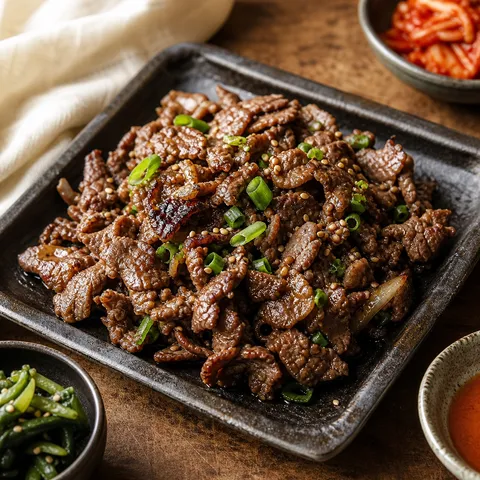
 Bulgogi (Marinated Beef BBQ)
Thinly sliced, marinated beef ribeye or sirloin grilled or stir-fried. Sweet, savory, and tender.
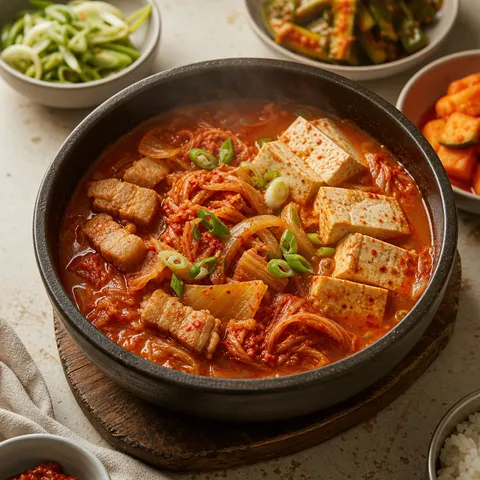 Korean Lens Verified Images are for illustrative purposes only, may be inaccurate, and do not guarantee the presence or absence of specific ingredients.
 Kimchi Jjigae (Kimchi Stew)
A classic, comforting stew made with aged kimchi, pork or seafood, scallions, onions, and diced tofu.