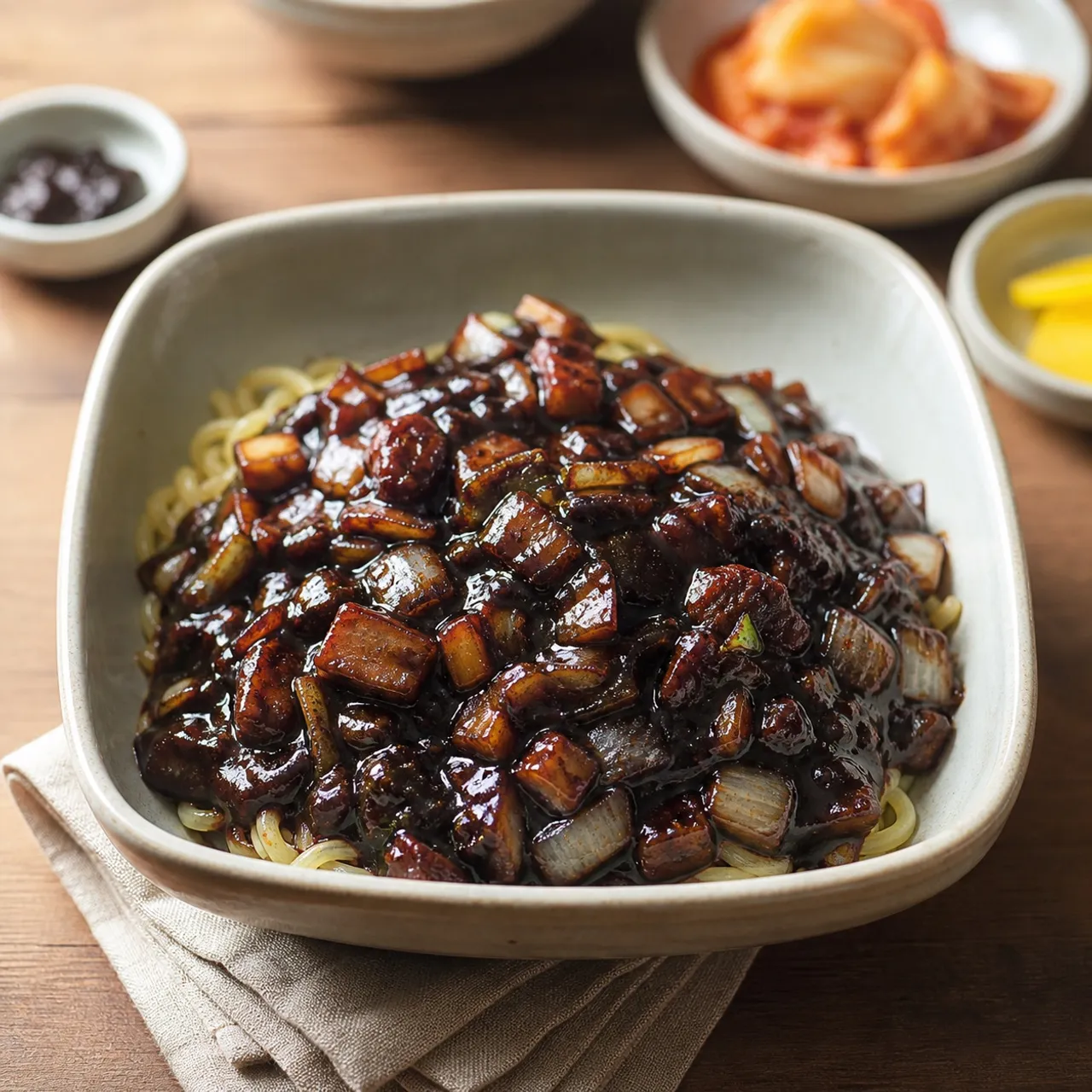
 Korean Images are for illustrative purposes only, may be inaccurate, and do not guarantee the presence or absence of specific ingredients.
 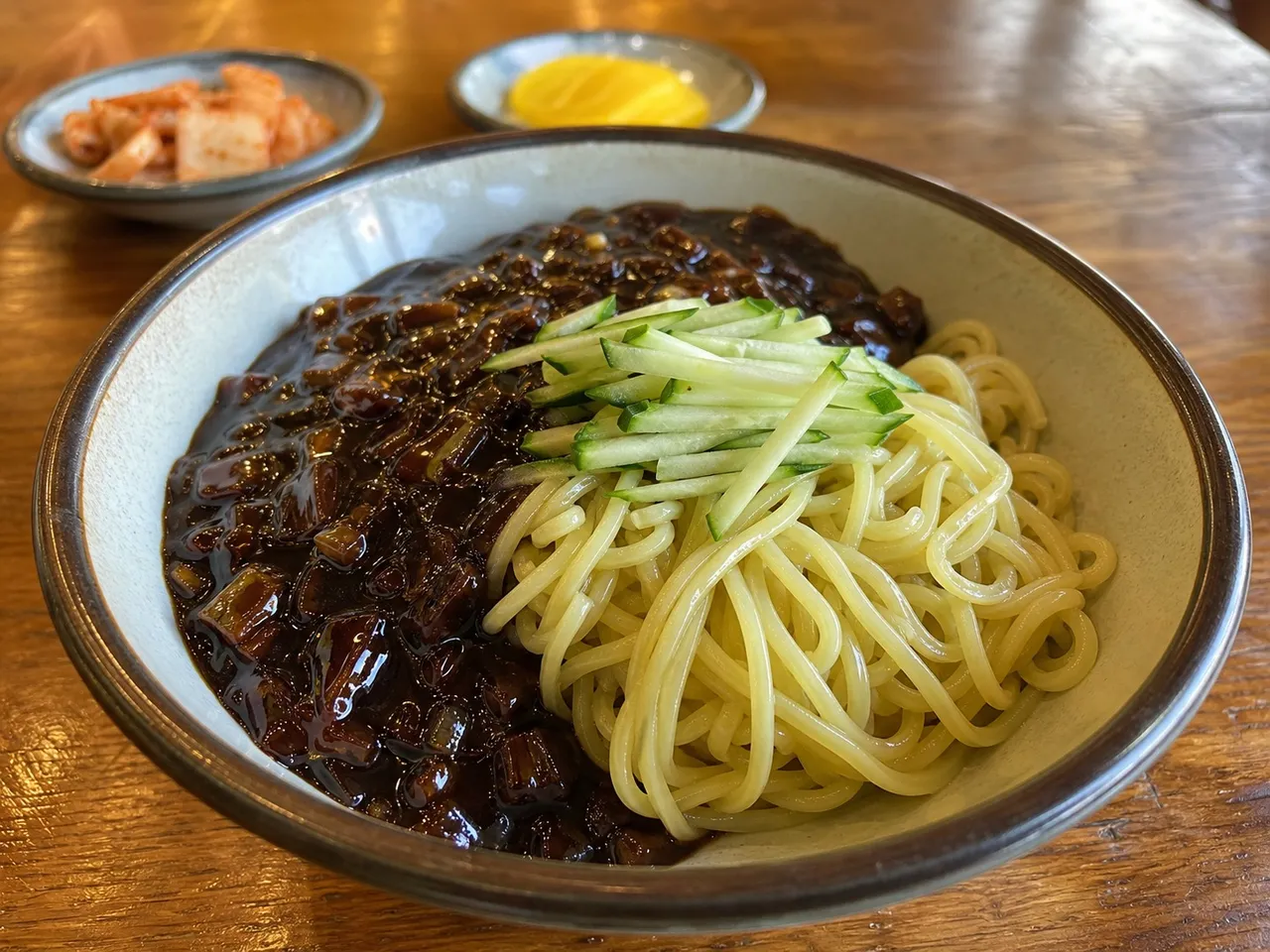 Serving Images are for illustrative purposes only, may be inaccurate, and do not guarantee the presence or absence of specific ingredients.
 Jajangmyeon (Black Bean Noodles)
A Korean-Chinese noodle dish topped with a thick sauce made of chunjang (sweet bean sauce), diced pork, and vegetables.
Contains common allergens
In the app, Listahan checks these against your household automatically.
Instructions
6 steps- 1
In a small pan, heat 2 tbsp of oil over medium heat. Fry the chunjang for 2-3 minutes, stirring constantly to remove its bitter, raw edge. Set the fried paste aside.
- 2
In a large wok or deep skillet, sauté the diced pork belly over medium-high heat until golden and crispy.
- 3
Add the diced potato, onion, and zucchini to the pork. Stir-fry for 5 minutes until the vegetables start to soften.
- 4
Clear a space in the center, add the fried chunjang and sugar, and mix it thoroughly into the meat and vegetables.
- 5
Pour in the chicken broth or water. Bring to a boil, cover, and simmer for 10 minutes until the potatoes are completely tender.
- 6
Slowly stream in the cornstarch slurry while stirring continuously until the sauce is thick, dark, and glossy. Serve hot over freshly boiled, chewy noodles, topped with julienned cucumber.
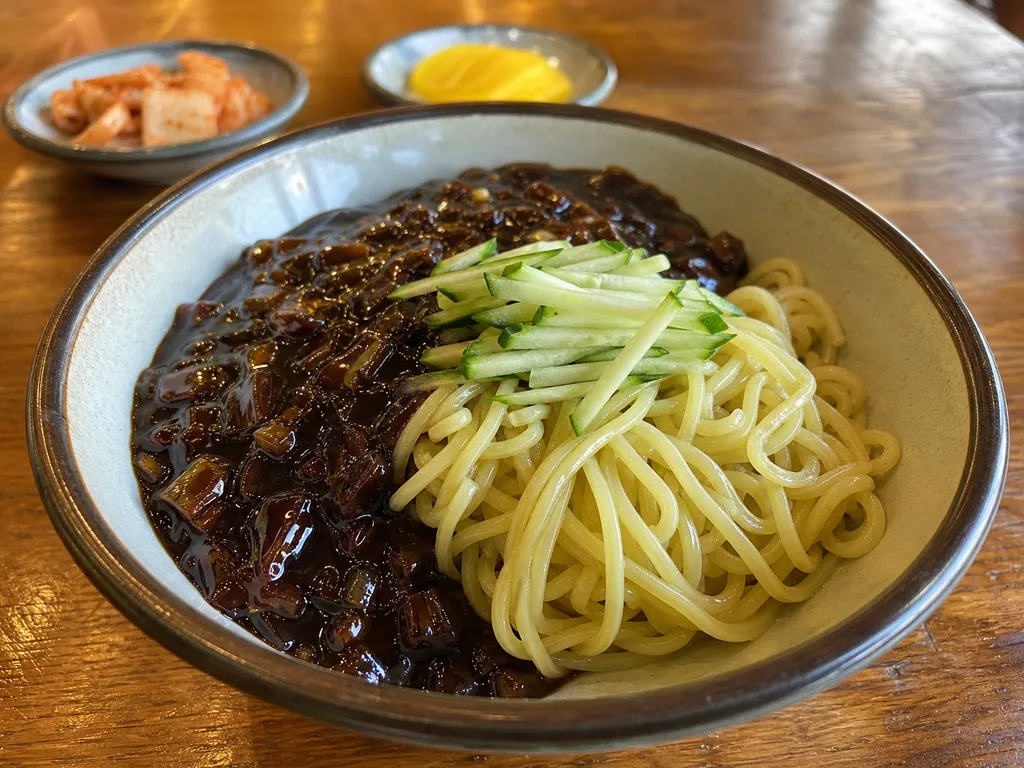 Images are for illustrative purposes only, may be inaccurate, and do not guarantee the presence or absence of specific ingredients.
 Listahan Family Score™
77/100
Good fit for most families
Score reflects how well this recipe fits a typical busy household. In the app, your Family Score is personalized to your household's allergens, kids, and pantry.
Nutrition
per serving720
Calories
54 g
Protein
74 g
Carbs
23 g
Fat
Estimated per serving. Actual values depend on the brands and portions you use.
Listahan cooking guide
Chef notes & practical guide
Technique notes, ingredient swaps, serve-alongside ideas, storage guidance, and equipment for this recipe.
Cultural context
Jajangmyeon is the wildly popular Korean-Chinese noodle dish of thick wheat noodles under a glossy, savory black bean sauce of chunjang, pork, and vegetables. Brought by Chinese immigrants and adapted to Korean tastes, it is a delivery staple and a cultural icon, even eaten ceremonially on Black Day. The frying of the chunjang paste is the make-or-break step.
Listahan note
This version fries the chunjang in oil first to mellow its bitterness, then builds a thick, glossy sauce that coats the chewy noodles.
Technique cues
- Fry the chunjang paste in oil before adding other ingredients to remove its raw bitterness.
- Dice the vegetables small so they melt into the sauce.
- Thicken with a cornstarch slurry for the signature glossy cling.
Kitchen flow
- Parallel prep
- Dice everything and fry the chunjang while the noodle water heats.
- Make-ahead
- Make the sauce ahead; boil noodles fresh and combine at serving.
- Leftover move
- Reheat the sauce and toss with fresh noodles or rice.
- Cleanup rhythm
- One pan for sauce, one pot for noodles; soak both promptly.
Ingredient brief
Role, handling, and swap guidance for each key ingredient.
Chunjang (black bean paste)
Sauce base
Purpose: Its dark, savory-sweet flavor is the entire identity of the dish.
Handling: Fry in oil first to remove bitterness, then build the sauce.
Adaptation: Use ready-made jajang sauce as a shortcut.
Pork belly
Protein
Purpose: Adds savory fat that enriches the sauce.
Handling: Dice and render before adding vegetables.
Adaptation: Use chicken or omit for a vegetarian sauce.
Onion, zucchini, potato
Vegetables
Purpose: Add sweetness and body to the sauce.
Handling: Dice small so they soften into the sauce.
Adaptation: Cabbage is a common addition.
Wheat noodles
Base
Purpose: Thick, chewy noodles stand up to the heavy sauce.
Handling: Boil until just chewy and drain.
Adaptation: Any thick wheat noodle works; udon is a stand-in.
Technique notes
- Frying the chunjang is essential; skipping it leaves a bitter sauce.
- Keep the sauce glossy and thick, not watery.
- Serve immediately, as the noodles absorb the sauce quickly.
Ingredient swaps
- Vegetarian direction
- Skip the pork and add more vegetables and a little oil.
- Seafood direction
- Add squid and shrimp for jjajang variations.
- Lower-sodium direction
- Use less chunjang and balance with a touch more sugar.
Serve alongside
- Danmuji (pickled radish)
- Raw onion with chunjang
- Tangsuyuk (sweet-sour pork)
- Kimchi
- Cold water
- Light lager
- Cold soda
Serving suggestions only — check pairings for your household's allergens.
Storage & reheating
- Refrigerate the sauce up to 3 days; boil noodles fresh.
- Reheat the sauce gently and toss with fresh-cooked noodles.
- Freeze the sauce up to 2 months; thaw before reheating.
Equipment
- Wide pan or wok
- Pot for noodles
- Wooden spoon
- Ladle
Make this household-aware
Listahan Pro checks this recipe against your household's allergens, finds pantry-aware swaps, builds the shopping list, and helps you plan the week around it.
Plan it in Listahan
Add Jajangmyeon (Black Bean Noodles) to your week, check it against your household's allergens, and build the shopping list automatically.
More Korean recipes
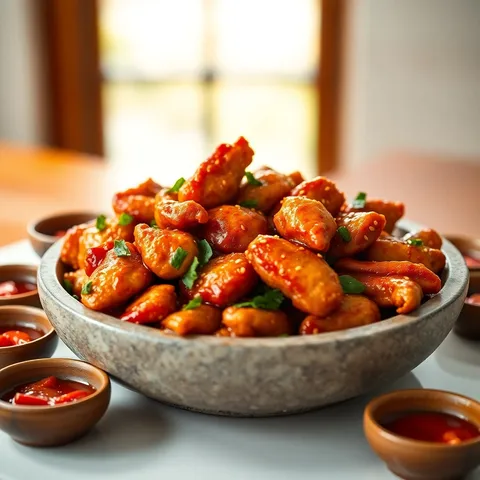 Korean Lens Verified Images are for illustrative purposes only, may be inaccurate, and do not guarantee the presence or absence of specific ingredients.
 Dakgalbi (Spicy Stir-fried Chicken)
Diced chicken marinated in a gochujang-based sauce, stir-fried with sweet potatoes, cabbage, perilla leaves, and tteok.
 Korean Lens Verified Images are for illustrative purposes only, may be inaccurate, and do not guarantee the presence or absence of specific ingredients.
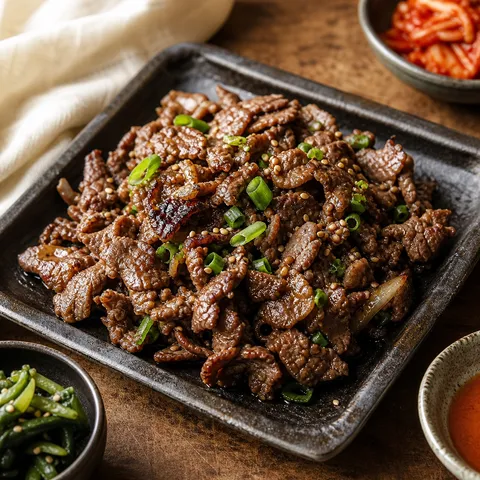
 Bulgogi (Marinated Beef BBQ)
Thinly sliced, marinated beef ribeye or sirloin grilled or stir-fried. Sweet, savory, and tender.
 Korean Lens Verified Images are for illustrative purposes only, may be inaccurate, and do not guarantee the presence or absence of specific ingredients.
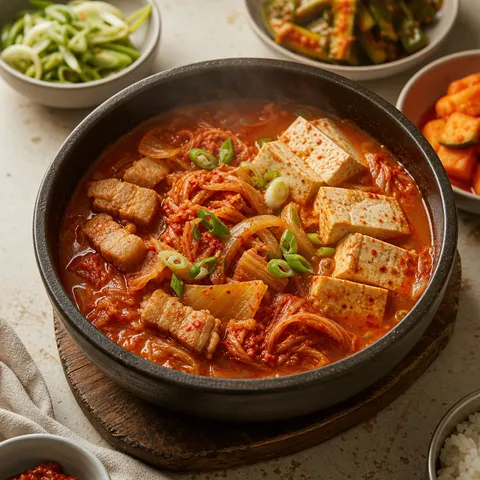
 Kimchi Jjigae (Kimchi Stew)
A classic, comforting stew made with aged kimchi, pork or seafood, scallions, onions, and diced tofu.