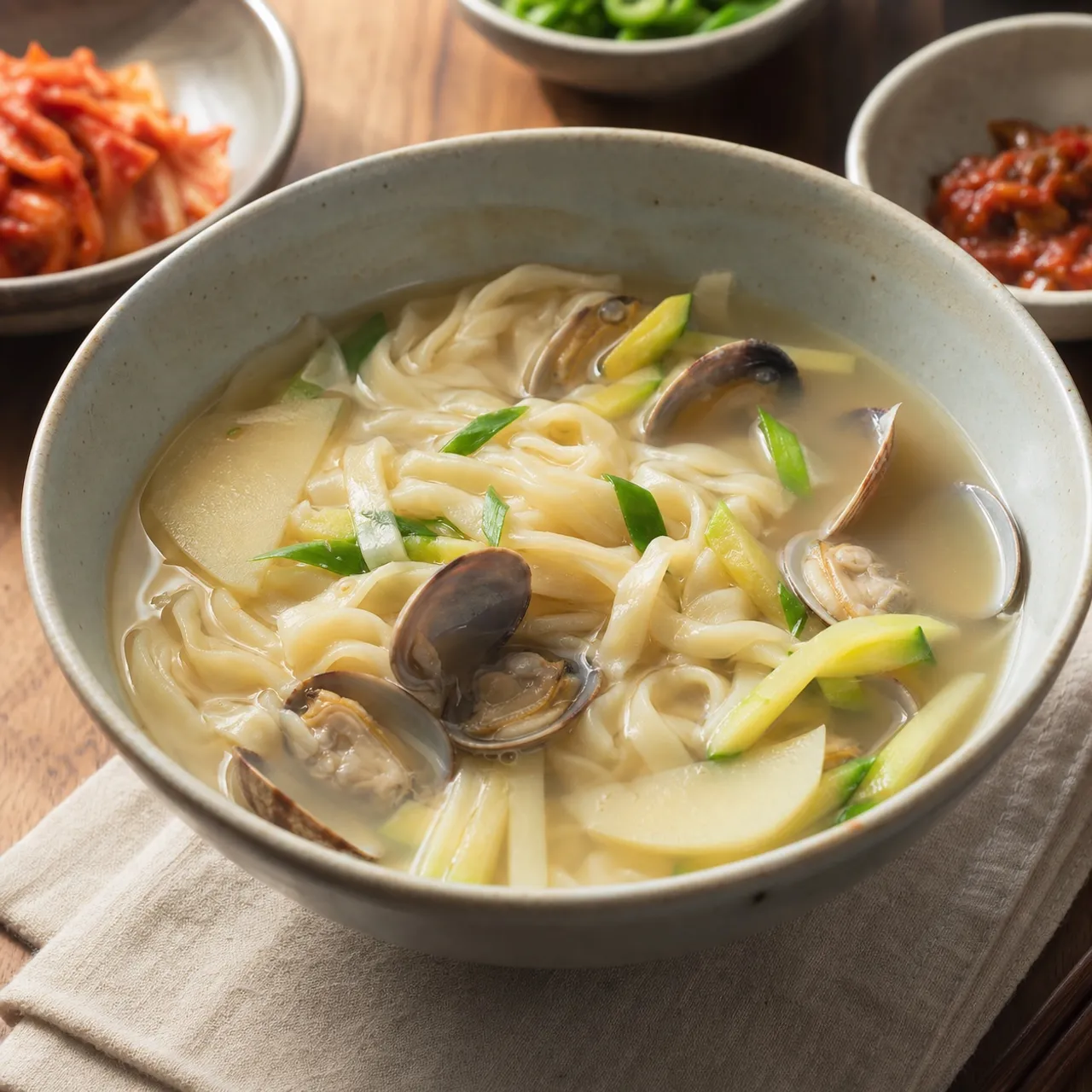
 Korean Images are for illustrative purposes only, may be inaccurate, and do not guarantee the presence or absence of specific ingredients.
 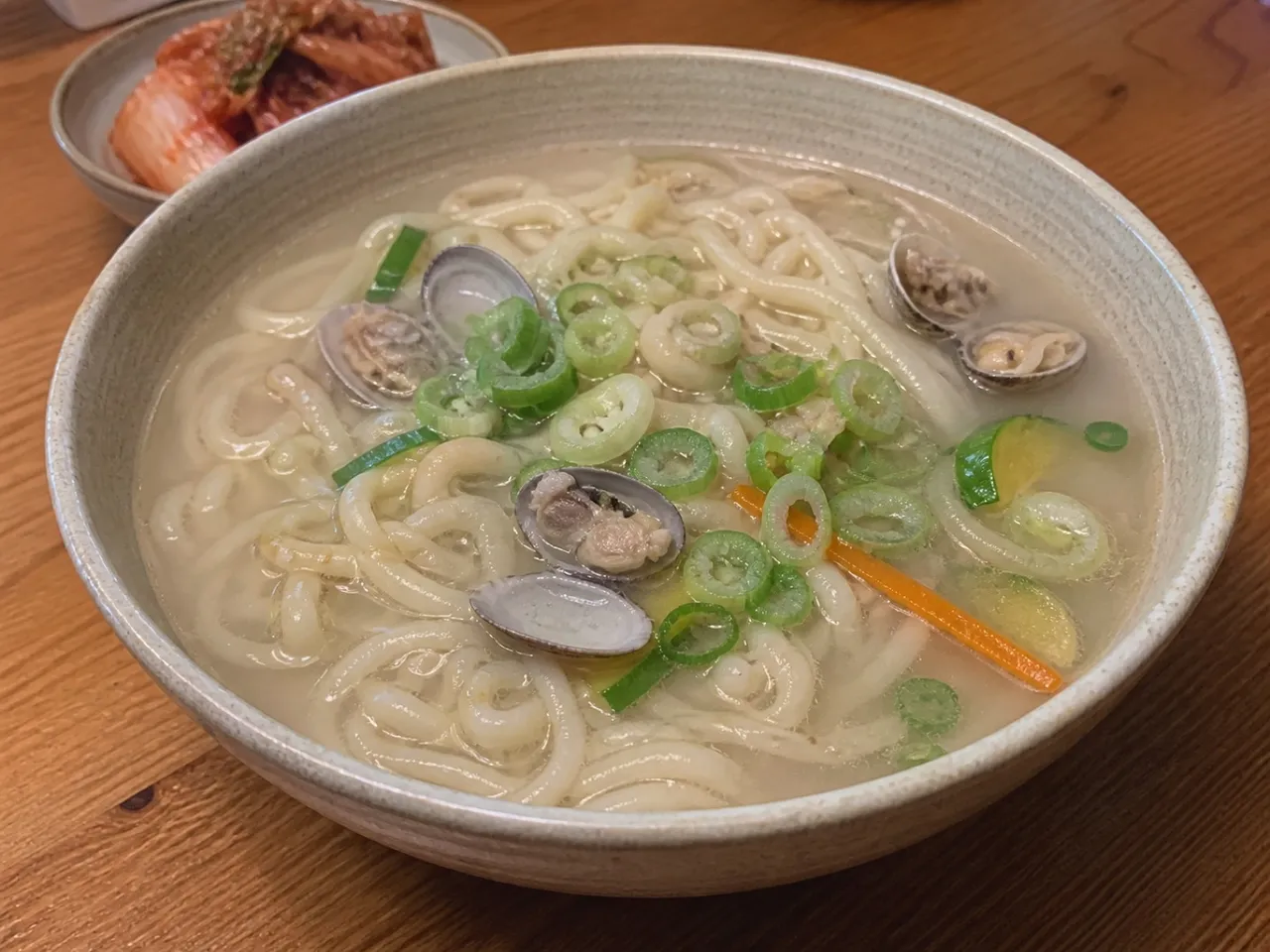 Serving Images are for illustrative purposes only, may be inaccurate, and do not guarantee the presence or absence of specific ingredients.
 Kalguksu (Knife-cut Noodle Soup)
A Korean noodle dish consisting of handmade, knife-cut wheat flour noodles served in a large bowl with broth and other ingredients.
Contains common allergens
In the app, Listahan checks these against your household automatically.
Good to know
- One-pot
Matched from this dish's own ingredients and timing. Browse more: one-pot dinners
Instructions
6 steps- 1
In a large bowl, mix the flour, salt, and water. Knead by hand for 10 minutes until smooth and elastic. Wrap in plastic and let it rest at room temperature for 30 minutes.
- 2
On a heavily floured surface, roll the rested dough out with a rolling pin until it is about 1/8-inch thick.
- 3
Dust the rolled dough generously with flour, fold it over itself several times into a flat roll, and use a sharp knife to cut it crosswise into 1/4-inch wide noodles. Shake the noodles loose to prevent sticking.
- 4
Bring the anchovy-kelp broth to a rolling boil in a large pot. Add the sliced potatoes and boil for 3 minutes.
- 5
Add the fresh noodles, julienned zucchini, and clean clams. Gently stir once to separate the noodles.
- 6
Cook for 5-6 minutes until the noodles are translucent and chewy, and the clams have fully opened. Serve immediately, garnished with chopped scallions.
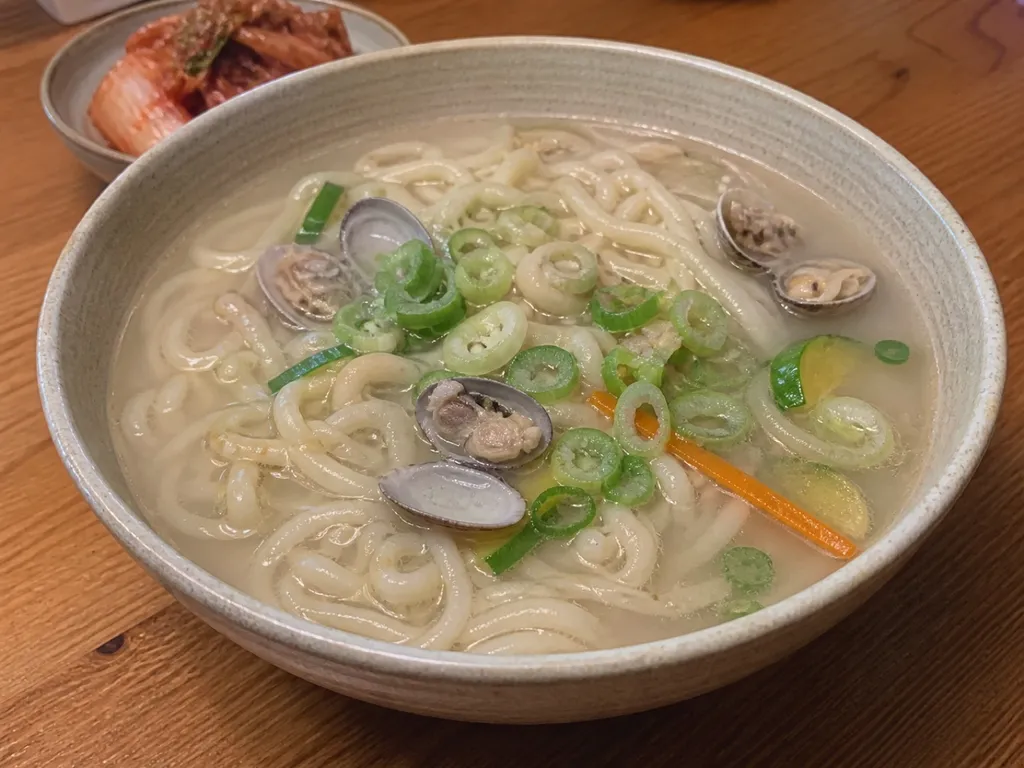 Images are for illustrative purposes only, may be inaccurate, and do not guarantee the presence or absence of specific ingredients.
 Listahan Family Score™
63/100
Works for many families
Score reflects how well this recipe fits a typical busy household. In the app, your Family Score is personalized to your household's allergens, kids, and pantry.
Nutrition
per serving735
Calories
66 g
Protein
81 g
Carbs
13 g
Fat
Estimated per serving. Actual values depend on the brands and portions you use.
Listahan cooking guide
Chef notes & practical guide
Technique notes, ingredient swaps, serve-alongside ideas, storage guidance, and equipment for this recipe.
Cultural context
Kalguksu means knife noodles, named for the hand-rolled wheat noodles cut by knife and dropped into a savory broth. A comforting, homey soup often made with an anchovy-kelp or clam broth, it is rainy-day and convalescent food. The fresh-cut noodles release starch that gives the broth its characteristic body.
Listahan note
This version uses fresh hand-cut noodles cooked directly in an anchovy-kelp broth, letting their starch thicken the soup into something hearty and homey.
Technique cues
- Cook the fresh noodles in the broth so their starch thickens it.
- Dust the cut noodles with flour and shake off the excess so they do not clump.
- Add clams or vegetables near the end so they stay tender.
Kitchen flow
- Parallel prep
- Make and strain the broth while you roll and cut the noodles.
- Make-ahead
- Make the broth ahead; cook the noodles fresh in it at serving.
- Leftover move
- The noodles soak up broth, so loosen leftovers with extra stock.
- Cleanup rhythm
- One pot; rinse the floury cutting surface promptly.
Ingredient brief
Role, handling, and swap guidance for each key ingredient.
Hand-cut wheat noodles
Base
Purpose: Their fresh starch thickens and flavors the broth.
Handling: Roll and cut, then dust with flour to keep separate.
Adaptation: Store-bought fresh kalguksu noodles save time.
Anchovy-kelp broth
Liquid base
Purpose: Gives the soup its savory, homey backbone.
Handling: Simmer and strain before cooking the noodles.
Adaptation: A clam broth makes a brinier version.
Manila clams
Savory accent
Purpose: Add briny depth and a coastal character.
Handling: Scrub and purge, then add to open in the broth.
Adaptation: Omit for a simpler vegetable or chicken kalguksu.
Zucchini and potato
Vegetables
Purpose: Add body and gentle sweetness.
Handling: Slice thin; add potato earlier and zucchini late.
Adaptation: Use whatever firm vegetables you have.
Technique notes
- Cooking the noodles in the broth is what gives kalguksu its body.
- Do not overcook the noodles; they soften further in the hot soup.
- Add a spoon of seasoned soy and chili at the table for a lift.
Ingredient swaps
- Vegetarian direction
- Use kelp-mushroom broth and skip the clams.
- Shellfish-free direction
- Use chicken or anchovy broth without clams.
- Chicken direction
- Make dak-kalguksu with a shredded-chicken broth.
Serve alongside
- Kimchi
- Seasoned soy and chili
- Pajeon
- Pickled radish
- Barley tea
- Cold water
- Makgeolli
Serving suggestions only — check pairings for your household's allergens.
Storage & reheating
- Refrigerate the broth up to 3 days; cook noodles fresh.
- Reheat the broth and add extra stock, since the noodles drink it up.
- Freeze the broth up to 2 months; noodles are best fresh.
Equipment
- Large pot
- Rolling pin
- Knife
- Ladle
Make this household-aware
Listahan Pro checks this recipe against your household's allergens, finds pantry-aware swaps, builds the shopping list, and helps you plan the week around it.
Plan it in Listahan
Add Kalguksu (Knife-cut Noodle Soup) to your week, check it against your household's allergens, and build the shopping list automatically.
More Korean recipes
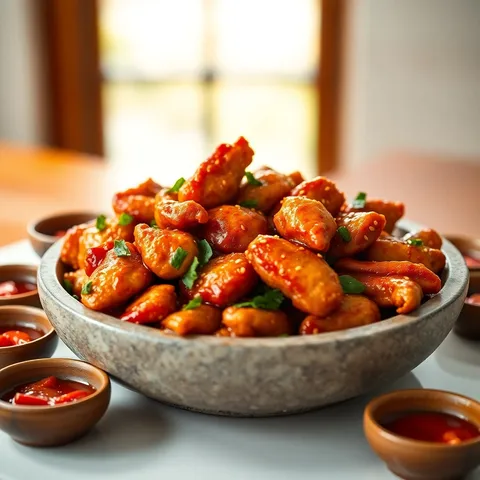 Korean Lens Verified Images are for illustrative purposes only, may be inaccurate, and do not guarantee the presence or absence of specific ingredients.
 Dakgalbi (Spicy Stir-fried Chicken)
Diced chicken marinated in a gochujang-based sauce, stir-fried with sweet potatoes, cabbage, perilla leaves, and tteok.
 Korean Lens Verified Images are for illustrative purposes only, may be inaccurate, and do not guarantee the presence or absence of specific ingredients.
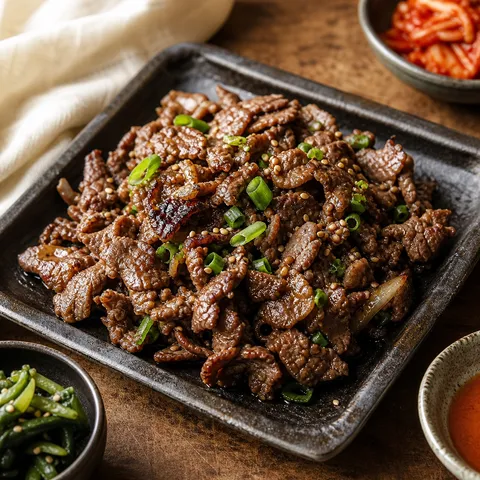
 Bulgogi (Marinated Beef BBQ)
Thinly sliced, marinated beef ribeye or sirloin grilled or stir-fried. Sweet, savory, and tender.
 Korean Lens Verified Images are for illustrative purposes only, may be inaccurate, and do not guarantee the presence or absence of specific ingredients.
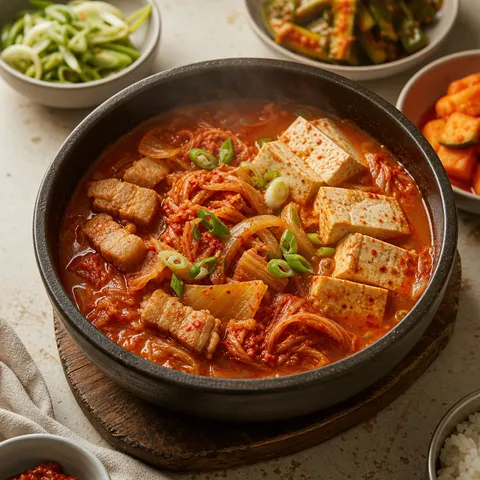
 Kimchi Jjigae (Kimchi Stew)
A classic, comforting stew made with aged kimchi, pork or seafood, scallions, onions, and diced tofu.