 Korean Images are for illustrative purposes only, may be inaccurate, and do not guarantee the presence or absence of specific ingredients.
  Serving Images are for illustrative purposes only, may be inaccurate, and do not guarantee the presence or absence of specific ingredients.
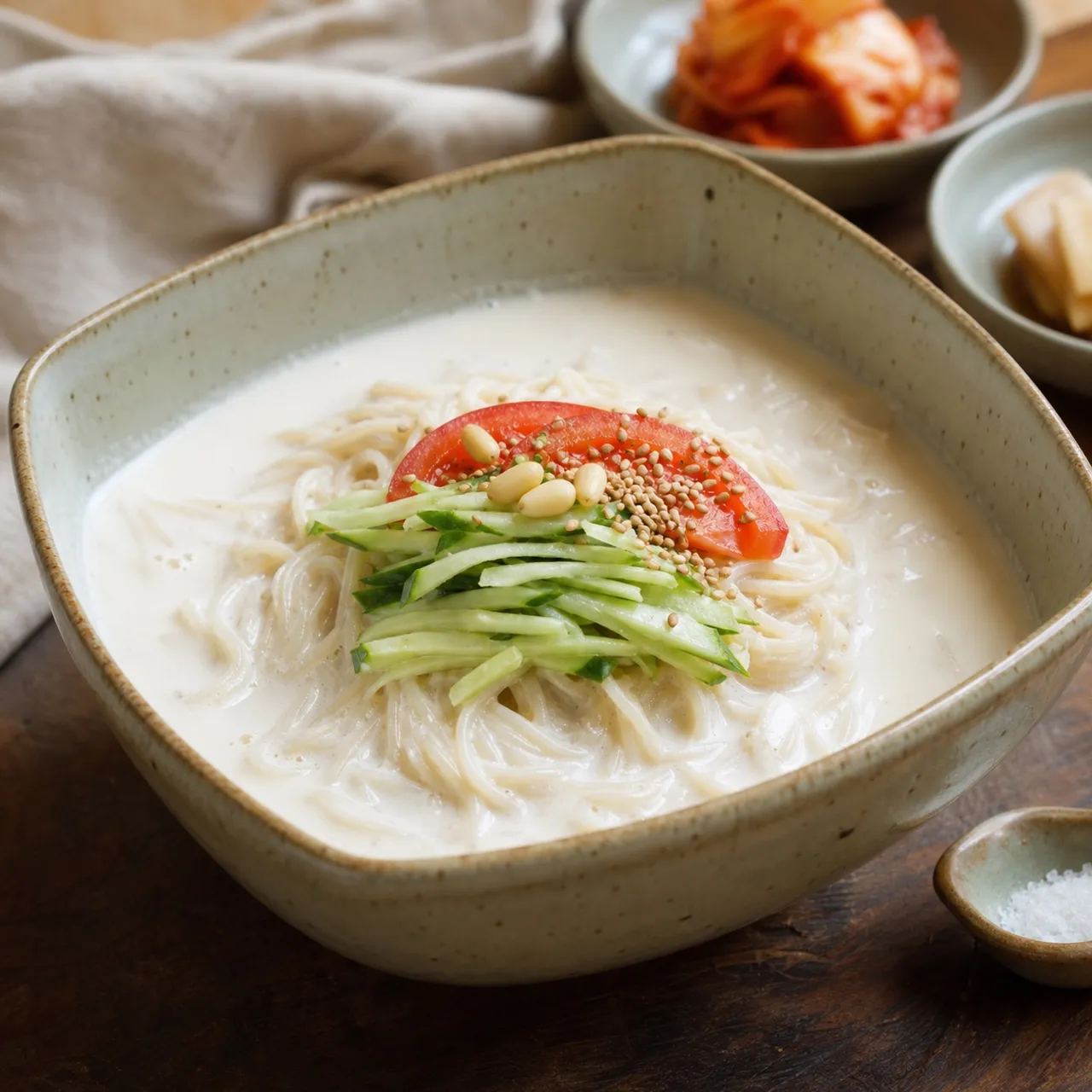
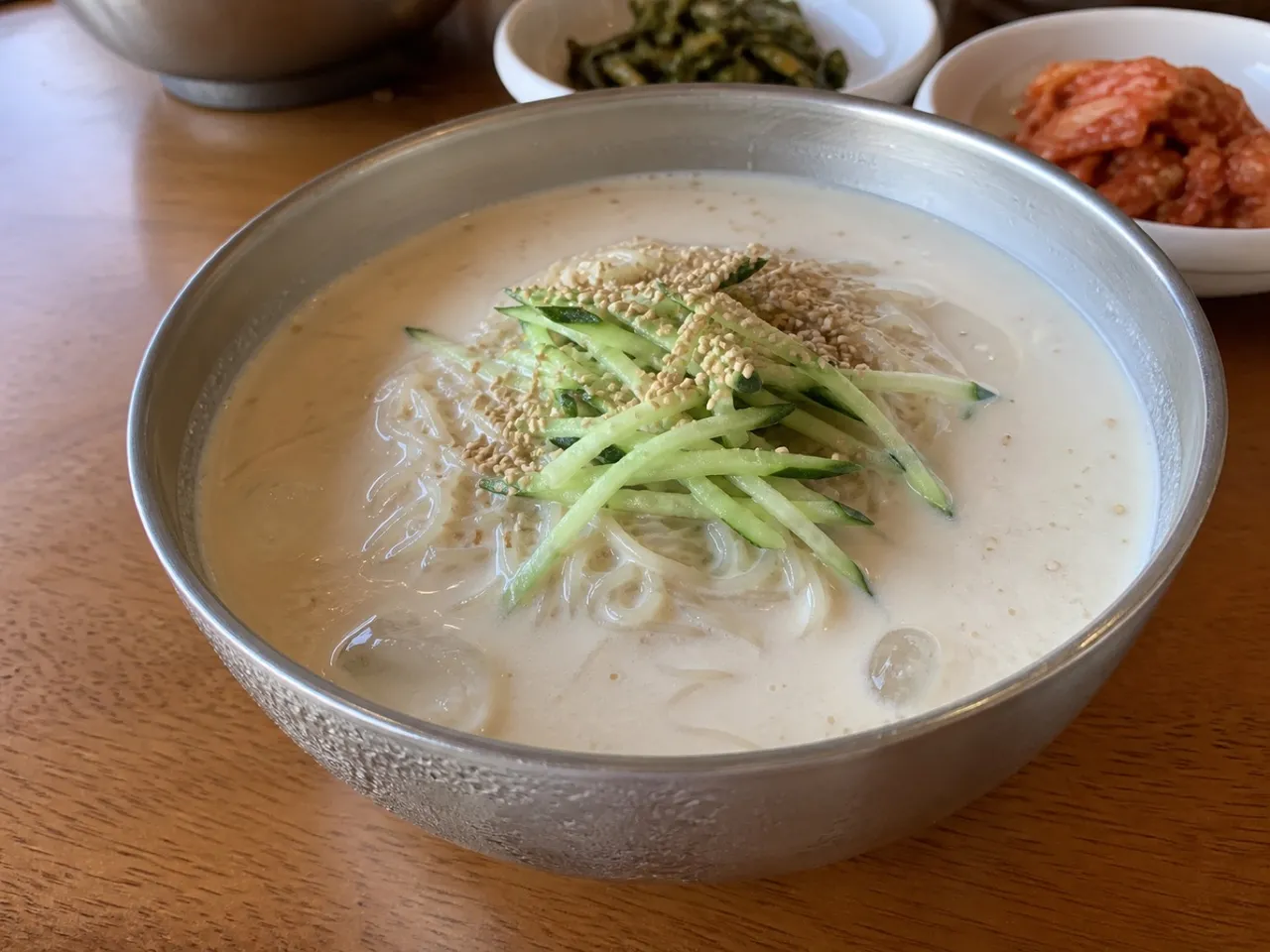
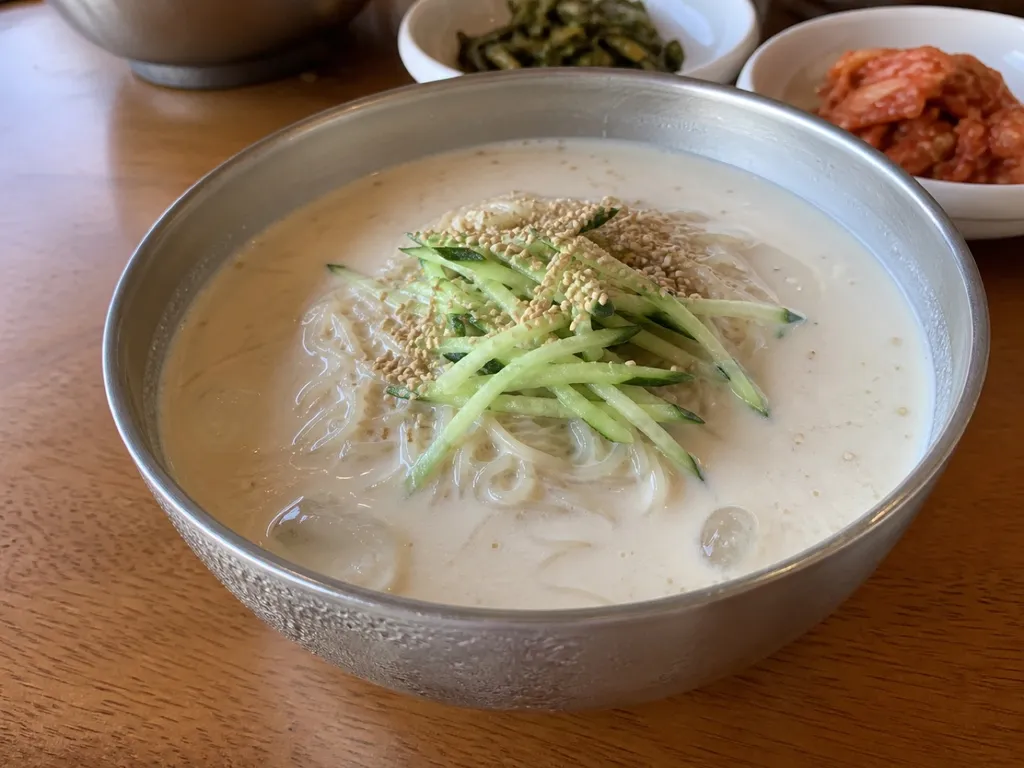
 Kongguksu (Cold Soy Milk Noodle Soup)
A seasonal Korean noodle dish served in a cold, rich, and creamy soy milk broth made freshly from soybeans.
Contains common allergens
In the app, Listahan checks these against your household automatically.
Instructions
6 steps- 1
Rinse the dried soybeans and soak them in plenty of cold water overnight (at least 8-12 hours). They will double in size.
- 2
Drain and transfer the beans to a pot with fresh water covering them by 1 inch. Boil uncovered for exactly 15 minutes. Overcooking makes them smell like fermented paste; undercooking leaves a raw, grassy taste.
- 3
Drain and rinse under cold water. Rub the beans vigorously between your hands to slip off the translucent skins. Discard the skins.
- 4
In a high-powered blender, puree the peeled beans with 3 cups of fresh, icy cold water and the toasted sesame seeds until incredibly smooth. Chill this soy milk in the refrigerator until ice-cold.
- 5
Boil the wheat noodles in water until chewy, then drain and vigorously rinse under ice water to remove starch.
- 6
Place a mound of noodles in a bowl, pour the chilled soy milk over them, and top with julienned cucumber and a slice of tomato. Serve with a small dish of salt for diners to season their own bowls.
 Images are for illustrative purposes only, may be inaccurate, and do not guarantee the presence or absence of specific ingredients.
 Listahan Family Score™
67/100
Works for many families
Score reflects how well this recipe fits a typical busy household. In the app, your Family Score is personalized to your household's allergens, kids, and pantry.
Nutrition
per serving80
Calories
6 g
Protein
6 g
Carbs
4 g
Fat
Estimated per serving. Actual values depend on the brands and portions you use.
Listahan cooking guide
Chef notes & practical guide
Technique notes, ingredient swaps, serve-alongside ideas, storage guidance, and equipment for this recipe.
Cultural context
Kongguksu is a chilled summer dish of thin wheat noodles in a cold, creamy soy milk broth made from scratch by grinding soaked soybeans. Nutty, mild, and refreshing, it is seasoned only with salt at the table. The homemade soy milk, often enriched with sesame or pine nuts, is the heart of the dish.
Listahan note
This version grinds soaked soybeans into a smooth, chilled broth enriched with toasted sesame, served over cold noodles to be salted to taste.
Technique cues
- Boil and skin the soybeans before blending for the smoothest broth.
- Blend with toasted sesame seeds for nutty depth.
- Chill the broth thoroughly and salt only at the table.
Kitchen flow
- Parallel prep
- Soak the soybeans the night before; blend and chill the broth ahead.
- Make-ahead
- Kongguksu (Cold Soy Milk Noodle Soup) reheats well, so cooking it a day ahead and finishing it just before serving is a reasonable way to spread out the work. This one leans on the servings thin wheat noodles. Plan around the boil; that's the slow part.
- Leftover move
- Keep extra broth chilled for another quick bowl.
- Cleanup rhythm
- Rinse the blender right away before the soy milk dries on.
Ingredient brief
Role, handling, and swap guidance for each key ingredient.
Dried soybeans
Broth base
Purpose: Ground into soy milk, they are the entire foundation of the dish.
Handling: Soak overnight, boil until tender, skin, then blend smooth.
Adaptation: Unsweetened store-bought soy milk is a shortcut.
Wheat noodles (somyeon)
Base
Purpose: Thin noodles carry the creamy broth without overwhelming it.
Handling: Boil briefly, rinse cold, and chill.
Adaptation: Any thin wheat noodle works.
Toasted sesame seeds
Enrichment
Purpose: Add nutty depth and body to the broth.
Handling: Blend into the soy milk.
Adaptation: Pine nuts add a richer, more luxurious note.
Cucumber
Fresh topping
Purpose: Adds crunch and a cool contrast.
Handling: Julienne and place on top.
Adaptation: Sliced tomato is a common addition.
Technique notes
- Skinning the boiled soybeans gives a noticeably smoother broth.
- Serve the broth icy cold for the best summer effect.
- Salt at the table; the broth is intentionally unseasoned until then.
Ingredient swaps
- Nut-free direction
- Use sesame only and skip the pine nuts.
- Gluten-free direction
- Use thin rice noodles in place of wheat somyeon.
- Shortcut direction
- Use unsweetened store-bought soy milk blended with sesame.
Serve alongside
- Kimchi
- Sliced tomato
- Pickled radish
- Cucumber salad
- Barley tea
- Cold water
- Iced tea
Serving suggestions only — check pairings for your household's allergens.
Storage & reheating
- Keep the broth chilled up to 2 days; cook noodles fresh.
- Serve cold; this dish is never heated.
- Freezing the soy broth is possible but can change the texture.
Equipment
- Blender
- Pot for noodles
- Fine strainer
- Chilled bowls
Make this household-aware
Listahan Pro checks this recipe against your household's allergens, finds pantry-aware swaps, builds the shopping list, and helps you plan the week around it.
Plan it in Listahan
Add Kongguksu (Cold Soy Milk Noodle Soup) to your week, check it against your household's allergens, and build the shopping list automatically.
More Korean recipes
 Korean Lens Verified Images are for illustrative purposes only, may be inaccurate, and do not guarantee the presence or absence of specific ingredients.
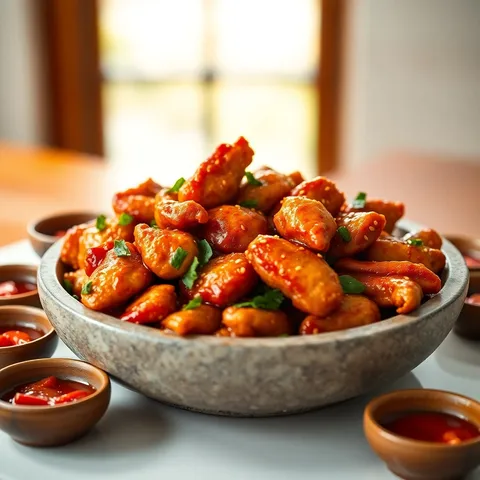
 Dakgalbi (Spicy Stir-fried Chicken)
Diced chicken marinated in a gochujang-based sauce, stir-fried with sweet potatoes, cabbage, perilla leaves, and tteok.
 Korean Lens Verified Images are for illustrative purposes only, may be inaccurate, and do not guarantee the presence or absence of specific ingredients.
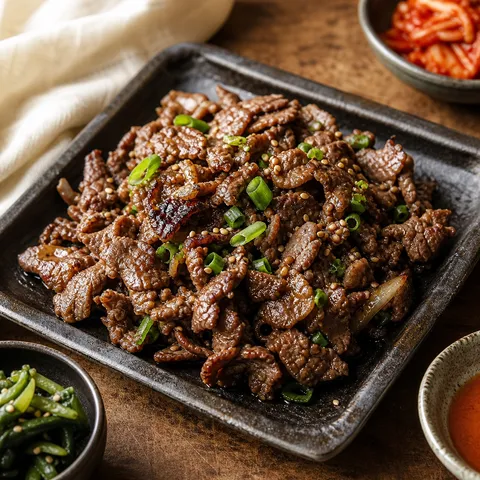
 Bulgogi (Marinated Beef BBQ)
Thinly sliced, marinated beef ribeye or sirloin grilled or stir-fried. Sweet, savory, and tender.
 Korean Lens Verified Images are for illustrative purposes only, may be inaccurate, and do not guarantee the presence or absence of specific ingredients.
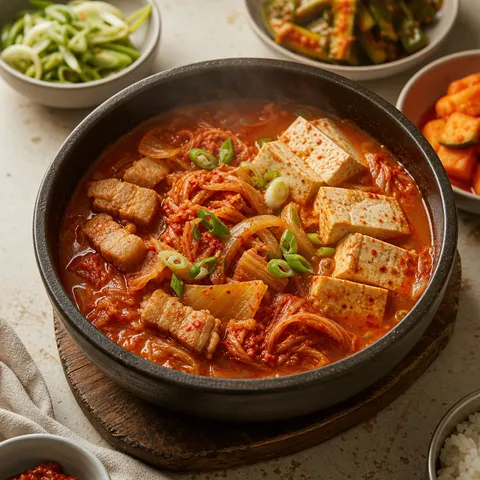
 Kimchi Jjigae (Kimchi Stew)
A classic, comforting stew made with aged kimchi, pork or seafood, scallions, onions, and diced tofu.