 Korean Images are for illustrative purposes only, may be inaccurate, and do not guarantee the presence or absence of specific ingredients.
  Serving Images are for illustrative purposes only, may be inaccurate, and do not guarantee the presence or absence of specific ingredients.
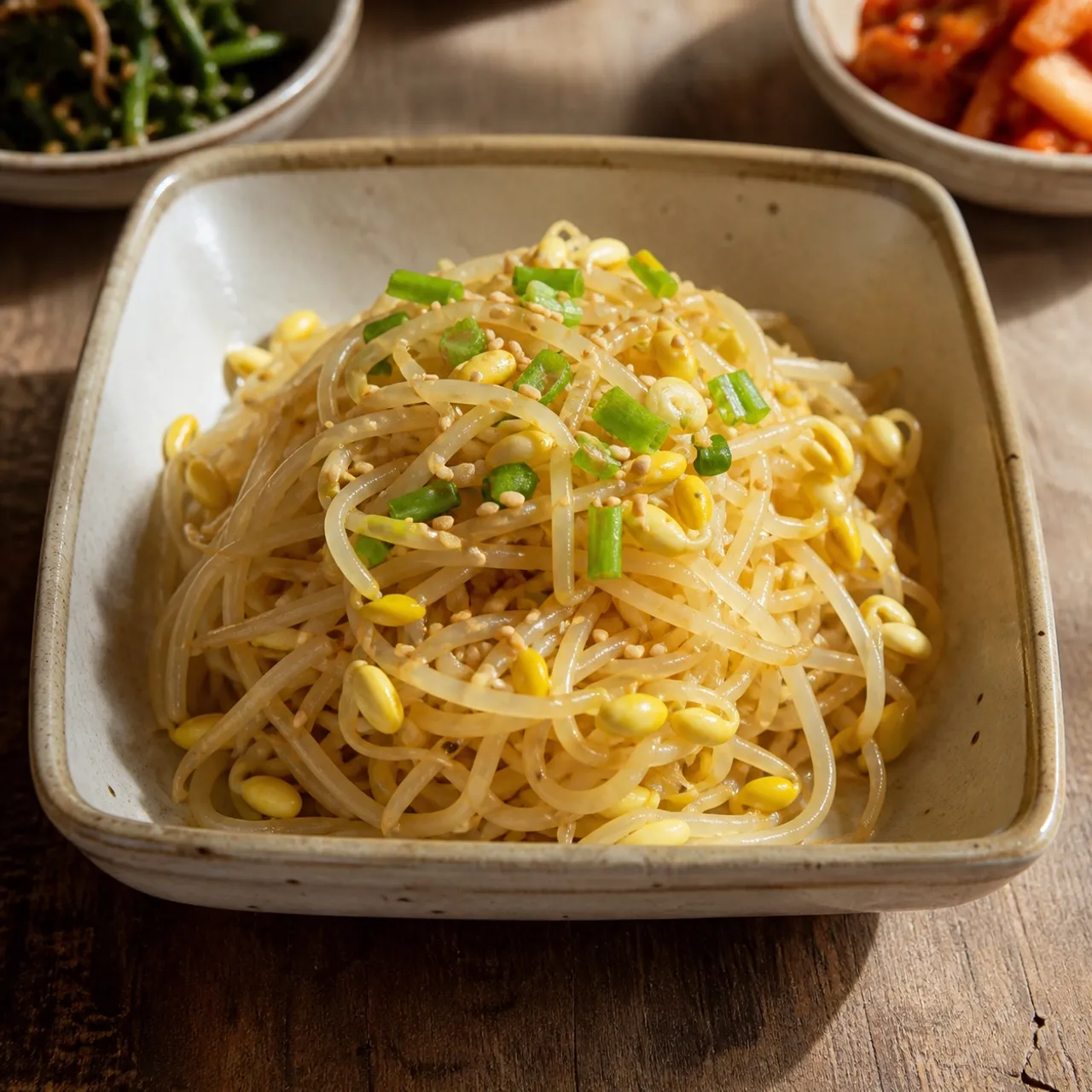
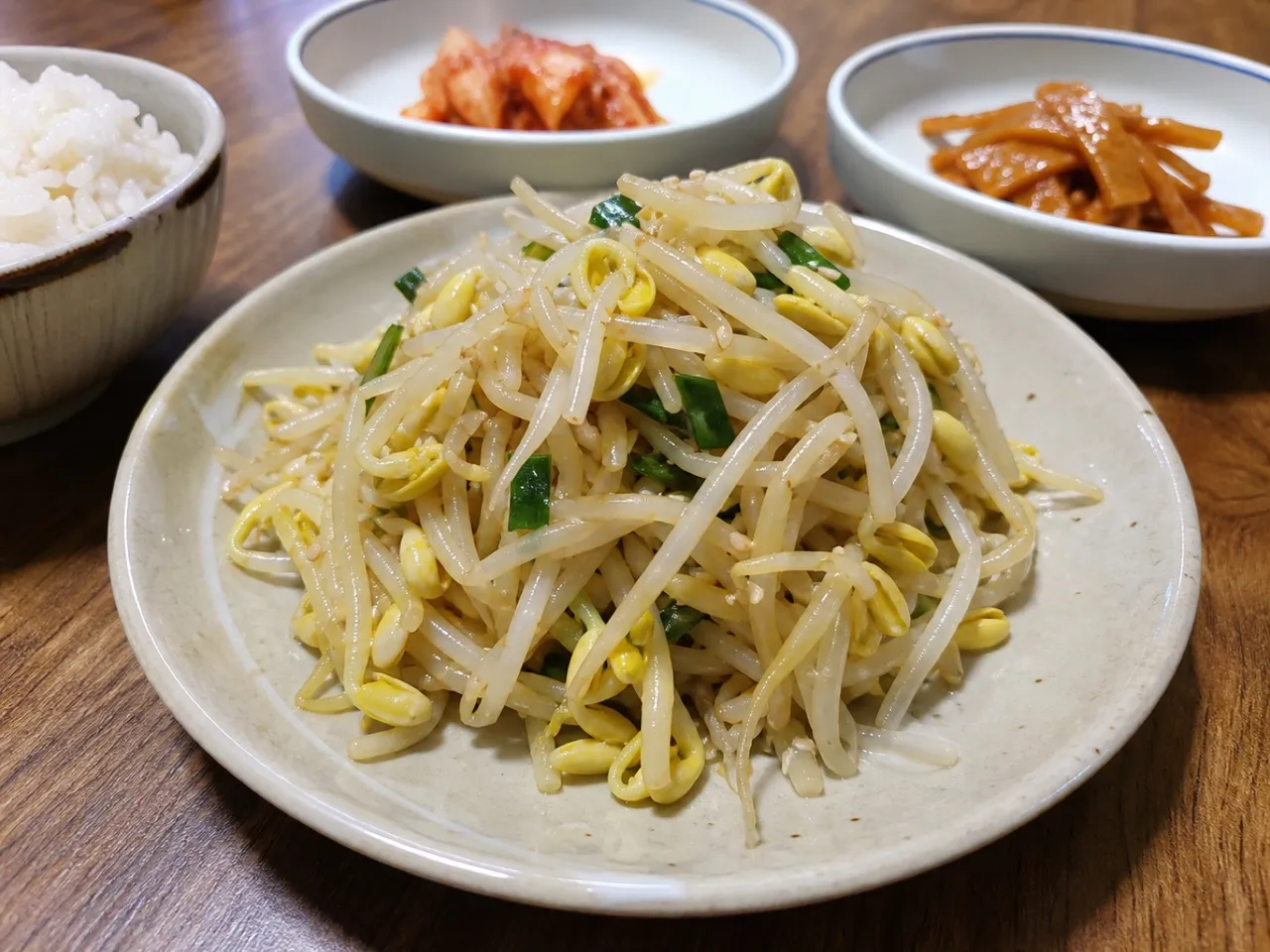
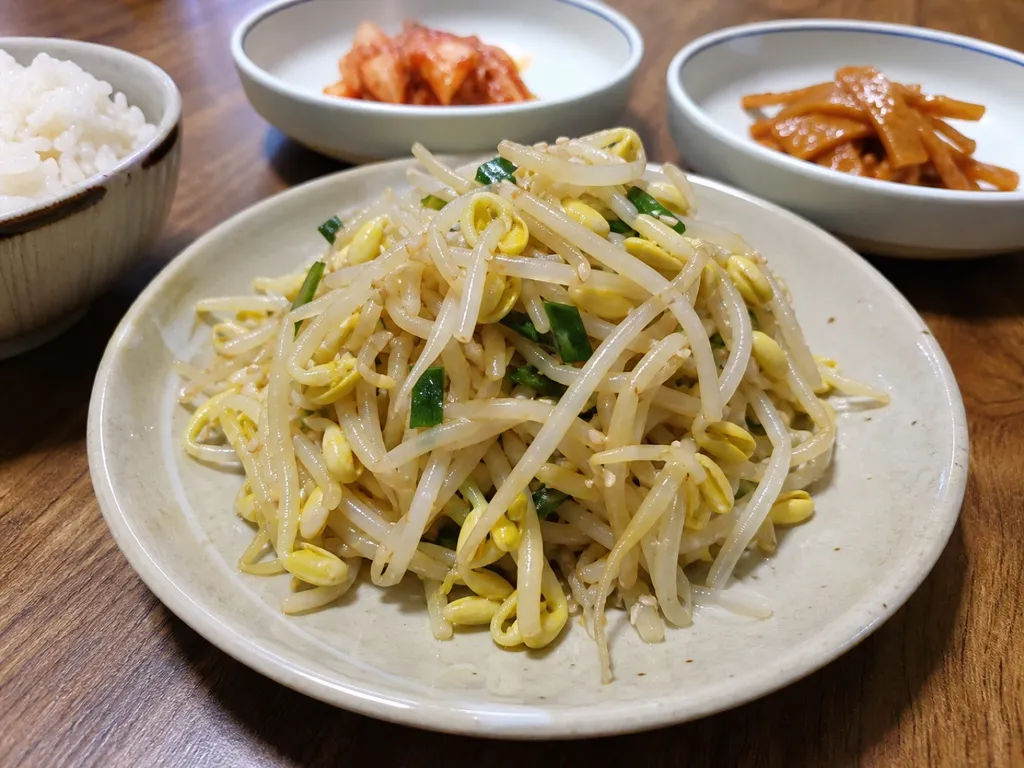
 Kongnamul Muchim (Seasoned Soybean Sprouts)
Crisp, refreshing soybean sprouts seasoned lightly with sesame and garlic, a crunchy staple banchan found on nearly every Korean table.
Contains common allergens
In the app, Listahan checks these against your household automatically.
Good to know
- Ready in under 30 minutes
Matched from this dish's own ingredients and timing. Browse more: 30-minute meals
Instructions
5 steps- 1
Place the rinsed soybean sprouts in a pot with 1/2 cup water and 1/2 tsp salt, cover with a tight lid, and bring to a boil over medium-high heat.
- 2
Once steaming, cook covered for 5 to 6 minutes without lifting the lid (to avoid a raw bean smell), until the sprouts are tender-crisp and the stems are translucent.
- 3
Drain the sprouts in a colander and let them cool slightly so they keep their signature crunch.
- 4
Transfer to a bowl and toss with the sesame oil, minced garlic, chopped scallion, and a pinch more salt to taste, adding 1/2 tsp gochugaru if you want a little heat.
- 5
Garnish with toasted sesame seeds and serve warm or chilled alongside rice and other banchan.
 Images are for illustrative purposes only, may be inaccurate, and do not guarantee the presence or absence of specific ingredients.
 Listahan Family Score™
70/100
Good fit for most families
Score reflects how well this recipe fits a typical busy household. In the app, your Family Score is personalized to your household's allergens, kids, and pantry.
Nutrition
per serving45
Calories
0 g
Protein
1 g
Carbs
5 g
Fat
Estimated per serving. Actual values depend on the brands and portions you use.
Listahan cooking guide
Chef notes & practical guide
Technique notes, ingredient swaps, serve-alongside ideas, storage guidance, and equipment for this recipe.
Cultural context
Kongnamul Muchim is a crunchy seasoned soybean sprout side, one of the most ubiquitous Korean banchan. The sprouts are briefly boiled, then dressed with sesame oil, garlic, and scallion, keeping their signature crunch and nutty heads. It is also the foundation of kongnamul-guk and a fixture in bibimbap.
Listahan note
This version boils the sprouts just until tender-crisp with the lid managed correctly, then dresses them lightly so they stay crunchy and clean-tasting.
Technique cues
- Either keep the lid on the whole boil or off the whole time, to avoid a beany smell.
- Boil just until tender-crisp so the sprouts keep their crunch.
- Dress lightly with sesame oil, garlic, and salt.
Kitchen flow
- Parallel prep
- Boil the sprouts while the rest of the meal cooks.
- Make-ahead
- Make ahead and refrigerate; it keeps a few days as banchan.
- Leftover move
- Add leftover sprouts to bibimbap or a quick soup.
- Cleanup rhythm
- One pot and a bowl; rinse promptly.
Ingredient brief
Role, handling, and swap guidance for each key ingredient.
Soybean sprouts
Main
Purpose: Their crunchy stems and nutty heads define the dish.
Handling: Rinse, boil briefly, and drain well.
Adaptation: Mung bean sprouts work but are more delicate.
Sesame oil
Dressing base
Purpose: Its nutty aroma is the key seasoning.
Handling: Toss in off the heat.
Adaptation: Perilla oil is a flavorful alternative.
Garlic and scallion
Aromatics
Purpose: Add pungency and freshness.
Handling: Mince and toss with the warm sprouts.
Adaptation: Use less garlic for a milder side.
Salt
Seasoning
Purpose: Seasons cleanly without darkening the pale sprouts.
Handling: Add to taste; gochugaru optional for a spicy version.
Adaptation: A little soy sauce adds depth at the cost of color.
Technique notes
- Manage the lid consistently to avoid the raw-bean smell.
- Do not overboil; the sprouts should stay crunchy.
- Dress while warm so the seasonings soak in.
Ingredient swaps
- Spicy direction
- Add gochugaru for a spicy kongnamul muchim.
- Soy-free direction
- Season with salt and sesame only.
- Perilla direction
- Use perilla oil for an earthier flavor.
Serve alongside
- Steamed white rice
- Kimchi
- Seasoned spinach
- Grilled meats
- Barley tea
- Cold water
- Soju
Serving suggestions only — check pairings for your household's allergens.
Storage & reheating
- Refrigerate up to 3 days in a sealed container.
- Serve cold or at room temperature; no reheating needed.
- Freezing is not recommended.
Equipment
- Pot with lid
- Colander
- Mixing bowl
- Cutting board
Make this household-aware
Listahan Pro checks this recipe against your household's allergens, finds pantry-aware swaps, builds the shopping list, and helps you plan the week around it.
Plan it in Listahan
Add Kongnamul Muchim (Seasoned Soybean Sprouts) to your week, check it against your household's allergens, and build the shopping list automatically.
More Korean recipes
 Korean Lens Verified Images are for illustrative purposes only, may be inaccurate, and do not guarantee the presence or absence of specific ingredients.
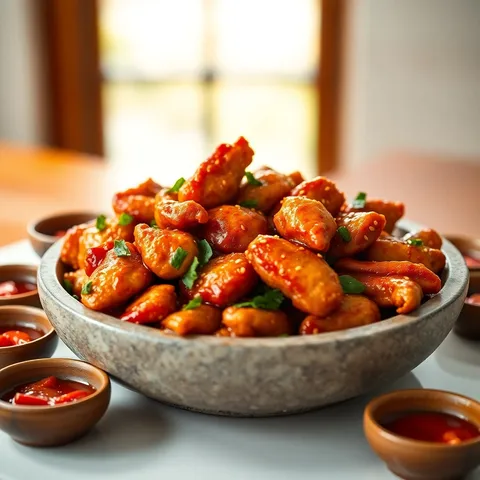
 Dakgalbi (Spicy Stir-fried Chicken)
Diced chicken marinated in a gochujang-based sauce, stir-fried with sweet potatoes, cabbage, perilla leaves, and tteok.
 Korean Lens Verified Images are for illustrative purposes only, may be inaccurate, and do not guarantee the presence or absence of specific ingredients.
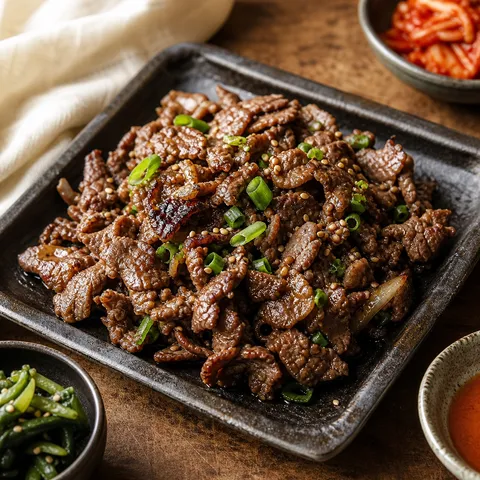
 Bulgogi (Marinated Beef BBQ)
Thinly sliced, marinated beef ribeye or sirloin grilled or stir-fried. Sweet, savory, and tender.
 Korean Lens Verified Images are for illustrative purposes only, may be inaccurate, and do not guarantee the presence or absence of specific ingredients.
 Kimchi Jjigae (Kimchi Stew)
A classic, comforting stew made with aged kimchi, pork or seafood, scallions, onions, and diced tofu.