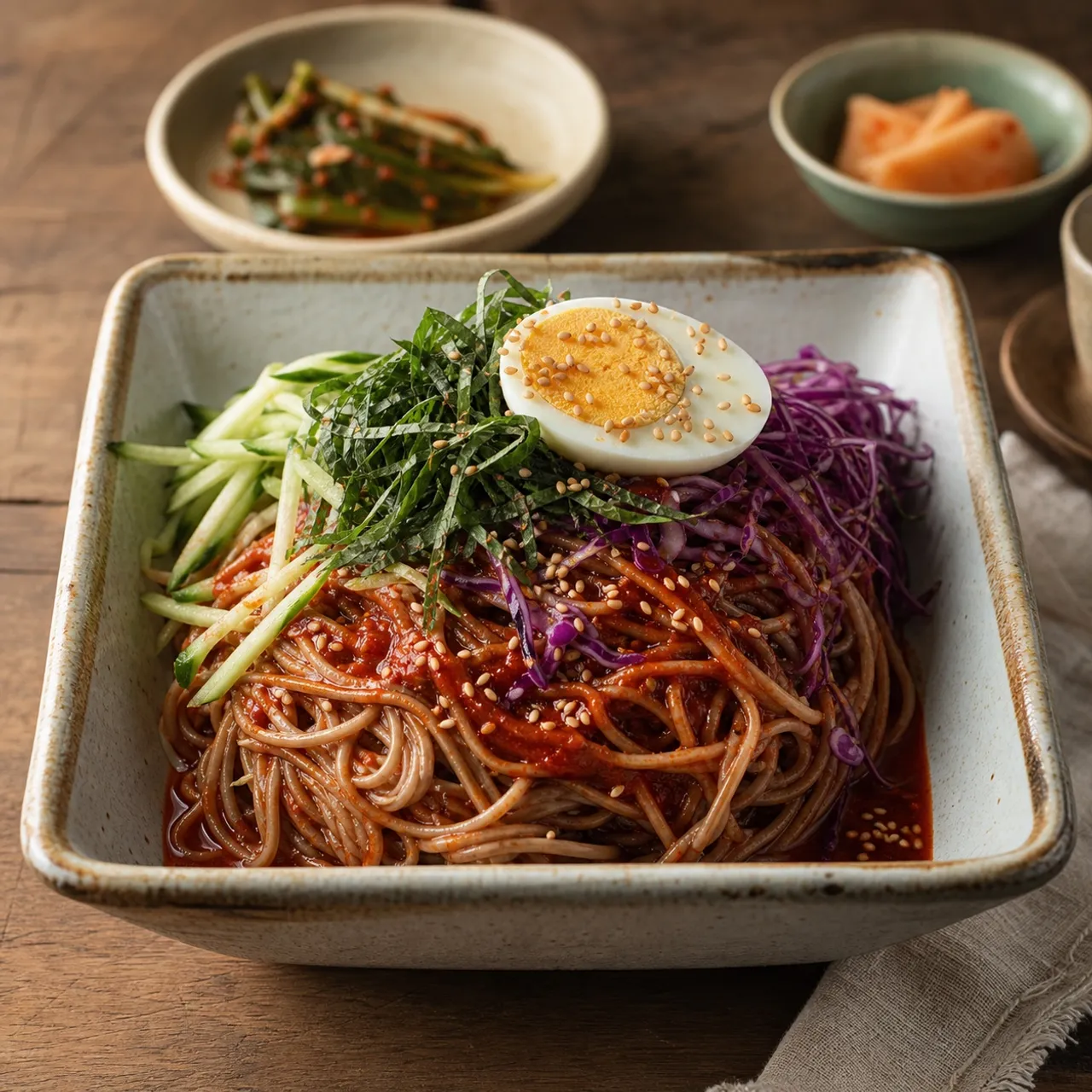
 Korean Images are for illustrative purposes only, may be inaccurate, and do not guarantee the presence or absence of specific ingredients.
 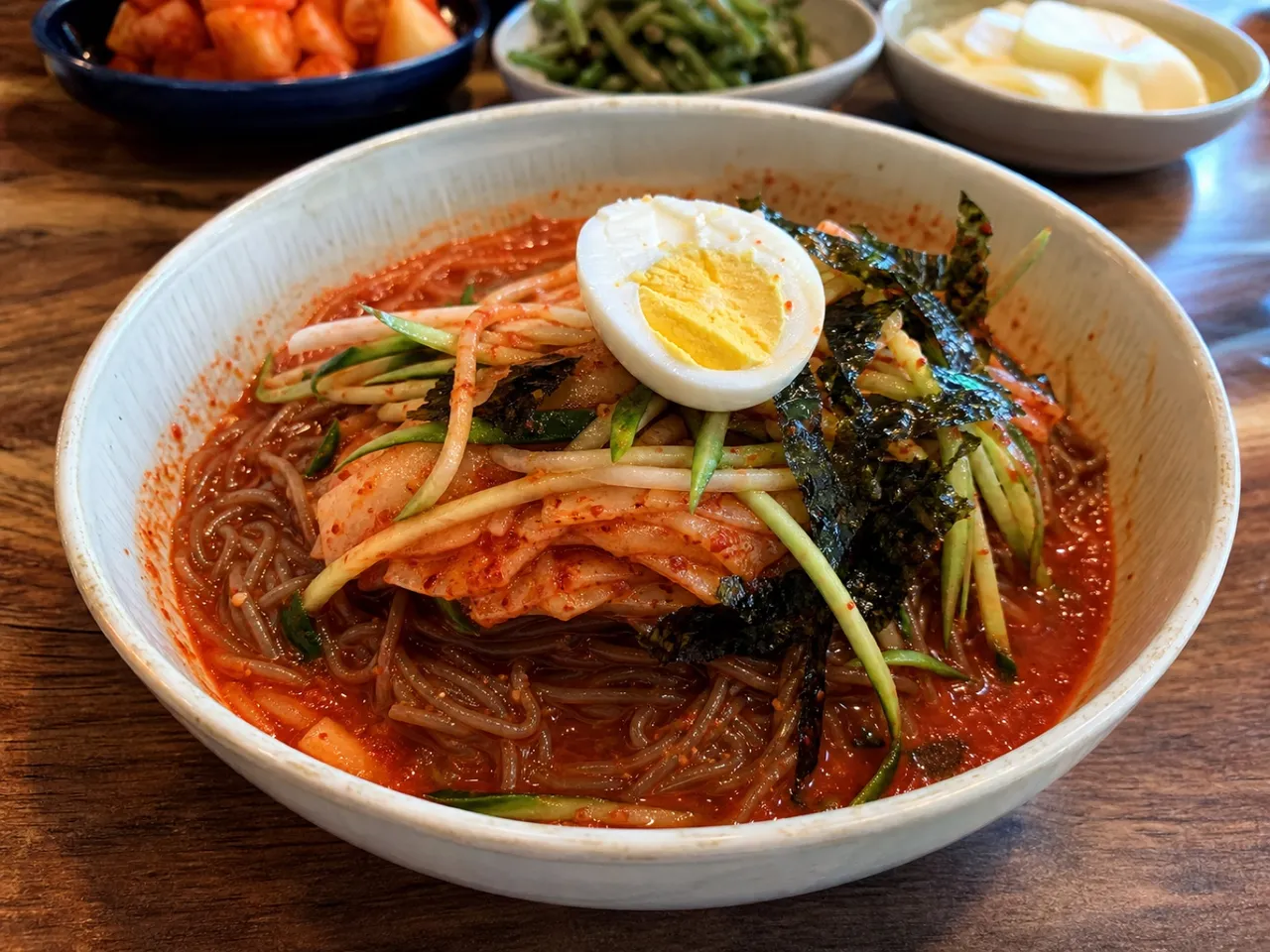 Serving Images are for illustrative purposes only, may be inaccurate, and do not guarantee the presence or absence of specific ingredients.
 Makguksu (Buckwheat Noodle Salad)
A chilled buckwheat noodle dish served with a spicy, sweet, and tangy sauce and fresh vegetables.
Contains common allergens
In the app, Listahan checks these against your household automatically.
Good to know
- Ready in under 30 minutes
Matched from this dish's own ingredients and timing. Browse more: 30-minute meals
Instructions
6 steps- 1
Whisk the gochujang, apple cider vinegar, sugar, sesame oil, and minced garlic together in a small bowl to create a balanced sweet, tangy, and spicy dressing.
- 2
Bring a large pot of water to a boil. Cook the buckwheat noodles for 3-4 minutes, stirring so they don't clump.
- 3
Drain the noodles and immediately scrub them vigorously in a bowl of ice-cold water to remove surface starch and cool them down completely. Drain well.
- 4
Place the cold noodles in the center of two wide, shallow bowls.
- 5
Artistically arrange the julienned cucumber, shredded red cabbage, and perilla leaves in colorful mounds around the noodles.
- 6
Spoon the spicy dressing generously over the noodles, top with half a boiled egg and a sprinkle of toasted sesame seeds. Diners must mix everything thoroughly before eating.
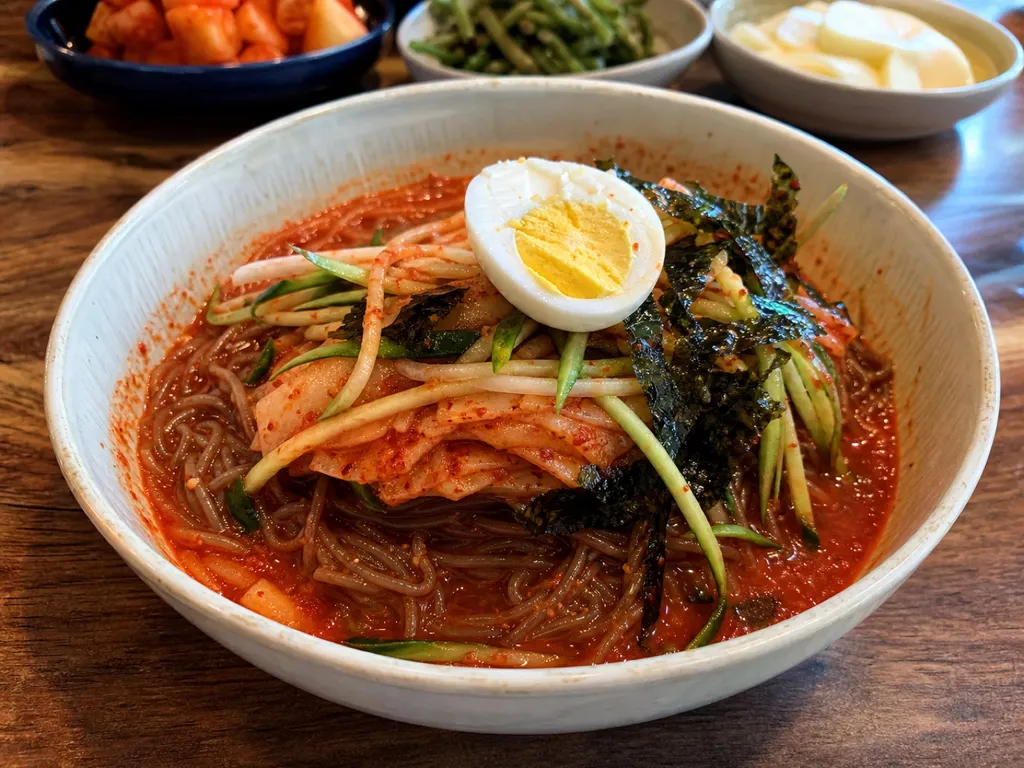 Images are for illustrative purposes only, may be inaccurate, and do not guarantee the presence or absence of specific ingredients.
 Listahan Family Score™
62/100
Works for many families
Score reflects how well this recipe fits a typical busy household. In the app, your Family Score is personalized to your household's allergens, kids, and pantry.
Nutrition
per serving145
Calories
3 g
Protein
16 g
Carbs
8 g
Fat
Estimated per serving. Actual values depend on the brands and portions you use.
Listahan cooking guide
Chef notes & practical guide
Technique notes, ingredient swaps, serve-alongside ideas, storage guidance, and equipment for this recipe.
Cultural context
Makguksu is a chilled buckwheat noodle dish from Gangwon Province, tossed with a spicy-sweet-tangy gochujang sauce and crisp fresh vegetables. The name suggests noodles thrown together casually. Refreshing and lively, it is summer food, with the option to add a little cold broth for a wetter version.
Listahan note
This version tosses chewy buckwheat noodles in a bright gochujang sauce with crunchy cabbage and cucumber, finished with perilla and a halved egg.
Technique cues
- Rinse the cooked noodles in cold water so they stay firm and cold.
- Toss with the sauce just before serving so the vegetables stay crisp.
- Balance the sauce so it is spicy, sweet, and tangy in equal measure.
Kitchen flow
- Parallel prep
- Make the sauce and prep vegetables while the noodles cook and chill.
- Make-ahead
- Prep the sauce and vegetables ahead; toss just before serving.
- Leftover move
- Add a splash of cold broth to leftovers for a soupier dish.
- Cleanup rhythm
- One pot and a bowl; rinse the starchy noodle pot promptly.
Ingredient brief
Role, handling, and swap guidance for each key ingredient.
Buckwheat noodles
Base
Purpose: Their nutty chew anchors the cold salad.
Handling: Boil briefly, rinse cold, and drain well.
Adaptation: Soba noodles are a close stand-in.
Gochujang sauce
Dressing
Purpose: Provides the spicy-sweet-tangy coating.
Handling: Whisk gochujang with vinegar, sugar, sesame oil, and garlic.
Adaptation: Adjust the heat with more or less gochujang.
Cabbage and cucumber
Fresh vegetables
Purpose: Add crunch and cooling contrast to the spicy noodles.
Handling: Shred and julienne finely.
Adaptation: Use lettuce or carrot for variety.
Perilla leaves
Herb accent
Purpose: Add a distinctive minty-anise aroma.
Handling: Chiffonade and toss in at the end.
Adaptation: Shiso or a little mint approximates it.
Technique notes
- Toss at the last minute so the vegetables stay crunchy.
- Rinse the noodles well to remove starch and firm them.
- Top with a halved egg and sesame for the classic look.
Ingredient swaps
- Gluten-free direction
- Use 100 percent buckwheat noodles and gluten-free gochujang.
- Soupier direction
- Add cold dongchimi or beef broth for a mul-makguksu.
- Milder direction
- Reduce the gochujang and add a touch more sugar and vinegar.
Serve alongside
- Boiled egg
- Kimchi
- Pickled radish
- Pajeon
- Barley tea
- Cold water
- Makgeolli
Serving suggestions only — check pairings for your household's allergens.
Storage & reheating
- Best fresh; refrigerate undressed components up to 2 days.
- Serve cold; this dish is not reheated.
- Freezing is not recommended.
Equipment
- Pot for noodles
- Colander
- Mixing bowl
- Cutting board
Make this household-aware
Listahan Pro checks this recipe against your household's allergens, finds pantry-aware swaps, builds the shopping list, and helps you plan the week around it.
Plan it in Listahan
Add Makguksu (Buckwheat Noodle Salad) to your week, check it against your household's allergens, and build the shopping list automatically.
More Korean recipes
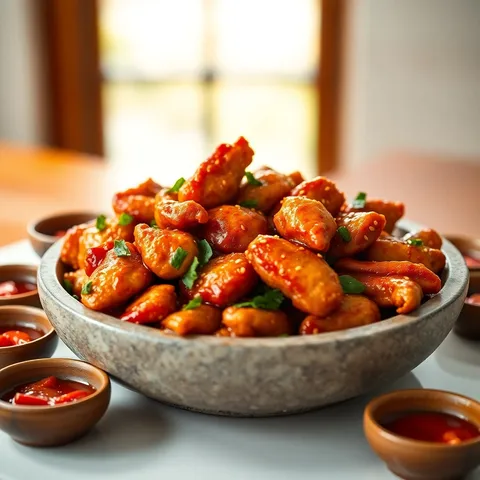 Korean Lens Verified Images are for illustrative purposes only, may be inaccurate, and do not guarantee the presence or absence of specific ingredients.
 Dakgalbi (Spicy Stir-fried Chicken)
Diced chicken marinated in a gochujang-based sauce, stir-fried with sweet potatoes, cabbage, perilla leaves, and tteok.
 Korean Lens Verified Images are for illustrative purposes only, may be inaccurate, and do not guarantee the presence or absence of specific ingredients.
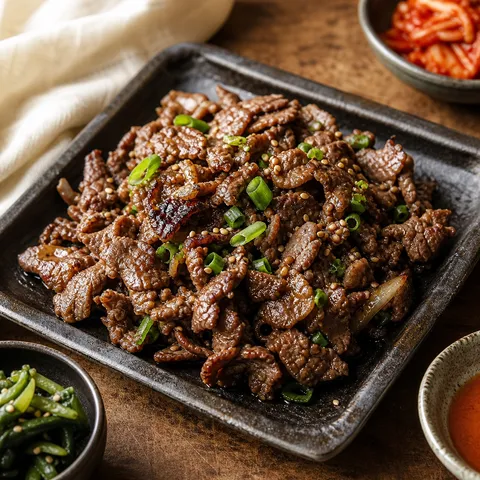
 Bulgogi (Marinated Beef BBQ)
Thinly sliced, marinated beef ribeye or sirloin grilled or stir-fried. Sweet, savory, and tender.
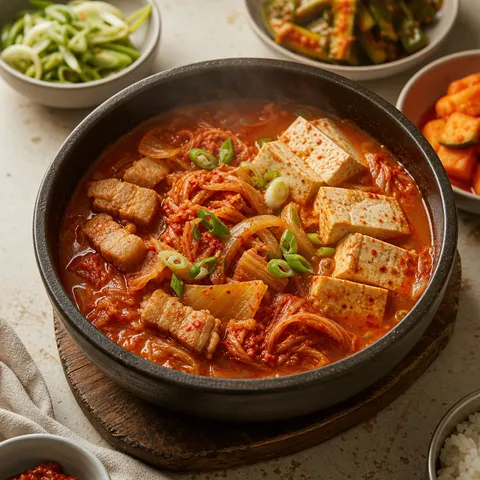 Korean Lens Verified Images are for illustrative purposes only, may be inaccurate, and do not guarantee the presence or absence of specific ingredients.
 Kimchi Jjigae (Kimchi Stew)
A classic, comforting stew made with aged kimchi, pork or seafood, scallions, onions, and diced tofu.